
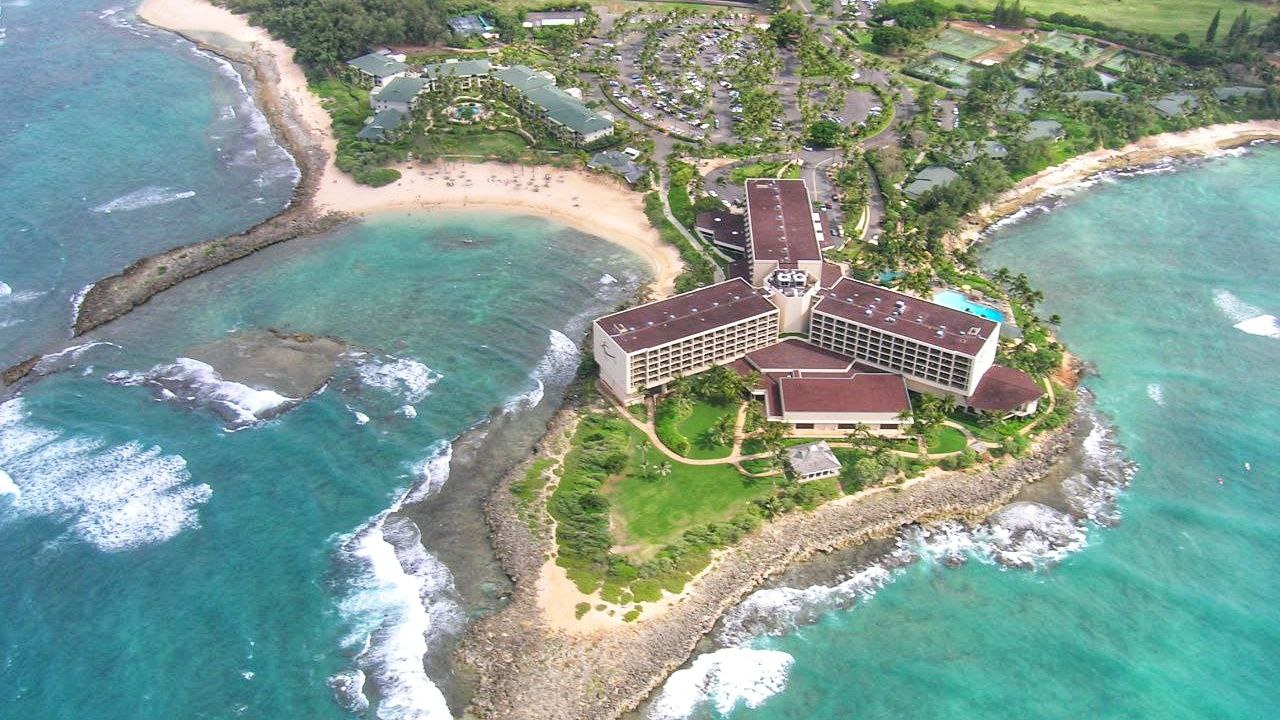
Visitors paying $1,000 or more a night at the Ritz-Carlton Oahu, Turtle Bay believe they are buying into one of the last protected stretches of Oahu’s North Shore. The resort markets 1,300 acres of open land, miles of coastline, monk seals resting on quiet beaches, and a nature-focused experience based on conservation and culture. Turtle Bay is presented as a place where decades of development battles were resolved and the surrounding natural landscape preserved.
What most of those visitors do not know is that the 49-acre parcel directly next door has already been approved for construction of a new 375-room hotel. That approval relied on environmental data from more than a decade ago, years before some of the endangered species now living on that land were ever documented. Now, what stands between what travelers think they are getting and what has actually been approved is ending up back in court.
North Shore community group takes County of Honolulu to court.
This week, Earthjustice filed suit in the First Circuit Court on behalf of the Center for Biological Diversity, the Conservation Council for Hawaii, and the North Shore community group Kūpaʻa Kuilima. The lawsuit challenges the City and County of Honolulu Department of Planning and Permitting’s December approval of Host Hotels’ plan to build a large 375-room hotel on the parcel adjacent to the Ritz-Carlton.
The plaintiffs are asking the court to invalidate that approval and halt construction until a new environmental impact statement is prepared. At issue is the developer’s reliance on an October 2013 supplemental environmental review. Because the proposed hotel falls below the 530-unit maximum that was the basis of that review, the city determined that no new study was required. The lawsuit argues that the decision ignores more than a decade of material changes on the ground.
Since 2013, a Laysan albatross breeding colony has been established at nearby Kahuku Point, starting in 2018. Monk seal pupping has increased on the beaches fronting the property. And endangered Hawaiian yellow-faced bees (Nalo Meli Maoli) occupy the project site. None of those were analyzed in the environmental review now being used to justify the hotel’s construction. Earthjustice attorney Dru Hara said, “Before they come in with the bulldozers and the pile drivers, we want to have a full understanding of the impact this is going to have.”
This is not the first time Turtle Bay development has been challenged.
The original environmental impact statement for the resort dates back to 1985. In 2010, the Hawaii Supreme Court blocked a similar attempt to rely on an outdated analysis, forcing a new review that led to the 2013 supplemental EIS. Thirteen years later, plaintiffs say the same problem has resurfaced, with approvals once again moving forward based on environmental conditions that no longer reflect the current reality.
Host Hotels paid $680M in 2024 to acquire Turtle Bay Resort, followed by an additional $50M for the 49-acre entitled parcel. A 2015 conservation easement preserved roughly 665 acres of land, while explicitly retaining about 150 acres fronting the ocean for future development of up to 725 lodging or residential units. The 375-room hotel now approved sits within that retained development envelope.
What Turtle Bay Guests See And What They Assume Is Protected
Guests arrive to open space, coastal trails, quiet beaches, and wildlife at the edge of the resort and naturally assume the surrounding landscape is protected in the same way it is presented. What is less visible is that development pressure is already active around the property. On one side, a separate Arete Collective project is underway, with roughly $43M invested in 100 resort residences and up to 250 hotel rooms planned to follow. Nearby, the newly approved 375-room hotel would be built on land many visitors assume is part of the same preserved North Shore experience. A third property near Kahuku and the James Campbell National Wildlife Refuge has also been identified for future development, further narrowing what guests can assume is settled or safeguarded.
Reader comments on Beat of Hawaii’s prior Turtle Bay coverage reflect how deeply this topic hits emotionally. One reader who remembered staying at Turtle Bay for $250 a night decades ago wrote that watching it become unrecognizable has been painful. Another couple celebrating their 30th anniversary mentioned they were priced out of the area entirely.
A longtime visitor summed it up simply: “Now it just feels sad because Hawaii is truly our favorite place, but we know we don’t fit in the growing luxury life.” Another reader said, “A hundred years ago, the government was controlled by sugar. Today it’s luxury hotels.”
Kūpaʻa Kuilima’s petition opposing the project.
State Senator Brenton Awa, who represents Turtle Bay, has opposed further North Shore development, saying there is a growing sense in the community that enough is enough. Kūpaʻa Kuilima’s petition opposing the project already has more than 20K signatures, reflecting how unresolved Turtle Bay remains decades after it was supposed to be settled.
For travelers, the lawsuit does not mean construction will begin immediately, nor does it determine the area’s ultimate fate. What it does reflect is that the North Shore experience being sold at ultra-premium prices is far more fragile than many guests realize. The land next door to one of Hawaii’s most expensive resorts was approved for development.
If you were booking Turtle Bay for its promise of preserved nature and open space, does knowing what has already been approved next door change how you see it?
Get Breaking Hawaii Travel News



‘N’ ‘O’ No, to developing a second hotel at Kawela Bay.
It would require road widening along the entire North Shore stretch of Kamehameha hwy and also open up the development of Kahuku land currently owned by the Mormon church. Transportation infrastructure would also be required to accommodate the massive increase in traffic. The country would lose its identity.
I hope that the EIS also considers the impact on water use, energy use, and traffic impacts. I used to visit the North Shore almost every year before traffic was an issue. I live in a tourist destination on the mainland where almost of the new development is for the wealthy. I learned that it generates more tax money so that’s why it’s allowed. It causes locals who work to have to move and commute. I hope this obscene development is stopped.
Why the surprise? There’s no hypocrisy here between “love of the aina” yet still doling out construction permits for luxury places. We all know that the State of Hawaii Wants its tourists to be the luxury travelers.
As a very recent visitor to Ritz-Carlton’s Turtle Bay Resort, I must side with the “leave it as is” team. The serenity alone is reason to honour it; however, the native history, the wildlife, the God-given stunning beauty of the environment…all sharply point to even more indications to respect the area and please allow God’s natural wonders to exist unperturbed.
Politicians have sold Hawaii out to the highest bidder approving all this development. This literally made me sick to my stomach. Im so thankful we got to enjoy going up there when Haleiwa was a little surf town. Last 3 times on Oahu we didnt even go up there. How in the world will the infrastructure handle so many more developments. Not to mention quality of life for the people living there. Unbelievable !! Well, we have our memories and pictures, yes, in the 70’s-80’s- 90’s we old folks printed pictures. Im glad we did ….. 🙂
We complain about over tourism while we continue to add hotel rooms. Either stop adding accommodations or quit moaning about the visitor numbers.
They blame everything bad on vacation rentals while adding time shares and high end hotels.
They don’t want independent owners, budget travelers, and non-union workers profiting off of tourists.
The North Shore of Oahu used to feel truly different from the rest of the island. More and more, it feels like that line is disappearing. There isn’t that much left to save and this would be a great place to start.
Aloha, I agree with your insightful comment. Also, while the developers and the politicians are focused on the jobs and tax revenue, they neglect to mention how these new developments will actually make living in the North Shore increasingly unaffordable and unlivable because of the rising costs associated with maintaining these “new” resorts and condos. For instance, the additional water and sewage usage will affect the natural geological conditions and biodiversity leading to higher maintenance/utilities costs and increased environmental damage. Also, vehicle traffic will most likely increase around the North Shore causing traffic congestion, more air pollution, and trash from tourists and the ultra wealthy flocking to the area. More importantly, as living costs rise around Kahuku, Kulima, and Kawela Bay, native Hawaiians and locals will be forced out of their neighborhoods to make way for new developments. We’ve seen this all before and it’s happening again, gentrification!
Hawaii talks conservation, but in the end money always wins. Turtle Bay is just the latest example. Still glad this is being challenged.
I understand the legal arguments, but from a visitor standpoint it’s simple. If I’m paying $1000 a night for nature, I expect that nature to still be there.
We stayed last year and thought the resort was beautiful, but it definitely felt like it was catering to a very different crowd than before. More construction could make it feel less appealing for sure.
This is why we have stopped going to Oahu. Every place that once felt open and wild eventually got carved up and monetized. Hawaii keeps selling the idea of preservation while approving more luxury projects all around.
We booked Turtle Bay specifically because it was marketed as protected and nature-focused. I had no idea that another hotel was already approved next door. That absolutely would have factored into our plans.
I love the North Shore and Turtle Bay, but I also know development has always been part of the plan there. The issue for me is using outdated information. That doesn’t feel right, especially given how much has changed.
We stayed at Turtle Bay in the early 2000s when it still felt remote and very special. Seeing what it has turned into is honestly heartbreaking. I don’t begrudge anyone making money, but this doesn’t feel like the North Shore anymore.
It’s so hypocritical that they won’t market Hawaii due to over tourism, causing many small businesses, so much stress, but they keep building hotels, vacation rentals, and homes everywhere!
Aloha everyone, I have stayed with my family the last two summers at the Turtle Bay Resort and we won’t be returning anytime soon after watching it transform, in real time, into a playground for the ultra wealthy. It’s shocking to see how the room rates have skyrocketed since the Host Hotels takeover. Also, the news that more development is coming to this rare pristine piece of the North Shore land is quite unbelievable! In my opinion, this land should be preserved for future generations and utilized for organic, regenerative, and sustainable, agricultural use.