
Officials gathered recently to talk about visitor safety in Waikiki and delivered a message travelers have heard before. Crime, they said, is down. Waikiki is safer than it has been, and visitors should feel comfortable walking around at night.
At the same time, those same officials and tourism leaders discussed expanding drone surveillance, adding license plate readers, linking more cameras together, and giving law enforcement real-time access to private business security feeds throughout Waikiki. The reassurance and the buildup are now being served up side by side.
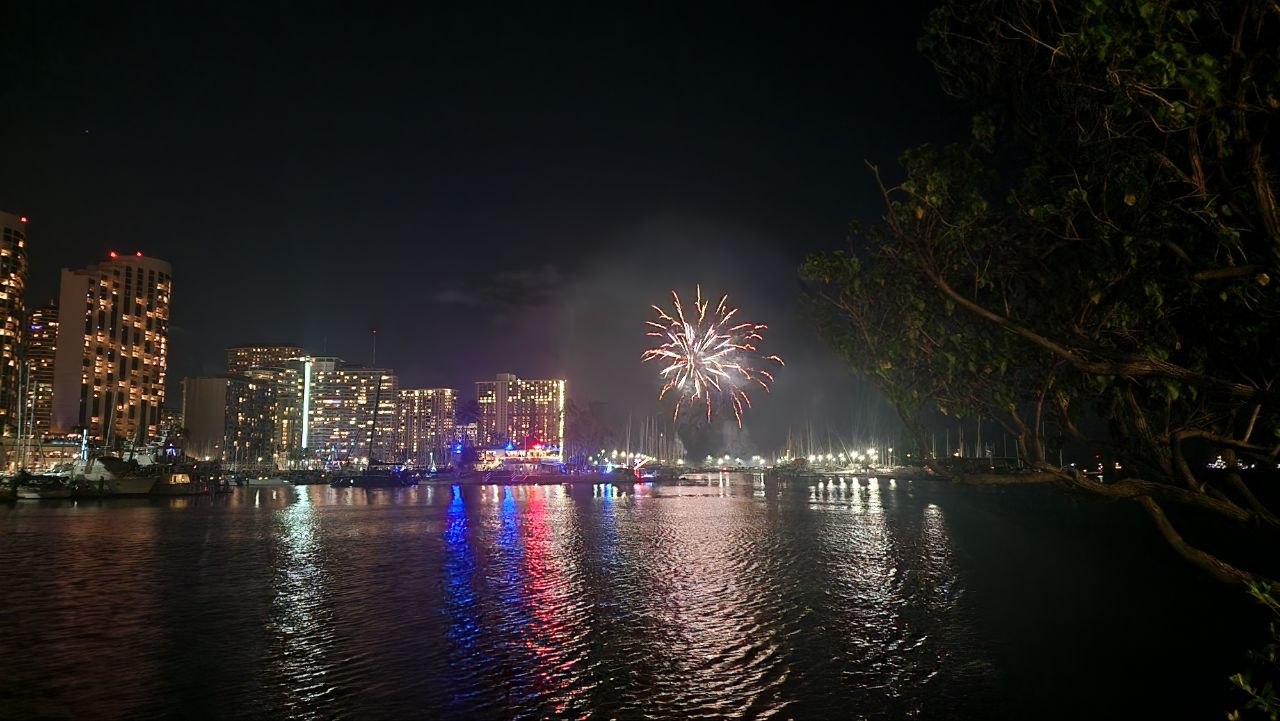
We were in Waikiki in December, and the nights along Kalakaua Avenue felt exactly the way visitors expect them to. The sidewalks were packed well into the evening, with crowds spilling out of restaurants and enjoying the warm nighttime weather. People crossed the street without looking twice, sometimes with phones in hand, and beach bags over their shoulders, fully in vacation mode.
One night, we parked near the zoo and walked the Kalakaua strip after dark. Nothing about it felt tense, and nothing suggested danger. It felt normal, which makes the current conversation harder to align with what visitors are actually experiencing on the ground.
What’s being built for Waikiki?
What’s under discussion goes beyond a few drones used during special events. Public descriptions now point to a broader surveillance network focused squarely on Waikiki, the state’s most important, visible, and highly visited neighborhood.
Drones are one piece of the puzzle, alongside fixed cameras, license plate readers, and live access to surveillance feeds from private businesses. According to GovTech reporting, Hawaii officials have described a Safety Via Technology effort that would allow law enforcement to view participating business cameras in real time, not just request footage after an incident occurs.
The concept has been discussed as one way to compensate for staffing shortages while relying on technology, especially in high-traffic Waikiki, where response time matters. HPD does maintain a Waikiki station on the street near the Moana Surfrider, but the emphasis now is on faster coordination across agencies through live monitoring.
This approach, currently under discussion, isn’t temporary or experimental. Waikiki is being positioned as the first and most visible place to put this model into practice before it is deployed elsewhere. The message here has been consistent: this is intended to become part of how Hawaii safety is managed rather than a short-term trial that subsequently disappears.
One interesting detail that’s gone largely unnoticed is that Waikiki sits within a controlled airspace because of its proximity to Honolulu International Airport, where private drone use is heavily restricted and can result in fines. Visitors are not allowed to fly their own drones there, even casually, even though the same airspace is now considered valuable for law enforcement surveillance.
How this actually feels to Waikiki visitors.
For visitors, the question isn’t whether technology can help police respond faster. Most will assume that it does. The question is what this does to the feeling of an iconic place that is marketed as relaxed, easygoing, and uncomplicated.
Hawaii travelers tend to assume the security they see is all of the security that exists. Patrol cars rolling by, officers on foot, hotel staff nearby. It is a visible presence that feels familiar and easy to understand.
Drones obviously work differently. According to media reporting, the drones are expected to operate mainly out of sight as they move through Waikiki. Department of Law Enforcement Director Mike Lambert has said the goal is to have technology on every corner, even when officers aren’t present. Visitors will not know when they are operating, who is watching live, or what happens to the footage.
For some Waikiki visitors, that will feel reassuring. For others, it may instead feel like something they did not factor in when they booked a Hawaii beach vacation. Either way, it does change the tone of Waikiki, even if many people will never notice a drone overhead.
The details that visitors and residents still don’t have.
Despite how confidently this new security tech is discussed, basic questions remain unanswered from the visitor and resident perspectives.
There has been little to explain when drones would actually fly, whether they will be limited to major events and specific incidents, or simply a new and routine part of nightly monitoring.
Visitors and residents do not yet know who will monitor feeds in real time, how stored footage will be used, or how long it will be kept. We don’t yet know what events might trigger deployment, whether it will be solely reactive and incident-related or also proactive, with constant observation of crowded areas. We hope that these won’t be things travelers usually learn only after something goes wrong. Hawaii has a history of that.
What’s moving ahead under the radar.
What stands out most isn’t the technology, but how quickly it is moving forward, given how little has been explained to those of us who walk these streets. The infrastructure is ahead of clear answers to basic and practical questions.
Waikiki appears set to change how safety is managed in the state’s most visible tourist corridor, and visitors are being asked to accept that change without being told how it will work or when it will be used.
Photo Credit: Beat of Hawaii in Waikiki for December fireworks.
Get Breaking Hawaii Travel News





We residents of Waikiki unfortunately are victims of crimes such as theft, threats from numerous homeless, vandalism, appliances and furniture left on corners in the dead of night, loud drunk tourists, etc. rarely are police called as they treat us as an inconvenience and as suspects
As a Waikiki resident, thanks for the heads-up on what’s on the radar. I do see drones occasionally peering into the high rise buildings (creeps). They go from the HHV to the residential buildings and cruise up each floor’s windows and lanais. Wailana, Waipuna, Villa, Chateau. Beyond reporting on Nextdoor and telling the actual building management, I have no idea what can be done.
Down doesn’t mean gone. HPD appears to be looking for ways to be more efficient – a person can monitor several drones, maybe doesn’t have to be paid the same as a patrolman, and can move their eyes at over 25mph to where they are needed. I don’t know how many people can run faster than 25mph, but I remember traffic in front of the Royal Hawaiian didn’t usually go that fast.