
Kauai residents are speaking out, and their message is clear. Tourism may sustain the island’s economy, but unmanaged growth is straining daily life, from parking and rescue operations to sidewalk maintenance and cultural respect.
In Lihue, the Hawaii Tourism Authority held a meeting where large boards displayed questions about tourism, and residents filled them with sticky notes sharing their responses. HTA then presented a decade of charts showing visitor growth. The contrast could not have been sharper. The charts showed billions in spending, while the boards of sticky showed frustration over missing restrooms, rescues at dangerous sites, and a lack of sidewalks.
About sixty people attended. Rob and I watched as the boards filled with comments that were emotional, blunt, and sometimes surprisingly practical. A discussion then followed on each topic. Residents accepted tourism outright. They acknowledged its value, but they pressed for urgent fixes that match the reality of one and a half million visitors sharing their island every year.
What stood out was that Kauai residents seemed more open to acknowledging the value of tourism than we have sometimes heard elsewhere, even as they were firm about the problems that still need to be solved.
A decade of tourism growth.
HTA’s slides tracked ten years of data. Visitor arrivals are up 130 percent since the pandemic low, daily visitor counts are 10 percent higher, and total expenditures have risen by 382 percent. Per person daily spending has more than doubled. In 2023, the visitor share of GDP was measured at 2.2 billion dollars, representing more than 40 percent of Kauai’s economy. On paper, that is a success story, and officials emphasized that they want to attract higher-spending visitors rather than simply more of them.
Resident sentiment tells a different story.
The same charts showed that fewer than half of residents in North and East Kauai say tourism enhances their quality of life. That number has stayed nearly flat for a decade. Another measure, asking whether tourism brings more benefits than problems, improved until last year but has now slipped again. While visitor spending has soared, resident approval has not kept pace. That disconnect framed everything else that happened in the room.
Safety flashpoints and rescues.
The Kalalau Trail was a recurring concern. One note said there had already been 23 helicopter rescues this year alone. Residents asked why visitors can set off on such a dangerous hike without training, permits, or rangers on the trail to intervene. Some suggested fines of $1,000, while others mentioned cameras or enforcement similar to what is found at Mount Rainier.
Shipwreck Beach was flagged as a place with repeated drownings and rescues. Wailua Falls was called unsafe because people climb over barriers and hike the treacherous trail down to the falls. Hoopii Falls was described as overrun, with calls for speed bumps and crosswalks. Queens Bath, although permanently closed, was still cited for trespassing.
Not everyone agreed on how to fix these problems. Some wanted strict enforcement and penalties. Others believed education and redirection would be more effective, so that visitors understand why rules exist and where safer alternatives can be found.
Infrastructure and access frustrations.
The word infrastructure came up repeatedly. The lack of restrooms was a constant complaint. Residents in Poipu and Kapaa have noted the absence of sidewalks and said it creates unsafe conditions for both locals and visitors. Scenic pullouts, crosswalks, and shoulders were also listed as needing attention.
Parking generated some of the strongest responses. Hanalei, Lumahai, and Shipwrecks were all called out as overloaded. Some suggested building visitor-only lots with reservation systems, while others proposed reserving portions of parking areas for residents. The Haena system was mentioned as a positive model.
Traffic mitigation ideas included electric shuttles, alternating flows, and roundabouts in Kapaa. One note described the situation as a nightmare on the Southside.
Protecting resident access.
Many residents said they want guaranteed access to their own island. Haena’s reservation system was pointed to as a working example. Some suggested halting commercial tours on the Wailua River during weekends so local families could enjoy the area. Others proposed creating more trails and parks to reduce pressure on a handful of crowded sites.
QR codes were floated as a way to match visitors with trails that fit their skill levels. Residents would still be free to choose, but the idea was to reduce rescues and accidents by steering unprepared hikers to safer routes.
Culture, respect, and visitor education.
Cultural concerns appeared on almost every board. Residents wrote that visitors climb on heiau for picnics, feed fish peas to get their attention, and disturb turtles and seals. Several messages boiled it down to a few simple reminders. Be respectful of nature. Do not touch turtles. Understand the ocean. Respect Hawaiian culture.
How to deliver that message was debated. Some called for rangers on trails. Others wanted QR codes at major sites, short videos on airplanes, or cards handed out at baggage claim. A recurring theme was that education should begin with welcome and invitation, followed by rules. Tone matters, residents stressed, if visitors are to absorb the message.
Social media and enforcement tensions.
Social media was another frequent complaint. Geo-tagging, residents said, sends large crowds to fragile or unsafe spots. Some suggested counter-content and positive examples to redirect attention. Others wanted influencers and even celebrities to model respectful behavior. DLNR was called on to issue stronger public statements, and there were suggestions that platforms should post warnings when users attempt to tag restricted sites.
Exclusion from decisions.
A final set of notes expressed frustration about being excluded from tourism planning altogether in the past. People said they did not know how to participate or that big hotels played by their own rules. Some questioned whether the dollars presented by HTA actually benefit the local economy. One board said it in just four words. We were never included.
The gap between policy and reality.
The meeting in Lihue revealed two perspectives that remain unaligned. HTA showed charts of record spending. Residents filled boards with complaints about parking, rescues, restrooms, and safety. These are not opposing views, but they tell different sides of the same story.
Compared with Maui, where opposition has often sounded sharper, Kauai residents seemed more measured. They accepted that tourism sustains the island while pressing for infrastructure and safety improvements. Their message was that the quality of life must improve alongside visitor spending.
For visitors, the lesson is clear. You are welcome, but expectations are changing. Respect cultural sites. Pay attention to safety rules. Spend money at local businesses so your dollars support the communities you visit.
Have you seen or felt these challenges on Kauai? Share your thoughts on how visitors and residents can work together to create a better balance.
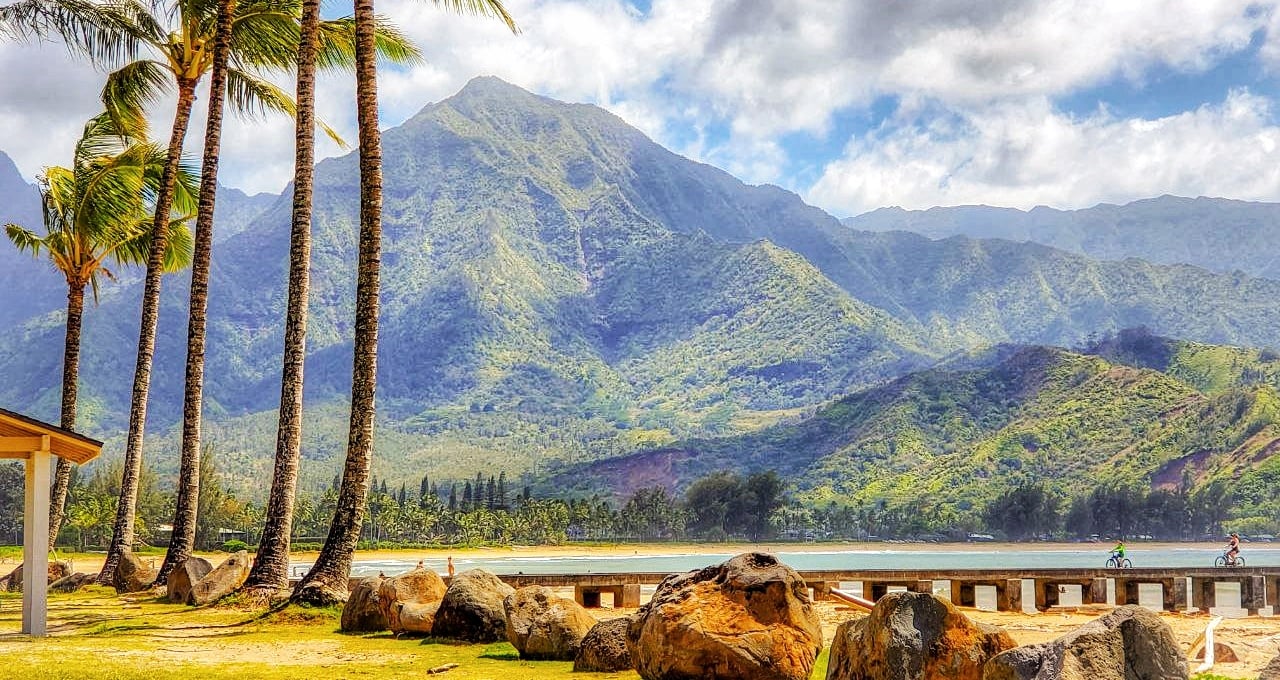
Photo Credit: Beat of Hawaii at Hanalei Bay.
Get Breaking Hawaii Travel News
I find it unfortunate that visitors to Hawaii in general don’t feel as welcome as they once did, it is after all an America state and part of Our country!
I think they may regret their unwelcome stance once the $$$ stop pouring in.
My father was born in Paia and I have lived in Hawaii and visited countless times. After reading how much Hawaii is against visitors I would say that Puerto Rico is an excellent destination to take Hawaii’s overload of tourists particularly for East Coasters. It’s closer and less expensive. There’s music, food and a welcoming culture. My family, though used to Hawaii and our first love has taken to Puerto Rico 🇵🇷. Give it a try, you won’t regret it!
We have been coming from Pennsylvania to the islands since 1993. We miss the old Hawaii from our early trips. The development of so many new buildings since then, and the roads, and parks never were expanded to a proportion to the visitor expected capacity. The zoning has allowed timeshare development to explode, without the state to increase capacity of roads, and parks, sidewalks, and parking. It seems every developer has convinced the planning committees, that there would be minimum difference in congestion with their development.
With the expansion, has the electric capacity increased?
I note that the highway between Kappa and the airport has a movable lane that gets cones placed and removed every day. A dangerous thing for the highway workers, an confusion for tourists who are confused 🤔 with the practice. Maybe that’s changed since I was there 3 years ago.?
I’m torn in my view of this problem. Like me, many Kauai residents are fairly recent (within the last 30 years). And most of us came to know and love the island initially as tourists ourselves. I’m not talking about life long born and raised residents – I genuinely feel your pain and empathize. But I have no similar empathy for those of us who moved here from elsewhere after falling in love as visitors. We knew full well what we were moving to – an island that is entirely dependent on tourism, at least as life on the island has been since we first arrived. Too many of these “complaints”come from people who know full well that before relocating here permanently We were the problem. We certainly didn’t make life better for island born folks by moving here so spare us the woe is me, tourists are a problem refrain. Frankly, anyone who isn’t native Hawaiian needs to word their complaints carefully or they make us all sound foolish.
You cant have your cake and eat it too.Everywhere is the same ,not just in Hawaii .Its just a lack of respect for a place that is beautiful and needs to be looked after . Just for example look at the ocean and the plastic left too destroy it for all the creatures that live in it .
Here all the locals for the most part are Howleys themselves. Who were tourists themselves. They came to the islands as tourists, fell in love ,moved here and are now complaining about others ,that come to visit. Let the Hawaiians decide what they want for their land.
We have been going to Kauai until fall 2022, for the previous 10 years, 2 to 3 times a year, for 2 to 3 weeks at the time, always renting a local property and spending hyper-local, away from tourist attractions. Couple of days ago, I asked my wife if she wanted to go to Kauai this fall, and she said “No honey, too much
She’s right. You’ve been going there too much. There’s a whole world to explore. Do it.
Aloha, I moved to Hawai’i in 1971 and lived on Oahu. I have a deep love for all the islands and the Hawaiian people. My four children graduated from Radford High School. I was a nurse down on King St.
When we left the island in 1989, I made 30 trips back “home”. On my last trip in 2017 with my son, Kalani, I saw the shocking difference of Waikiki. I spoke with the head of the Visitors Bureau. Told her about what was done to the local people by changing the dynamics of Waikiki. International Market people was great for locals, markets, clothing, food etc, gone. The turned Waikiki into Rodeo Drive, CA, not good. Gone is everything that made Waikiki so special. The VB said was to attract High end Visitors and I said “what the Japanese “, she said. These island’s belong to the people. Visitors are vital to the economy of all the island’s, but the People of Hawaiian should always come first.
Mahalo
I first read of these meetings in an article on the “Kauai Now” news web page. From what I’ve read, the majority of the comments and suggestions made by the attendees were thoughtful and well measured. My take is the majority were looking for solutions that would be to the benefit of all. As a resident of the Reno/Lake Tahoe area, I can well understand what happens when a location is “loved to death”. My wife and I made our first trip to Kauai in 1997. We immediately fell in love with the island, the culture and the people. Kauai quickly became our heart home. We have returned regularly, with our most recent visit in March of this year. With the number of times that we’ve traveled to Kauai, we have yet to experience unpleasant rude or hostile behaviors from the people of Kauai. I’m sure there are some that exhibit these traits, but we haven’t witnessed those folks. Take time to visit with locals, understand pono and you’ll be surprised how welcomed you will be.
I have been coming to Kauai since 1986 and living in Kauai since I retired in 2022. Over these five decades- I have seen enormous increases on tourist taxes and real estate taxes (40% increases in real estate taxes and 30% increases in tourist taxes in one year are examples). In addition there are now charges on tourists in state parks. While I have seen these increases I have not seen any significant improvements in local or state government services. The money appears to disappear into a black hole. There is an over abundance of jobs in Kauai but it appears that the locals are either not interested in working or are under qualified due to the failing educational system. As a result these jobs are filled by young people moving in from the mainland. This is a shame on the state and local governments. I think as long as the locals tolerate their poorly performing governments, problems will persist and they will continue blaming the tourists instead of their governments.
What is your source for saying Queen’s Bath is permanently closed? I can’t find anywhere else that says that. There are reports on Google, AllTrails, and TripAdvisor of the gate being open and people visiting it within the last week. The only government sources I can find say it’s closed during the winter and can be temporarily closed at other times during high swells. I see nothing corroborating it being permanently closed.
Before the lahina fire, my wife and I went to Maui every year (18 by actual count) for a couple of weeks. After the fire it became obvious that we and our money were not wanted. Haven’t been back since and likely will never go again.
Tourism problem solved.
I couldn’t agree more. We visited Maui and the lack of public restrooms and dilapidated public parks is frustrating. They deserve nicer public amenities. All the tourism money and none of it goes to the people.
Unfortunately I fear the islands are screwd, the islands of 3 decades ago are gone forever and there is no getting them back. Governments have allowed this to happen by letting developers to over develop. The more resorts they build the more people they can accommodate. “If we build it, they will come”.
I agree, the influencer is not helping anywhere, they cause the rude, self intitled to spawn everywhere, not just the islands. Question : do 4 little islands really need 90 golf courses?????
Hawaiians have their share of rude and self-entitled. Tourists dont hold a monopoly in that regard.
To answer the question, does HI *need* the revenue from those courses?
As a long time visitor of Kauai, the article was light on the truth. Locals are no longer hiding their hate of tourist. Attitude everywhere even when remaining completely respectful to Locals and their culture. They want tourists money without the tourist. Downright racist to whites online and in person. It’s accepted behavior there now. Aloha is long gone.
Been saying this for years. Especially bad on the Big Island.
Been coming to Kauai for over twenty years and haven’t felt any rudeness at all. Maybe look at yourselfs.
Ditto for me. I never, ever have had an issue on Kauai. This summer we visited Maui for the first time and got a little but not bad.
We also went to Molokai and I was prepared to get some grief from locals. The only one was funny though, it was a little girl, about 4 y/o who gave us the double middle finger. Everyone else lived up to the reputation of “the friendly isle.”
They had restrooms for Paying Customers not freeloaders who spend nothing but expect to be allowed to use their facilities. Why should a business make their private restrooms available to someone who does nothing to support that business?
Good question, simple answers: Pricing & priorities. Limit options for middle-income travelers, i.e., affordable lodging, dining, activities that would incentivize them to visit. Conversely, raise prices on properties, put the money into higher-end amenities that only people with lots of money can afford. This will discourage many middle-end travelers and families from coming. But the caveat: the wealthy don’t treat anybody or anything any better, and often worse, than those who scrimp and save to visit and enjoy the Aloha spirit and beauty of the islands. Money doesn’t bring or negate friendliness, but on balance, you’ll likely get less of the latter and hope you get more of the former. Jobs? Tough to call, but there are other places to visit, and reputation and social media and forums like this are powerful in shaping visitor decisions – forever. But it is Kauai’s right to do what it wants – whether it’s ultimately good to discourage tourism, or not.
I wanted to go In your Entire report You never Mentioned When or Where This Meeting would take place !!!!!!!!!
I’m sorry the good people of Kauai are dealing with such problems. As a Florida native whose hometown has become a tourist mecca in the past few years, I can empathize. As many people have written, government’s raking in money, yet not using it for upkeep that both residents and tourists need. Like so many of the issues we Americans are facing today, it will take leaders to step up in Kauai – a group of concerned citizens – to make politicians accountable to what the people of Kauai want done.
We love visiting Kauai and have such fond memories of all the wonderful people and the aloha throughout Hawaii. We respect Hawaii, it’s culture, it’s wildlife and its people and I know many tourists feel the way we do. I’m sorry for the actions of those disrespectful tourists who visit Hawaii. Those people, unfortunately, behave the same way here in Florida and I imagine, where ever they go.
Tourist are disrespecful of others lands, except when you are one. OK Theodora.
Go to a “locals” beach, you’ll find they’re by far the most littered. Their yards too.
Whole thread reminds me of a commercial that ran ubiquitously “100 yrs ago” during the anti-litter campaign. An American Indian looking over a trashed up land with a tear down his cheek. Drive by a reservation today. Looks like a landfill.
I would like to let you know that when we went to Kauai this May of 2025. There were no bathrooms to use every business we asked had a sign up No restrooms! It was hard. So more restrooms or st least public restrooms would be nice. I know they had restrooms but were not willing to let us use them!
I suppose the bird droppings, decayed vegetation, weed problems, and fruit trees that overhang sidewalks is a tourists problem. Just state that nobody wants to stand over reflective concrete in the hot sun and have to work. The reality of it all is finding a long enough hose to go to a water outlet or spicket to clean the sidewalks to operate a pressure washer. Then there’s the most obvious no water available at all. So all in all quit pushing these problems and placing them on the tourist’s plate.
I was shocked to see sidewalk maintenance as a deteriorating problem.
So how do tourists destroy or damage sidewalks? IMO this just sounds like Hawaiian people don’t want to work. I experienced a bus driver quitting and making everyone walk 2 miles back to Waikiki because he refused to drive the public transit bus anymore. I experienced a orange vested airport worker complain about his work hours and wanting to get off earlier than his shift. It’s not that tourist’s are the problem. It’s employees that want to get paid for little or no effort. IMO after 11am people that work outdoors because of the heat just don’t want to be present but want a paycheck.
I Agree 1000% Percent !! There is more Opportunity to work and earn money Here on Kauai Than anywhere in the World !!
I have been all over and That is not an exaggeration.
Almost anyone with no special Training could Start working T O D A Y …..if They would Just show up ! But They would rather Complain about not having Money and Tourists. King Kamehameha would Never Tolerate that !
A few thoughts as a recent visitor to Kauai.
On Kalalau Trail: I’m not a hiker but I did go to the adjacent beach park on the shuttle and heard the briefings. I think they are already quite good. Unfortunatlely hikers overestimate their ability and have to be rescued all over the world — I don’t think it is a solvable problem.
On beach safety: I think more nuanced signage might help — not just “don’t swim here” but “don’t swim outside the reef” or suggest safer alternative beaches.
You are part of the US. FYI before deciding if you want to exclude fellow American visitors and/or act like an independant island:
Based on the Rockefeller Institute “Balance of Payments” numbers, the average Hawaiian receives about $7,178 more in federal spending than they pay in federal taxes each year.
That’s an average per resident, meaning total inflows (defense, Social Security, Medicare, federal employee salaries, etc.) minus outflows (federal taxes paid by individuals and businesses), divided by Hawaii’s population.
So Hawaii is a net recipient of federal money, not a net contributor. Ranking as the 9th most “needy” state in the US.
I will do my part and not visit Kauai anymore. I have been there 3 times and it is clear tourists are not welcome.
There is often a lot of blame placed on the visitors. Some of the resident comments tell the actual story: Government and businesses are making money without properly supporting the local economy nor infrastructure. Visitors and residents are like children (both act in their self interests, often selfishly). Businesses and Government act like bullies (both often act in their selfish interests and don’t actually care about the greater good). The solution is to enact comprehensive plans which guide and balance visitor and resident opportunities/freedoms while assigning caretaking and comprehensive planning responsibilities to business and government since they are the ones receiving all the revenue. They have the responsibility to maintain EVERYTHING, from ecological protection to infrastructure capability. The sidewalk and parking needs, guided and layered information with access control (not site eliminations but visibility and accountability) are crucial
I think there is a common fallacy in many of the posts that being rich is the only driver on what visitors spend money on. Not does being rich correlate to poor behavior and entitlement. There has been a cultural shift amongst in The Gen Z visitors to air bnb, ubers to avoid costs and the rise of selfie takers and internet influencers which has led to changes in the dynamic. It has driven loss if revenue as well as dangerous behavior in Hawaii and in many other tourist destinations globally.
Money, money, money. money. as the song states. Noone wants to give it up. Locals are not considered when there is money to fill someone’s pocket. However, locals may be persuaded by this money and forget what they are fighting for.