
The New York Times published a Kauai itinerary in its “36 Hours” travel feature. The photos are stunning, the writer clearly knows the island, and the spots highlighted are genuinely worth visiting. But the premise itself, that you can meaningfully experience Kauai in a weekend, collapses when taking into account the island’s geography, infrastructure, and pace.
This isn’t about one writer’s choices. It’s about a format that works brilliantly for walkable cities but fundamentally misreads how Kauai works entirely. After nearly 20 years covering Hawaii travel from the ground here, we’ve seen what happens when visitors try to execute these overly compressed itineraries. They spend their weekend frustrated in traffic rather than relaxed on beaches or trails.
Kauai was never built for speed.
That itinerary assumed Kauai operates like a compact, quick-stop destination. It doesn’t. With a single highway, narrow two-lane roads, single-lane bridges, limited parking, significant traffic congestion, even before mentioning mandatory reservation systems, Kauai moves at its own pace, one that mainland visitors often can’t accurately estimate.
This isn’t a criticism of the island. It’s how Kauai has deliberately managed its resources, and it helps prevent over-tourism. But it makes rapid-fire itineraries nearly impossible to execute without constant frustration. Visitors expecting to zip around Kauai like it’s a theme park quickly learn the island has other plans for them. Kauai doesn’t just resist being rushed. It outright refuses.
Not even an island-wide itinerary.
The itinerary isn’t even island-wide. It focuses almost entirely on Kauai’s North Shore, from Kapaa to Haena. Yet even when limiting the scope to a single coastal region, the 36-hour timeline still falls short. When you can’t successfully execute a north-shore-only weekend, that shows how completely the format misreads the unique Kauai pace. Nowhere is this more evident than in the logistics of simply getting around the island.
Traffic and timing: the reality.
Consider the logistics. The article suggests a one-hour drive from Lihue to Princeville. That’s accurate on a quiet Tuesday late morning. But on typical Kauai travel days, especially Friday afternoons when many visitors arrive, the drive can take twice or even triple as long. And it’s not just Friday afternoons.
As we write this, Google Maps shows multiple accidents and near-islandwide gridlock, from Lihue to the North Shore. Add a stop at Wailua Falls, where parking fills by 9 a.m., and half your first day disappears before you even reach Hanalei. Kauai’s narrow roads and limited options can mean delays that add up fast: 10 minutes to cross the bridge, 20 searching for parking, and 30 waiting for timed entry at popular spots. By the time you reach your next stop, the schedule has evaporated. That’s the reality that quick itineraries like this gloss over.
Haena State Park: where short trips fail.
Haena State Park illustrates the core problem with quick-visit itineraries. The Times mentions the reservation system as a planning detail. In practice, it’s often the dealbreaker. Entry slots sell out 30 days in advance during most seasons. There’s also the $45 shuttle service, which can be either reserved or put on standby.
Visitors who book Kauai on short notice, exactly what a “36 Hours” piece would seem to encourage, will be turned away at the Haena checkpoint. We covered this evolution extensively in Should Haena Beach Park Go To The State? Hawaii Divided. The system protects fragile resources and has measurably improved visitor experience for those who do manage to get access. But it requires planning windows that contradict spontaneous weekend trips. You can’t simultaneously encourage last-minute Kauai visits and likely include Haena in the itinerary. The infrastructure says no. So, what’s the alternative for those with limited time?
What actually works for short visits.
If you genuinely only have a weekend for Kauai, connecting a business trip, extending a neighbor-island stay, or maximizing limited vacation time, the strategy is simple: pick one region and commit to it. On the north shore, plan ahead: book your Haena reservation a month in advance, prepare for rain, and bring patience.
Skip the fine dining and grab fresh fish from the Hanalei Dolphin market. Stroll Hanalei Bay, then unwind with coffee or shave ice. If you choose the south side, relax in Poipu, visit Spouting Horn, and explore Koloa Town for dinner. Then add a drive to Waimea Canyon if you start early. Both of these approaches work because they match the island’s rhythm instead of challenging it.
Why this matters beyond one article.
This isn’t just about one article. It’s a pattern. National travel media often apply city-friendly formats to the Hawaiian Islands, ignoring how the islands actually work. The result is that visitors arrive with unrealistic expectations and can leave frustrated, blaming Kauai for not fitting that mold. We see it every week in reader comments.
Travelers who follow compressed itineraries spend their vacations stressed rather than relaxed. The “36 Hours” model works for compact urban destinations with good transit. On Kauai, with its scattered towns, unpredictable weather, reservation systems, and reliance on rental cars, that model sets visitors up for disappointment.
Understanding Kauai’s actual pace.
Kauai rewards patience rather than efficiency. The island’s infrastructure, weather, and resource preservation systems all push against rapid itineraries. That’s not any flaw. It’s largely responsible for preserving what makes Kauai special while other destinations have been loved to death. Visitors who take that 36-hour timeline literally will experience parking lots and traffic more than beaches. The island’s rhythm moves slower than schedules. That’s not an obstacle to overcome. It’s closer to the entire point here.
Have you ever tried to squeeze Kauai into a quick itinerary? Did Haena’s reservation system catch you off guard? We’d love to hear how your plans matched or clashed with the island’s slower pace.
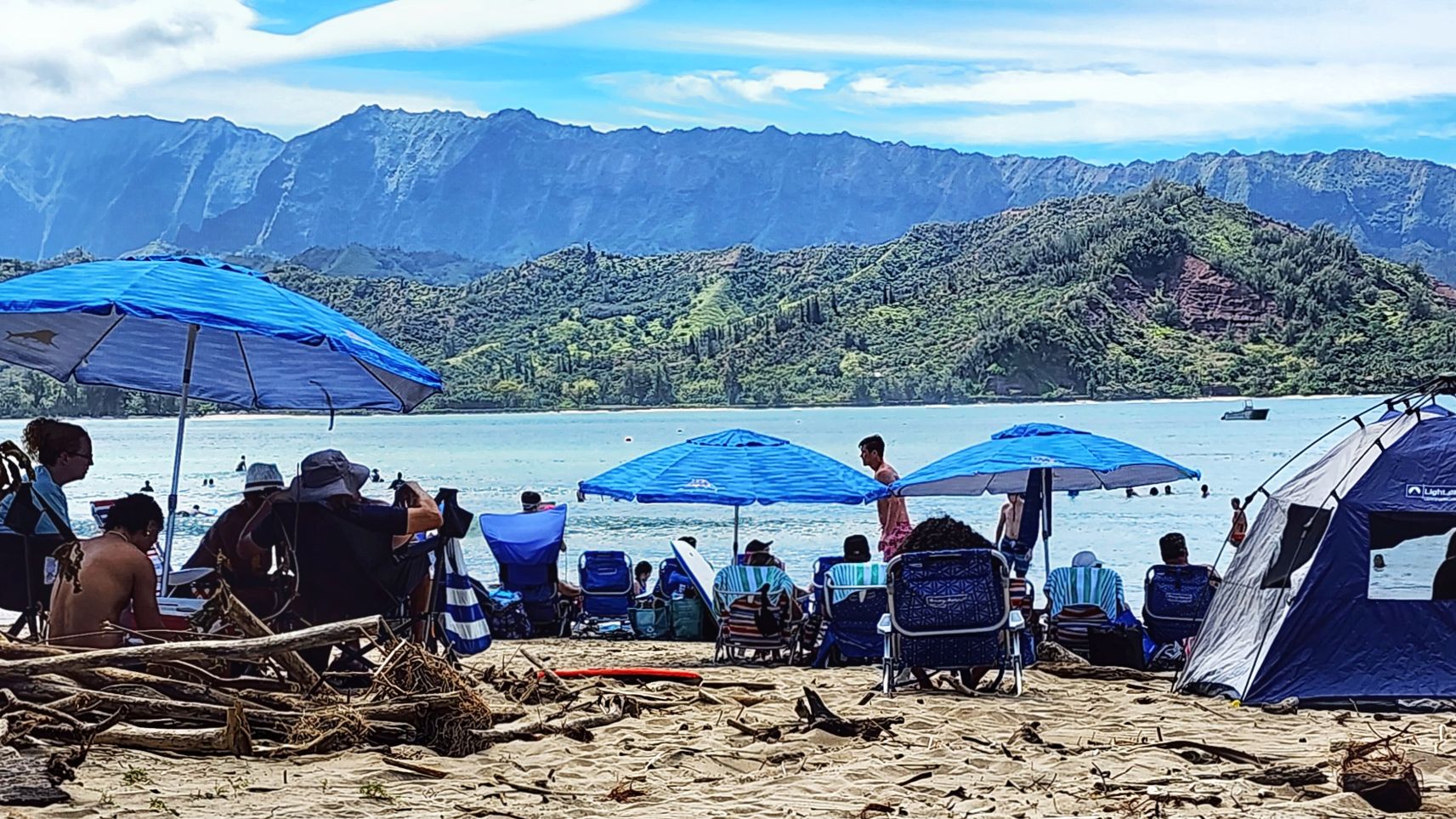
Lead Photo Credit: © Beat of Hawaii at Hanalei Bay, Kauai.
By Rob and Jeff, Beat of Hawaii.
We’ve spent nearly 20 years covering Hawaii from Kauai as full-time residents, reporting firsthand on the travel, the changes, and island life. The shifts that shape Hawaii often happen quietly, long before most visitors notice. We follow them closely and tell you what they mean for your trip. Join us →
Get Breaking Hawaii Travel News



Shoots, it takes me at least 24 hours just to unwind, take a breath and do nothing but breathe in the wonderful scented air, get my feet back on the ‘aina and chant to the ocean Aloha. Next day go search out my favorite plate lunch, see if anybody is selling roadside laulau, pick up some fresh poi and other food goodies and back to kicking back. Guess my 36 hours is shot right off the starting line. And I haven’t even made lei yet. And that is on any of the Islands.
I’ve been going to Kauai 3-4 times a year for 23 years. We love the island for all the qualities you’ve noted in your article. We spend a week, identify a single destination each day (or none at all), take our time and enjoy the destination at leisure. One doesn’t hurry in Kauai; one shouldn’t hurry in Kauai, that’s why you choose to come in the first place.