

For more than two years now, Maui visitors have heard the same message about Bill 9: thousands of Maui vacation rentals could eventually disappear as the county sought to return more housing to local residents. Now that story has taken yet another unexpected turn.
Maui County Council voted last Friday to advance two proposals that would name specific vacation rental properties allowed to keep operating as vacation rentals, moving roughly 2,056 units into newly created hotel zoning districts instead. The proposals now head to the Maui Planning Commission and would still require additional approvals before anything changes, but they represent one of the biggest shifts yet in how Bill 9 could ultimately reshape Maui’s visitor accommodations.
Which Maui properties were just named.
For travelers who have followed Bill 9 because of a particular condo resort, the property names are more useful than zoning terminology.
Several recognizable Maui complexes were specifically addressed during last week’s Friday Council meeting.
Kaanapali Royal, at 2560 Kekaa Drive in West Maui, was included in the proposed hotel zoning under Resolution 26-110. It has been one of the most visible properties in the Bill 9 fight because its owners previously challenged the law in court.
Wailea Ekahi I, II, and III, at 3300 Wailea Alanui Drive in Wailea, are among the properties included in Resolution 26-111. The three connected complexes make up one of Wailea’s largest and most recognizable resort communities.
Papakea, at 3543 Lower Honoapiilani Road in Lahaina, and Maui Eldorado, at 2661 Kekaa Drive in Kaanapali, are also included in Resolution 26-111. Both are established oceanfront and golf-course-adjacent resorts that have operated as vacation properties for decades.
Kamaole Sands has operated as a resort condominium since 1983 and maintains a 24-hour registration desk. It is among the properties included in Resolution 26-111.
Luana Kai, in South Maui, has operated as a vacation rental property since 1979. Council Member Tom Cook said he personally visited the property and reviewed its operating records before concluding that it belonged among the hotel-like properties being considered for rezoning.
Mahina Surf, in West Maui, has functioned as a hotel-like visitor property since 1971. A proposal to remove Luana Kai and Mahina Surf from Resolution 26-111 failed by a 2-6 vote, leaving both properties in the measure being sent to the Planning Commission.
The named complexes are only part of a larger official inventory covering dozens of properties and approximately 2,056 units. That list could still change during Planning Commission review or when the resolutions return to the Council.
How the Maui Bill 9 story changed.
This isn’t another lawsuit challenging Bill 9 or yet another delay in its implementation. This time, Maui County itself is proposing that a substantial group of Maui resort properties should be treated differently because of how they were built and how they’ve operated for decades.
The Council voted 7-1 on both Resolution 26-110 and Resolution 26-111, with Council Member Keani Rawlins-Fernandez opposed and Council Member Gabe Johnson absent. Council Member Nohelani Uu-Hodgins presented Committee Report 26-56 on behalf of the Housing and Land Use Committee.
If ultimately approved, the resolutions would move qualifying properties into newly created H-3 and H-4 hotel zoning districts where short-term vacation rentals could continue operating. Roughly 2,056 units, nearly one-third of the inventory targeted by Bill 9, could be impacted.
Clearly nothing changes for owners, guests, bookings, or existing reservations today. The Maui Planning Commission will review the proposals next, and further Council action would be needed before any zoning changes take effect. Bill 9’s original phase-out deadlines, January 1, 2029 in West Maui and January 1, 2031 elsewhere in the county, remain in place while that review unfolds.
The Office of Hawaiian Affairs urged the Council not to advance the resolutions, arguing that they would remove about 2,056 units, or nearly 30% of the affected inventory, from the housing pipeline created by Bill 9.
OHA representative McKenna Woodward cited Maui County data showing that local buyers purchased 25% of the 101 affected properties sold since Bill 9 took effect. Applying that share to the larger group of units being considered for hotel zoning, OHA estimated that roughly 514 potential homes for local buyers could be at stake.
Woodward also said that about 85% of affected property owners have out-of-state mailing addresses. She connected the debate to the broader displacement of Native Hawaiians, noting that more Native Hawaiians now live on the mainland than in Hawaii.
Rawlins-Fernandez gave similar reasons for casting the only no vote. She framed the issue as a choice between creating more housing opportunities for Maui residents and protecting the financial interests of off-island property owners.
What remains uncertain about Bill 9.
The unresolved question is how many of these properties would ever realistically have become long-term homes. Some operate with hotel infrastructure and visitor services, while others are timeshares, leaseholds, or properties with ownership structures that may make conversion to local housing more complicated than the original Bill 9 numbers suggested. But Woodward’s testimony did show that some movement toward local ownership has already occurred.
The Planning Commission could support the proposed zoning, recommend changes, remove properties, or raise new objections. The Council would then need to take further action before any rezoning becomes final.
What this means for future Maui visitors.
For the past two years, many Maui travelers have assumed that familiar condo resorts would eventually disappear from the vacation rental market under Bill 9. That assumption has become much less certain than it was originally.
Maui County is now considering whether these units once targeted for removal should instead receive permanent hotel zoning. If that happens, these long-established visitor properties could continue accepting vacation rental bookings rather than transitioning into residential housing.
Nothing has been officially decided, and Friday’s votes do not guarantee that any particular property will remain a vacation rental. What changed is that a Maui County path that could allow thousands of those rentals to remain is open.
Have you stayed at Kaanapali Royal, Wailea Ekahi, Papakea, Maui Eldorado, Kamaole Sands, Luana Kai, or Mahina Surf? Do you see these complexes primarily as visitor accommodations or as potential long-term housing for Maui residents?
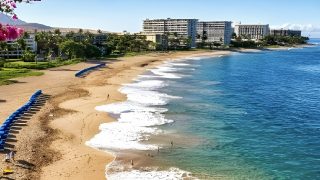
Photo Credit: © Beat of Hawaii at Wailea Beach on Maui.
By Jeff and Rob, Beat of Hawaii.
Please share your thoughts in the comments. You can also sign up for our free email updates to follow what happens when these proposals reach the Maui Planning Commission.
Get Breaking Hawaii Travel News



Papakea definitely is set up for visitor accommodations.
I have owned at Luana Kai since 1988, both as a person who rented their unit and now as a resident. In all of those years many, many, many units have been bought and sold. Out of 113 units in the complex, fewer than 10 are utilized as permanent residences, the remainder are rentals. This property was built to be used for rentals and does not lend itself to family living due to size of the units and only one parking space per unit along with high Association fees. If the property worked as permanent housing there would be many more local families as my neighbors.
We have stayed at Kamaole Sands for several years. As a couple, it works well to stay a couple months though I don’t think it would work as a full-time family residence. The units we’ve used have 1 bedroom, 2 bathrooms and a full kitchen but there is almost no storage (closet in the bedroom), 1 parking spot and no pets allowed. If it goes to long term rental or local ownership, the annual/monthly maintenance fee could put the cost out of reach for a lower income family. These condos aren’t very soundproof making noise caused by several children a possible issue, too. Hope this issue is settled soon.
My bldg. is a long term land lease over $1,000. per month for my unit.
I know Luana Kai well and its structure is much like a resort community with very high monthly costs that would make a resident feel like they are still paying monthly rent even if they now own it.
In my opinion definitely not suitable for residential usage unless quite wealthy!
There’s a lot of backpedalling going on here. The fact finding and research that is finally happening should have been done before council rushed like a bunch of sheep to pass this bill. And the 25% of local buyers who have bought condos still leaves 75% that are not being snapped up by eager locals with deep pockets. The criteria that is being used which condos qualify to keep their stvr status is also questionable. Council is trying to dig itself out of.a very deep hole indeed.
I could never figure out the reasoning that these vacation rentals could serve as full-time housing for local residents. I’ve stayed at Luana Kai multiple times. There’s barely enough parking on site for each unit, and with beach visitors sometimes not enough parking. There’s no storage in the units, tiny kitchens, and no pets are allowed. The maintenance expense for the property is huge, so it’s not clear how it could be considered as affordable housing. No elevators, so upper floors require carrying everything up yourself, like groceries and other shopping. Unless you’re single with a wardrobe consisting of tee shirts, shorts and flip flops, ride a bike for transportation, and only eat out, I can’t understand how anyone could possibly life there full time.
The question I have is, where were those 25% of purchased affected properties located? Were they in these long-time rental complexes or were they in neighborhoods that are near in resort areas? Opponents of Bill 9 have argued that many of these Minatoya list condos are not suitable for long-term renting or purchase (I’m one of them). Is there any evidence that properties that are in traditional tourist areas are selling to locals? I suspect not, but I’m looking for facts.
Also, keep in mind that 15% of current Minatoya properties are already traditionally owned by local residents. So there really isn’t much of a local owner difference. It’s not as if 25% of them magically appeared where there were none before.
Of course “they” will argue that even 1 extra condo sold to a local is a “win”.
Also I just remembered that as per the council, the average price of the Minatoya units that have sold since Bill 9 passed was somewhere in the $400K’s, which addresses your question somewhat.
We have availability to time shares at Papakea and as much as we love the place we couldn’t imagine purchasing a unit without the ability to rent it out to cover costs. Even then we have thought the burden would be too much. We have found it laughable that anyone would figure it would house regular people living and working on the island. The monthly expenses on a small 1 bedroom unit, before a mortgage would probably run at least 3000.00 per month. People don’t seem to realize how big a staff is required to maintain such a property, plus taxes plus monthly upkeep, plus all the other ‘special’ fees, insurance possibly lease fees etc. etc. are needed to simply keep a unit like that afloat. You have to be Very Rich to live there on a year round basis. Luckily we enjoy it once a year or so and support the local businesses. I certainly hope that this new list ‘sticks’.
The Ekahi is in Wailea Resort, a planned development resort complex that naturally should be converted to H3/H4 zoning. Other Wailea Resort properties on Bill 26-111 are Wailea Ekolu and Palms at Wailea
Most of the proponents of Bill 9 will probably be OK with zoning changes for properties which are clearly in a vacation resort, as indicated by this council’s latest legislation.
We stay often at Wailea Ekahi. It is preposterous to think this development could be used for local housing. It looks like a resort community, smells like a resort community, tastes like a resort community and is in fact a resort community. This whole topic of making decades old vacation condos into local housing was nothing more than a swerve from Maui government dodging the fact that they ignored the growing housing crisis for at least 40 years. Now being faced with lawsuits, backlash and economic realities they are blinking. The fault lies in incompetent Maui government. The residents sadly get what the have voted for.