

Hawaii continues to expand nonresident fees at state parks, and the latest justification from the state is that these fees will help reduce vehicle break-ins (in addition to supporting park maintenance). It is a reassuring line in theory, but it falls apart the moment you look at who is actually being targeted by these crimes and who is being charged to prevent them.
That contradiction is what sparked dozens of the sharpest comments we have seen in months.
Visitors are the ones whose rental cars are broken into. Visitors are also the only ones paying the fees. Yet the people committing the break-ins are usually not part of the fee system at all, while the people affected by these crimes are the ones funding it.
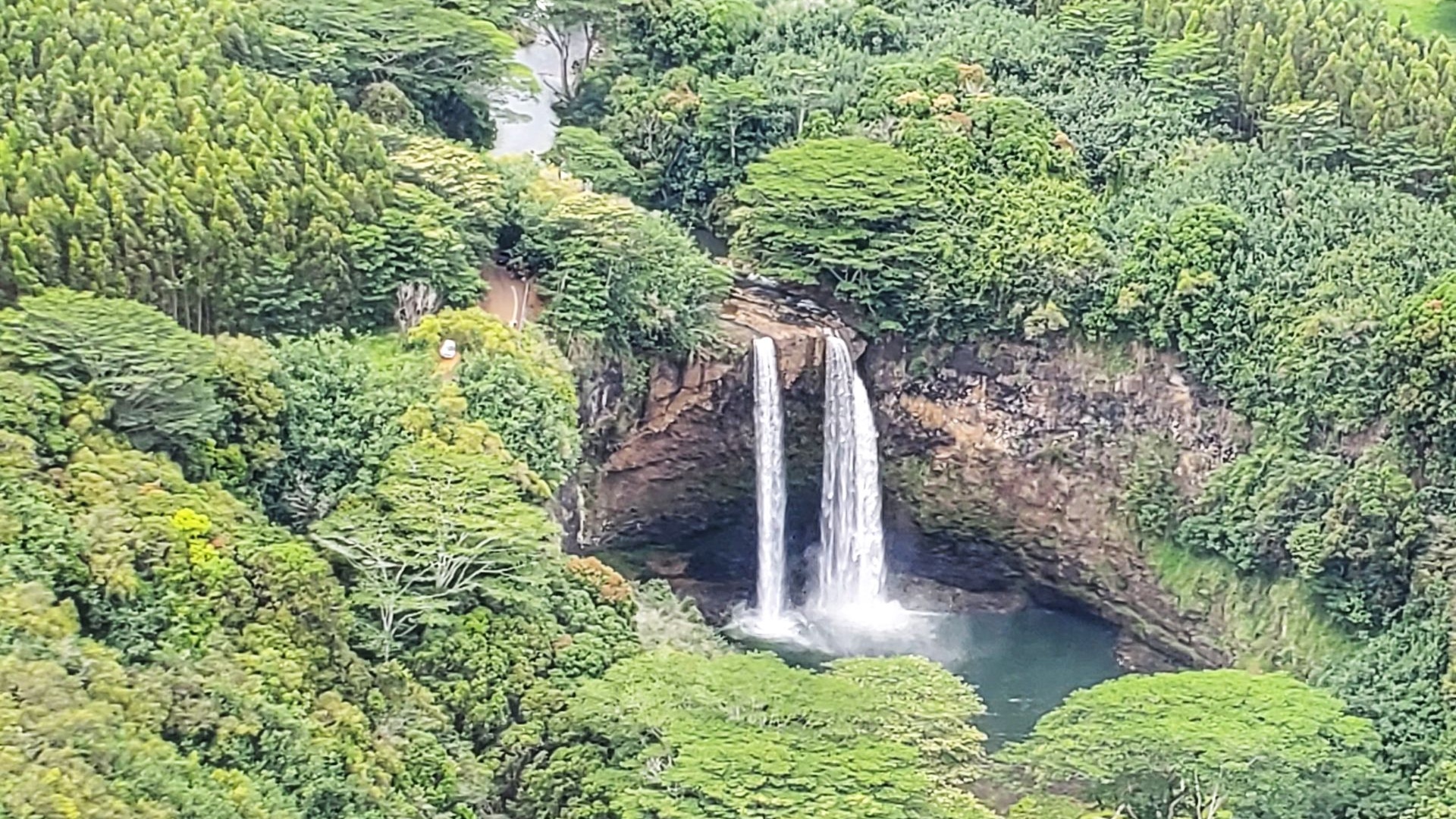
The timing has amplified frustration because Hawaii just added four more parks to the nonresident fee system, including Rainbow Falls, Wailua River, Puu Ualakaa, and Kekaha Kai. These are not sprawling day-use parks where visitors spend hours. They are quick stops, often ten minutes or less, and that has made the idea of paying to access them feel out of proportion to many. The break-in explanation only added fuel to the fire, because many readers believe it does not match the facts on the ground.
Here’s the rationale for not charging residents.
Some states already offer discounts on state park fees to residents. The state of Connecticut is like Hawaii and provides free access to residents.
Hawaii residents already support these parks financially year-round, and the state frames free access as a return on investment and a way to avoid “double-charging” residents for public land they already subsidize. It’s also protection against residents being priced out of their home landscapes.
The logic problem that BOH readers keep pointing out.
DLNR has said that the expanding fee system will improve visitor experience, manage traffic, and reduce break-ins. It is the last point that visitors questioned immediately. Break-ins at Hawaii viewpoints, waterfalls, and beach lots overwhelmingly target rental cars. These are easy to identify because of barcodes, license plates, frames, and makes/models.
Visitors are the victims. Yet they are the only group required to pay the fee meant to deter break-ins. As one reader, Sandra, asked us, are tourists breaking into other tourists’ cars? Her comment drew thirty-seven upvotes, the most on an entire thread.
Matthew said that if the state wanted to reduce break-ins, it would need to charge the people actually committing them, because those individuals do not appear to be the ones paying to park. Dennis added that it is not visitors who are stealing catalytic converters, cutting tags, or breaking into cars at trailheads. He said that these crimes have always come from those individuals, not from tourists taking pictures at a lookout.
These comments raise an uncomfortable question for the state. Either the fee system is a meaningful security measure, in which case everyone entering a park would logically be part of it, or it is simply a clever payment mechanism unrelated to security at all. It cannot be both. And when the state’s own justification hinges on reducing break-ins while leaving out the people who are actually doing the break-ins, the logic feels lacking, and resentment grows.
The growing friction visitors feel at every stop.
Another theme that emerged from readers is the growing friction surrounding such simple moments in Hawaii. Until not long ago, visitors could pull over at Wailua Falls or Rainbow Falls without thinking about how long they would stay or whether they needed to pay at a kiosk. Today, the decision is different. People now wonder whether a ten-minute stop is worth $10 or $20. They wonder whether the machine works, whether the QR code will load, or whether they will be fined for pulling in without paying.
Robin wrote that some of these stops are so quick that adding a fee makes them not worth doing at all. Jake said that a long list of small fees has begun to ruin Hawaii for him and that he is considering alternatives. Ed said that the piecemeal approach has created a system that feels like nickel-and-diming. He described parking at Hapuna’s upper lot, where the kiosk did not work, the connection was unreliable, and there was no obvious place to pay. These are not isolated complaints. They form a clear pattern that the system is inconsistent, confusing and frustrating at the smallest moments of a Hawaii trip.
A simple annual pass could change everything.
Amid the frustration, several readers proposed a constructive solution. They asked why Hawaii does not offer a state visitor annual pass similar to the National Parks pass.
Chris said a yearly pass would simplify logistics for people planning many park stops. Jerry said he would rather buy a pass than wake up early for reservations or check each park’s rules individually. Ed said he is not asking for free access. He simply wants a system that does not require paying separate fees at every stop.
An annual pass would reduce friction for visitors and provide Hawaii with predictable revenue. It would also show that the state wants people to explore without hitting a wall of confusing micro fees. Visitors already pay high hotel fees, taxes, rental car surcharges, and rising airline prices. A consolidated pass would soften the cumulative effect of these expenses and shift the narrative from nickel-and-diming to one that’s more welcoming and manageable.
Visitors ask for clarity, consistency and simple logic.
Instead of asking for everything to be free, visitors are asking for a system that reflects how people actually use these parks. They are asking for tools like an annual pass that make exploration easier rather than harder.
Would an annual Hawaii state park pass change your experience?
Get Breaking Hawaii Travel News




If you want security guards you pay for them. As the “readers” have pointed out, it’s tourist cars being broken into. So pay the fee, wave to Uncle sitting on a stool watching your junk, and carry on.
I confess that while parking to take a picture of a scenic waterfall or other awesome sight, I also remove catalytic converters to pack in my luggage when I return to the mainland. Seriously, the state should consider having something similar to a National Park pass where for one fee you can visit (and park) at all the scenic sights that you would like for a calendar year. The state needs to get serious about the thieves at parks before they graduate from catalytic converters to something worse.
It wasn’t very long ago that I was very happy to be going to Hawaii. This year I am very happy that we are not going to Hawaii.
I think I’ve figured out the legislature’s logic with this new state park fee system that they believe will lower vehicle break ins. Most returning visitors, and possibly some newbies, will look at these fees and say “Forget it!” That will lower the number of cars at the parks, and provide fewer opportunities for thieves to break into them. Then…. the legislature can say “See? The number of break ins have been drastically reduced. Yay for us!”
I think I’ve nailed it.
I have been reading BOH for many years now. It is deplorable that tourists are being nickel and dimiing just like airlines do. As a former kama’aina I find it shameful and it breaks my ❤
I really don’t know what Hawaii is doing to raise money. One doesn’t charge fees to the goose who lays golden eggs. The tourism officials need to recruit experts from the mainland to clean the mess. Obviously there is nobody in the state who is capable of running the visitor industry properly.
If this method of taxing the tourists to death, the industry will fail miserably.
I live in Wisconsin and our state park system charges an annual fee, and gives you a sticker for your windshield. I think it is around $28 a year (8 cents a day) and $15 for seniors. Hawaii could have rental car companies put them in their cars and charge an extra $1 a day for the rental. After a couple of rental times, the sticker would be paid for and the car company makes a few bucks to boot. Sometimes you need an outsider to shed some light on the problem.
We are coming back again for three weeks. We have always rented a car and gone to various areas of the island every other day.
This visit: no rental car. No parking fee at the hotel. No $20 fee to take pictures of places we’ve been to.
It won’t be the same, but for the $2,500 we’ll save by not renting the car, we can do a lot of other things (like take another trip to somewhere that appreciates us visitors)!
The place is a “Hot Mess” for sure.
An annual pass would be easier as when you make your travel and lodging reservations you take this step too. One problem I have with it is that paying for 52 weeks when you are staying 1 or 2 weeks might be a bit much. It should be pro rated. Also, how would you show that you have purchased a pass, have something to hang on your rear view mirror? That would be a flashing neon sign that you are a visitor. Yes I am aware there are other signs also.
Some states offer a week and/or a month pass. I think those could be popular.
They address the issue of the really short stops that seem not worth the fee if they could be combined into one payment.
The Oregon Coast has a “Coast Pass”. It is an agreement between the state and federal agencies. One pass that works at all the different agencies.
fs.usda.gov/r06/passes/oregon-pacific-coast-passport
The Oregon pass is pretty cheap (especially compared to the rest of the state). It’s not so much the price, it is the convenience. Having a single pass that covers all parking on any one island is something that I think many would go for. Even if it was more, it could be popular.
As a point of comparison I paid $30 to park at Walden Pond. However, here’s how the funds are used:
–Salaries for park rangers and staff.
–Maintenance of trails and grounds.
–Upkeep of the reservoir, including water quality inspection and treatment.
–Paving and maintenance of roads and parking lots.
–Operation of the visitor center, restrooms, and other facilities.
–General preservation efforts to maintain the site’s natural and historic character.
–
“Hawaii DLNR has said that the expanding fee system will improve visitor experience, manage traffic, and reduce break-ins?”
–
Sorry Hawaii, this is just a barefaced money-grab with zero $$$ going to “improve the experience”.
Yes, Hawaii continues to fee and tax visitors to death, making travel there even more frustrating and unpleasant! I have family there on 2 islands, and I own a hotel condo and a timeshare, yet, I get charged as a visitor. I gave up on trying to get reservations anymore at Ha’ena State Park or Hanauma Bay (never available). Now, the State wants to charge for a quick view stop & photo opportunity?!?!?? Insane!! I like the idea of a Park Pass, if they must, but it better be nominal in price. With this new proposed Park fee, the ones to gain are the Parking Operators $$$$!
Tourist numbers will plummet along with employment and the people will wonder why!!!
We have been going to Wailua Falls every time we visit Kauai, which has been a lot, have many pictures and videos, been there, done that, bought the T-shirt, but no more. One thing for sure though, there will now be ample parking spaces.
It looks like my previous prediction of the Popeye tax man coming to Hawaii is coming true: Breathing air tax, taking photos tax, walking on the sand tax……
Just returned from 14 days on Oahu. Visits date back to 81’ annual visits for the last 25 years. Can this “State” get anymore chaotic? Fees for everything and nothing improves. No one in charge. Yes, annual passes are the answer then show us what you did with the money and just maybe we visitors might be more simpathetic. We have one more trip in May for 6 days with a daughter and family then we are taking a break from Hawaii.
that’s just it, they cannot show us where the money went…………… Wait til the Greene Fee’s are implemented in Jan!
If these fees really funded security (or anything else for that matter), I would understand, but nothing has changed. Having a sign that says “pay here” is not security. It’s just another dumb step between you and the view.
We drove into Kokee park, found no clear instructions, and finally gave up. It should not be this hard for something so simple. The system is confusing even for people who visit regularly.
A fee idea of some kind could work if it came with transparency. Where does the money actually go? What improvements have and will be made? Visitors and residents deserve those answers. This is not rocket science.
Maybe if we saw a Security guard in the parking lot it would make a difference?
We planned a simple morning driving around and seeing waterfalls etc. Instead we ended up skipping things because the fees didn’t seem worth it for such quick stops. Hope this can get sorted out to make sense.
Yes, charging a fee for a quick stop is just insane! The legislature certainly needs to go back to the drawing board on this dumb idea!
How does it help to prevent breaking?
Saying the fees will prevent break-ins without showing any data is a big problem. If the state has proof this works, they should show it. Otherwise it’s just another line that doesn’t hold up.
Yeah, it seems that no one has developed an (effective) plan on how to prevent these breakins, it just talk and don’t expect anything to change. Then wait for the next round of fees, with the same justifications declared. I wonder if some of the locals know who is doing it, but won’t say anything because those persons are family/friends and they don’t want to get them in trouble or face community sensure for ‘finking’ on one of their own???
Maybe if every visitor and resident that suffers a break-in at one of these pay-to-park locations sues the state for not providing the increased security that the fees are supposedly providing the Hawaii legislature will gain a little common sense. Especially if the state loses and the money is Anyone know any good lawyers? taken from legislators salaries.
Do you know who pays in the end? This shows up in the car rental price. It’s one of the reasons car rentals in Hawaii are so expensive.
People like to say “it is insured” thinking that it means something. What they forget is that the insurance company never loses money in the long run. Your premiums will repay every claim you make. The more claims you make, the more your premium becomes. The rental companies are not a charity either, the more the insurance premium, the greater the rental price.
There is no real incentive for Hawaii to care. The cost is passed along to non-residents. That is until tourists stop coming.
I agree with Robin that paying $20 for a short 10 minute stop at Wailua Falls is going to keep us away. I still favor the reservatiom system at Haena park, but $20 there, and another $20 at Wailua Falls, and another $20 at…wherever, is it really worth it ? Are we supposed to stay in our resort all day ?
Kitty K: “Are we supposed to stay in our resort all day ?”
Well, that’s essentially what we did last week (fortunately, we stayed at the Westin Maui Ocean Suites, with some of the best snorkeling on Maui right off Airport Beach).
We took the free resort shuttle to Lahaina and Whalers/Blackrock, but dined exclusively on-property (using our resort credit).
No Golf this trip (most Maui courses now closed or bulldozed). No excursions (too expensive and inconvenient now). Only brief side trips to Kapalua and Makena (where they now charge for parking; but we parked in free lots and walked a bit), and Wailea. So, local establishments didn’t get any of our business (too expensive and inconvenient).
We’ve been making one or two trips a year for the last couple decades, but we decided this would likely be our last.
We have many magical memories, but much of the Hawaii we experienced is gone forever.
I fully support maintaining parks, but the way these fees are implemented is chaotic. Every park seems to have a different rule, a different sign, and a different system. A single annual state park pass would make so much more sense.
Oh, come on! You keep forgetting HI is a ‘third world country’, a ‘banana republic’ masquerading as a modern state of the union! You expect ‘standardization’ and efficiency and ‘get it done today’ behavior??? It’s the history of the place, and it hasn’t changed much, except for the graft takers in the gov’t, since it became the 50th state. Frustrating.
I don’t mind paying for real improvements, but I’ve seen zero increase in security at any of the parks charging fees. No attendants, no patrols, nothing. Oh yeah, and don’t get me started on those restrooms. It feels like a cash machine masquerading as visitor safety.
If the idea is to cut down on break-ins, shouldn’t the people actually doing the breaking in be somewhere in the the focus? Visitors are the victims, not the problem. The logic here is completely backwards.
Well, ya know, the gov’t may actually see You as the problem, leaving stuff in your car that temps their young (or not so young) people to not be able to resist temptation and violate the integrate of your vehicle. I other words, if you and you care weren’t there in the first place, the local talent would not have been corrupted in a life of crime. So stay away, and by that act, promote public safety and reduce the crime rate. No tourists means no rental cars gives the locals reduced crime! Simple! (no applause please!)
The probably debated telling people that it would reduce the number of dumped and picked over automotive hulks you find all over the islands too.
But then realized that was a bridge too far and just stuck with the break in story.
We’ve visited Hawaii for years and never had to calculate whether a quick stop was worth a fee. That’s nuts when you think about it. Now it feels like every beautiful viewpoint comes with a surcharge. It changes the entire rhythm of a Hawaii vacation.
I don’t mind paying reasonable fees, but charging visitors to theoretically stop break-ins makes no sense. I don’t see how a kiosk, if one even exists and is manned, prevents anyone from this. And, if there’s no staff around, what exactly are we paying for?
To start with, it isn’t only rental cars that get broken into. That is a generalization. As a resident of the big island I have had my non-rental truck broken into.
The enforcement mechanism for fining people for not paying to park is nonexistent. A private company monitors all enforcement. If you get tagged they have no way to force payment. There is no way they are going to have a collection company go after anyone for a small fine.
No one here pays parking fines. The county and the state will not enforce it.
If it’s a rental car the fine will go to the rental car company who in turn will pass that on to you with an added administrative fee, just like they do the camera tickets etc….and the will go to a collection company if need be.
I’m afraid it’s all about tourist hate, haole hate and pointing the finger at the victims of break in crimes as somehow deliberately and maliciously “causing the locals” to break in to their cars ! What rot and nonsense…just more of it everyday it seems. No one but locals are breaking into cars anywhere on this island. I’ve lived here 60 years and it’s always been that way. It ain’t the tourists breaking into the locals cars, that’s for sure! Sorry but true.
I would welcome an annual pass. I was up at 3am 30 days out to secure Ha’ena parking passes and then of course that day due to rain the Kalalau was closed(and I had to go on the website to find this out as no notification was given). There should be an allowance of spots for people like me so I could have gone another day while there. The lot has never even been half full in the many times we have hiked the trail so residents would still have plenty of spots. Very frustrating
True. Inefficient system.
I have long thought that an annual pass like the senior National Parks pass would be much better. I am getting really angry about all the parking fees. Even a county by county pass is preferable. $30 plus tax for the 4 of us to park for 20 minutes at Rainbow Falls? Totally outrageous. We are now looking at Cook Islands after we get back from the Big Island in January. I don’t like feeling like I am being played for a sucker