
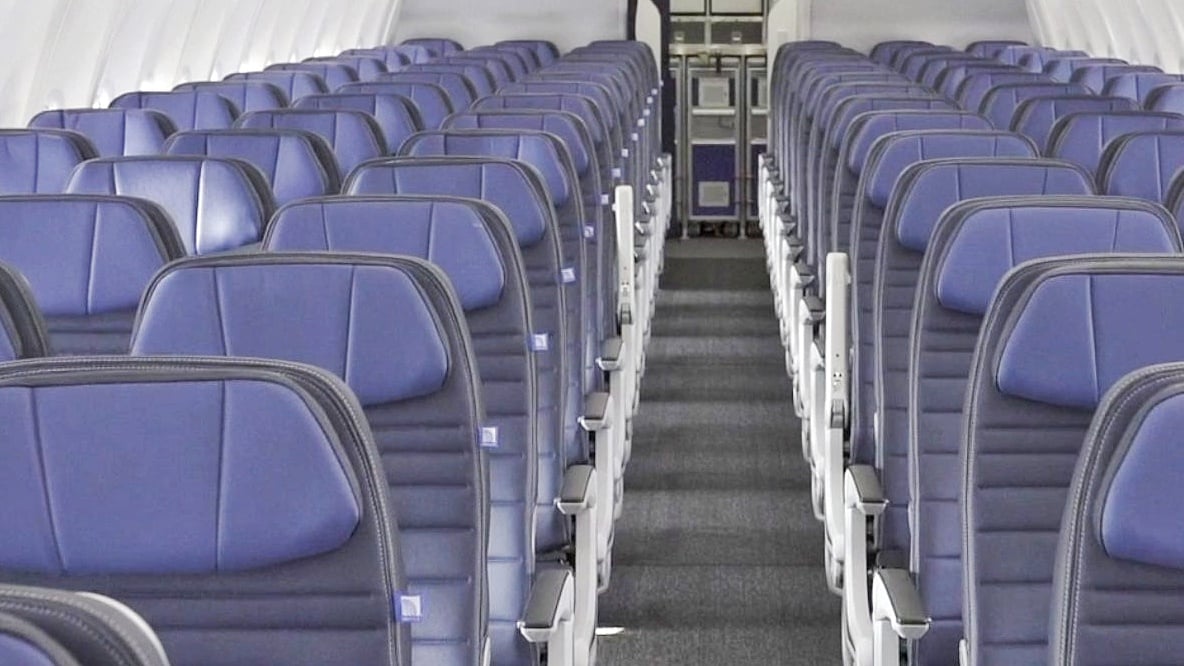
“Even though we purchased upgraded tickets, flying is not what it used to be with cramped seats,” said Ann B., a traveler who flew from the East Coast to Hawaii. Her upgraded seats didn’t help much on the eleven-hour flight.
Another reader, Engineer_Lou, added, “Airlines have removed the TV displays from headrests on long flights to Hawaii. Makes the trip harder for six hours.” And Andy C., who’s been flying to Hawaii since 1972, told us, “I can’t take the discomfort of economy, and I read that economy seats are about to get even worse.”
These aren’t isolated grumbles. Hawaii travelers, including us, are getting louder about the shrinking space, harder seats, and missing amenities that define the new narrow-body era now dominating Hawaii flights. The industry calls it optimization. Passengers call it something else.
The problem is magnified by distance, among other factors. Hawaii flights rank among the longest in the United States, equal to or longer than many transcontinental routes. Now that these journeys are predominantly on narrow-body aircraft, the experience has shifted from a once iconic, relaxing start to a Hawaii vacation into something far less appealing. For many, the flight itself has become something to face and endure rather than anticipate.
The revenue reality behind the squeeze.
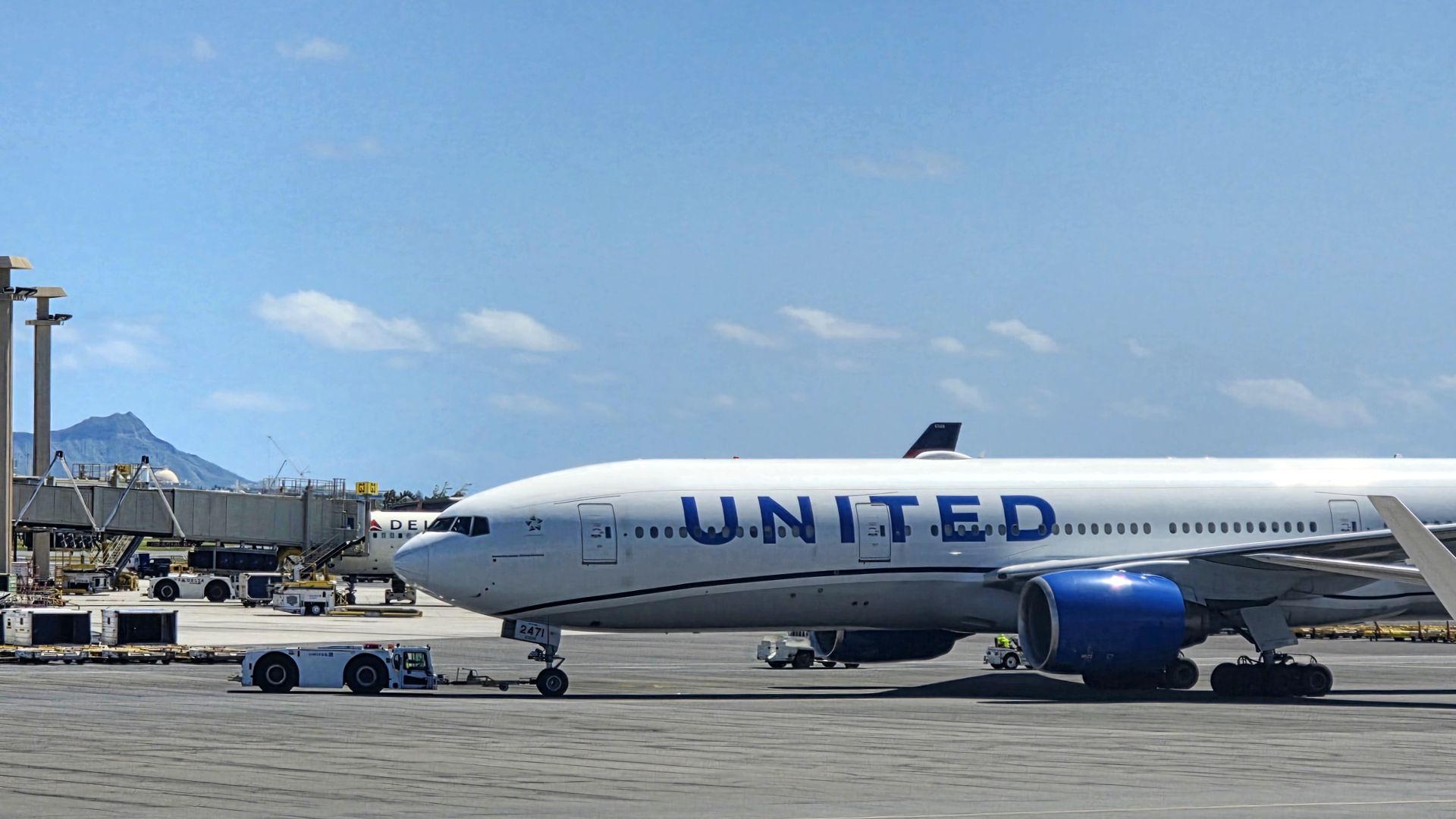
The A321neo and MAX 8 and 9 are now the de facto workhorses of Hawaii travel. Alaska’s typical 737 seats about 175 passengers, while Hawaiian’s A321neo holds up to 189. Compare that to Hawaiian’s retiring A330 widebodies, which seat roughly 278 passengers with noticeably wider aisles and roomier lavatories. The difference is stark when you are five to six hours over open ocean.
We’ve recently flown United’s and Southwest’s 737 MAX, and Delta’s and American’s A321neo. We’ve also flown wide-body aircraft, including the Hawaiian A330 and 787 Dreamliner.
When it comes to the narrow-body planes, they’re all configured about the same way: tight, cramped, and uncomfortable. Every single inch of space has been fully accounted for. And it isn’t any better for the flight crew, where flight attendants sit at the rear of the cabin and struggle to even move through the narrow aisle with passengers heading the opposite way to the mini-lavatories.
The horror is uniform across carriers, affecting both passengers and crew. We’ve written before about preferring to book three seats for two passengers near the front of the economy cabin to have breathing room away from the mess. That’s no longer a luxury strategy. For us, at least, it’s become a survival tactic for making these flights bearable.
It’s not just one carrier making flights miserable. United, American, Alaska, Delta, Hawaiian, and Southwest have all adopted a similar approach to maximizing seating density on their narrow-body flights to Hawaii. The configurations are nearly identical because the economics are identical. No one is competing on comfort anymore. The airlines are competing to see who can fit the most seats.
These planes are marvels of economic efficiency on paper, but feel more like test chambers for human tolerance. The smaller bathrooms leave no place to stand. Getting to and from the lavatory means a careful choreography of passing others in an aisle so tight that one person must turn sideways. On a long flight, many travelers stop drinking water to avoid the ordeal of using the restroom. And we’re among them.
What travelers have lost.
Andy C. summed it up after four decades of flying to Oahu. “I now fly United first class because of my age. I can’t take the discomfort of economy.” He remembers when even basic seats came with legroom and personal screens. Now, many Hawaii routes have gone minimalist. Seatback entertainment is gone. Wi-Fi streaming replaces it, but only if the signal cooperates. The aisles feel tighter, the seats feel harder, and there is nowhere to stand without being pressed against someone else.
It isn’t just comfort that’s disappeared. It’s the whole mood. Hawaii flights used to feel like the beginning of the vacation. Now they feel like a test of patience. And because these are some of the longest domestic flights in the country, everything that has been stripped away is felt twice as strongly. What was once the opening chapter of a Hawaii trip has become the part you brace yourself for the most.
What changed with Alaska’s Hawaiian buy-out.
For years, Hawaiian Airlines’ A330s widebody planes set the standard for long-haul island flying. Twin aisles, larger restrooms, and roomier layouts made even coach feel more humane.
With Alaska Airlines’ purchase, that era is evolving. The merged airline will lean on Alaska’s 737 MAX fleet and Hawaiian’s A321neo, the same narrow-body aircraft type that every other carrier already uses to Hawaii. The reasons are simple. These are efficient, profitable, and designed to fit as many seats as possible. What they are not designed for is comfort on five-hour or more flights over the open ocean.
This isn’t a temporary transition. It is the new industry model. Travelers who love the light and space of those widebody cabins will feel the downgrade the moment they step into a single aisle, no matter the airline. Something else has shifted, too.
Hawaii flights used to feel a little different, almost like small-scale international trips. Now they are treated and configured the same as any domestic run. The result is a long flight that feels shorter on space, comfort, and any hint of what once made the journey itself part of an iconic Hawaii experience.
When upgrades don’t fix anything.
Even travelers willing to pay extra aren’t spared. Mignon B. told us about her recent flights to and from Maui. “We booked Premium Economy for the extra legroom for the eight-hour flight. As we were boarding, American Airlines texted saying our seats were changed to coach and that we would not be seated together. On the way home, we booked First Class, but the airline said maybe the gate agent could help us. No luck. The flight was full.” Her story isn’t unique. Airlines oversell higher cabins, bump passengers to lower ones, and issue only minor refunds. The result is a flying experience that consistently costs more but delivers less.
We felt the same squeeze on our recent Hawaii and South Pacific routing, though for slightly different reasons. On Hawaiian, we were denied boarding entirely, which we wrote about, and why what happened next still makes no sense.
On United, we paid a small fortune for Polaris lie-flat business class from Papeete to San Francisco, only to get service so poor that the airline provided an on-the-spot $150 per person credit that didn’t come close to matching the dismal experience.
Then came two American flights that were simply very late, one more than three hours, with no explanation at all, followed by a first for us: the airline tried to give away the extra seat we had purchased so we could actually breathe on the long flight.
Different airlines, different routes to and from Hawaii, same theme every time. Paying more didn’t buy much of anything. It seemed only to make the disappointment sharper.
It’s a new kind of frustration, paying for comfort and not getting it. Oversold premium cabins and seat downgrades show how fragile the premium experience has become. And when the gap between first and economy keeps shrinking to a few inches and a slightly better drink, it’s getting harder to feel like anyone is winning anymore.
The long-haul problem no one fixes.
Flights between the mainland and Hawaii are long. From Los Angeles or Seattle, a five- to six-hour flight in a cramped single-aisle cabin is already uncomfortable. From the East Coast, nine to eleven hours with a connection feels even harsher. These configurations might make sense for short hops, but not for half-day journeys over the Pacific.
The same narrow-body aircraft that run Hawaii routes also fly to Denver, Phoenix, and Dallas, yet Hawaii passengers spend twice the time in the same limited space. The plane doesn’t change. Only the duration of discomfort does.
The same narrow-body experience that now gets you to Hawaii would never be used on routes to Europe or Asia. International long-haul passengers get wider seats, proper meals, and room to move. Hawaii gets domestic treatment at international distances and prices.
The cost of less comfort.
The average Hawaii traveler now pays record fares while experiencing the least comfortable cabins ever offered on these island routes. Reader after reader tells us the same thing: it feels like paying more to get less. We’re hearing it about everything from tighter seats to smaller bathrooms to aisles so narrow that even passing another person feels like a negotiation.
For some, it’s already a deal-breaker. Several longtime visitors have said they’re looking at other destinations entirely because the overall journey feels easier elsewhere.
Hawaii flights used to be part of the magic. Now, they’re something to endure. We’re at the point where we book extra seats ourselves just to have enough space to breathe.
Are you choosing other destinations because the journey to Hawaii has become something to endure rather than something to look forward to?
Get Breaking Hawaii Travel News


If most of the Airlines could care less… they would
“The airline tried to give away the extra seat we had purchased “. Great strategy; wish you had explained a bit more under what excuse could the airline try to take a paid seat away from you…
I haven’t flown out of Hawaii for some 10 years, primarily because it is such a test of endurance, even in economy-plus. I used to fly to the Mainland 2-3 times a year and it didn’t seem as bad as it did on the last few flights. My doctor says I should get up and walk around the plane every 30 minutes to keep the blood circulating and avoid blood clots, but you can’t do that in a one-aisle plane, especially when you have to go sideways down the aisle. I’ve been there and done that, so travel is not that important to me at age 88; however, my wife has wanted to make some Vegas trips. I can’t afford first class and it simply isn’t worth the endurance test necessary to fly 6 or more hours in cramped conditions. At 5-11, I’m average height, but my knees still hit the seat ahead. That includes economy-plus.
It all comes down to how much money you want to spend.I
If you want to fly comfortably to and from Hawaii…
I live in Maui, and I can tell you right now I will not fly any plane but the A330 when traveling back to the mainland on Hawaiian.
If I cant find the two seats on side available on that plane, I will not fly Hawaiian.
The A321 is junk when it comes for comfort, for any of the people on it.
It’s all about expense to the airline. This is happening nationwide. Try to get a plane with two seats on the side from Los Angeles to Florida on any airline too.
Same problem. The airlines only care about profits and their investors. What they fail to understand is their investors will have nothing to invest in.
If customers stop flying on their airline. They all lose.
Greed is at the center of everything.
Alaska bought Hawaiian just to get their bigger planes for European trips.
They only want to fill seats for profits on flights to Hawaii.
Reality
Even hauling Animals has strict rules about room, breaks, and watering. Truck drivers and hores people know this.
But airlines hauling people don’t care. Tighter the better bottom line. And no amenities. I choose to fly Hawaiian to the mainland over Southwest because of setback intertainmen- movies, tv, etc. But now that’s gone. Terrible!
Maybe a new airlines will start with better amenities. I flew Midwest Express several times from SFO to Milwaukee. All first class seats, entertainment, great food, and drinks. It was about $75 more than other airlines coach. But then they were bought out and turned to greed- gone!
All based on the “bottom line “.
Almost every problem can be traced to money ( greed).
In my opinion, it’s essentially the constant intense pressure from share holders that are destroying businesses … with demands for more profit at the expense of the consumer. So what Americans were once very proud of (providing the best of everything for everyone) has been destroyed … And it hasn’t helped any that over the past 50 years, the American habit to Always look for the cheapest product or service … has finally come home to roost with hard seats for our big American tushes … cause out of ignorance and trickery … we asked for it.
Imagine your family; mom 6 feet tall without shoes, dad, 6’7,” granddad’s 6’7″… it’s physically impossible to fit in a coach seat. Comically, Hawaiian Airline seatbelts are 1 foot longer than United’s. But, seat pitch is just as painful. A discriminatory event if you’re very tall, but not a person of size in weight. Miserable. The thousands spent on First Class? More punishment for a crime we didn’t commit.
My wife and I fly from the Los Angeles area, sometimes LAX, sometimes LGB to Maui for the purpose of visiting family. Since 2018 we have been strictly Hawaiian with Puulani status. We generally fly LAX on the A330, with an occasional trip from LGB on the A321 if the price is significantly cheaper, which is almost as rare as a goony bird. We both detest the A321, not because it is a bad aircraft, but it is not comfortable for the trip. While they say 5 hours, consider that you are essentially seat bound for 6 hours from time of boarding until you deplane.
Excellent article BOH. Agree with readers comments too! It’s most apparent that the only way you can improve the inflight Hawaii experience is to have elite or million status, or airline club/lounge membership, and/or a premium airline co-branded credit card. This is clearly not something that most leisure travelers want to spend their vacation dollars on, unless they are frequent fliers. Just completed a quick ten day visit to Kauai, and although in first class, the A321-neo on AA was acceptable but in no way comparable to wide-bodied comfort and service that we enjoyed in years past.
In flight crew was excellent round trip, but Lihue Airport catering is really bad, so return flights suffer from poor meal options.
Aloha to all.
hard seats…that says it all…
Our beloved BOS to HNL flight’s final day is this Thursday, 11/20. We will greatly miss the comfort of the A330, but we’ll truly miss the amazing Aloha spirit, kindness, smiles, and service that we experienced on that long flight. Mahalo to all the Boston based crew. We never took you for granted!!
So far, it is still fairly early in the takeover, but I have found that Hawaiian AL cabin flight attendants still have the Aloha. That may disappear once they have to merge seniority lists and our Hawaiian flight attendants begin to get the less attractive assignments.
Aloha Rob & Jeff, You are the ‘Press’ and this article is beginning to tell the story of air travel, especially to Hawai’i. Let the “power of the press” continue to speak for the (frequent) traveler.. May I also suggest that you personally invite an airline CEO to join you both on a flight to the mainland, filling your third seat, not in First Class. Then share your experience and that of the CEO with readers.
Hawaii flights are indeed “something to endure”. Not only the flight but the potential for delays. I was on HA812 etd 12:10 pm HNL to SFO on Nov 15. After all passengers had boarded, we were instructed to deplane and go to a new gate – mechanical problem and equipment change. Revised ETD 2:05 pm. Again after all passengers had boarded, we were instructed to fully deplane. Another mechanical problem and another equipment change. Third time worked, another aircraft, another gate and we took off at 10:45 pm. A 10+ hours delay! An unintended red eye flight.
Bonnie mentioned safety in an emergency. I know that before a new design went into service the builders would have to fill a plane with volunteers and then prove it could be evacuated in a certain time frame. One, I wonder if they still do that, and two, weather these newer tightly packed sardine cans could pass that test. Especially when they are packing more seats into the same space.
It’s actually a FAA requirement, not something the builders just do. I believe the rule is that a plane has to be able to be evacuated in 90 seconds. It may depend on the size of plane, but I don’t think so
Of course, that entirely depends on how many selfish people try to get their bags out of the overhead bins….
I don’t believe it had anything to do with the size of the plane, it had to pass in that time, period. I saw a report years ago that it took 2 tries to get a 747 to meet that requirement, and then just barely. The question still remains, if they pack 20+ more seats in could they still pass or are they getting by on their previous pass? You would think they would have to retest, but …
This partially answers my own question and the answer appears to be no.
“Congress has also taken steps, with the FAA Reauthorization Act of 2024 including provisions from legislation like the EVAC Act that require the FAA to update its testing and evacuation standards to account for “real-world” conditions.”
It’s so sad. Even lie flat first class can be uncomfortable. United is using their old 777-200 from HNL-LAX. Worst first class experience ever!
Aloha from Honolulu!
I participated in one of those de-planing tests when I worked for Douglas Aircraft in CA. I believe it was a DC-8, possibly a DC-9 stretch, and were all feeling fairly cheery (vice in a panic because the plane had crashed, etc.) and it took two tries to meet the time requirement. And that was in 1969-70, I believe. So those who flew back them know how wide the seats, and isles were. I question the validity of the current testing, if it still exists.
I have a right leg that is partially paralyzed. Just trying to deplane after a flight is a major effort, trying to get my foot & cane into the aisle, squeezing out of the seats. If there were to be an emergency, I already know I wouldn’t make it out.
I recently flew Delta Seattle to Kahului and it was first class. Two seats still horribly tight seats, ridiculously small bathroom and cramped area between seat rows. It actually was scary getting in and out of seats to use the head and I actually bruised my o___ trying to get out and past my seat mates empty seat. Claustrophobic isn’t the word for it. Maybe dangerous in an extreme evacuation scenario emergency ? What are these airline CEOS and Board of Directors thinking ? Were now in the Dark Ages of flying folks.
Hello,
I’m from the east coast and own a home on the big island. For my family of 7, travel to Hawaii has truly become something we “dread but endure”, and every trip seems to get worse. It is so frustrating that even when we are willing to pay for “upgrades” the improvement is minimal. The price tag on first class tickets do not feel worthy of the cost. Seats don’t recline much and there are no leg rests or tv screens. In economy, we are treated like second class citizens.
What can we do? Do the airlines hear our complaints? Is there any hope for positive change?
I appreciate the attention you give to this issue and look forward to hearing more.
I’m wondering what airlines you fly? First class seats most definitely do recline much more than coach on every airline I fly. And, depending on the plane, they do have foot rests, even in PE.
I’m originally from Connecticut, but have been living on the Big Island since 2012. I have not been back East since moving. My ohana in CT wonder why we don’t make a return visit, and the long, cramped flight is why.
Just because we are traveling to Paradise doesn’t mean you can cramp us ignore usand make us miserable. It takes me two days to recover from the flight, and I’m only coming from California.
We’ve been flying Hawaiian Air from San Jose to Maui and Kauai 3x/year for the last several years, so we’ve become sadly inured to the A321neo experience (only once did we get the A330 widebody, but only because of a last-minute equipment change; we and the crew were giddy). Typically we would purchase first class (for space, not because the service is first class) when the prices were +/- $1000 rt but those days are gone; not worth $1500 or more! We just returned from a Kauai trip and our OGG-SJC extra comfort seats were pleasantly roomy and comfortable and the seats themselves seemed to have been recently refreshed. An extra unexpected bonus was no third passenger in our middle seat. For our January maui trip, we took your advice and booked all three extra comfort seats on the A321neo. We love Hawaii, but the flight prices and flight experience make it most unpleasant.
With Pleasant Hawaiian Holidays retirement of their Trijet contracts to the Islands post 9/11,
the fate of unique and differentiated service and “glamour for all” to a tropical paradise was sealed. Hawaii could no longer be just a loss leader to encourage butts in seats upon other routes for some airlines, and a business and marketing niche for others.
Success has its price as well as its rewards, and the victory will go to the Island which finds ways of retro-capitalizing Aloha in the lure of business and tourism for its citizenry. Mahalo Hawaii, to the times when memories of air travel to the Island State was Honestly Different.
As I keep saying, “You gotta fly!”, and the airlines know it , and you are at their mercy, and they Don’t Care. It’s all about maximizing profits and keeping the stockholders happy, customers don’t count. It’s the ‘new normal’, and the term ‘service’ left the room a long time ago. It’s now considered a ‘quaint’ term in business, so get used to it.
For things to change for the better there has to be money in it. ‘Sardine cans’ are the result of that approach to the airline industry. Tight, uncomfortable seating, over-booking flights, flight delays/cancelations, seating changes, all that is the new normal. Nothing will get better unless there is money in it for the carriers.
Sorry, I misspoke. Iceland Air flies A321XLR and 737s, not A321NEO. Aer Lingus flies A321XLR and A321XLR.
I haven’t chosen to go to different places yet, but I have chosen flights with older model planes, 737s and A330s. They still have a little bit more room, at least enough so I can bend over and reach the personal items in the bag under the seat in front of me. Unfortunately at some point they’ll all be gone.
As for cost differential, a first-class seat is obviously better than basic economy, but is it really 5 to 6 times better, I’m not so sure.
“The same narrow-body experience that now gets you to Hawaii would never be used on routes to Europe or Asia.”
This statement simply isnt true. The A321NEO is used by Aer Lingus and Iceland Air on routes to the US. (I know this for a fact because I’ve flown them) AA and others announced months ago that they will begin using the A321XLR to fly between the US and new destinations in Europe that aren’t economically feasible to fly wide bodies to.
I’m fortunate enough to be able to afford United First Class from Chicago and I recognize that it is vastly superior to economy but frankly those small cubicles always feel like coffins to me. They’re very tight. I know, I know…. I’m lucky to get lie-flat etc but they’re Not luxurious comfort, or service (or food) by Any means, themselves.