
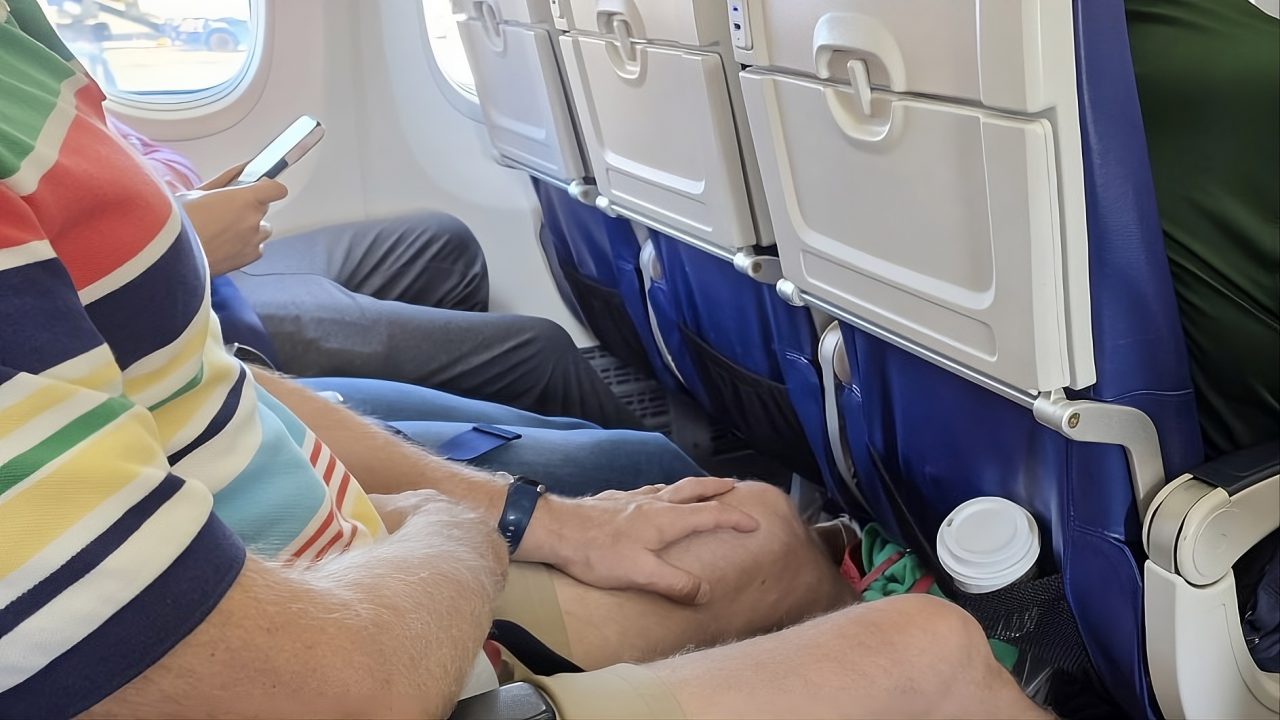
A reader, Lynn, recently asked us how we stay healthy on flights between the mainland and Hawaii, noting that after decades of frequent travel we must have picked up a few habits along the way.
After hundreds of Hawaii flights over roughly twenty years of writing Beat of Hawaii, our routine looks almost nothing like it did when we started this. None of these habits came from a single decision or some carefully designed travel plan. They accumulated flight by flight as we noticed what left both of us feeling better when we arrived as well as what seemed to make the first day of a trip harder than necessary.
This is not medical advice, and we are not suggesting that everyone should travel the way we do. But we were asked, and these are simply the habits that have stayed with us after years of making the five-to-six-hour-plus trip across the Pacific, where there is no quick stop along the way and little room for fixing what was forgotten once the flight is underway.
We start preparing before we leave.
One of the biggest changes we have made happens before we ever reach the airport. We used to assume we would eat or buy food after security, and catch up on water to avoid dehydration once we were seated. That approach often left us boarding rushed, hungry, thirsty, or already feeling behind. We also consider the unwritten Hawaii flight rules nobody agrees on.
Now we both try to eat something light before leaving, begin the day well hydrated, and organize anything we may need during the flight before we close our suitcases. Medications, chargers, headphones, wipes, snacks, and clothing are all ready to go where we can reach them without unpacking half a carry-on in the aisle.
We also charge every device before leaving home and bring a portable charger rather than assuming the outlets at the seat will work. They don’t always. None of this is complicated, but boarding without a string of small problems has become one of the easiest ways to make the trip feel less exhausting before it even gets going.
We care more about where we sit than we used to.
There was a time when the lowest fare drove nearly every decision we made. We still care about price, but after enough long Hawaii flights, we have become much more willing to consider what the seat itself will mean for the next five or six hours.
An aisle seat can make it easier to stand up without disturbing anyone, while extra legroom can completely change how cramped the flight feels. A bulkhead sometimes works well for us, although we look carefully at the exact seat because the fixed armrests and no under-seat storage do create their own tradeoffs.
On some flights, especially when economy fares are unusually low, we buy all three seats in the row for just the two of us. As we explained in Paying Too Much For Hawaii Premium Economy? What We Do Instead, purchasing the middle seat correctly can create more usable personal space without paying the far higher cost of two premium-cabin tickets. But that isn’t always the case, and so it has to be vetted each and every flight.
The shift is not really about luxury. And to be honest, luxury doesn’t exist in Hawaii domestic travel, and we stopped chasing it years ago. Rather, it is about being able to move, change position, and arrive without feeling as though we have spent half the day folded into a space that did not fit us. Rob is 6-4, and Jeff is 6 feet.
We both tend to wipe down the things passengers touch most.
We carry small packets of alcohol wipes and clean the surfaces we are most likely to touch during the flight. That usually includes the tray table, seat belt buckle, armrests, entertainment screen, air vent, and the controls around the seat.
We don’t make any big production out of it, and we do not assume that wiping down a seat eliminates every risk. It is simply a routine that takes less than a minute and has become as automatic as fastening the seat belt.
Airplanes turn quickly, and the same surfaces are touched by one passenger after another throughout the day. For us, giving those areas a quick wipe feels like a reasonable safety habit without turning the cabin into something to actually fear.
We almost always bring our own food.
Airline food has changed considerably over the years, and on Hawaii flights there may be little available beyond snacks or items we wouldn’t normally choose. Even when a meal is offered, we no longer assume it will arrive when promised or be satisfying enough to carry us through the flight. Honestly, Jeff will tell you he returns more food trays uneaten than eaten.
That lesson was reinforced on an eight-hour United Polaris business-class flight not long ago from Papeete to San Francisco. As we shared in Our Trip From Hawaii Exposed A Troubling New Flight Pattern, we boarded an expensive overnight business-class flight with preordered meals and every reason to expect reliable food and service.
Instead, the meal service stretched on for nearly three hours, and we had eaten every peanut and snack we brought before dinner was ever started. We joked afterward that we nearly starved in Polaris business class, but the experience drove home the point clearly. Even an international premium cabin is no longer a guarantee that food will arrive how and when we expect it.
Today we assume that anything we truly want to eat needs to come with us. If anything else happens, it’s a bonus. Depending on the departure time, that might mean a sandwich, fruit, nuts, crackers, or something possibly picked up in the airport after security. We also carry empty water bottles and refill them before boarding rather than relying entirely on the small cups handed out during beverage service that sometimes do and sometimes don’t arrive.
Bringing our own food gives us more control over when and what we eat, especially on flights that cross normal meal times. It also avoids the familiar situation of arriving in Hawaii or on the mainland overly hungry and making the first available restaurant decision before we have even reached the first stop.
We move more than we used to.
Earlier in our respective travel lives, we could remain seated for nearly an entire flight and think very little about it. That has changed, particularly on the longer mainland-to-Hawaii routes where several hours can pass without any natural reason to get up.
When the seat belt sign is off, and the aisle is clear, we try to stand and walk periodically rather than waiting until landing. There are clearly better and worse times, so we watch for those, then fewer people are competing for the narrow aisles. Even while seated, we move our feet and legs and change position more frequently than once seemed appropriate.
For us, the biggest change has simply been that of awareness. We no longer treat remaining motionless for five or six hours as the price of flying to Hawaii.
We pay attention to the cabin around us.
The temperature on a Hawaii flight can move from uncomfortably warm during boarding to surprisingly cold once the aircraft is at cruising altitude. And that varies greatly by aircraft type, seat and row, as well. We dress in layers and keep something light, including a hoodie, within reach rather than packing it overhead where we cannot easily get to it when needed.
We also usually open the overhead air vent and adjust it as needed during the flight. On occasions when respiratory illness appears to sound widespread, or when someone nearby is visibly unwell, we both bring and might choose to wear a mask. But hopefully not.
The broader change is that we now notice the cabin environment instead of simply enduring it. Temperature, airflow, noise, and the ability to rest all influence how we feel when the door opens back here in Hawaii.
We think about landing.
That realization has also changed how we book flights. As we explained in We Don’t Book Hawaii Flights The Way We Used To, we no longer focus only on finding the cheapest airfare. Departure time, seat choice, connections, and the schedule after arrival have all become part of what we consider the best trip, not merely the least expensive one.
Sadly, none of this guarantees an easy Hawaii flight.
Flying remains a remarkably safe way to travel, and none of these habits guarantee anything. Delays happen, cabins can be uncomfortable, and even a well-planned trip can go sideways even before the aircraft leaves the gate.
These habits have remained part of our routine for a more basic reason. More often than not, we arrive feeling better than we did when we paid less attention to the journey itself. We are less likely to spend the first day of the trip catching up on rest instead of using that time.
Frequent Hawaii flyers often develop routines of their own, and we suspect many Beat of Hawaii readers have thought of things that have never occurred to us.
What do you do before or during a Hawaii flight that has become part of your own routine?
By Jeff and Rob, Beat of Hawaii.
If you enjoy articles like this, sign up for our free Beat of Hawaii emails so you never miss our latest Hawaii travel news, firsthand experiences, and reader discussions.
Get Breaking Hawaii Travel News
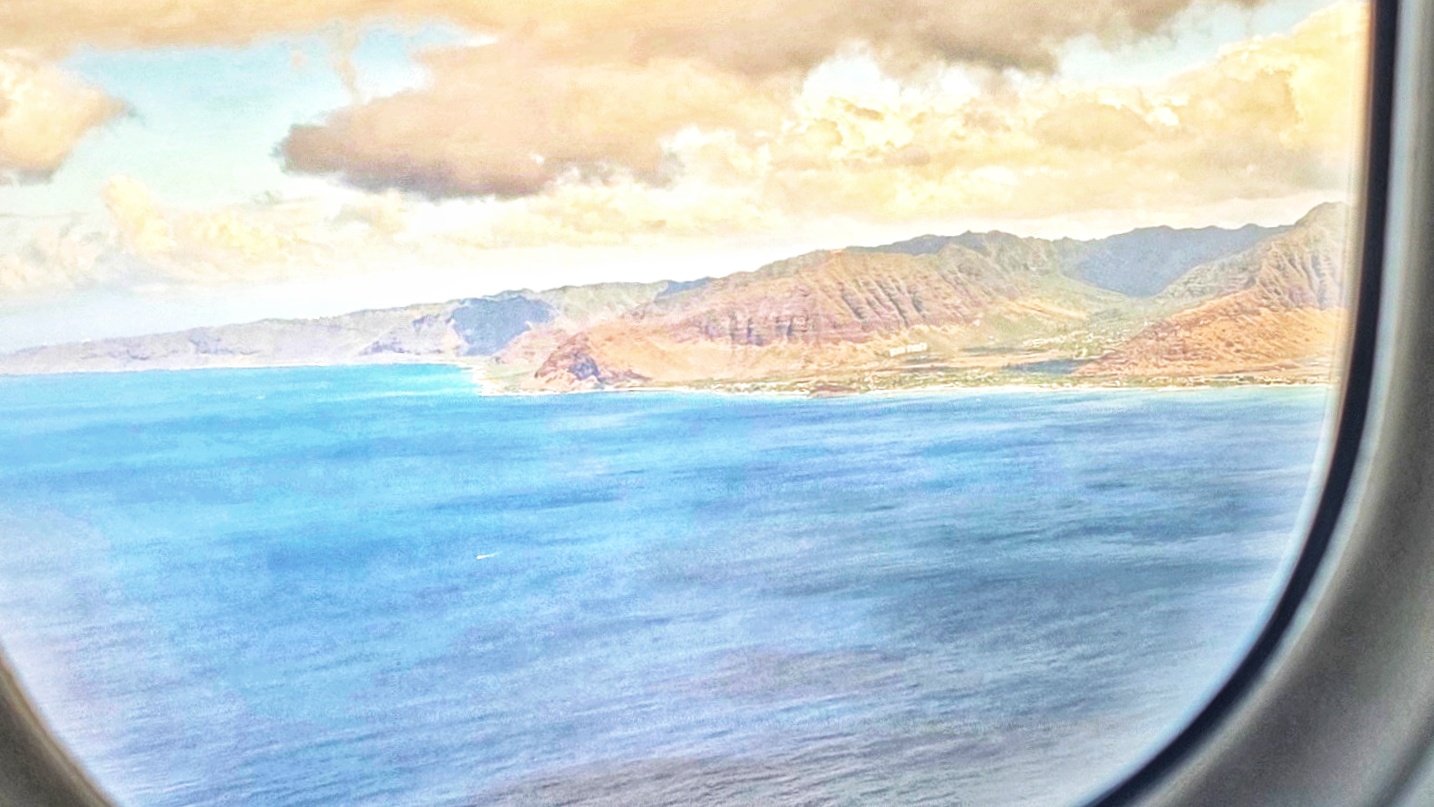


Fly First Class….life is to short for overthinking any thing.
Blessings in God’s Speed.
Aloha,
We do everything you do, too. But we always buy a bottle of Smartwater after going through security. We’ve read plenty of articles and studies that those water bottle filling stations are only healthy and safe IF the filters have been regularly checked and changed. Many airports (and resorts) did not pass purity tests.
Mahalo for the great info, BoH!
We have been traveling from Seattle to Maui each February since 1984. It is cold in the Pacific Northwest when we depart and wonderfully warm when we arrive on Maui. One thing we always do is wear pants with legs that zip off turning them into shorts. We stay warm on the flight but upon touching down we’re ready for the sunshine. We do the reverse on the return flight.
This is excellent advice and exactly what we’ve been doing for years. Not just for flight travel but also when we travel by ferry, which can easily be a 5 hour trip, door to door. Life works so much better when we organized!
We changed our flight routine after our 2nd trip to Hawaiʻi (20+ trips ago).
We only fly business / first class now.
Please stop mentioning nuts as a snack on airlines. I have 3 friends with deadly nut allergies from 3 different types of nuts. Yes, they carry Epi pens. As a RN, I see increasing numbers of people with nut allergies everyday. Most won’t get the importance of not taking nut snacks until the plane is turned around due to a medical emergency.
A few tips of my own:
You can’t take water through security, but you can take ice. Fill your insulated bottle at home or the resort with ice the night before and put it in the freezer with the lid off. The ice inside will be solid in the morning. Then go to the airport with the cap on. Then you can fill the water post security and have ice water on your trip.
“Pregame” the time zone. Going east, get up very early in the morning. Going west, sleep in. Do this a few days before your departure.
Break up long trips. When younger, vacation days are a premium. Getting older, they often are more available. Take the extra long layover, and get a day hotel.
What do I do on a long flight to Hawaii? This may sound a bit silly, but I bring a real class for when I order a cocktail. It just makes it seem a little more like a vacation instead of a long commute.
Larry G.