
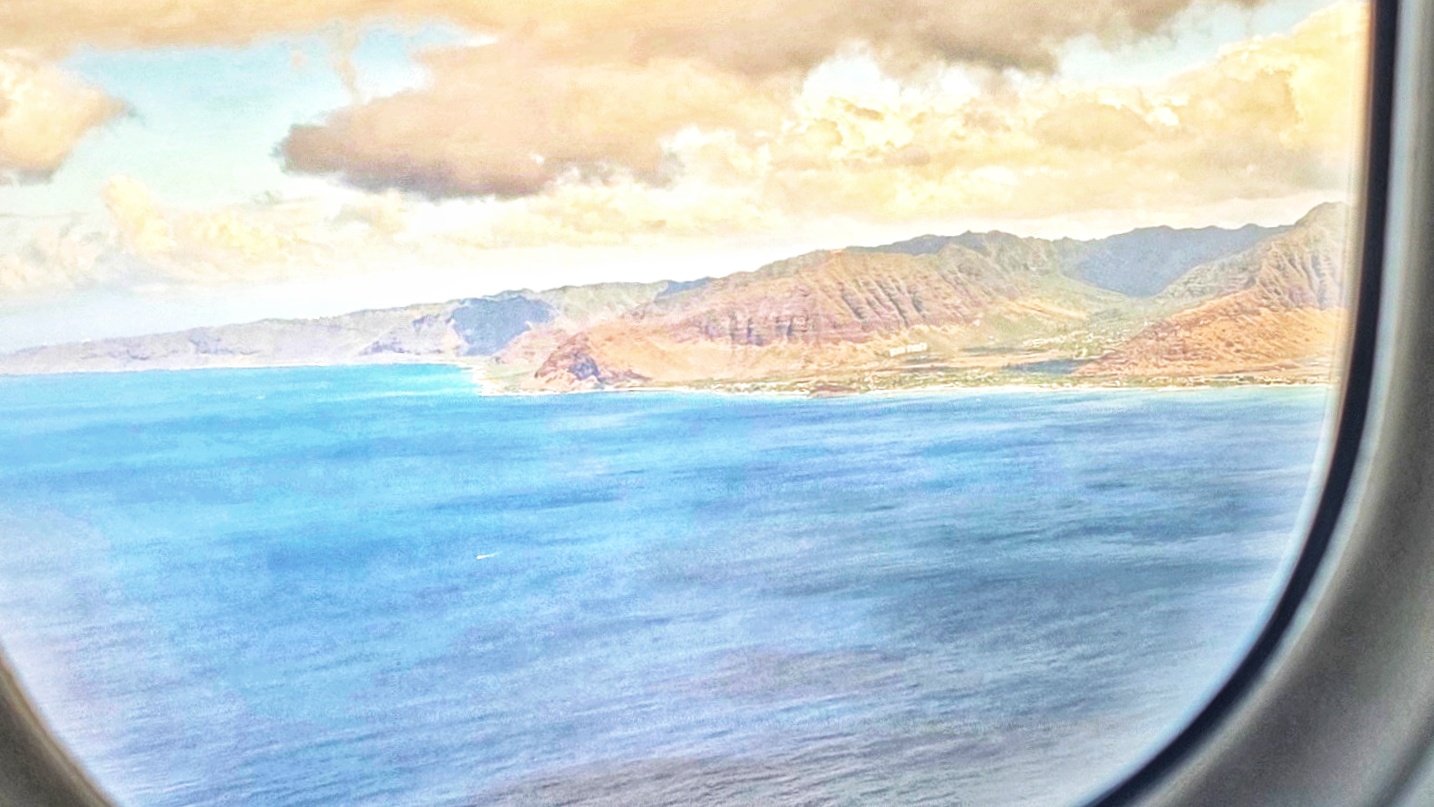
After booking hundreds of Hawaii flights over the years, we no longer begin with the question we once asked almost automatically: “What is the cheapest fare?” Here’s what changed.
We still care about price, probably more than ever before, but the lowest fare does not necessarily produce the best value, and that’s the key. A cheaper ticket nowadays often brings a worse schedule, a connection, a difficult airport, or an arrival that leaves us too tired to be ready for what comes next.
What changed is that we stopped treating Hawaii airfare as a purchase unto itself. We now look at the entire journey and trip and, in terms of the flights, ask which combination of price, airport, timing, flexibility, and comfort gives us the best overall value and the best trip.
One recent Bay Area booking changed Hawaii flight planning.

We need to be in San Francisco for a day of meetings and BOH work, so the obvious search was for a flight into San Francisco International Airport, as pictured below. The best option we found into SFO was three extra-legroom economy seats for the two of us at a total cost of $1,057 to $1,207. We often consider that 3-seat arrangement on a longer flight because leaving the middle seat empty gives us more room and feels far less confining than sitting shoulder to shoulder for hours.

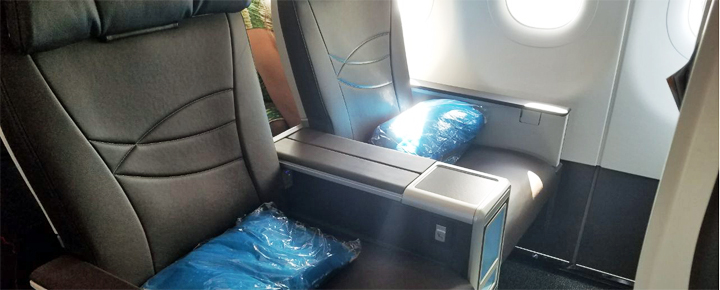
Then we checked Oakland. Economy was a much better price for the 3-seat trick. That was $877 for three. But there was something even better we found. That was two business-class seats into Oakland for $1,218 total for two passengers. Oakland was less convenient for our time in San Francisco, but not enough to outweigh what the same money would buy during the flight. Not only that, but the Oakland flight came with two free bags each, and pre-order meal service we’re anxious to report on again.
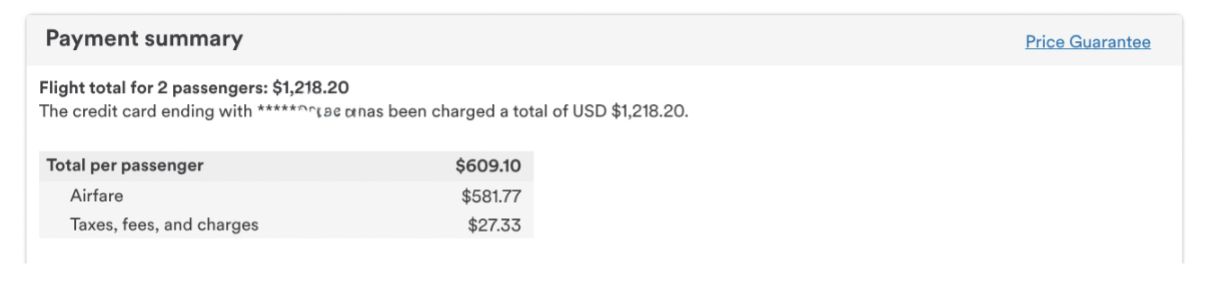
In the end, instead of three economy seats, we opted for the two larger seats in a clearly less claustrophobic cabin, easier access to the lavatory, and at least the possibility of a reasonable meal and regular beverage service. We will still pack our own food because airline catering is too unpredictable for us to depend on, but the overall flight should be considerably more comfortable and less stressful.
The comparison was not between spending $1,200 in economy and paying substantially more for business class. It was probably going to be up to $1,200 either way. One option took us directly into SFO with an empty economy seat between us, while the other took us into Oakland in business class and required an airport we are less inclined towards and minor additional ground transportation.
A nearby airport gave us a choice that did not exist before.
Years ago, we might have searched only SFO and never even checked that the Oakland option existed. By widening the search to a nearby airport, we suddenly had two very different ways to spend largely the same money.
We could buy three extra-legroom economy seats into the airport closest to our meetings, or three into a nearby airport, or two business-class seats into Oakland for about the same total fare. The nearby airport did not simply produce a lower price. It created a choice that had not existed when we searched only San Francisco, and therein, sometimes the most useful change is not finding a cheaper flight, but discovering an entirely different version of the journey.
Comfort now depends on what the flight entails.
This is not a piece about always flying business or first class, because that is simply not how we BOH editors travel. Sometimes we buy a premium cabin, sometimes premium or extra-legroom seating, and sometimes regular economy is exactly right.
The decision depends on the length and difficulty of the trip rather than how the cabin is labeled. A short daytime flight is not the same as a long travel day, an overnight, multiple connections, or arriving with meetings or other work still ahead.
Claustrophobia is a significant part of that calculation too. Three economy seats can work well because the empty middle seat creates real breathing room, but a premium business/first cabin can offer a calmer and less enclosed experience, along with easier movement and lavatory access during a longer flight. If you haven’t spent time in the line heading to the back of a narrowbody A321neo or B737 MAX, you’re in for a real treat.
What we are buying is not necessarily luxury. It may simply be enough space, less physical and mental strain, and a better chance of arriving more functional, either in Hawaii or on the mainland.
We no longer compare flights one at a time.
We once approached airfare by comparing a handful of flights, looking at the departure times and prices, and choosing whichever appeared to be the better deal. Now we compare the complete journey from the moment we leave one place until we are settled at the next.
The airport can matter as much as the airline, while the arrival time is definitely more important than anything served onboard the plane. A nonstop is worth far more than the difference in price, while a slightly longer drive or Uber from a nearby airport may be insignificant when it produces a much better fare, schedule, or cabin experience.
We also think about what happens after landing. A difficult arrival can mean losing much of the following day, paying for ground transportation that reduces the fare savings, or reaching Hawaii already exhausted. We used to compare flights and bottom-line price, while today we compare trips and value.
Airline loyalty no longer frequently makes the decision.
We are now largely airline agnostic, which would have been much less true even a few years ago. We still have airlines, loyalty programs, aircraft, and seats we prefer, but those preferences rarely override a substantially better fare, schedule, airport, or cabin on another carrier.
The old promise of loyalty was that staying with one airline would eventually be rewarded with more upgrades, useful miles, and better treatment. For many travelers, including us, that exchange has become far harder to justify.
We have written previously about why chasing airline loyalty no longer feels worthwhile. The change does not mean that we are without preferences. It simply means loyalty no longer determines the pick before we compare the complete trip. That has made us much more flexible, as is appropriate in today’s Hawaii flight environment. We may choose one airline in one direction and another on the return, use an airport that was not our first choice, or book a cabin we had not originally considered when it appears the overall value is better.
Refundable has become one of our favorite Hawaii travel words.
We once viewed refundable airfare largely as an expensive feature intended for business travelers. Now we often book it on purpose, not as insurance against something going wrong, but to stay ready to trade up if something better appears before the trip. And even when we don’t book refundable, we always check how much extra it costs and consider it as an important option.
We do not pay extra for refundability on every trip. We use it when the uncertainty is great enough, or the trip matters enough, that keeping our options open has real value because the cost seems too high.
Premium cabins on Hawaii flights no longer feel aspirational.
The premium experience many of us long-time Hawaii travelers remember, or imagined from an earlier era of flying, has largely disappeared from domestic travel. The cabin name remains, but the sense of special occasion does not.
That does not make business or first class worthless. It means we no longer judge the cabin by an old promise the product rarely delivers in any recognizable way.
We are not buying glamour or expecting some remarkable dining experience. We may, however, be buying a wider seat, more personal space, fewer people around us, easier movement about, or a better chance of resting during a difficult Hawaii travel day.
Those are tangible benefits, and sometimes they are worth the price. At other times the premium fare is so disconnected from reality and the actual improvement offered that we would rather buy extra space in economy or keep the money for something else entirely. Once we stopped treating a premium cabin as something inherently special, it became easier to evaluate what it was actually worth on each Hawaii trip.
The lowest fare can still be the right answer.
None of this means we have stopped looking for cheap airfare. A low Hawaii airfare with a good schedule, a reasonable airport, and the right amount of comfort remains the easiest decision of all.
What has changed is that we no longer consider the price just by itself. We look at what each airfare requires us to give up, be that money or comfort, and whether that trade is worth making.
Sometimes saving hundreds of dollars is the obvious choice. On another trip, paying more may eliminate a tight connection, prevent the loss of a day, or make the difference between arriving exhausted and arriving ready to begin.
The goal for us a penny more. Rather, it is to recognize where spending differently can change the trip.
Decades of Hawaii travel made us less rigid and more practical.
This evolution did not happen because of one airline, one bad flight, or one unusually good Hawaii airfare. It happened gradually through years of Hawaii travel, schedule changes, uncomfortable arrivals, missed opportunities, and flights that worked either far better or far worse than we expected. We became less loyal to cabin labels, less attached to a particular airport, and more willing to book a trip in a way that once might have seemed unconventional even to us.
Flying into Oakland for a day of work in San Francisco is one example. Booking refundable airfare so that we can continue shopping until the end is another, while choosing three economy seats instead of two business-class seats can be equally sensible under different circumstances. We are looking at which choice leaves us with the best trip after everything else has been considered.
How do you decide which Hawaii flight to book now? Is it still mostly about only the lowest fare, or airline loyalty, or do the airport, schedule, flexibility, cabin comfort, and the trip waiting at the other end all factor into your ultimate decision?
Photo Credit: © Beat of Hawaii.
By Rob and Jeff, Beat of Hawaii.
Some of the most meaningful parts of Hawaii are the ones visitors walk right past without knowing they are there. We’ve spent nearly 20 years finding them firsthand for BOH as full-time Hawaii residents reporting on travel, culture, and island life, and telling you what they mean for your trip. Join us →
Get Breaking Hawaii Travel News


OAK is safe. We’ve been flying into there for a long time, as our family lives in the East Bay.
Oakland has the highest total crime rate of any California city with 20,000 or more people, with 8,587 total crimes per 100,000 residents.
Maybe safety is the number one factor to consider?
Traveling into Oakland airport has another consideration . When landing , or departing ; doesn’t have same hours as SFO. Sometimes hard to get across Bay bridge. Especially during commute hours ; normally a 20-25 min ride can take 40-50 min in commute time . And if no accidents , protesters , motorcycle club or any other delay trip can be agonizing .