

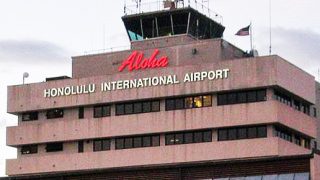
Airport facial scanning is coming to Hawaii this spring, and it represents a meaningful change in how travelers move through island airport security. The Transportation Security Administration has confirmed that Honolulu will be included in its next expansion of TSA PreCheck Touchless ID, the biometric screening system that allows eligible travelers to clear security using only their face. No physical ID is handed to an agent, no boarding pass is scanned, and a camera takes a live image and attempts to database match it.
This rollout is part of a national expansion, growing the program from 15 airports today to 65 by this spring. Honolulu is the only Hawaii airport TSA has publicly confirmed so far, and neighbor island airports are not on the current list. For travelers who frequently fly between Hawaii and the mainland, this shift will be felt quickly.
What is actually coming to Honolulu.
The system arriving at Honolulu is technically TSA PreCheck Touchless ID, and it is no longer framed as a pilot. TSA is scaling it as a standard option at major airports.
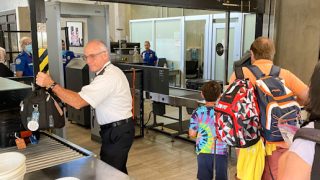
Touchless ID allows certain travelers to pass through the document check portion of the TSA checkpoint without presenting anything. A live image of the traveler’s face is captured and compared against a reference photo already held by the government, most often from a passport or a visa record. If the match succeeds, the traveler proceeds through screening, and if it does not, the process defaults back to a traditional ID check with a TSA officer.
Related to privacy concerns, TSA says the facial image captured at the checkpoint is deleted within 24 hours of the traveler’s scheduled departure time and is not retained long term.
What Honolulu already has and how this goes further.
Many Honolulu travelers assume this system is already in place because cameras are actively in use at TSA checkpoints today. What HNL currently uses is known as CAT-2, and that works very differently.
Under CAT-2, travelers still present a physical ID, and the camera verifies that the person standing at the podium matches the photo on the document being shown. It is a one-to-one check, and the traveler controls which identity document is used.
Touchless ID removes that process entirely. Nothing is presented, and the system performs its one-to-many search against a government database to identify the traveler. That shift is has drawn added attention and concern beyond the current systems in use.
Who this applies to and who it doesn’t.
Eligibility is limited at least for now, and the program does not apply to every traveler passing through HNL.
First, travelers must be enrolled in TSA PreCheck or Global Entry. They must opt in to Touchless ID, and be flying on a participating airline. Those airlines currently include Alaska Airlines, American Airlines, Delta Air Lines, Southwest Airlines, and United Airlines, so in that regard, all travelers heading from Hawaii to the mainland are covered.
Touchless ID does not eliminate the need to carry identification. Travelers are required to have a physical ID available if the system is unavailable or if a match fails. There is no additional fee for using the service. TSA positions it as a new and included feature for travelers already enrolled in trusted traveler programs.
Why some travelers will jump at it.
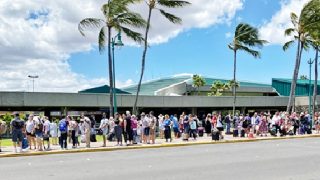
In practice, Touchless ID can move far more quickly, as has been reported at the early airports where it is already live.
The biometric lanes are often lightly used, and travelers pass through without the rigmarole of pulling documents from bags, removing wallets, or other items while at the screening checkpoint. For frequent flyers who already rely on PreCheck, the process should feel smoother and more predictable, particularly during peak travel periods.
Where privacy and accuracy concerns come in.
The efficiency of Touchless ID is also the source of its controversy, particularly among some privacy advocates. Unlike traditional ID checks, the system relies on facial recognition matched against a government database. Critics argue this builds the foundation for biometric surveillance infrastructure without clear guardrails.
Accuracy has also been examined closely. A 2019 study by the National Institute of Standards and Technology found that facial recognition systems can show higher false match rates for certain racial and age groups, even as overall performance is otherwise improved. TSA maintains that its systems meet federal accuracy standards, but the existence of documented disparities continues to cause concern.
Consent remains another issue. The Algorithmic Justice League has reported that roughly 99% of travelers are not verbally told that facial recognition is optional, leaving consent to hinge on signage that often uses technical language such as “biometric identity technology,” which many travelers do not fully understand in the moment.
What TSA leadership has said publicly.
Some of the unease around Touchless ID comes from statements made by TSA leadership about where the agency sees airport screening headed.
TSA Administrator David Pekoske said at SXSW that the agency expects biometrics to become standard, stating that “eventually we will get to the point where we will require biometrics across the board.” That does not agree with repeated assurances that participation is to remain optional.
Senator Jeff Merkley responded in a Senate statement by saying that no one should be required to have their face scanned to travel and that no government should have the power of a national surveillance system at its fingertips like this.
How opting out plays out in real life
Travelers who do not want their face scanned can decline when they reach the checkpoint. For now, if directed toward a biometric lane or asked to step in front of a camera, travelers can tell the TSA officer they want a manual ID check instead. The process reverts to a standard document check and does not result in losing your place in line.
Although signs are posted at checkpoints, they are often easy to miss and do not always clearly say “facial recognition,” which is why asking directly remains the most reliable way to avoid getting scanned.
What opting in actually involves.
Opting in tends to be less straightforward and varies by airline. Travelers must first be enrolled in TSA PreCheck or Global Entry, then ensure passport information is added to the profile on the airline they are flying. Some airlines prompt travelers during check-in, while others require opting in through account settings ahead of time.
When everything lines up right, a Touchless ID indicator appears on the mobile boarding pass. Even then, lanes may not have staffing, the system may not be available, or the indication may not appear consistently, which is why travelers are still expected to carry identification in case the process falls back to a manual check, especially during the roll-out.
What Hawaii travelers are left to decide.
For Hawaii travelers, Touchless ID introduces a new choice that did not exist before and one that will likely be met with different opinions. Some will see it as a layer of convenience added to a process they already know well, while others will see it as another step toward normalizing biometric screening in everyday travel and life. Honolulu is confirmed, and other Hawaii airports are not, at least thus far.
When face scanning arrives at HNL this spring, will you step into the camera lane, or ask for the old-fashioned ID check instead?
Get Breaking Hawaii Travel News



Is facial recognition currently active @ HNL? Family members will be visiting soon, and we plan to travel in April or May.
Always Opt Out ……
After hitting the beach and receiving 2 shades of tan in skin color I would think that it wouldn’t match your pale real identification on your drivers license. Does someone who has a facelift operation questioned or not allowed also. The only foolproof way to really identify someone is a retinal eye scan. I don’t really know how this system of skin color works when your are light skin colored and went from a red to a tan skin color prior to leaving.
Facial scanning is based upon the distances between key facial features and has little to nothing to do with your skin coloration. Even if you gain or lose weight the metrics of those distances between your features does not change. If you think otherwise then look it up.
Anyone posting 20 selfies a day should not complain! So, when can we get a refund on real ID?
Real ID turned out to be a joke. Remember, they said, this was to prevent terrorists from flying and would streamline boarding. We were told you won’t be able to board a flight without Real ID. TSA recently said, starting Feb 1, 2026, pay us $45 if you don’t have Real ID, it will take longer to screen you but you can fly.
Biometric scanning doesn’t sound foolproof and is even a more invasive collection of personal data. Sorry, not sorry, gov’t entities are not great at protecting data. On top of it all, you may have to show your ID anyway in case “something” goes wrong. This isn’t ready for rollout, and not sure it ever should be.
Actually used it yesterday and they do compare it to whatever ID you present which in my case was a RealID driver’s license. They do Not keep a copy of your facial parameters after the ID is confirmed, at least that is what they say but it literally takes seconds for the ID check to happen.
Sign me up! Anything that makes getting through the airport quicker is fine by me. Anyone who thinks the government does not have all your info and your picture is mistaken. I remember 3 months before my 18th birthday. I got a letter from the draft board reminding me to sign up for the draft! I wondered why they had to tell me when they already knew where I lived and my birthday.