
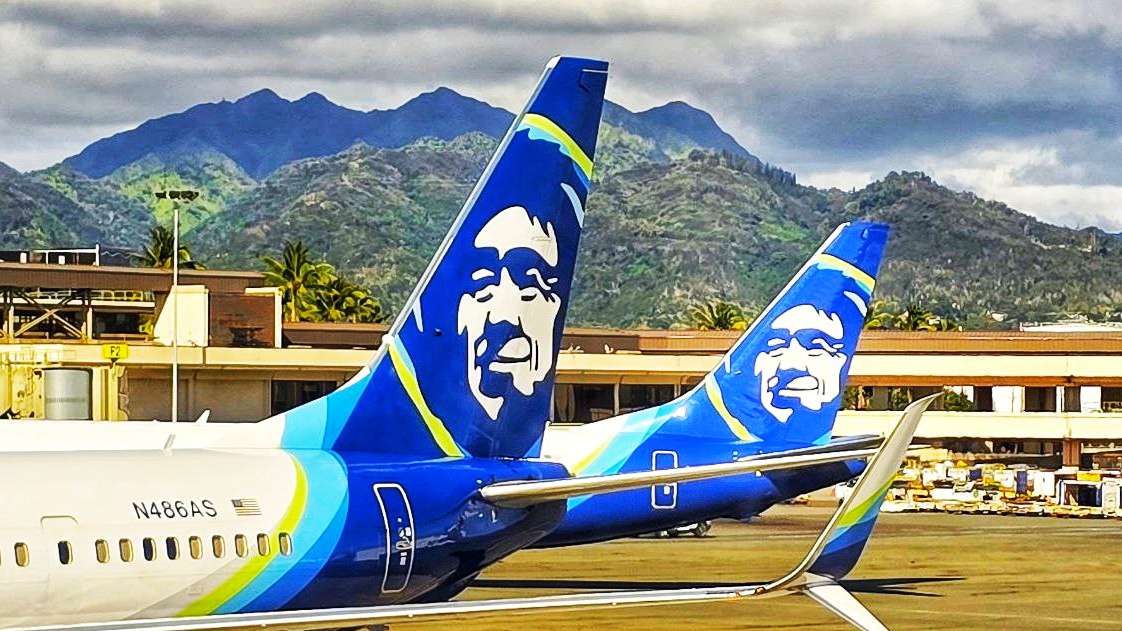
Alaska Airlines just made news by dropping 14 daily flights across one of its mainland networks through the end of July. That is taking place at Horizon Air. The canceled routes may seem irrelevant to Hawaii and just another Pacific Northwest hiccup. But this latest disruption could be an early warning light for Hawaii travelers watching everything as Alaska absorbs Hawaiian Airlines.
When an airline starts cutting flights and turning down new planes, it’s rarely an isolated problem. In this case, the airline now responsible for Hawaii’s air travel future is already strained on the mainland, trying to scale up long-haul and international service while bringing its newly acquired Hawaiian operation into line.
Aircraft delays hit Horizon Air.
Alaska’s regional carrier, Horizon, was supposed to receive two new Embraer E175 jets in May. However, the planes were delayed after Alaska rejected the deliveries, citing new U.S. tariffs that would’ve added unanticipated costs. A 10% baseline duty on imported aircraft like Embraer’s, made in Brazil, is still in effect.
Without those jets, Horizon is canceling 14 flights daily, primarily on high-frequency routes where passengers can be rerouted more easily. Cirium data also reflects that Alaska has canceled 55 flights out of Seattle Airport this summer (this is cumulative and not a daily average).
Those include flights from Seattle to Spokane, Boise, and Sacramento. These cancellations illustrate how even short-haul gaps at key hubs can ripple outward, especially during peak season. However, any cut to regional lift means more stress on remaining routes and crews, with fewer options if something goes wrong.
These disruptions could translate into tighter schedules, increased delays, and more missed connections for Hawaii-bound passengers from Alaska’s mainland regional airports. It’s one more sign that the system Alaska is building may not be as resilient as advertised.
A growing financial squeeze.
Behind these summer cuts lies a deeper financial strain. Alaska is juggling multiple economic pressures: slowing domestic demand, inflation-driven cost increases, volatile fuel prices, labor contracts, fleet updates, and now, getting Hawaiian Airlines under its belt. That merger wasn’t cheap, and as it unfolded, it became clear it was happening just as airlines are being forced to rethink everything from route strategy to aircraft orders.
In its last earnings call, Alaska didn’t provide full-year financial guidance, citing uncertainty. That silence says a lot. While Alaska’s leadership insists they’re in a strong, long-term position, short-term cracks are another matter. And they are of great importance to those of us with the highest expectations regarding Hawaii.
Hawaiian Airlines brought many good things, including widebody aircraft and international routes, into Alaska’s portfolio, but it also brought underperforming assets, stiff competition, and a long list of integration challenges to resolve. If Alaska is already rejecting new planes and slashing flights to save cash, the promise of a seamless Hawaii expansion looks more uncertain.
Tariffs create an unexpected kind of turbulence.
While many of the new tariffs announced in April are still on hold, the 10% duty on imported Embraer jets remains. That adds up even on a small order, and the cost burden may push future deliveries out even further for Horizon and other regional carriers.
This isn’t just about one aircraft model or supplier. The airline industry depends on a complex, global supply chain, and when trade policy shifts, everything from maintenance parts to cabin components to entire aircraft can be delayed or derailed.
Alaska says its Boeing orders are unaffected, indicating that the airline targets specific cost exposures rather than pulling back more broadly.
Horizon previously ordered eight more of the Embraer E1785, with options for thirteen beyond that. If tariff conditions remain in place, it could raise doubts about Horizon’s ability to scale its network as planned.
And for Hawaii travelers, the concern isn’t just regional. Alaska is also now responsible for Hawaiian’s 25-year-old fleet of interisland 717s, which were long planned for retirement. That transition now appears uncertain, as Alaska faces tough decisions about where to invest and what can wait.
Will Hawaii routes feel the ripple?
Alaska says the current cancellations are limited to Horizon’s regional network, but systems are interconnected. Fewer regional flights mean fewer inbound passengers to West Coast hubs, which also launch nonstop Hawaii flights.
With Alaska planning to unify operations with Hawaiian in the months ahead, these disruptions may eventually bleed into interisland service, long-haul flights, and even loyalty redemptions. Already, travelers report confusion over schedules, partner availability, and credit card perks, among other integration issues.
We’ll be watching to see whether changes at this regional level impact Hawaii connections or whether operational strain forces further resource reshuffling that trickles down in unexpected ways. This summer could offer a preview.
Reader concerns mirror the headlines.
Beat of Hawaii readers have already flagged concerns over recent airline cuts and shifting reliability. When Southwest slashed flights earlier this year, one commenter wrote: “If one more airline cuts Hawaii routes, we’re stuck paying triple just to visit our family.”
Another reader pointed to Alaska’s changing service levels, saying: “They talk about expanding, but we’re seeing more cancellations, fewer nonstops, and less flexibility. Doesn’t feel like an upgrade for Hawaii travelers.”
These comments aren’t just emotional—they reflect a real shift in expectations. Hawaii-bound passengers are noticing the growing disconnect between airline marketing and operational reality. This Embraer delay adds one more reason to question what’s next.
Integration pressure keeps mounting.
The Alaska–Hawaii combination was pitched as a long-term investment in the future of Pacific travel. But that vision depends on stability, growth, and the ability to juggle multiple high-stakes challenges simultaneously.
Alaska is trying to launch new, fiercely competitive trans-Pacific routes, absorb Hawaiian’s Dreamliners originally intended for island flying, merge clashing loyalty programs, and manage two workforces with different contracts, cultures, and expectations. At the same time, it’s turning away new regional jets and cutting flights on the mainland side.
That’s not a small task. And for an airline the size of Alaska—tiny compared to competitors American, Delta, Southwest, or United—the margin for error is thin. One more pressure point, whether it’s tariffs, weather, or fuel, and the whole system starts to wobble.
Hawaii travelers may not care who’s flying the plane—as long as the flight’s on time, the connection works, and the seat isn’t swapped last minute. But this summer, we’ll see how much Alaska can handle without letting it reach the islands.
Travelers should stay alert this summer.
If you’re flying to Hawaii this summer and relying on a connection from a smaller West Coast or inland city, double-check your itinerary. The regional link might be at risk even if your Hawaii leg looks intact. And with Horizon trimming 14 flights daily, backup options could be limited.
This is also a time to keep close tabs on aircraft swaps. If Alaska/Hawaiian reshuffles widebodies to cover gaps elsewhere, seat maps and upgrade options could shift with little notice. Travel insurance might not prevent delays or help you with a narrow-body downgrade, but it can at least help with hotels and rebooking costs if problems arise mid-journey. BOH editors, too, are keeping an eye on future Hawaiian flights to ensure no unanticipated changes.
Final thoughts.
The aircraft delays making headlines today are not just a footnote. They’re part of a bigger story playing out across Hawaii’s skies.
As Alaska works to absorb Hawaiian Airlines and reshape travel to the islands, these disruptions reveal how delicate that process is. Whether it’s just a couple of missing planes, a tariff here or there, a delay, or something else, the Hawaii summer travel experience suddenly starts to look different.
It’s clear that these times and the integration of Hawaiian will test what Alaska’s made of to the core.
With this as a preview, Hawaii travelers should pay close attention. What starts on the mainland doesn’t always stay there.
Have you been impacted by recent changes or delays while flying to or from Hawaii? Let us know. We’re tracking developments and reader stories to see where this all leads.
Get Breaking Hawaii Travel News





You would think when Southwest reduces or eliminate interisland flights, the locals only have themselves to blame when Alaska/Hawaiian interlsland fares goes back to $200-$300.
A lot of flame towards an airline that acquired Hawaiian with a better plan than they themselves had. Why not express how Southwest forced Hawaiian into loosing revenue? Southwest came in, did the job, and now they are leaving. Pretty cruel right? Lot less of a stretch than how Horizon is going to impact Hawaiian….
It might say “Hawaiian” on some of the aircraft, but it’s the Eskimo who calls the shots. Alaska’s main focus is expanding their international flights from SEA. The 4th B787 aircraft will arrive this month and the 5th B787 aircraft will come in November. Expect the November B787 to sport Alaska colors.
Hawaii will eventually become just another destination for Alaska and will be subjected to market conditions and airline economics. There is no loyalty in this business.
In the future, don’t expect all three A330 widebody flights from LAX to operate or daily A330 flights to/from SMF, OAK, SFO, SAN, or possibly even LAS if passenger yields are low and the widebody aircraft can be used on higher revenue making (read: international) city pairs, especially after the planned A330 cabin refurbishment . The A321 and the B737 (50 firm orders awaiting delivery with 100 options) will eventually become the primary aircraft for Hawaii-Mainland flights.
Not too far off in the future I suspect the Hawaiian Air Dreamliners will feature the eskimo guy instead of Pualani.
The slow ride to complete absorption is on. Remember Virgin America…
I am wondering what will happen to my 50,000 rewards points for travel to Hawaii? I have had them for about 10 years and not sure if Alaska Airlines will honor them. I don’t have a clue whom I need to contact to get this information.
Any advice???
This merger clearly impacted competition in the market. The politicians including all the mayors here in Hawaii were all in on the merger because they support whomever lines their pockets. Hawaii residents can pound Waikiki artificial beach sand. That being said l suspect Hawaiian’s structural inefficiencies and epic congenital losses are not going to be magically cured by the financial geniuses at Alaska Airlines. Its stock has dropped from over 70 after the merger to 50 ish as reality sets in among investors.