
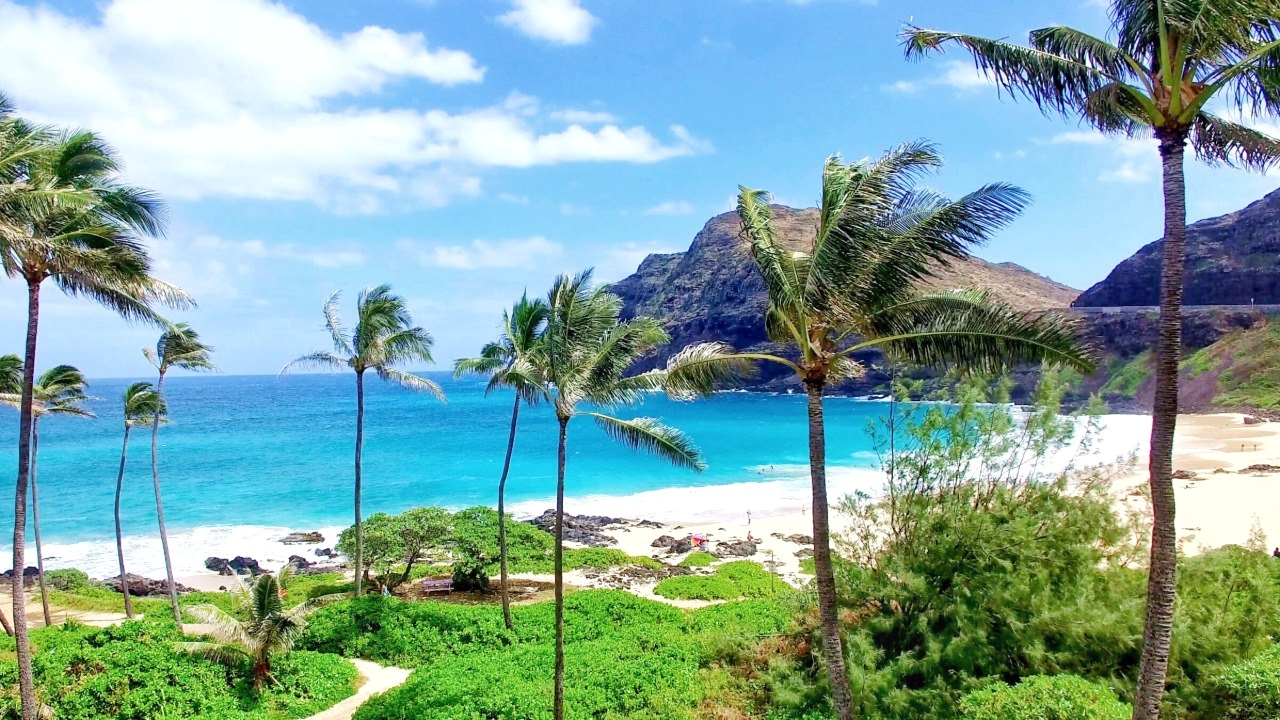
For decades, Hawaii had something few destinations will ever achieve. It had a travel bug. Millions of people carried it around almost without thinking. Hawaii was the trip they defaulted to, the splurge they justified fastest, the place they returned to again and again because the pull never really went away. It was not just that the islands were beautiful. It was that Hawaii got into people’s systems and stayed there.
That bug shaped how people traveled. Hawaii was the easy trip, the familiar one, the destination people talked about going back to before they had even unpacked, maybe before they even returned. Families built traditions around it. Couples saved for it. West Coast travelers especially treated it as the one big trip that still felt emotionally simple, and you did not have to talk yourself into it because if you had the bug, the decision was already halfway made.
What is changing is not just the cost or the logistics but the instinct itself. For a growing number of travelers, that old pull is weakening. Hawaii is still loved, still iconic, still powerful, but it no longer feels automatic the way it once did. Once people stop reflexively choosing Hawaii, everything else, including costs, rules, and sentiment, becomes harder to overcome.
Did the welcome get harder to find?
The first thing many visitors notice is the cost. Hotels go stratospheric, taxes rise to 19%, resort fees multiply, parking costs keep spreading, restaurants and car rentals escalate, and more parts of the trip start carrying a price tag that used to at least feel less intrusive. What had once felt like a big trip with manageable albeit high cost, started to feel like a destination constantly reaching into your pocket.
Hawaii has for over a half-century depended most on repeat visitors who understood it. They were not expecting cheap; they were expecting clarity and ease. Instead, the nightly hotel rates increasingly became the starting point for an unwanted conversation. Travelers who once knew roughly what a trip would cost began running out of control calculations for lodging, taxes, car rental, parking, food, activity reservations, and the growing pile of charges that sit on top of the first “I do” airfare.
The damage done is as much psychological as it is financial. A vacation starts to feel less like something you are giving yourself and more like a system designed to extract value at every turn. Once that happens, travelers do not just complain about cost. They start wondering whether the destination is still aligned with them, either on this trip or on the next. Decisions start happening differently.
That feeling of doubt intensifies when the much higher costs are accompanied by public messaging about sustainability, regulation, and visitor behavior. Some of those goals are understandable. But from the traveler’s side, the sequence hit hard. The fees and the rules arrived before any renewed sense of welcome did.
Hawaii flights that no longer felt like part of the vacation.
Getting here once felt like part of the Hawaii experience itself. The nonstop flight from the West Coast was never short, but it was manageable. The route structure was strong. The aircraft often even felt better suited to the mission. The beginning of the trip started the moment you boarded, and that part has eroded.
Flights became more expensive, more cramped, or less predictable in value. Product quality across the industry has become less consistent. The old sense that airlines were competing to make flying to Hawaii feel somewhat special weakened and then disappeared. In too many cases, the flight became just another endurance test before the vacation could begin rather than a part of the experience.
Hawaii is not Las Vegas or San Diego. You can’t just jump in the car if airfare gets ridiculous or schedules get awkward. The flight is the only gateway, and as it becomes harsher, more expensive, and less rewarding, the whole trip starts to feel more challenging.
The loyalty side of the airline equation is not helping either. Frequent Hawaii travelers used to build long-term habits around airline programs, upgrade possibilities, and route familiarity. When that gets disrupted, too, the effect is bigger than seat assignments or mileage accrual. It undercuts the Hawaii travel bug routine. Travelers who once knew exactly how to put a Hawaii trip together and did it again and again suddenly feel like they are relearning the fast-changing system each time, and the flight that once reinforced Hawaii’s pull now feels like one more uncomfortable thing to manage.
Hawaii accommodation options disappeared in the middle.
Hawaii used to offer a clear middle. It was never just luxury resorts and cheap budget scraps, but a wide range of accommodations that made repeat travel both realistic and comfortable. That middle has thinned out badly.
Vacation rental uncertainty, county crackdowns, ongoing legal fights, and the broader push away from mid-range visitor lodging all fall on the same group of travelers: not rich, not budget backpackers, but steady repeat Hawaii visitors with enough income to keep coming as long as the numbers still make sense. For them, Hawaii is not becoming impossible in one dramatic way. Rather, it is becoming harder with a steady, grinding away feeling.
When the middle disappears, a destination like Hawaii changes character. For many, the trip stopped being something a family could repeat every year or two and became something they either stretch themselves to achieve or decide to skip entirely. That is how travel habits die, with one missed year becoming two, then four, then never.
Hawaii may have entirely misread which visitors it could afford to lose. The middle wasn’t the dead weight they thought it was. It was the muscle memory of Hawaii-centric travel aficionados. These were the people who came back over decades, told friends, brought kids, then grand kids, rented cars, shopped at Costco and Foodland, and made the islands part of their regular lives rather than just one trophy trip. Once those travelers start drifting away, the damage is very deep.
Higher-end travelers may spend more, but they will not recreate the same culture of repeat visitation. They do not necessarily visit the same kinds of businesses or move through the islands the same way. Hawaii may still get revenue, but it loses something in the very structure of its visitor base.
The welcome itself changed.
In recent years, Hawaii has sent mixed signals about tourism. Residents and officials talk about overtourism, housing pressure, environmental strain, and the need for change. Those concerns have long been real. But what filters outward to travelers is not nuance. It is a broad impression that Hawaii has become conflicted about even wanting them.
That impression does not stay confined to policy debates. It spreads through ordinary travel conversation. People hear about being unwelcome and about visitors as a burden. They hear about all of it on social media. Even when they never experience any of that personally, it starts shaping the emotional backdrop of the Hawaii vacation.
The old Hawaii brand was not just scenery.
Hawaii has been about emotional ease and warmth, and the feeling that once you get here, the islands will take over. The newer version, at least in many travelers’ minds, is more defensive and conditional, and more loaded with questions and doubts.
Arguably, most visitors still have wonderful experiences, and Hawaii residents remain gracious, warm, and deeply welcoming hosts. But a change in perception does not need to be fair or accurate to be powerful. Once enough people start saying Hawaii does not feel like it wants them, others begin carrying that assumption before they ever research the trip.
Hawaii is no longer rejected after scrutiny, but is increasingly being ruled out before comparison. People are not always saying it costs too much. They are saying some version of why put myself through all that, including the cost, and once that becomes the first question, the emotional foundation of the trip has already shifted south.
Other places got easier.
Travelers now have more alternatives in the very category that Hawaii used to dominate almost by default, and other destinations have become easier, more visible, and more emotionally accessible at the same time. Mexico has stronger flight networks and, in many markets, still offers more reasonable pricing, though costs there have clearly risen sharply, too.
Europe, despite the distance, can feel more rewarding once travelers start comparing the total spend. The Cook Islands, Tahiti, and other Pacific destinations are showing up in conversations that once would have ended with Hawaii before they even began. Even domestic options that do not offer the same magic can feel less fraught.
Hawaii built its visitor economy on repeat visitors. People did not just come once; they came back, and many were already talking about the next trip before they had even left. The islands became part of how they imagined future happiness. Once that reflex changes, Hawaii is competing on ease, value, clarity, and emotional simplicity, and right now, those are harder to sell.
Nobody is stewarding Hawaii travel as one coherent experience, and visitors feel it. Counties are doing one thing, the state is doing another, Hawaii tourism messaging moves in one direction while rules and fees move in another, and visitors are left to decode the whole thing for themselves. The answer seems to be everything at once, which is part of the problem.
Travelers do not need every detail, just enough to sense a pattern of more fees, more friction, more uncertainty, and less of the spontaneity and emotional ease that made Hawaii worth the effort.
And yet Hawaii keeps filling seats, travelers who swore they were done still come back, and families who skipped a year or two find themselves researching flights again. The Hawaii travel bug is stubborn in a way that defies math, real enough to survive almost everything thrown at it, which in the end may be Hawaii’s saving grace.
Do you still have the Hawaii travel bug, or has something changed?
Get Breaking Hawaii Travel News



Over the past 50 years I have been able to enjoy a Hawaiian vacation 6 times. My last trip was 2 years ago. I am still hoping to return in the next few years . I love the Hawaiian love
We are the precise visitor that Hawaii thought it could live without. Over 40 years of traveling to the islands, first just 2 of us, then 4 then married kids with grands. It has become too expensive when you are paying for 8 people, 2 condos, airfare and rental cars, plus groceries and extra fun activities. We always stayed at least 3 weeks and at one point 6 weeks. I do miss it, but I don’t want to book a 3 week trip and find out the place we loved is no longer recognizable. So we have decided to travel to other places we have wanted to see, and we can book a great cabin on a cruise and see 3 countries for what 2 weeks in Hawaii would cost us. Would we like to come back…sure, but things will have to change drastically for us to make the trip again….and I have a feeling there are many others who have similar stories. It is just a shame what greed and inept politicians have done to the islands and her people.