
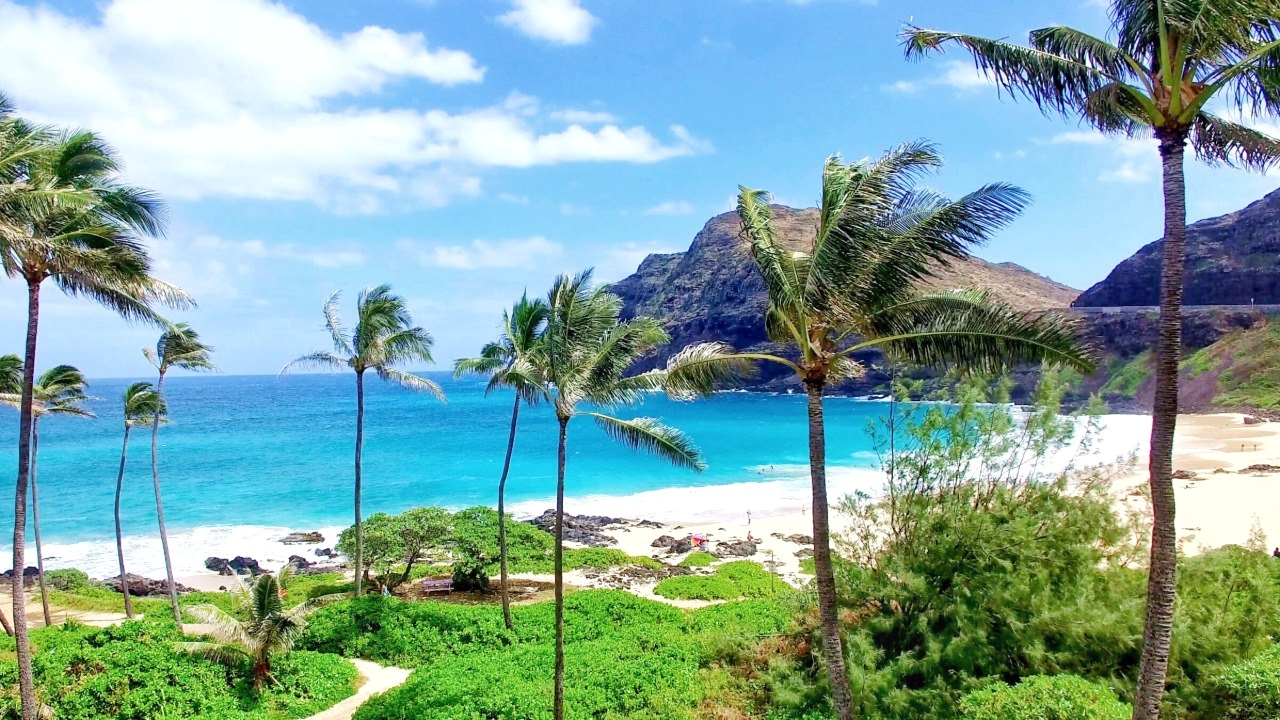
For decades, Hawaii had something few destinations will ever achieve. It had a travel bug. Millions of people carried it around almost without thinking. Hawaii was the trip they defaulted to, the splurge they justified fastest, the place they returned to again and again because the pull never really went away. It was not just that the islands were beautiful. It was that Hawaii got into people’s systems and stayed there.
That bug shaped how people traveled. Hawaii was the easy trip, the familiar one, the destination people talked about going back to before they had even unpacked, maybe before they even returned. Families built traditions around it. Couples saved for it. West Coast travelers especially treated it as the one big trip that still felt emotionally simple, and you did not have to talk yourself into it because if you had the bug, the decision was already halfway made.
What is changing is not just the cost or the logistics but the instinct itself. For a growing number of travelers, that old pull is weakening. Hawaii is still loved, still iconic, still powerful, but it no longer feels automatic the way it once did. Once people stop reflexively choosing Hawaii, everything else, including costs, rules, and sentiment, becomes harder to overcome.
Did the welcome get harder to find?
The first thing many visitors notice is the cost. Hotels go stratospheric, taxes rise to 19%, resort fees multiply, parking costs keep spreading, restaurants and car rentals escalate, and more parts of the trip start carrying a price tag that used to at least feel less intrusive. What had once felt like a big trip with manageable albeit high cost, started to feel like a destination constantly reaching into your pocket.
Hawaii has for over a half-century depended most on repeat visitors who understood it. They were not expecting cheap; they were expecting clarity and ease. Instead, the nightly hotel rates increasingly became the starting point for an unwanted conversation. Travelers who once knew roughly what a trip would cost began running out of control calculations for lodging, taxes, car rental, parking, food, activity reservations, and the growing pile of charges that sit on top of the first “I do” airfare.
The damage done is as much psychological as it is financial. A vacation starts to feel less like something you are giving yourself and more like a system designed to extract value at every turn. Once that happens, travelers do not just complain about cost. They start wondering whether the destination is still aligned with them, either on this trip or on the next. Decisions start happening differently.
That feeling of doubt intensifies when the much higher costs are accompanied by public messaging about sustainability, regulation, and visitor behavior. Some of those goals are understandable. But from the traveler’s side, the sequence hit hard. The fees and the rules arrived before any renewed sense of welcome did.
Hawaii flights that no longer felt like part of the vacation.
Getting here once felt like part of the Hawaii experience itself. The nonstop flight from the West Coast was never short, but it was manageable. The route structure was strong. The aircraft often even felt better suited to the mission. The beginning of the trip started the moment you boarded, and that part has eroded.
Flights became more expensive, more cramped, or less predictable in value. Product quality across the industry has become less consistent. The old sense that airlines were competing to make flying to Hawaii feel somewhat special weakened and then disappeared. In too many cases, the flight became just another endurance test before the vacation could begin rather than a part of the experience.
Hawaii is not Las Vegas or San Diego. You can’t just jump in the car if airfare gets ridiculous or schedules get awkward. The flight is the only gateway, and as it becomes harsher, more expensive, and less rewarding, the whole trip starts to feel more challenging.
The loyalty side of the airline equation is not helping either. Frequent Hawaii travelers used to build long-term habits around airline programs, upgrade possibilities, and route familiarity. When that gets disrupted, too, the effect is bigger than seat assignments or mileage accrual. It undercuts the Hawaii travel bug routine. Travelers who once knew exactly how to put a Hawaii trip together and did it again and again suddenly feel like they are relearning the fast-changing system each time, and the flight that once reinforced Hawaii’s pull now feels like one more uncomfortable thing to manage.
Hawaii accommodation options disappeared in the middle.
Hawaii used to offer a clear middle. It was never just luxury resorts and cheap budget scraps, but a wide range of accommodations that made repeat travel both realistic and comfortable. That middle has thinned out badly.
Vacation rental uncertainty, county crackdowns, ongoing legal fights, and the broader push away from mid-range visitor lodging all fall on the same group of travelers: not rich, not budget backpackers, but steady repeat Hawaii visitors with enough income to keep coming as long as the numbers still make sense. For them, Hawaii is not becoming impossible in one dramatic way. Rather, it is becoming harder with a steady, grinding away feeling.
When the middle disappears, a destination like Hawaii changes character. For many, the trip stopped being something a family could repeat every year or two and became something they either stretch themselves to achieve or decide to skip entirely. That is how travel habits die, with one missed year becoming two, then four, then never.
Hawaii may have entirely misread which visitors it could afford to lose. The middle wasn’t the dead weight they thought it was. It was the muscle memory of Hawaii-centric travel aficionados. These were the people who came back over decades, told friends, brought kids, then grand kids, rented cars, shopped at Costco and Foodland, and made the islands part of their regular lives rather than just one trophy trip. Once those travelers start drifting away, the damage is very deep.
Higher-end travelers may spend more, but they will not recreate the same culture of repeat visitation. They do not necessarily visit the same kinds of businesses or move through the islands the same way. Hawaii may still get revenue, but it loses something in the very structure of its visitor base.
The welcome itself changed.
In recent years, Hawaii has sent mixed signals about tourism. Residents and officials talk about overtourism, housing pressure, environmental strain, and the need for change. Those concerns have long been real. But what filters outward to travelers is not nuance. It is a broad impression that Hawaii has become conflicted about even wanting them.
That impression does not stay confined to policy debates. It spreads through ordinary travel conversation. People hear about being unwelcome and about visitors as a burden. They hear about all of it on social media. Even when they never experience any of that personally, it starts shaping the emotional backdrop of the Hawaii vacation.
The old Hawaii brand was not just scenery.
Hawaii has been about emotional ease and warmth, and the feeling that once you get here, the islands will take over. The newer version, at least in many travelers’ minds, is more defensive and conditional, and more loaded with questions and doubts.
Arguably, most visitors still have wonderful experiences, and Hawaii residents remain gracious, warm, and deeply welcoming hosts. But a change in perception does not need to be fair or accurate to be powerful. Once enough people start saying Hawaii does not feel like it wants them, others begin carrying that assumption before they ever research the trip.
Hawaii is no longer rejected after scrutiny, but is increasingly being ruled out before comparison. People are not always saying it costs too much. They are saying some version of why put myself through all that, including the cost, and once that becomes the first question, the emotional foundation of the trip has already shifted south.
Other places got easier.
Travelers now have more alternatives in the very category that Hawaii used to dominate almost by default, and other destinations have become easier, more visible, and more emotionally accessible at the same time. Mexico has stronger flight networks and, in many markets, still offers more reasonable pricing, though costs there have clearly risen sharply, too.
Europe, despite the distance, can feel more rewarding once travelers start comparing the total spend. The Cook Islands, Tahiti, and other Pacific destinations are showing up in conversations that once would have ended with Hawaii before they even began. Even domestic options that do not offer the same magic can feel less fraught.
Hawaii built its visitor economy on repeat visitors. People did not just come once; they came back, and many were already talking about the next trip before they had even left. The islands became part of how they imagined future happiness. Once that reflex changes, Hawaii is competing on ease, value, clarity, and emotional simplicity, and right now, those are harder to sell.
Nobody is stewarding Hawaii travel as one coherent experience, and visitors feel it. Counties are doing one thing, the state is doing another, Hawaii tourism messaging moves in one direction while rules and fees move in another, and visitors are left to decode the whole thing for themselves. The answer seems to be everything at once, which is part of the problem.
Travelers do not need every detail, just enough to sense a pattern of more fees, more friction, more uncertainty, and less of the spontaneity and emotional ease that made Hawaii worth the effort.
And yet Hawaii keeps filling seats, travelers who swore they were done still come back, and families who skipped a year or two find themselves researching flights again. The Hawaii travel bug is stubborn in a way that defies math, real enough to survive almost everything thrown at it, which in the end may be Hawaii’s saving grace.
Do you still have the Hawaii travel bug, or has something changed?
Get Breaking Hawaii Travel News




The ‘bug’ you refer to is real for those of us who love Hawaii. The sad part is those in power (from the Governor on down) are treating it as something that needs to be eradicated (like a flu bug). As a distant observer (we live in Colorado), it obvious that none of the decision-makers ever passed a course in Marketing 101. The keystone of Marketing 101 is establishing a strong brand. In the past, the mere mention of ‘Hawaii’ conjured up positive vibes. Sadly, not so much today. Secondly, is maintaining a high level of ‘brand loyalty’ as in repeat customers – again, not so much today. Thirdly, research shows that aquiring new customers can cost at least 5X the amount of money it takes to maintain the current customers – maybe the current budget would be better spent fixing the infrastrucure or paying teachers a living salary. The real irony is the former ER doctor now Governor, has done everything in his power to ignore the fact the Hawaii ‘brand’ is on life support.
Southwest flight over was miserable, with people crammed in like sardines, yet whole rows of open seats and a militant steward who wouldn’t let anyone change seats. Families split up, yelling at people using the lavatory even when fasten seatbelt sign was off….then we get here, and Hale Koa beach is full of homeless! We can’t let ourselves or our granddaughter walk barefoot in sand that may be full of syringes and dog poop.
I still have the bug but cost is definitely a deterrent. I will try to get back in 2 years. Only going to go to Maui and Kauai. Oahu is too busy and just like going to another big city with an ocean view.
We still have the Hawaii bug. Except what used to be 2 or 3 times a year (25+ yr) many times with friends, is now once every other year without them. And it isn’t the cost. We have replaced the Hawaiian attitude towards visitors with the warm sincere welcome of Asia. And quite honestly, we prefer Asia over anywhere else. So Hawaii can keep telling visitors “just give us your money and leave.” For us, we already are leaving.
What a well written article. It expresses exactly what I feel. Yes, I have the Hawaii bug. I have said , because of the political fighting, costs, lack of welcome ; that I would not be back. But I still keep coming. As a matter of fact; we will be there in September. All in all, Hawaii still pulls me to it. The beauty draws me to it year after year. But social media has given the locals a venue to express that we are a problem to them. I try to understand . I have always respected the land, people and culture. But it’s getting harder and harder to justify the costs, the hurt feelings and the greedy political unrest. But as long as it is a free country; I will come…with respect and with a grateful heart. Because there is no cure for this Bug. Mahalo
We swore off Hawaii (Maui, specifically) after the fire and the “hate tourist” months that followed. We moved off Hawaii and found less expensive trips to Europe and Asia where we were treated with welcoming arms (reminder, we travel during shoulder seasons). After many trips to bucket-list places, we admitted the “bug” was still there. We have been back twice in 3 years, not the 2-times-a-year we used to love. You are correct the aloha is mostly absent, the airline prices are insulting, and tourist services are sorely lacking up and down the spectrum. But if you put expectations behind you, it’s possible to find the little gems that are still there and have a beautiful trip.
I have spoke to people who have visited Hawaii many times in the past and the common problem is too crowded. Not what it used to be. New hotels and the areas that used to be nice are now run down and trashy. Hawaii on Oahu isn’t at all the same as it was 50 years ago. I hated to see the change 20 years ago. Today forget it. The bug leaves me with the welcomming memories and not the disappointing vision that I might see today. Thank the bug because it might keep the good memories good while the other side of the picture might give you a vision of what Happened. Where did the Hawaii that I remember go or disappeared.
This article really hit home for us. We’ve been to Hawaii dozens of times starting in 1981 and to all the islands. (We live outside San Francisco.) We stopped going in 2019. Things had changed too much. Especially in West Maui. We ate at Longhi’s when it first opened…verbal menus only. We gladly paid the price. We ate at Eric’s in Kahana many times. Even the Gateway Plaza was a place to be…Roy’s original location…wonderful shops…et al.
It’s hard to place a finger on what the final straw was, but it was certainly a culmination of all the points you laid out in this article. It brought tears to our eyes…but it was good to know that others recognized what has happened.
We cherish every memory of our Hawaiian experiences.
Thank you. Dave and Jo
I totally agree with this article. I’ve been to many of the Hawaiian islands and have visited 7 times with the last time being 2025. After this visit I have been telling friends I doubt I will be able to go back. The costs of everything from the accommodations, the cost of simple groceries, the lack of profitable franchises and the many empty store fronts discourages us from returning. The complete lack of affordable flight options since COVID and the less affordable car rentals starts the vacation off with a bitter taste. With such beautiful people and landscapes already making the island well worth the escape, I will miss my frequent trips unless more realistic travel returns to the islands.
Outstanding BOH article that is spot on, and expresses the many emotions and thoughts that many of us long time Hawaii travelers have been feeling over the past few years. The vibe has definitely changed and not all for the better. Your comments about losing the middle demographic is right on target and so very true.
Aloha to all.
Your article perfectly describes my feelings. In 1972 our first trip cost $299 each for me and my wife , including airfare and 7 nights at the Reef Hotel on the Beach. After 20 trips we said no more. The systems have become too complex, all of them, to try to navigate. Between the traffic, the parking, the costs, the crowds, you get beat down a lot more than you relax. And then my favorite place in the world, Lahaina, burnt to the ground. Now I read about the walkways along Kaanapali beach and Waikiki Beach crumbling. It is not the same Hawaii I experienced, where our waitress at the Jolly Roger would always bring us a flower from her garden every morning at breakfast. My home office is filled with Hawaiiana from all our trips, and over 100 Hawaii books. I love Hawaii and it’s people and I cherish my memories, but corporate greed has ruined Hawaii.
There’s still plenty of legal vacation rentals, and they are the Hawaii for the middle class. A whole house for far less than one room in a resort hotel. They are nicer than ever, and staying in one can make you feel like you live in Hawaii.
Our travel agency has been booking the beautiful Islands since
1963. However, our appreciation is deeper–we have a photo of my dad as
a 16 year old with a surfboard in about 1922. My brother spent part of every
summer with friends in Kaneohe since he was 8-flying on the Pan Am Clipper.
I remember when Pan Am, Northwest, United, Delta, Continental and Western
flew to the islands. Continental had a snack bar at the rear of their 747.
Corporate hotel managers made the negative change. I attended a Marriott
meeting in Los Gatos with 8 other travel agents–we asked why they added
resort fees: “Because we can.” After covid, greedy Wailea hotels raised rates
beyond their value. As members of Nor Cal ASTA we knew our Island friends
and deeply value the culture. Tourism was so local–not so much any more. Marilyn B
Perfectly written article on every reason that people are hesitant to visit there including myself. I never thought I would lose the travel bug and desire to go back. I actually have an open reservation that expires in September and I am considering to have it refunded to me. Too many confusing issues with the airline merging, the website, etc,etc,etc. Looks like Mother Nature has been erratic in her weather systems over the islands which I find interesting.
Yes, we’ve lost the bug. Our age is one of the factors. The trip from midwest is hard. By the time we checked into our condo in Maui’s
West side, we’d been up for 23 hrs. We’re late 70-early 80s. Airfare, room rental & car rental significantly more than last year. We always spent time in Lahaina. Loved eating at Kula Lodge. Both gone. Traffic is crazy. We had a medical issue this past Feb and medical care was not
ideal. Due to medical equipment failures, we had to go to 3 different facilities in 3 different areas on island. We had a 23 hr power outage due to high winds. Too much for elderly to handle. In so many ways, its not the Maui we’ve enjoyed for the last 40 years. We spread around money to people, places & organizations we’ve followed. Aloha Maui! ❤️❤️❤️
I was born and raised in Honolulu (Kakaako), and left in 1960 when I joined the military. When I was in high school (Iolani No Ka Oi), we used to cruise thru’ Waikiki at midnight on a Saturday night in the mid to late 50’s, and usually we’d be one of only a few cars on Kalakaua Ave. I imagine today, Waikiki is a “zoo” 24-7. If I still didn’t have family in Honolulu, and I hate to say this, but I don’t think I’d ever go to Hawaii again.
Thanks for describing Hawaii reality as it applies to us and many like us. We came once then twice yearly for 20 years, to a Maui that was always predictable and a wonderful escape from mainland reality. Pricey but still affordable, especially from WA state and with an above average but not wealthy income, and once there lots of things to do were free (eg parking). Now it’s very much more pricey, unpredictable (mostly with lots of new rules and charges) and totally tax-ridden. The mood as changed noticeably towards visitors as well, including more anti-tourist signs and bumper stickers. We are not going this year and only went once last year. Hope things change but may not in our lifetime as we are getting older (but still travel to other places).
I definitely had the Hawaiian travel bug. But it is making me sick. First the airfares and the narrow body planes out of SFO. Then car rental hikes, condo hikes and their depleted quantities on Maui and soon on the other counties. Park fees, park reservations, parking lot time restrictions and fees, and all the additional taxes and the list goes on is makig me sicker.
The Hawaiin Islands were my grounding and spiritual healing place. I so lovingly looked foward to it. Now I am priced out and it’s becoming too frustrating to plan and visit. How I wish the bug didn’t get stepped on and get crushed.
Over the past 50 years I have been able to enjoy a Hawaiian vacation 6 times. My last trip was 2 years ago. I am still hoping to return in the next few years . I love the Hawaiian love
We are the precise visitor that Hawaii thought it could live without. Over 40 years of traveling to the islands, first just 2 of us, then 4 then married kids with grands. It has become too expensive when you are paying for 8 people, 2 condos, airfare and rental cars, plus groceries and extra fun activities. We always stayed at least 3 weeks and at one point 6 weeks. I do miss it, but I don’t want to book a 3 week trip and find out the place we loved is no longer recognizable. So we have decided to travel to other places we have wanted to see, and we can book a great cabin on a cruise and see 3 countries for what 2 weeks in Hawaii would cost us. Would we like to come back…sure, but things will have to change drastically for us to make the trip again….and I have a feeling there are many others who have similar stories. It is just a shame what greed and inept politicians have done to the islands and her people.