

A routine beach rescue at Makapuu on Oahu took a dangerous turn this week when even the rescuers needed rescuing. Two beachgoers got into trouble in the surf just after 7 p.m., shortly after sunset, when lifeguards had gone off duty. But as Honolulu Ocean Safety personnel responded, they too were swept out by strong currents, triggering a second emergency. The incident involved visitors and trained ocean safety professionals, each caught in separate waves as conditions worsened.
Update: Two rescued at Sandy Beach hours later.
Just hours after this article was first published, Honolulu Ocean Safety responded to two near-drownings at Sandy Beach—a stretch also featured in Jeff’s personal story. In separate incidents on June 19:
At 11 a.m., lifeguards rescued a 25-year-old woman struggling to swim; she was treated on scene and declined further medical care.
Around 12:40 p.m., a 27-year-old visitor was pulled from the surf unresponsive. Lifeguards performed CPR, restoring his pulse. He was taken to the hospital in critical condition.
The rescues occurred in 6 to 10 foot surf. Ocean Safety officials remind everyone: always check with lifeguards before entering the water—and call 911 immediately if you spot someone in trouble.
At Makapuu, Honolulu Ocean Safety confirmed that lifeguards entered 4–6 foot surf that evening to perform rescues and carried out more than 200 preventative actions during the day. It’s a sharp reminder of how quickly conditions can shift at some of Hawaii’s most photographed beaches—something experienced Hawaii ocean-goers have warned about for decades.
BOH co-editor Jeff knows this stretch of coast well, and has experienced firsthand how deceptive it can be. “That day changed everything,” he said. “I had the experience, the knowledge, and the confidence. And still, I was completely overpowered. It’s that deceptive.”
Why East Oahu beaches are deceptively dangerous.
Makapuu has no massive reef breaks typically associated with the North Shore. Remember, the surf was only four to six feet at the time. So to most visitors, it looks far more approachable—maybe even mellow. But the east side of Oahu is where trade winds and swell often collide. That creates a wash of short-period waves, side currents, and bouncing chop, sometimes making footing nearly impossible and exiting unpredictable.
Jeff says, “Makapuu looks like a great beach until you’re in. And then there’s no bottom, no visibility, cross-currents, and no easy way out.”
DLNR warned in early June that surf dangers were increasing across east-facing coastlines. Their June 3 advisory cited incidents at Spitting Caves and China Walls. And while that release focused on cliff-jumping, the safety themes are identical: strong currents, false confidence, and fading light.
How sunset turns Hawaii’s beaches into danger zones.
By 7 p.m., there are no lifeguards on duty. No warning flags. No rescue equipment staged. If something goes wrong, help may be far away. That’s what happened here. It was compounded by conditions that are common after dark: Wind shifts. Light chop. Cross currents.
The Honolulu Fire Department conducts hundreds of water rescues annually, many of them in the areas tourists assume are safest. Without signage or supervision, the east side remains misunderstood and often underestimated.
Not just a Hawaii visitor mistake.
It would be easy to frame this as another example of tourists making risky choices. But here’s the reality: the victims this week were reportedly young residents. And the rescuers? Some of Hawaii’s most skilled ocean professionals.
That’s a hard truth to digest, especially for confident swimmers. The assumption that “those of us who live here know better” or that training will save you isn’t always correct. The ocean here can reset the rules.
In fact, it was recently reported by one publication that nearly half of Hawaii’s drownings in the past five years may have been residents, not visitors. And drownings are now one of the top three causes of fatal injury in the islands.
A personal story from nearby Sandy Beach.
Jeff’s near-drowning happened not far from this rescue, at Sandy Beach, a favorite among bodyboarders. It was a beautiful, calm afternoon with familiar swell. “I’ve surfed that break since I was a kid,” he said. “But one set came through that had an outrageous cross pull. I got held under twice. And suddenly, I became scared in a place I knew like home, and it became hard to even get out.”
That was years ago, but the impact sticks to this day. It’s not just about skill—it’s about conditions, timing, and ultimately respect for the ocean.
Should night surf be an option?
We understand the temptation. The light is beautiful. The water is warm. You think a quick dip or photo can’t hurt. But that’s where mistake can begin.
After dark, the beach is no longer always your friend. There’s no safety net, no visibility, and very few people nearby to help. The people who needed rescue this week were lucky that someone saw them.
That’s not always the case. A significant percentage of Hawaii’s drowning fatalities happen in the early morning or evening hours. Time of day appears to correlate with risk, because support systems are thinner and surf patterns become harder to see and predict.
The bigger takeaway.
For us, this wasn’t just another rescue story. It was a reminder that Hawaii’s beauty always comes with a sharp edge. While we often focus on visitor safety, this is one of those moments when the message extends to everyone, visitors and residents alike.
The Honolulu Fire Department and Ocean Safety personnel put their lives on the line for people who never realized how far in over their heads they were. And sometimes, as we saw this week, they need help themselves.
What we hope readers might remember.
If you’re a visitor planning to drive the scenic east coast of Oahu, be aware that Makapuu is frequently not the best casual swimming stop. Respect the ocean. Respect the time of day. If there’s no lifeguard on duty, it’s not the right time to go in.
And if you’re a resident—no matter how long you’ve lived here—don’t let confidence override caution. The ocean doesn’t care how often you’ve paddled out before this.
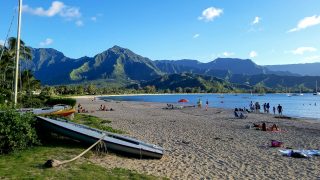
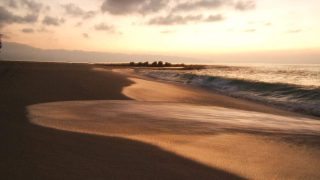
Lead image Beat of Hawaii. Makapuu Beach looks calm, but rescues like this week’s show how quickly it can turn.
Get Breaking Hawaii Travel News

all beaches should have large tally signs that indicate deaths and rescues by date and be up to date so that visitors can sere the dangers in black and white
I’m a strong swimmer with fins & snorkel. I’ve been at Makapuu where I had concerns about the strong current.
I generally disregard the strong current signs as I can handle Most places marked that way. I would like to see a special indication when strong currents are more than a lifeguard with fins could swim against.
Great article! M
Aloha BOH,
My story is similar to Jeff’s. After 3 years of testing to become a firefighter, I finally got my dream job in the SF bay area. The next year my family came out to Oahu to vacation/visit o’hana and we decided to go to Sandy’s for the day. My brother in law went out to body surf and after a while I followed, except he had fins and I didn’t. I ended up getting caught in the surf break and all I could think of as I was tossed and turned in the sandy water was “great…I finally become a firefighter and now I’m gonna drown in Hawaii”. Long story short, I eventually got myself out, but the scary part was that no one had seen me in distress. My sisters actually asked me “how was the water?” Lesson learned…….respect the ocean!!
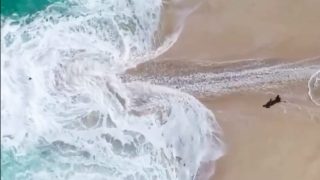
“Even Expert Swimmers got/get swept out at this beach”. Of course – & it’s only a nice short walk from the rooftops seen only after photo enlargement on my phone so that I could view the deep water channel between the white water turbulence on each shallower area inside of reefs carbuncle’s mostly just below the surface which was cause of breaking waves turbulent rough energy. Without a decent pair of swimfins & real understanding of the bottom of this small “cove” it’s very easy to realize the easily accessible hazard(s) to anyone wishing to enjoy a refreshing dip w outward flow of ebbing tide would be very hard pressed in effort to swim in reverse direction back to shore. At lower right of pic it looks like a person in white water of broken wave holding/standing onto a decent length of surfboard or might be a piece of reef still being whittled away.?
Just ask any Emergency Room doctor in Hawaii. They have heartbreaking stories to share. “Never, ever, turn your back on the waves,” one told us.
Thanks BOH for this excellent article and important reminder about respecting the ocean at all times. We’re in our mid 70s now, and don’t even go into the water when we’re in Hawaii. We love just sitting on the beach and watching the beautiful surf and waves from a safe distance. When we do go swimming it’s in our timeshare pool, with others around. As the old saying goes; “when in doubt, don’t go out!”
Aloha to all.
Going in Hawaii ocean waters at night is great, but unsettling. If no full moon overhead, it is black. Pitch black. You look out and see absolutely nothing. And you can lose people if they move even a few feet away from you. You and your friends better have, at minimum, those clip-on waterproof strobes or LEDs if you’re doing any serious nighttime swims or snorkel. Better is a hand-mounted dive light, even if not diving. You’ll see a lot more squid at night, maybe even some big rays too, all those feeders come out.
Worse is looking back at shore when in the ocean at night. If you’re not in front of a condo, resort or hotel, or something with bright lights, the shore also is totally black. No car lights or highway lights to guide you, as Hawaii doesn’t have much of either at night. If in a remote location, especially east side on any island, it is so easy to get disoriented, even lost, in the total blackness of the shore and sea.