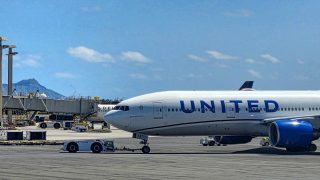

The Hawaii airfare bargains that have appeared intermittently throughout 2026 may become harder to find come next spring. Alaska Airlines now says its early 2027 Hawaii bookings are producing double-digit increases in revenue relative to seats available, while industry schedules show mainland-Hawaii flight capacity declining by more than 4% in the second quarter. That’s a sharp change from a year when airlines added seats to Hawaii faster than the market could absorb them.
The new figures emerged during Alaska Air Group’s October 21 earnings call, after it announced a $147 million quarterly loss amid sharply higher fuel costs. Despite the losses, Alaska expects its Hawaii business to perform considerably better in 2027.
Hawaii airfares may be entering a different market.
Across its network, Alaska reported a 13.4% increase in passenger yield during the third quarter, including a 17% year-over-year increase in September. Yield measures revenue earned per passenger mile flown, and Alaska told analysts it was comfortable carrying somewhat fewer passengers if higher yields more than made up the difference.
Those nationwide gains don’t mean Hawaii visitors paid 17% more for their tickets. Federal figures show U.S. airfares rose 22.4% in September compared with a year earlier. But Alaska’s West Coast-Hawaii flights weren’t seeing the same improvement. In both the second and third quarters, the airline collected less ticket revenue relative to the seats it offered on those routes, even as most of its other flights performed better.
We’ve seen the pricing contradictions in our own research. In July, when Alaska was already telling investors that Hawaii fares were strengthening, we found round-trip Los Angeles-Honolulu tickets starting at $259 on four competing airlines. Other dates on Alaska’s own calendar, however, cost more than $600, before prices dropped again.
Alaska now sees better conditions ahead, partly because it may have fewer seats to fill. During the past year, industry capacity between the mainland and Hawaii increased approximately 6%. Published schedules show growth slowing to 1.9% in the first quarter of 2027, then declining more than 4% in the second quarter next year.
Alaska’s chief commercial officer, Andrew Harrison, told analysts that January and February Hawaii bookings already show double-digit year-over-year unit revenue improvement, though he acknowledged it’s still early. Those winter booking results and the spring capacity reductions cover different periods, but together they suggest airlines flying to Hawaii may be regaining pricing power after a difficult year.
Alaska has spent nearly 20 years proving Hawaii needs fewer widebodies.
Another aspect of the airline’s changing strategy is something we’ve been discussing since Alaska purchased Hawaiian Airlines in 2024. Hawaiian built much of its mainland and international network around large, twin-aisle aircraft, while Alaska successfully served Hawaii using only Boeing 737s beginning in 2007. American, Delta and United have likewise demonstrated that much of the mainland-Hawaii market can be served more cost-effectively with smaller, single-aisle aircraft.
We’ve long believed that Hawaii doesn’t need nearly as much widebody flying as Hawaiian historically operated. Alaska’s ownership gives it more flexibility to decide which markets actually need those large aircraft and which narrowbodies can serve economically. That has been central to our thinking about what the purchase would eventually mean for Hawaii.
Alaska has emphasized its intention to retain Hawaiian’s widebody fleet, but it has never promised that any particular number of those aircraft would continue operating routes that touch Hawaii. Keeping the airplanes and keeping them flying to Hawaii are entirely different things. We’ve been raising that question since our October 2024 article, Will Hawaiian Airlines’ Widebody Planes Fly the Coop?.
For passengers, the distinction is not about the number of seats available. Travelers who prefer Hawaiian’s two-aisle cabins, including two-seat pairs along the windows in economy and lie-flat business class, may eventually have fewer widebody options on some Hawaii routes as the airline assigns more aircraft elsewhere. Alaska hasn’t disclosed what proportion of Hawaiian’s future A330 widebody flying will continue to serve Hawaii.
Seattle gets the big expansion using Hawaiian A330 planes.
The contrast became particularly visible this week. Alaska announced four weekly Seattle-Osaka flights and three weekly Seattle-Tahiti flights for 2027, all using Hawaiian Airbus A330 widebodies. Neither route touches Honolulu, and both support Alaska’s effort to turn Seattle into a much larger international hub.
Tahiti provides an especially interesting comparison. Hawaiian added a second weekly Honolulu-Papeete flight earlier this year, operating on Tuesdays, and Alaska is now adding three weekly departures from Seattle. That’s four additional weekly Tahiti flights compared with Hawaiian’s former once-weekly Honolulu service, with three of those additions bypassing Hawaii entirely. We examined that development in our recent report on Hawaiian’s Tahiti expansion shifting toward Seattle.
Alaska is still adding selective Hawaii flights, including new seasonal Honolulu service from Boise and Spokane. Boise will receive daily winter service, while Spokane gets just one flight weekly. Those additions show that Alaska continues to seek and find opportunities in Hawaii, although its far more ambitious widebody expansion is now centered on Seattle.
Alaska hasn’t announced that its new Seattle international flights require specific Hawaii flights to be cut. But reductions are already happening. San Jose-Lihue and San Jose-Kona were temporarily suspended in 2026, while Paine Field-Honolulu last operated in April and has no scheduled return. Oakland-Lihue has substantial gaps beginning in November, and Portland-Lihue is scheduled to disappear in May 2027, as we reported in Hawaii Flights Promised Year-Round Are Disappearing Again. The projected 4% reduction next spring is industry-wide, so these individual Alaska changes are only one part of that larger picture.
For travelers planning Hawaii trips in 2027, the more immediate concern is whether the inexpensive fares we’ve seen on and off on some routes will continue as seat availability tightens. Fewer flights don’t automatically mean higher prices everywhere, and travelers with flexible dates can often still find excellent deals. But Alaska’s improving Hawaii revenue outlook, combined with the industry’s planned capacity reduction, gives us reason to believe that the unusually aggressive discounting we’ve seen will not continue into next spring.
What you can do before booking Hawaii flights for 2027.
With airlines planning fewer seats next spring and probably beyond, we’d start comparing fares now, particularly for travel from April through June. Check different departure and return dates, compare nearby mainland airports where practical, and set Google Flights price alerts for routes you’re considering. There’s no reason to panic-book based on an airline forecast, but waiting indefinitely for another unusually cheap fare based on past prices you’ve paid could be disappointing.
If you find a fare you’re comfortable with, consider booking a ticket that lets you change or cancel without a penalty (our favorite way to go), and keep checking prices afterward. But as we recently reported in Hawaii Flight Prices Drop. Airlines Just Made Savings Harder To Claim, Alaska passengers are now reportedly being told they must cancel and rebook to claim lower fares rather than simply have existing reservations repriced. That can put companion discounts, seat assignments, and other benefits at risk. We’ve saved money doing this ourselves, but we’d now check the replacement fare, available seats, and credit rules before canceling anything.
Photo Credit: © Beat of Hawaii at Kahili Beach on Kauai.
What are you seeing as you price Hawaii flights for 2027? Are fares higher than you expected, or are you still finding the bargains that appeared throughout 2026?
Get Breaking Hawaii Travel News