
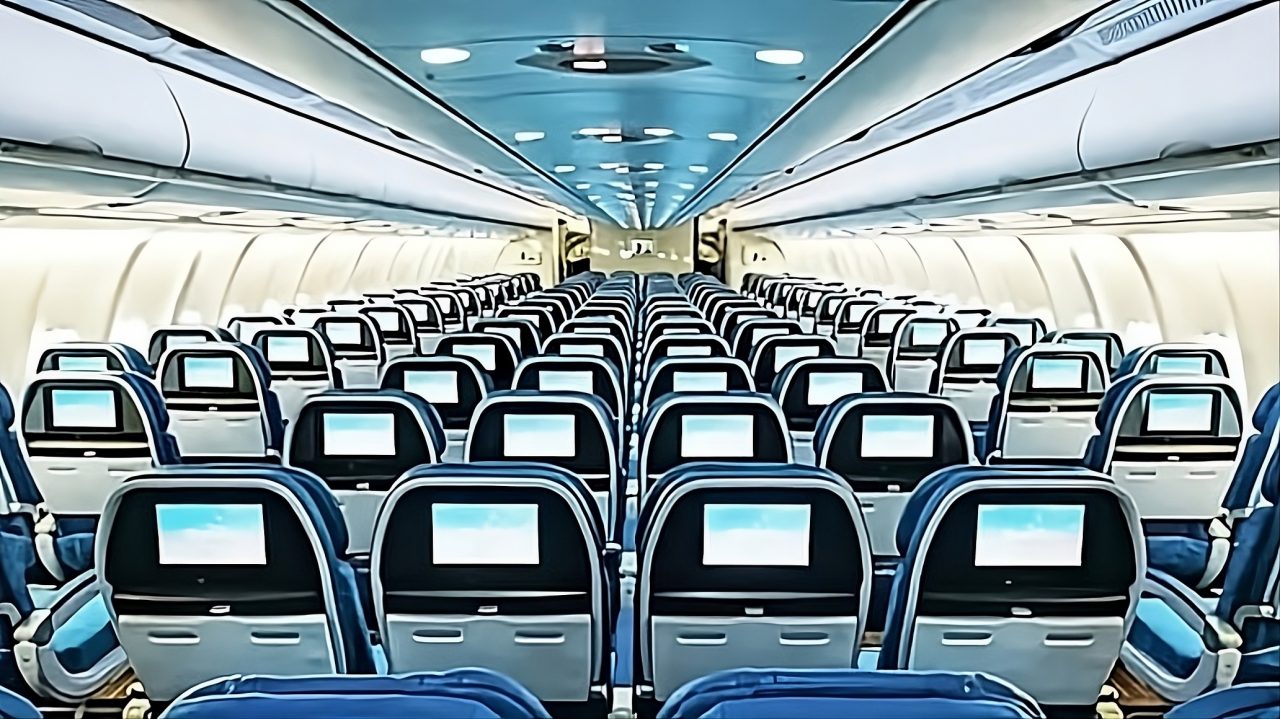
A Hawaii vacation has moved dramatically upscale while some of the airplanes carrying visitors here have decidedly not. Travelers can spend $1,000 a night on a resort, pay substantially more for the rest of their trip, and then settle in for six, eight, or ten hours on a widebody that has been flying for decades.
Airlines, meanwhile, are spending billions on new Boeing 787s and Airbus A350S with more premium seats, the latest entertainment, and business-class suites with direct aisle access and doors.
We wanted to find out whether Hawaii really has become a place where older planes, especially widebodies, keep flying after newer aircraft take over elsewhere. Looking across United, Delta, Hawaiian/Alaska, and American, here’s what we found: the pattern is strongest at United and Delta, takes an entirely different form at Hawaiian, and is largely different at American.
What is clear is that much of the latest long-haul investment is going elsewhere rather than to Hawaii. For travelers, this is about what they experience for all those hours on the way to an increasingly expensive destination.
United’s 364-seat Hawaii workhorse is nearly 30 years old.
United’s high-density Boeing 777-200s wide-bodies have been familiar sights on Hawaii routes for years. The 19 aircraft of that configuration average about 28.5 years old, carry a whopping 364 passengers, and continue to fly regularly between Hawaii and cities including the West Coast and beyond. Some date to the late 1990s, when much of today’s premium airline experience didn’t even exist.
United’s 787 fleet is from a different era entirely. Its 787-9s average less than seven years old and its 787-10s just over five, with Dreamliners playing a growing role in international flying across Europe, Asia and the South Pacific. Dreamliners also fly on Hawaii routes, so United’s Hawaii operation isn’t all older 777s, although those high-density widebody aircraft remain concentrated here and continue to do much work on key routes.
But back to the 777. With 28 seats up front in a very old and odd configuration, and 336 in economy, the 777 plane handles Hawaii’s huge leisure demand well. The Dreamliner may be more appealing to passengers, but United can mostly use it elsewhere where a larger premium cabin has greater earning potential.
For United, the 777 long ago stopped representing the future without losing its usefulness. Moving 364 people at once to Honolulu or Maui is still a job these airplanes do exceptionally well, which gives the airline little financial reason to replace them on those routes just because something newer and more premium exists.
Delta deploys some of its oldest widebodies on very long flights to Hawaii.
Delta’s remaining Boeing 767-300ER fleet averages about 29.5 years old, and those aircraft continue flying to Hawaii. One of their assignments is New York-Honolulu, where a westbound trip can approach 11 hours and ranks among the longest domestic flights in the country. Its A330-300s, averaging about 17 years, are also part of Hawaii flying from longer-haul mainland gateways.
Delta does have Premium Select (premium economy) on some 767s and is investing heavily in its older A330s rather than simply replacing them. Upgrades planned or in process include new Delta One suites, entertainment systems, Bluetooth and USB-C power, allowing an older airframe to deliver a much newer, upgraded cabin experience.
Delta also describes Hawaii as part of its long-haul leisure network and has emphasized the premium experience travelers increasingly expect flying here. Some of those travelers are nevertheless making the trip aboard aircraft approaching three decades in service, even as the airline’s newest widebodies become more familiar mostly elsewhere.
Hawaiian’s A330 issue isn’t really its age.
Hawaiian’s A330-200 fleet averages about 12.5 years, nowhere close to the age of United’s Hawaii 777s or Delta’s 767s. We have flown and written about these aircraft repeatedly, and the cabin has increasingly been the bigger issue than the airplane itself.
Hawaiian’s current lie-flat premium seats use a 2-2-2 arrangement without direct aisle access for everyone. We saw the contrast ourselves when we compared Hawaiian’s aging A330 premium cabin with Alaska economy, and we’ve also written about the lack of true premium economy on Hawaiian’s long-haul fleet.
Alaska isn’t leaving the A330 unchanged, however. A complete interior overhaul is scheduled to begin in 2028, with new business-class suites, true premium economy, and updated coach cabins, as part of more than $600 million in planned Hawaii investment over five years. We’ve already looked at how the A330 overhaul could remove around 60 economy seats as more room goes to premium passengers, and the impact on economy-class travel.
American doesn’t quite follow the same pattern.
American’s Hawaii operation includes relatively young Dreamliners. Its 787-8 fleet averages about seven years and its 787-9s less than six, putting Hawaii passengers on the same basic generation of widebody American uses across its international network.
American no longer has an aging 767 operation but does have older 777-200ERs still flying to the islands, even as its widebody network depends much more heavily on the 787 family. Hawaii therefore receives a broader mix of American’s current long-haul fleet, including both older 777-200ERs and far younger Dreamliners.
Industry-wide, what Hawaii gets depends heavily on what each airline owns, how those aircraft are configured, and where each carrier can earn the most from its newest and most upgraded planes.
Why older widebodies keep finding homes in Hawaii.
Hawaii combines long distances with high volume leisure demand. Airlines need enough range to cross the Pacific and enough seats to move hundreds of vacationers at once, without necessarily finding the same premium demand available on major international business routes.
United’s 364-seat 777 shows how well an older aircraft can fit that market. Replacing it with a newer 787 could mean fewer seats to Hawaii while taking that Dreamliner away from another route where its premium cabin can earn the airline more money.
There is also a financial advantage in keeping proven aircraft productive. Their capabilities are well understood, much of their original capital cost is behind them, and cabin refurbishments can extend their passenger life without requiring an airline to replace the entire airplane.
For passengers, those economics don’t erase what they see and feel when they step aboard. Hawaii increasingly sells a premium vacation product from the moment visitors begin planning it, and we’ve previously looked at the odd disconnect between that and what airlines actually offer premium Hawaii travelers.
The newest widebodies will keep arriving, but Hawaii won’t necessarily be near the front of the line to receive them. Several airlines have found that aircraft no longer reflecting their technological prowess can still be exceptionally valuable here, which may be the most frustrating explanation of all for Hawaii visitors paying today’s prices while spending hours aboard them.
Have you noticed older planes showing up more often on your Hawaii flights, and does the aircraft you get matter when you’re paying today’s Hawaii prices?
By Rob and Jeff, Beat of Hawaii.
Some of the most meaningful parts of Hawaii are the ones visitors walk right past without knowing they are there. We’ve spent nearly 20 years finding them firsthand for BOH as full-time Hawaii residents reporting on travel, culture, and island life, and telling you what they mean for your trip. Join us →
Get Breaking Hawaii Travel News


We typically fly Alaska which now uses Hawaiian A321 or A330 planes that are not that old.
Delta replaced their 757’s used for Lihue to Seattle with A321s. So it isn’t all older aircraft.
We had a horrible trip on Delta from Atlanta to Lihue, part of an international trip. We will never fly Delta, it was that bad!