

Flights to Hawaii once defined aviation. There was a time when flying to Hawaii was not only a big deal for passengers but also for the airlines themselves. Pan Am, TWA, and United all built prestige around their Hawaii services. The Boeing 747 and other wide-bodies turned the Pacific crossing into a statement of comfort. Lounges, two aisles, and a sense of occasion were part of the journey.
Those days are gone. Hawaii has now been reduced to what airlines treat as another domestic run. For the carriers, it is simply a five-hour flight to manage with maximum efficiency, no different in their playbook than service to Des Moines. The sense of grandeur that once surrounded Hawaii flying has slipped away.
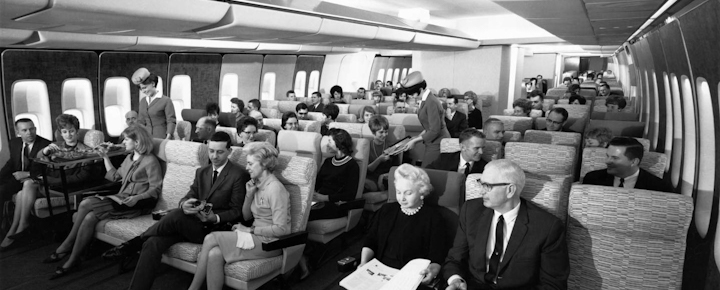
All airlines are shifting to smaller planes.
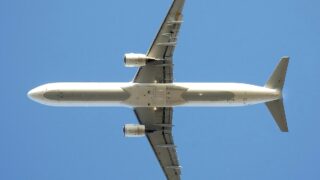
In December of last year, United Airlines flew an Airbus A321neo from San Francisco to Honolulu and back. There were no paying passengers. This was a proving run, part of the FAA’s required extended overwater certification. With that single test, United confirmed what is already clear across the industry: narrow-bodies are taking over Hawaii service.
United already relies heavily on the 737 MAX for Hawaii, assigning wide-body aircraft only where demand, premium cabins, or cargo justifies it. The A321neo only deepens that pattern. For visitors, it is another step away from the wide-body tradition that once defined the trip.
Comfort traded for efficiency.
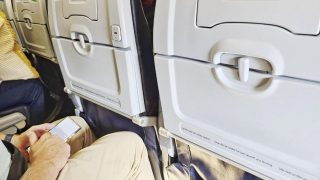
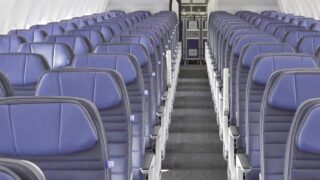
Five hours across the Pacific on a single-aisle aircraft is not the same as a twin-aisle experience, even as some would disagree. Cabins feel tighter, lavatories are fewer, and the aisles stay congested for sure. For families traveling with children or for older passengers who need more space, the difference is more than inconvenient. It can make the journey far more difficult than it once was.
While the newest Boeing and Airbus planes do bring improvements such as bigger bins and quieter engines, they cannot change the physical limits of a single-aisle narrow-body.
Airlines argue that travelers gain in other ways. Narrow-body aircraft allow airlines to either charge less per trip or earn higher profits, offer more departure times, and provide carriers with the flexibility to adjust schedules without flying empty seats.
For some visitors, that potentially could translate to lower fares or more convenient flights. Flying to the islands used to feel like part of the island vacation itself. Now it feels more like any other domestic hop, crowded and routine.
The A321XLR could reshape Hawaii travel.
Starting in 2026, the A321XLR will begin entering U.S. fleets. With its more extended range, it could connect inland hubs like Denver or Dallas directly to Hawaii. For travelers, that could mean skipping crowded West Coast connections. For the airlines, though, the first deliveries are more likely to go towards the Atlantic, where revenues are higher and competition sharper.
That makes Hawaii less of a priority, but the symbolism is important. The XLR shows that airlines now have tools to bypass wide-body aircraft almost entirely. Once that capability exists, it is hard to imagine a return to the days of jumbo jets bound for Honolulu.
Southwest wild card: Spirit slots in play.
Industry chatter has added one of the strangest twists yet. With Spirit walking away from dozens of A321XLR deliveries once lined up through AerCap, speculation has grown that Southwest may be exploring ways to take them. For an airline built entirely on Boeing, the idea of adding Airbus aircraft sounds almost impossible.
However, Southwest is under pressure, and its Hawaii operation has struggled since its inception. The company is in such flux that the notion of breaking its Boeing-only tradition no longer feels entirely unthinkable. Even if it never happens, the fact that this possibility is circulating demonstrates the extent to which the narrow-body trend has become a disruptive force.
Wide-bodies fade, and so does the glamour.
Hawaiian, American, Delta, Alaska, United, and Southwest all now rely heavily on narrow-bodies to Hawaii. Hawaiian still operates its fleet of A330 wide-bodies. Still, under Alaska’s ownership, it is far from guaranteed they will all stay in Hawaii service as Alaska leans into its long and successful tradition of narrow-body flying.
Wide-body aircraft across the entire industry are still flying to Hawaii, but the number is far fewer than ever before. They are deployed only on premium-heavy routes, cargo-driven flights, or during peak travel demand. What used to be the default has become the exception, and today a wide-body to Hawaii is a deliberate choice rather than the standard way to fly. The baseline experience of flying to Hawaii has shifted permanently to single-aisle cabins.
That change means more departure options and sometimes more affordable fares, but also smaller cabins, busier aisles, and less comfort. The collapse of space is not about one airline. It is about all of them.
What this means for Hawaii travelers.
For visitors, the comfort collapse is now a reality. The wide-body aircraft that once symbolized Hawaii travel are shrinking into niche roles. Narrow-bodies are filling nearly every other slot. That means the journey to Hawaii will increasingly feel like any other domestic trip, stripped of the glamour and space that once defined it.
The airlines will celebrate efficiency and environmental gains. Travelers will measure the difference in lavatory lines, cramped aisles, and how the trip feels before they even land. Some will accept it as a fair trade for lower fares or nonstops from inland hubs. Others will mourn the loss of an experience that once set Hawaii apart.
Hawaii has always been at the forefront of aviation change. From Clippers to 747s, from lounges to wide-bodies, the islands helped shape most aspects of airline history. Today, Hawaii is undergoing another transformation. But this time, the change makes the trip feel smaller, tighter, and far less special.
As Hawaii flights continue to shrink in both space and glamour, travelers are left to decide if the journey to paradise is still worth it, and whether the choice of airline even matters.
For some, the trade-off of lower fares and more departures feels fair. For others, the loss of many wide-bodies and the comfort they provided is a deal-breaker.
What do you think? Would you trade comfort for convenience on your next Hawaii flight, or is the journey just as important as the destination?
Get Breaking Hawaii Travel News



No trip even on a wide body plane is comfortable or luxurious including a trip to Hawaii. So a two seat isle os not for me , ever.
The only way I fly to Hawaii in on business class.
This is just another (of many) disappointing fact about air travel. They take our money (much more) and give us less. It’s all about the all mighty dollar. Air travel was once a great luxury. Unfortunately that is not the case now.
Hawaii is a beautiful destination, the flights are long. I wonder how many travelers they will lose.
It continues to baffle me that a five hour flight is so unbearable to some that they will jettison a two week vacation, 336 hours if we are going to get technical, for 9 or 10 hours of flying. Hawaii is 5 hours from the West Coast, Mexico is 2 or 3 from the West Coast, 5 from the East. The Caribbean is 5 from the West, closer to the East but you get a lot of safety concerns there and places like the USVI or the Caymans are no less expensive than Hawaii. Many if not everyone who reads BofH travels, do they all demand widebody aircraft on every flight they take? Are the demanding 787s and 777s on every transcon SFO-JFK trip? Do they refuse to go anywhere if they have to be on a plane more than 3 hours? What I’m reading suggests that to be the case which I know is Not the case. For those complaining about expensive plane tickets, a $440 economy ticket from LAX to HNL in 1980 would cost the equivalent of $1,524 today so airfares have come Way down, not up, that is just a fact.
It’s sad that the allure of the special flight to Paradise is being reduced to a City Bus type ride. It’s seems that the Hawaiian Experience is being lost. The Aloha Spirit that you get on a Hawaiian Airlines Flight is disappearing. Yes, they say that they will keep the brand but somehow you end up on another Airlines that owns that brand , the experience is not the same. The same Aloha Spirit is just not there. I understand, it’s all about profit and bottom line for the shareholders. But that first frontline experience can make or break your whole Hawaiian Experience. What’s next, Standing room only with handrails. So Sad.
No trip even on a wide body plane is comfortable or luxurious including a trip to Hawaii. So a two seat isle os not for me , ever.
The only way I fly to Hawaii in on business class.
I am disappointed if the wide bodies go away. I have a seat that I love and get every year. I pay extra for it. I’m hating the Alaska changes.
Given the current state of flying – to Hawai`i or elsewhere – in ways airline execs just don’t experience, see, or even empathize with; and the hard facts of costs & pricing (except for non-IATA, nationalized carriers) it’s a done deal. (It can take me 2-3 hours to get to the airport, another 3 to process thru, all for an uncomfortable 5+ hour flight; ditto on the back end.) Only solution is to pay up, or some kinda “space odyssey” deal: pack us in, turn on the cryogenics* or anaesthesia and wake us up at destination. No meals, drinks, complaints, or non-compliant pax; and minimal overhead.
* Or redefine “comfort”: HA used to turn the cabin temp WAY down on packed flights HNL-PPG. We gladly huddled together for warmth, neighbors became “seat-mates” preferring close, friendly collaboration over personal space, amenities, or gripes.
So you expect airlines to reduce their profitabilty for the “grandure” of a flight to Hawaii? The 1960’s are calling you. Hawaii has lots of grandure to offer once the traveler gets here. Just dont expect it on the plane ride. Lower fares and more selections work for me.
The flight to Hawaii, regardless of what airlines using the single aisle for five hours crammed in the small seats is gonna be unbearable. I get cramps in my legs and claustrophobia saying so close to people. The flight attendants are really gonna be able to go up and down the aisle and if they have that cart, you can’t get to the bathroom. I don’t think the airlines thought this thing through and only profits are consideration. The passenger has become forgotten it’s all about profits and it’s not just a simple five hour. Flight. Five hours is five hours. I am not happy with the directions. The airlines are going. I will look for an airline That respects their customers to Hawaii. I used to fly United but not sure anymore.
People stop flying to Hawaii. Too costly on the island anyway. There other beautiful places to visit and you can fly a wide body jet.
Airline travel is simply brutal for the average traveler compared to what it used to be. I am an aviation enthusiast, former private pilot, and former USAFR flight crew member. You’d think given that history that I’d love to fly. No! I have as much if not more contempt for the commercial airline industry than they do for the average traveler. It’s all about squeezing money from us, and nothing more! Even a two-hour domestic flight makes you feel like cattle! Given that and the current unwelcoming atmosphere for tourists in Hawaii, I doubt I will ever return.
Before I lived in Hawaii and we use to fly from Denver to Kauai or Maui via LAX or SFO and HNL it was an all day affair requiring two airlines two connections and dare I say many, many hours spent in one off those airports after missing a connection, having an interisland flight cancelled or overbooked, having a return HNL to mainland flight overbooked or any other combination of mishaps that could cause the entire puzzle of flights to come apart at the seams. While the one wide body part of getting to Hawaii was memorable I’m not sure it made up for the extra time and complexity we all dealt with in getting to Hawaii in the past. Now I can get from Kona to just about any west coast or middle American city I need to non stop and vice versa. Same can be said for Honolulu and OGG. To a lesser extent LIH but still one can get to Hawaii much more easily and faster with much lesser chance of getting bound up with one or two connection delays as was common in the past.
So, back in the day (1965-1975), what were ticket prices like? What would a round trip from Los Angeles have cost in today’s money?
Comfort over conveniece every time for me. Let’s face it, this is where our long awaited vacations begin. Where is the sense of relaxation being herded onto a narrow aircraft and being tucked into a narrow space for five hours. No thank you very much!
I thoroughly agree Angela!
I prefer comfort. The narrow body planes are so tight and with travelers weighing more than they used to, it is a really long uncomfortable flight.
Been there many times. About 9 including my honeymoon. But I will never return, it is in the US and I am Canadian. No more US anything for me, travel, food, any products. That said many parts are just stunning. Mexico from now on!