
Hawaii just outlawed gondolas, along with cable cars, aerial trams, and funiculars. These are now banned across the islands under a single new law just signed by Governor Green. The state erased an entire category of combined attraction and transportation. It did this to stop the one proposed ride that had been moving towards Oahu’s North Shore since 2019.
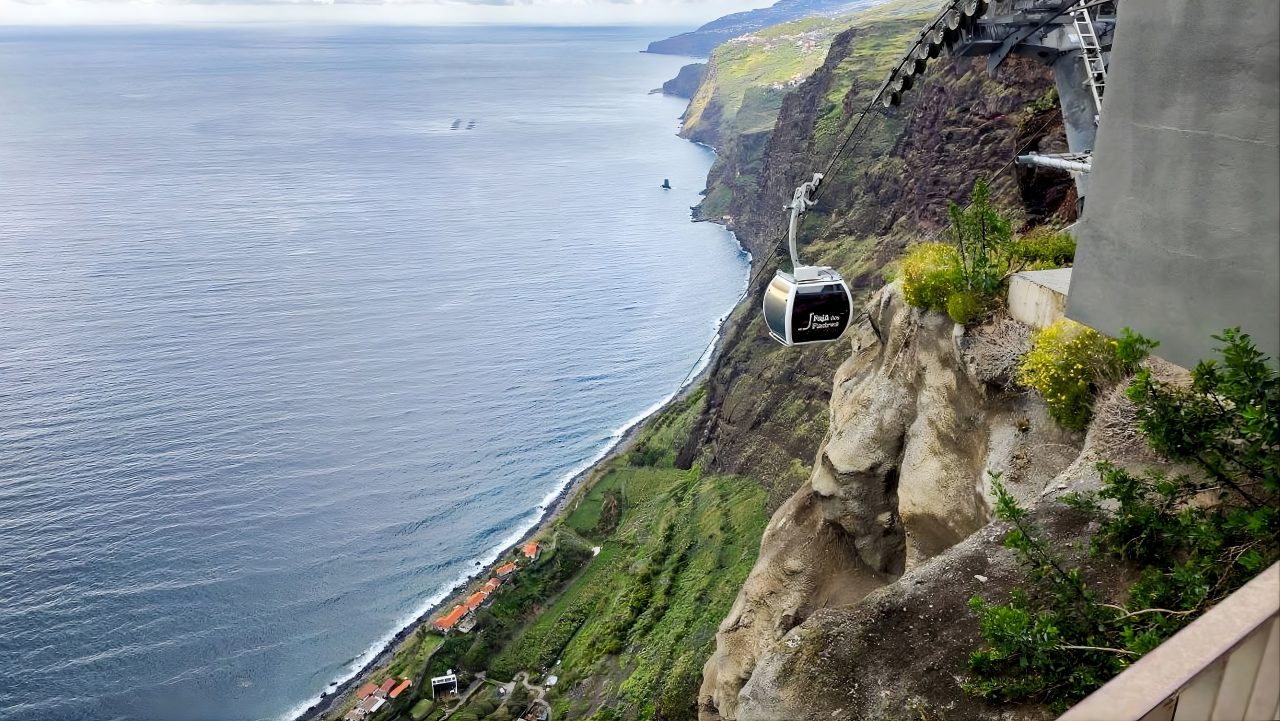
Other places build these for the very visitors Hawaii is seemingly trying to attract, and Madeira, the Hawaii of Europe, has for years. We have ridden its seven cable cars, and they are part of how you see the island. Two were built for visitors outright. The rest started as farm lifts, and those have since become rides visitors use, gliding over cliffs and banana groves to places you could never otherwise reach. There a gondola isn’t seen as an intrusion on ag land. It is how the land gets used. Hawaii looked at the same idea and decided it never wants one, anywhere, and that decision is now permanent.
For a visitor, it could be read as another line Hawaii has drawn, after vacation rental controls, resort fees, rising accommodation taxes, and evolving reservation and timed-entry systems. The question underneath it is simple. Is Hawaii protecting itself, or closing itself off to the people who come to see it?
The ban also shuts a door Hawaii might later miss that almost no one is talking about. Rail was meant to reach Waikiki and the University of Hawaii at Manoa campus, but those extensions remain in limbo. In that gap, a different idea quietly circulated. A detailed local proposal, mapped out online, pitched an aerial gondola running from the rail terminus at Ala Moana to Waikiki and UH Manoa, arguing a modern cable line in Honolulu could potentially move thousands of riders an hour for a fraction of rail’s cost. Whatever its merits, that path is now closed to any private developer, and even a public version would need its own act of the Legislature. The same law written to stop one tourist ride above the North Shore also eliminates the most practical case a gondola might ever have made in Hawaii, as urban transit.
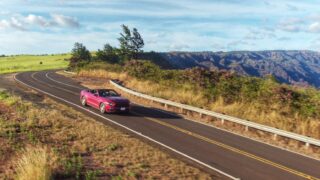
Drive out through Mokuleia and Waialua, and the feeling of Oahu changes fast. Even the traffic noise fades as the Waianae Range rises sharply behind open agricultural land. Mount Kaala sits back there at over 4,000 feet, the highest point on Oahu, and from below it looks less like a casual hike and more like a place you are not meant to ever access. A North Shore ranch proposal aimed to change that, with plans to carry visitors up toward those slopes by gondola rather than on foot.
On more than 2,300 acres of former Dole land, Kaukonahua Ranch proposed a large agribusiness operation anchored by an attraction that would have reset how visitors experience this more rural side of Oahu. The idea was not a small farm stop but a full gondola climbing up toward Mount Kaala, lifting visitors into a unique landscape that’s never been part of the North Shore loop. That proposal, which would have included towers and cables, didn’t simply stall out. It became the reason the state moved to ban an entire category of attraction and transportation, statewide, for the first time.
The scene on the ground.
The project was presented as agricultural diversification as part of a working ranch, rather than as a standalone visitor attraction dropped into the North Shore’s pristine interior. That in part made a minor conditional use permit possible in 2019, a pathway that involved less scrutiny and fewer public hearings than a major permit would have required.
How the plan unraveled.
But officials began questioning whether a project of this scale should ever have been processed as a minor one, arguing that something covering thousands of acres and introducing a gondola toward the island’s highest mountain demanded a higher level of review and public input. Last November, the Honolulu Council moved to revoke the permit and urged the Department of Planning and Permitting to reconsider the approval.
Then the state went further than any permit could.
The state legislature, however, did not stop there. It passed the measure prohibiting passenger and cargo ropeways across the islands. The language is broad, covering the entire category of gondolas, aerial tramways, chair lifts, cable cars, and funiculars, which means a project like the one proposed above Mokuleia is no longer a matter of permits.
Governor Green signed the measure, now Act 172, with the prohibition reaching privately built passenger or cargo ropeways in every land use district. Government projects are exempt only if the Legislature signs off on them. It is now the law.
The ranch’s general manager submitted testimony calling the measure a targeted effort to override an existing, permitted project, the city agreed the move was aimed backward, with the Honolulu managing director warning it would create legal and administrative challenges by targeting a project already reviewed and approved seven years ago. The bill’s sponsor, Rep. Sean Quinlan, did not flinch. He acknowledged the risk plainly, saying that anytime you pass a law, there is a chance of litigation, and if the state gets sued, so be it.
Who wanted to build it, and what stood in the way.
The proposal did not come from a local ranch or farm operation. The backer was Canadian businessman Joey Houssian, whose ties run to Whistler in British Columbia. The plan was an aerial tramway paired with a powered zipline chair ride on land zoned for agriculture. Quinlan, whose district includes the area, said he was tired of foreign developers coming to Hawaii to make money off his community, and that foreign-money framing ran through much of the testimony against the project.
There was a deeper objection, too.
Mount Kaala is sacred to many Native Hawaiians, and a coalition has organized to protect the Waianae Range and the mountain’s slopes from Kamananui to Kaena. For them, the win was not only about traffic or ag land structures, but about whether Native Hawaiians have a real voice in what gets built on land that holds significant cultural and historical meaning, and whether a mountaintop that has never carried visitors by cable should start doing so now.
What it means for the rest of Oahu’s farm attractions.
The gondola was an extreme case, but it grew out of something visitors encounter all over Oahu. Agritourism, the ATV tours, zipline courses, horseback rides, farm tastings, and event venues that have spread across the island’s agricultural land over the past decade, have become a test for many new visitor experiences outside Waikiki and the resort zones. The Mount Kaala agritourism project, on a minor permit, is the kind of easy-scrutiny path that allows a gondola to move toward the island’s highest peak with little public input. That is what sparked the outrage, and Oahu has since moved to require a fuller review of agritourism proposals going forward.
Other established operators are paying close attention. Kualoa Ranch, one of Oahu’s most recognizable attractions outside Waikiki, both backed the protection of agricultural land and warned that tighter requirements could burden legitimate operations and discourage the diversification that keeps Hawaii farms financially viable. When an operation of that scale signals concern, the ripple extends well beyond one gondola. The North Shore Neighborhood Board chair framed the whole fight in a single question. What do ATVs and gondolas have to do with growing food?
The line Hawaii drew.
Farming alone rarely pays the bills in Hawaii, and that fact is increasingly true. Agritourism has been seen as a financial bridge for some operations trying to hold large tracts of land without selling or subdividing. The Mount Kaala project tested how far that concept could stretch, and the answer has come back as a firm no.
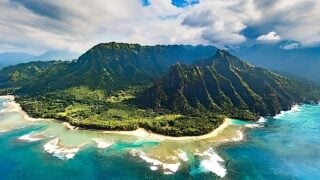
From a visitor’s perspective, Hawaii moved to ensure that one type of inland attraction would not exist here at all, and it did so initially to stop a single project on the North Shore of Oahu. Mount Kaala remains exactly as it has been, rising steeply behind Mokuleia with no cables or stations.
What are your feelings about the decision? Add your opinion in the comment section. Mahalo!
Photo Credit: © Beat of Hawaii on the island of Madeira, where cable cars take visitors to places not easy to reach.
By Rob and Jeff, Beat of Hawaii.
Some of the most meaningful parts of Hawaii are the ones visitors walk right past without knowing they are there. We’ve spent nearly 20 years finding them firsthand for BOH as full-time Hawaii residents reporting on travel, culture, and island life, and telling you what they mean for your trip. Join us →
Get Breaking Hawaii Travel News


I am currently on a comprehensive round-the-world cruise on a residential ship, the Odyssey. I have seen every form if cable car, aerial tram, funicular, and overhead rail imaginable ( including Oahu).
After observing the immediate-localized impact of the devices, and extended impact such as parking, vendors, unregulated street sales, etc. I am in full agreement of a state-wide permanent ban.
The insertion of not just the visual of the devices, but wide-spread impact have no place in Hawaii.
Hawaii does all it can to throttle business!
Hawaii seems to be developing a unique ability to shoot themselves in one foot while standing on the other.
Of course there will be offshore capital involved in development projects. If there isn’t enough local capital, where is new investment to come from?
Of course Mt. Kaala is sacred. They all are.
Hawaii needs to have a very serious conversation with itself whether it wants to be in the 3rd world or a member of the modern world with native traditions. Knee jerk decisions, ill-defined goals, and pandering to overtly racist localist minorities are not good strategies, short or long term.
This site is almost exclusively anti anything the Hawaii government does or doesn’t do.
1 paragraph as to why locals fought hard to deny this project. The pushback was quite fierce and last time I checked the politicians are there to represent the public.
To be fair- banning them across the entire state may have been a bit much but so is dedicating time to talk about using gondolas potentially to move people in Honolulu. I mean go look up say NY and their tramway to Roosevelt Island- it’s a money pit and it’s recovery from fares pales compared to other modes of transportation in NY.
“Mount Kaala is sacred to many Native Hawaiians” – is there any spot in the Hawaiian Islands that isn’t sacred to someone, at least as soon as someone else wants to use it for something?
It’s a phrase that seems to pop up every time someone wants to stop some development or other use of a location. Particularly by the military.
Outsiders who start tourist businesses are going to have problems in Hawaii. Think shark tours, Wailua river kayak tours, Na Pali coast, Waikiki surf lessons.
This tramway should have been like the Native Alaska tramway in Juneau, and owned and operated by OHA.
The Palm Springs tram is owned by the city.
These buisiness can bring in 100 million + a year.
The 1/2 way up a mountain should have been rejected because its a stupid idea.
Trams are all over the Alps, Tahoe, British Colombia, Hong Kong, Turkey etc. and are great for those of us not physically able to climb mountains any more. They are charging 40 to 100 per person, and people are happy to pay it.
Mahalo Nui 🌺 Loa to all the NS residents that have been fighting this parasitic corporate commercial lunacy blight for years!
i just spent a week at Telluride based solely on the fact that they had gondolas . It was fabulous and i will definitely return.
If you were impressed by Telluride you should try the Canadian Rockies in Banff / Canmore / Jasper. Multiple times more impressive and also cheaper since Telluride charges crazy amounts for even just plain hotels.
Aloha. Not trying to mix apples and oranges, but why is it OK to build unsightly wind turbines at the base of the West Maui Mountains (and other places on the Islands) but not gondolas? Gondolas are barely noticeable by comparison and would add economic value in a low impact manner. Is this just really about a non-Hawaii company wanting to build the structures? Something just seems off with this new legislation. BTW, I am not a resident, so I know I’m not a stakeholder in the matter, but it just seems that the government has become “selectively” anti-business. Not allowing in certain locations is one thing, but a complete ban seems somewhat ridiculous.
Mahalo for allowing comments.
Props for disclosing you’re not a resident.
I’ll say this, windmills (which plenty of locals also don’t like) at least serve a purpose to help with renewable energy that benefits locals. A gondola doesn’t really help locals much at all- sure the people employed and the nearby people may benefit but they also must deal with the negatives that additional tourism brings.
And while tourism demand might be lower than usual due to headwinds that include significantly higher airfare due to the Iran war and weaker international demand that this site chalks up to Hawaii policies instead of just the broader anti-American sentiment present in the world and our #1 international market from Japan experiencing the worst exchange rate seen in decades.
Hawaii will do just fine without gondolas.
Mahalo Ke Akua that Ka’ala was protected. Hiking is permitted so why not focus on this aspect? It’s much more sustainable and true to the ‘aina than machines.
Because the progressive greens managed to Force us to have wind mills … the biggest waste of money that everyone knows … and destroys life whether on land or out at sea with it’s toxic intense vibrations. And the issue on the North Shore with the gondola is that corporations keep attempting to use Hawai’i to make lots of money. The residents have been fighting this for years as they don’t want the NS to turn into a commercial theme park. I grew up NS in the 60’s and still in the islands … and so happy to hear that our corrupt fake state did not sell it’s soul to one more corporation. I was there in court with the NS community fighting against a corporation who wanted to purchase Waimea Valley to make a theme park … with everyone else many years ago … and thankfully we won.
Aloha Rob & Jeff
While not specifically favoring Gondolas, if they are on private property why should they be banned, if used for transportation or tourism on that property. Less obtrusive, probably less dangerous, and less offensive environmentally than helicopter tours, commercial windmills and solar panel farms in formerly productive ag areas. Just my 2 cents… I live Kauai. Love that you explore a large variety of issues around the islands❤️
Hi Kitty.
Thanks very much!
Aloha.
wasn’t it going to go over a mountain range? is that private land?
Good for Governor Green,
Not beholding to tacky crap. Go to Disneyland for that type stuff. Deadly helicopter tours should also be banned. Enough.
Certainly can understand the concern and opposition by residents of the North Shore of Oahu. However, a Statewide ban seems a bit extreme. You don’t have to look to Madeira for examples of successful trams and cable cars. Just look at how successful the Palm Springs Aerial Tramway has been. Built in 1963 and still going strong after 63 years! It is an asset to the desert communities and far from a blight on the desert landscape.
I think the decision to Not allow gondolas, etc… to be on Mount Kaala is sound and proper for All of the . This was a step in the right direction that should be done for Hawaiian peoples and the land that is Theirs. We (everyone else), need to accept that No progress on Any island is Good!
If you do nothing but build and build, where are the islands then? Not the paradise it should be, it will have Wall to Wall shopping malls, restaurants, and consumer goods everywhere! Leave Hawaii Hawaiian, please! I love the islands, and I want them around for a long, long time!
🌺
No gondolas!
No gondola on Oahu’s North Shore, please leave it as it is. That area can not support anymore traffic. And consider the recent flooding that occurred this past year in that area. There are enough attractions to satisfy tourists already. Some tourist actually visit the North Shore to get away from the busy touristy Oahu areas.
This is consistent in a way with the Hawaii legislative pattern….in a nutshell, a very large standard deviation of law giving, cause and effect, policy directions, etc. All over the place. Agriculture, I understand is simply not anywhere near a support industry in HI and economics from the outside (distance, wages, etc.) simply overwhelm ‘feelings’ … if it is to be a business. How the native culture feels about some mountain, piece of land, etc. Also ultimately a matter of opinion with wide variation among the native group, which is also not super well and crisply defined. And the limits of holy land claims….fuzzy. This leads to wild legislative activity; slowing everything needed or not; and incoherence. This might be a good thing or a bad thing…but I think it is … a real thing. Any given decision becomes also a part of a wide distribution of overall, balanced wisdom.
I have mixed feelings about this bill’s passage. I have travelled the world and a tram, gondola etc. can be a wonderful attraction, if tastefully done. I agree that sacred lands should be preserved as is. There are however places where if done correctly could be helpful transportation.
I remember when Kualoa Ranch was just a ranch that few tourists visited. Now it’s become one of Oahu’s signature attractions. That makes me wonder where the line should be drawn between good agritourism and too much agritourism. It’s probably harder to answer than people think. Not sure where this should get answered, but it seems like a blanket no might not have been the best move either.
One of the things we enjoy most on Oahu is driving out toward Mokuleia because it feels so different from Waikiki. I’m not sure a gondola would have ruined that, but I can understand why residents didn’t want to find out.
The surprising part isn’t that the project was stopped. Lots of projects get denied. What’s surprising is that the legislature decided to ban the entire category statewide, as though the existing permitting process wasn’t working well enough.
We rode several cable cars in Madeira and absolutely loved them. They never felt out of place because they seemed woven into the landscape and the island’s history. At the same time, I can understand why Hawaii would see the situation differently. Every destination has to decide what fits and what doesn’t. At the same time a statewide ban seems extreme.
Glad to see that the beauty of the islands is important to government. Have lived where there are gondolas. They take away from the natural sights . The skyline and mauka should be protected. Man can move about by foot. Less damage to the land.
I wonder what happens if someday Honolulu actually does want a gondola for transit. Like the one I’d heard about that I thought UH was involved in at one point.
Having been to Madeira, I can see both sides. Their cable cars are incredible, but Hawaii isn’t Madeira either. I’m just not sure why this one questionable project had to result in closing the door to other ideas that might have worked here.