
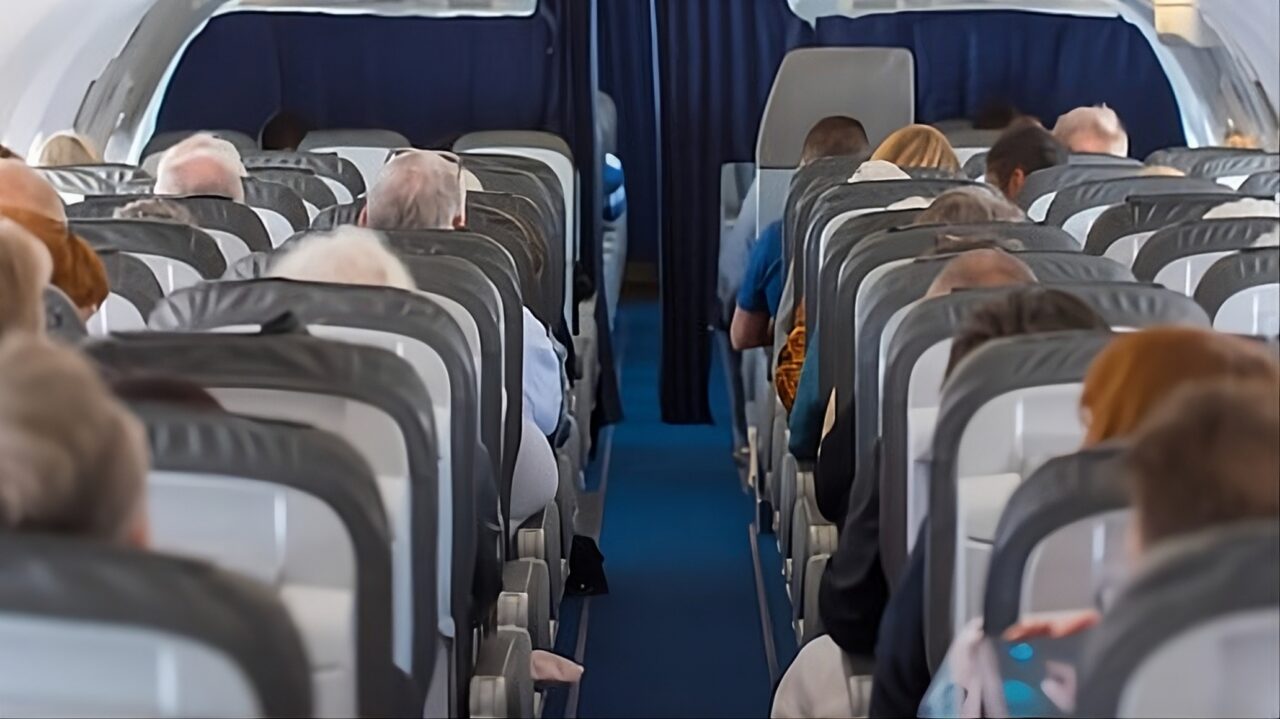
Hawaii traveler anger around flights has been building for years, but this week’s article on summer 2026 airfares pushed it into sharper focus. Readers were reacting not only to record pricing, but to a growing sense that airlines are squeezing Hawaii travelers from every which direction all at once, often assuming demand will hold no matter what changes or costs are imposed. Well, maybe not anymore.
Higher fares, fewer perks, less space, and long trans-Pacific flights are all converging. What most readers did not yet know is how close Hawaii just came to absorbing a test of one of the most aggressive economy seat downgrades attempted by a mainstream airline in recent years. That plan stopped just short of Hawaii only because passengers elsewhere revolted first.
How Hawaii nearly got the tightest seats yet.
It was Canadian airline WestJet that was the latest to shake up the industry when it tried introducing a high-density seating configuration on part of its Boeing 737 fleet, pushing comfort far beyond what most travelers expect from what’s considered a full-service carrier. Seat pitch was reduced to about 28 inches, a measurement typically only associated with ultra low cost carriers, and recline was eliminated entirely on standard economy seats (Hawaiian’s interisland fleet has no recline). They also added an extra row of seats, further increasing passenger capacity.
We have been tracking this pattern for years, most recently as airlines shrink baseline economy comfort on Hawaii routes and then sell that space back through extra-legroom rows and premium seating tiers. What WestJet attempted shows what happens when this strategy is pushed too far, too fast.
WestJet intended the configuration roll-out across 43 planes, but only reached 22 before the airline abruptly reversed course. Those aircraft were operating leisure routes lasting five to six hours, which is the same flight time on WestJet’s Hawaii service from Calgary and Vancouver to Honolulu, Maui, Kona, and Lihue.
This was not a hypothetical scenario for Hawaii travelers. The same narrow-body fleet serves these island routes, and the densification strategy was designed to expand fleet-wide rather than just be limited to select markets.
Passenger backlash was beyond what airlines ever expected.
What’s interesting is exactly what motivated the sudden about-face. It did not come from any policy review. Instead it came from passengers who were experiencing the seats firsthand and sharing what that looked like publicly.
A viral TikTok video showed a family flying from Edmonton to the Dominican Republic, with the father, who stands 6 feet 3, unable to straighten his legs as his knees pressed firmly into the seat in front of him. His daughter joked that he would need to pay extra for his other leg, and flight attendants ultimately moved him to a seat with more room. The video spread rapidly, surpassing a million views and prompting a flood of similar complaints from travelers.
Cabin crews were already dealing with the fallout. Flight attendants reported rising tensions onboard, more frequent confrontations, and increased physical strain as frustrated passengers sought any relief. Their union described the configuration as universally unpopular, while even pilots warned that it eroded the guest experience and weakened the airline’s brand.
Then executives acknowledged the problem.
What makes this episode particularly revealing is what happened internally once concerns escalated. In November, WestJet’s CEO and five senior executives flew from Calgary to Toronto seated in the back rows of the densified aircraft, experiencing the configuration under the same operating conditions passengers were complaining about.
According to a union bulletin, executives acknowledged that the seating arrangement would present challenges on longer trips and overnight flights. The CEO later said he personally felt comfortable in the seat but understood that others would experience it differently. That acknowledgement would clearly apply to Hawaii, where flights are longer than the executive test run and even operate overnight when leisure travelers expect a reasonable degree of comfort.
The reversal and its implications.
WestJet this month reversed course and announced it would remove the extra rows and return the 22 affected aircraft to a 174-seat layout with roughly 30 inches of pitch, and restoring recline in standard economy. The timeline for completing the conversion has not been finalized, but the decision itself was a clear win.
The situation became brand damaging to such a degree that the airline hopes it will soon fade. That may be true for WestJet’s reputation, but the broader lesson extends well beyond one airline or any single fleet decision.
How this connects to Hawaii airfare anger.
The timing of this reversal matters because it collided directly with mounting frustration over Hawaii airfare pricing. That was reflected in our analysis of summer 2026 fares. One reader who wrote to us captured the intensity of that sentiment and explains why this seat story resonates so strongly now. “It’s time to begin a consumer boycott of all Hawaii air travel until the airlines come to their senses and are forced to back off this price-gouging stunt.”
Hawaii visitors’ reaction is not triggered by pricing alone. The WestJet episode shows that, at the same time fares are reaching unprecedented levels, airlines were also preparing to continue reducing comfort on routes that already demand long hours in the air. The combination of higher prices and shrinking space is where frustration turns into something worse.
Hawaii avoided this outcome by a narrow margin.
WestJet’s Hawaii service peaks during winter, when long stage lengths and overnight flying dominate snow-bird flight schedules. Those are the conditions where airline leadership acknowledged the densified seating struggled most. Had passenger outrage emerged later, there seems little doubt Hawaii routes would have been included in the rollout.
This was not a case of airlines proactively protecting Hawaii travelers. It was a case of a plan collapsing under consumer pressure before it reached its logical next destination.
Where the line may be forming.
Airlines remain under intense pressure to increase earnings via revenue per seat, and densification is one of the few remaining vehicles available. This situation shows that even on leisure routes where demand has long been treated as impervious to such changes, there are limits to how much can be taken away before passengers push back in a meaningful way.
Hawaii is at the center of airline tension, combining long durations, high prices, and long-held emotional expectations around what is fast becoming a trip of a lifetime. The question for travelers isn’t whether airlines will test those limits again, but rather how much tolerance remains before high pricing and discomfort together start altering behavior in ways airlines can’t dismiss any longer.
Get Breaking Hawaii Travel News

We are planning to visit Oahu in 2026. We will definitely take note of this issue and plan accordingly.
Who wants to be uncomfortable when they are spending hard earned money or even fly that long?
I just flew Westjet to OGG. For my party of three, 6’1″/5’11″/5’4″, I had to pay over $700 in seat fees ( on ” sale” at the time of booking) to get adequate economy legroom for 2 out of 3 passengers. Over and above the fares paid. The seats were not comfortable, the legroom barely adequate.
There is a video out there, on Canada’s Global TV, of a couple who were told by WS to acquire a doctors note to prove height. They did. Then they were told to have an MD fill out a 12 page questionnaire and submit. They paid for extra legroom seats and filed a complaint with a Canadian government agency; they are 89,000th + in the queue. Seriously.
This is what flying has become.
Oakee Dokee…… From now on when that WorstJet CEO flies on his confirmed ticket he should be permanently banished to the “Worst’ least legroom, non reclining seats in the fleet … How can these fools utter such insulting pablum…
Hope they can’t live this down as a reminder to their other greedy brethren that
in addition to flying too close to the sun, there’s definitely a limit to their corporate greed….
When you live on the neighbor islands that have few medical options, you must fly to HNL. I have always said, if there’s an emergency, I’m toast. I have limited mobility in one leg & getting out of these squished together seats is extremely difficult.
I have always wondered if anyone noticed the poor service from the mainland to Hawaii. We have been flying United ( and once in awhile American) from the Midwest. Back in the day, seatback entertainment was the last to come to flights. The flights to europe, in economy have free hot food. The flights to Hawaii, there is no free food yet the distance is about the same as it is to Europe from the Midwest.
The airlines are doing the same as Maui, squeezing Hawaii travelers from every which direction all at once. Good for West Jet correcting the problem.
Hawaii needs to take lessons from West Jet.
WestJet was facing a huge, but quiet, revolt. It was self preservation to reverse the policy, not good will. The viral video of the unfortunate passenger in the 28″ pitch seat was the proverbial straw/camels back. WS quietly converted planes, some whole planes, subjecting unwitting passengers to these mini seats, even those who booked extra legroom at the front of the plane. The refund for not getting the seat chosen was either $50 for flights within Canada or $100 for international flights. The screaming had begun, the staff were hearing about it, the credit cards were being cancelled, the flight options were being explored and booked.
Funny, we just completed 2
of 3 inter-Island flights. At 6 feet tall, in economy, I was very comfortable. I didn’t notice any difference as previous flights. Same for our 5 hour flight from San Francisco. So, these Hawaiian airlines members have no complaints.
My experiences on interisland flights have been that I’ve had to crunch myself down to get into the seats, & I’m 5’ 4”.
Whew! … Well share holders of all large corporations are putting the squeezed on all us commoners, only here for them to parasite off of. Not until us stupid commoners wake up to what is happening to the quality of our lives getting worse and worse … start saying hell-No … will anything change.
Right on Ginger, well said! We need to do what was brilliantly depicted in the hit movie “Network” years ago:
“I’m mad as hell, and I’m not going to take this anymore!”
Aloha to all!
Airlines need to accept there is a finite limit to how much they can squeeze out of cabin space. Given the dire quality of inflight food options, a better solution would be to remove the galleys and use the space for additional seating. Let passengers bring their own food and drink aboard.
By the same token, passengers need to accept that the airline industry is not immune from the same financial pressures as any other sector of the economy. Rising prices are a fact of life. Paying $300 roundtrip 20 years ago has no bearing on current market conditions. Prices rise. Deal with it.
The airline seats are not designed for the average, oversized, huge, over-fed American families. Ask yourself: Do you ever see over-fed, huge pilots, or stewards? Nope. They are very fit so they can move about the plane quickly in case of an emergency.
I was on an alaska flight anchorage Seattle seated in first class. This flight attendant was the size of a bouncer. She stood in doorway as pilots took their bathroom breaks and was as wide as the door. Wish I could share a picture because I’ve never seen this in all my years of flying. I don’t know if there’s physical limits or not because she must have been 250 pounds too.
Gosh Valerie,
Not nice to stereotype Hawaiians as “oversized, huge, over-fed”.
Be Kind!
The comment refers to Americans of every state.
In defense of Valerie she said nothing about Hawaiian people. She said Americans.