
Hawaii just moved forward with a near-term (3-year) plan to bring traffic management, parking controls, and shuttle-based access to Oahu’s North Shore. It’s the same kind of approach Kauai now uses beyond Hanalei. The plan targets the corridor from Haleiwa through Sunset and Pipeline, one of the busiest tourism stretches on the island outside Waikiki, with parking hubs, peak-time advisories, and a study of a park-and-ride shuttle.
In December, we drove the eastern North Shore from Haleiwa through Laniakea, Waimea, Sunset, and Pipeline and found exactly what the plan is trying to address. Traffic was backed up through Haleiwa, parking lots filled past capacity, cars lined the shoulders at Laniakea, and the familiar surf-break stops were churning with visitors circling for spots even when there was no surf to see. This is the corridor the DMAP is targeting, and we can confirm that the pressure on it is real.
A sharp contrast sits 20 minutes in the other direction. We recently wrote about the western stretch past Haleiwa, out toward Mokuleia and Kaena Point, where empty beaches and open parking already exist with no planning attached. The DMAP does not cover that side because there is no crowding. The plan is concentrated on the part of the North Shore that has driven the Oahu visitor pressure story for many years.
The plan being advanced: what it actually covers.
The Hawaii Tourism Authority’s draft 2026-2028 destination management plan for Oahu identifies the North Shore corridor as a priority hotspot, alongside two trail sites elsewhere on the island. The North Shore is the most tourism-impacted stretch on Oahu outside Waikiki, which is why the plan focuses there. The DMAP addresses traffic management, parking controls, managed access, visitor data collection, and coordination among the agencies in the corridor.
For the North Shore specifically, the plan calls for baseline data on traffic, parking, and safety, peak-time travel advisories, tour and shuttle operator coordination, and a study of a park-and-ride shuttle. It also overlaps with state funding for a parking hub near Haleiwa and the long-discussed Laniakea bypass project. The combined idea is to help pull cars off the shoulders and route visitors through controlled hubs.
Those issues are not minor. Parking, roadside stopping, and beach access have long affected the North Shore visitor experience. Residents have dealt with blocked driveways, illegal parking, traffic backups, and too many people treating a rural coastline like a theme park loop. Whether any of the planned results materializes is a separate question, and the agency’s own track record is part of the issue.
A 2025 state audit of HTA found the previous round of destination management plans was rushed, often duplicated existing efforts, missed major hot spots, and proved impractical, with little accountability or means to measure outcomes. HTA has said the new round of plans was based around a narrower scope and tighter agency coordination. The new plan looks reasonable on paper, but it will still need to clear the same agencies, budgets, and timelines that produced the last set of unacceptable results.
Why it’s happening now and not later.
The case for moving this forward now is obvious. North Shore pressure is already very real, and when surf season spikes, tourism activity increases, or social media pushes yet another wave toward these very same stops, the traffic tightens up even further.
Planning ahead of the next surge is necessary to give agencies time to collect data, test coordination, and determine whether park-and-ride, shuttles, timed advisories, or parking controls can work before conditions get even worse.
The Kauai precedent is worth understanding.
Kauai’s North Shore is the closest precedent, though the timeline is often misread. Plans for managed access, capacity limits, and parking controls at Haena State Park were in development well before the April 2018 Kauai floods. The floods did not create the controls. They accelerated controls that residents, agencies, and planners had been working on for years. When access reopened, the reservation system, shuttle service, and parking limits at Haena State Park and the Kalalau Trail were largely ready to go, in part because the closure accelerated implementation.
That system did not solve every problem, and plenty of visitors find it limiting, too rigid, or confusing. It did change behavior. People can no longer drive to the end of the road, find parking, and walk in whenever they would like.
Oahu’s North Shore is not the same as Kauai’s Haena, and Haleiwa is not Hanalei. The scale, road layout, resident pressure, tour activity, and visitor volume are different. The basic planning logic, however, carries over. The goal now is to push through controls that have already been in discussion for years, so they can be in place before conditions get even worse. The Haleiwa parking hub and the Laniakea bypass aren’t new ideas, but have been on the table for years, much like Kauai’s north shore plans were before they were implemented.
Kauai’s system has also shown how fast Hawaii access can move from informal to controlled once the agencies have a plan, and how visitor beach days can turn into required reservations, shuttles, fees, and timing exercises. Once this happens, there will be no turning back.
What North Shore visitors should actually expect.
Nothing in the plan points to reservations for every North Shore stop. The nearest-term changes are advisories, parking adjustments, and efforts to spread visitors across time and location.
The Haleiwa parking hub, if it moves forward and is implemented, would move cars out of the most congested roadside areas and give visitors a place to start, without blocking traffic. The Laniakea bypass has been planned to address the bottleneck that has long congested the highway. Shuttle and park-and-ride concepts would also help reduce the number of individual cars stopping at the same handful of points of interest.
None of this will happen immediately. Most of it will take time, funding, and inter-agency coordination. The audit history from the last round also stands as a warning sign.
Where this leaves residents and visitors.
Residents have dealt with the worst of North Shore crowding for years, and few would argue that the problem was ever exaggerated. The backups, illegal parking, and safety issues are real, and they affect daily life in ways visitors see only for a few hours, while residents deal with them full-time.
Visitors driving the north shore of Oahu today are seeing exactly what the latest version of the plan was designed to help. The pressure is real, the parking is full, and the corridor is full, as residents have been describing for years. The plan exists because the unworkable conditions exist.
The open question is whether Hawaii can deliver this round of controls in a way that the previous round of plans did not, and whether visitors who rent cars in Waikiki will actually park and ride Oahu’s North Shore when asked. Kauai’s controls work because the single-entry road forces them. Oahu’s North Shore does not have the same road function, and that may be the biggest gap the plan has to close.
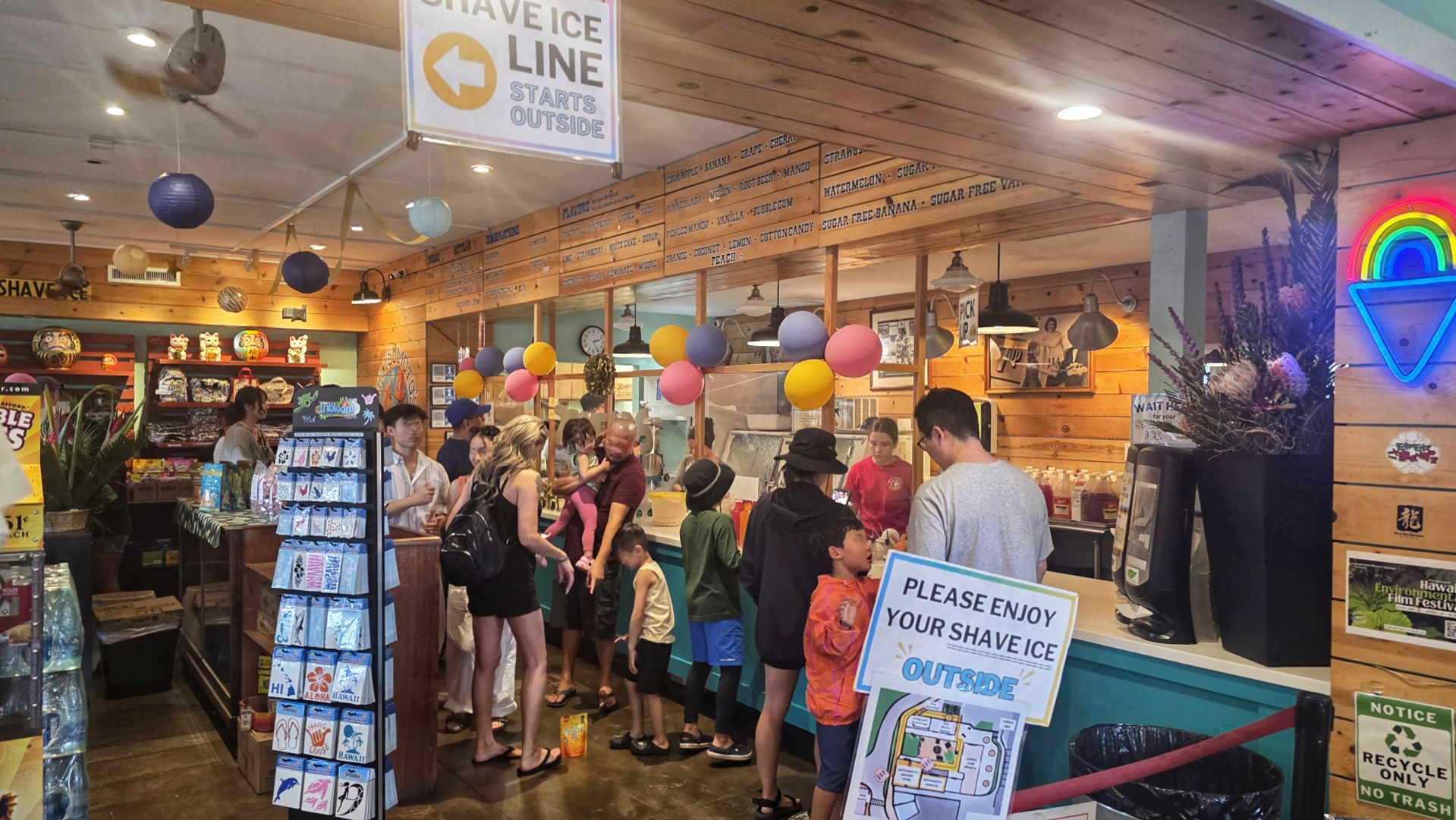
Photo Credit: © Beat of Hawaii at Matsumoto Shave Ice in Haleiwa on North Shore Oahu.
Get Breaking Hawaii Travel News



Mahalo as always BOH. Speaking of Kauai-styled visitor controls, has there been a central website or app created for the reservation system, shuttle service, and parking permits? I haven’t heard much about this in awhile, but I’m planning a return trip to Kauai in the fall and would like to have my plans in place. Call it FOMO, but I’m a planner. Thanks for any information you can provide.
Outside of seeking a hotel where you can walk right out to the beach, eat in the hotel restaurant, pay to park your car daily and not move the vehicle all week, and never plan to venture around. Isn’t this what Hawaii wants tourists to do or is everything else getting to be a big hassle and inconvenience for you if you are a tourist? It all sounds like a plan that was designed and not just made up. Your freedom in Hawaii has just been controlled by Hawaii’s when and where admission system. Isn’t this another form of a gate admission tactic or just stay at your hotel and don’t test your luck? With all the hassle wouldn’t people question whether to leave their hotel location in their rental car?
Don’t this sound about the same as the Disneyland 1 hopper, 2 hopper, 3 hopper park pass. Waikiki pass, North shore pass what ever. It IMO is just another way to control crowds like the Disneyland park is full crowd control management at Disneyland. Hawaii is all about controlling where people go, where people stay, where and when people can view the sights, and definitely how people are forced to spend their money unwillingly. IMO the most funny thing is that Hawaii claims it isn’t getting to become Disneyland. Unbelievable!!!!
Don,
There is a difference between disneyland and hawaii. Disneyland has better bathrooms
Hawaii isn’t Disneyland. Unlike Disneyland, there are people who live and work here and must navigate the same roads just to get to and from work, school, shopping, doctor’s appointments, and yes, recreation.
What do you propose? Simply letting unmanaged hordes of tourists clog every road, jam every street, block traffic so that nobody can get by? If you don’t like our attempts to manage it, please know Disneyland is still an option.
Build a parking garage like the airport or malls have. Maybe make the road 4 lanes versus only 2 like many other states Highways. IMO Hawaii tries to solve today’s problems using decades of years old infrastructure and development. How is this the tourist’s problem if Hawaii don’t prepare for the future? Is the hotels the only ones who accommodate or design to take care of more people like the Royal Hawaiian Village. Design surfboards with wheels underneath so if you live close you can skate-surf to the beach.
Visitors don’t view Hawaii as Disneyland, the locals have this perception.
What the government is doing with fees, etc. is actually turning Hawaii into Disneyland, and will cause visitors to treat Hawaii like Disneyland.
Despite raising taxes and fees, the crowds just keep coming. It’s the very definition of over-tourism. There are simply too many visitors for the available space. If taxes and fees aren’t lowering the number of visitors, the only options left are reservations and turning people away.
Perhaps visitors should try going off the beaten path and not do the exact same thing the herd is doing.
I guarantee visitors will go off the “beaten path”, it is probably happening already. What this will result in is other areas becoming congested and locals complaining about it, saying the same thing regarding not following the herd and find other areas to go.
I live in Laie and we love to go to North shore in winter to watch the surfing competitions. Traffic seems to get backed up at certain times and certain days. It would be nice to have shuttle buses to the competitions but other than that, they need to make a lot more parking along that North shore stretch. And there is room to do that. Right now, there are only little parling lots at each beach. So everyone parks along the road. Surfers are not going to take a bus with their surf board in hand and many of the people on the North shore roads are surfers. Waimea Bay especially needs more parking. The lot is so tiny and does not accommodate even on a slow day with just locals.
Beat of Hawaii nailed it again with their recent article describing how the State “fixed” Kauai’s north shore Haena State Park area by actually “breaking” other beach areas. Before the shuttle Haena State Park had 3,000 visitors per day. The new maximum amount allowed is 900. Where did they think the other 2,100 would go? Well, they didn’t simply go back to the hotel. Lumahai, Hanalei, Anini, Kalihiwai, Rock Quarry, etc took the hit and absorbed the 2,100 visitors. Unlike Haena State Park most of those beaches have no toilets or lifeguards. This was not “fixing” a problem, just shifting it to another neighborhood beach. If you live on Oahu, and you still have a “secret” uncrowded beach spot for your family, prepare for it to be overrun by tourists if they implement this NIMBY plan. My guess is this will “break” Mokuleia, Haula, etc. Instagram will determine where tourists end up.
hawaii vacation = death by a thousand cuts