
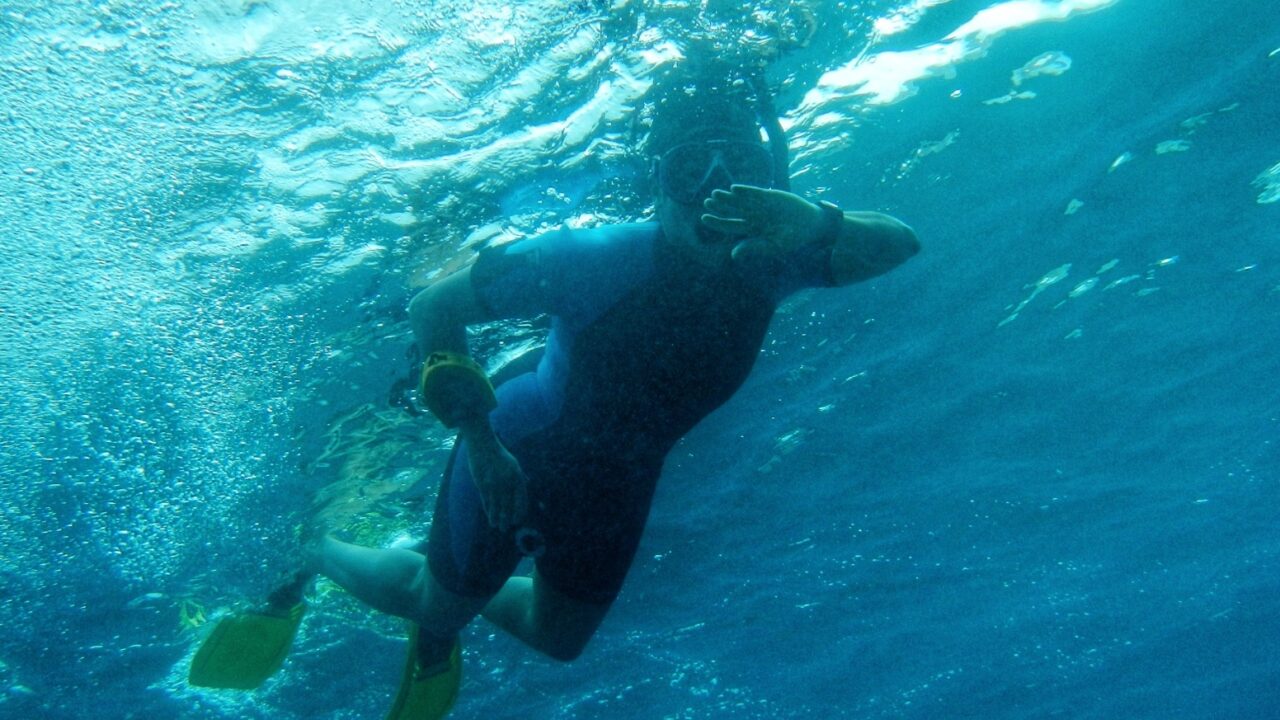
We have covered Hawaii snorkeling deaths for nearly two decades. In that time one pattern keeps showing up that most visitors have never heard of. It is called ROPE, Rapid Onset Pulmonary Edema, and it may explain why people keep dying in calm water without a struggle.
A reader named Renee put it bluntly under our recent full-face mask article. She said Hawaii owes it to visitors to warn about this, especially if they are snorkeling within a week of flying. Her comment was not about masks or Costco or carbon dioxide buildup. It pointed at something different that has been hovering around these deaths for years.
If you follow these cases long enough, you eventually run into the term ROPE or SIPE, swimming-induced pulmonary edema. If you are a first-time visitor arriving for a bucket-list trip, there is a good chance you have never heard either term before you step into the water. And that’s the problem. That gap between what researchers and water people know and what visitors are told is where this story lives.
What ROPE looks like on the beach.
One of the details that keeps showing up in suspected ROPE cases is not dramatic at all. A person swims in. They are not flailing. They are not screaming. They may look tired but controlled. They make it back to shore under their own power, walk up the sand, and then within minutes they deteriorate rapidly.
That does not match the public image of a drowning driven by waves or visible struggle. It looks like something internal, something happening inside the lungs rather than outside in the surf. Spouses in multiple Hawaii cases have described exactly that sequence, including the lawsuit we covered in Wrong Or Ignored Hawaii Visitor Drowning Warnings Refocused By Lawsuit.
Only after you look at that pattern does the physiology start to make some sense. When the body is immersed in water, pressure shifts blood toward the chest and lungs. Cold water can also tighten blood vessels. Add exertion, excitement, anxiety, or heavy breathing, and in some individuals fluid can move into the lungs, reducing oxygen exchange and making breathing progressively harder. The person may not feel panic in the classic sense. They may simply feel that breathing is suddenly much more difficult than it should be.
The flight-to-snorkel timing question.
The aspect that keeps rattling readers is the timing between arrival and first snorkel. Does it matter? Several researchers associated with the Hawaii Snorkel Safety Study (below) have discussed whether long-haul air travel could contribute to vulnerability, not as a single cause but as part of a group of factors. Dehydration, disrupted sleep, mild hypoxia from cabin pressure, and circulatory changes are all part of long flights visitors endure from the mainland.
Visitors often land, drop their bags at the hotel, and head straight to the water because the ocean is the main reason they came. That pattern is common and understandable, and it is rarely paired with a warning about pacing yourself after a five to six-hour flight. When you combine recent air travel, exertion in unfamiliar ocean conditions, and possible underlying cardiac or vascular issues too, the margin for error gets narrow.
The Snorkel Safety Study, funded in part by the Hawaii Tourism Authority, examined numerous drowning cases and identified patterns consistent with rapid onset pulmonary edema in a significant subset. It did not declare every snorkeling death a ROPE case, and it did not claim that flying automatically causes lung fluid accumulation. What it did say is that a meaningful number of cases did not fit the usual explanations and that immersion-related pulmonary edema is a plausible contributor in Hawaii waters.
When readers start seeing themselves in the findings.
After our recent article, BOH commenter Mike wrote urging us and others to read the Snorkel Safety Study and contact the project manager Carol Wilcox. He said he experienced what he believes were the beginning stages of SIROPE at Kealakekua last year, describing restricted airflow, pressure on his chest, rising carbon dioxide, dropping oxygen saturation, and increasing difficulty breathing. He made it out of the water. He is convinced others have not been as lucky.
Whether every such episode is clinically confirmed ROPE is not the point here. Rather it is that readers are recognizing their own near-misses in some of the patterns described by researchers. That is when the term ROPE moves from academic theory into one’s own experience.
What Hawaii tells visitors, and what it does not, yet.
There are snorkeling safety tips scattered across state and tourism websites. They tell visitors to check conditions, avoid swimming alone, and use proper equipment. They do not typically say that snorkeling within hours of a long-haul flight may carry additional physiological risk for some individuals. They do not typically explain immersion pulmonary edema in plain language that a first-time snorkeler would recognize and understand.
The Hawaii Tourism Authority funded the Snorkel Safety Study. Funding research and broadcasting findings are not the same thing. A visitor reading an arrival brochure or watching an in-flight video is unlikely to hear and recognize the words pulmonary edema, let alone understand how their recent air travel might factor in.
That disconnect is what fuels comments like Renee’s. “If incoming flights warned of dangers, people would stop dying. The fact it continues is unacceptable.” She sees a preventable pattern and asks why the warning is not delivered when it would matter most. Even if the medical community continues to debate mechanisms and percentages, there is a communication gap.
Where this leaves the conversation.
ROPE does not explain every snorkeling death, and no one should think that it does. At the same time, the idea that some drownings may involve immersion-related pulmonary edema is no longer fringe. It has been studied in Hawaii, funded by the state, and litigated in Hawaii courts.
Visitors will continue to land in the islands after a five-hour flight, grab a mask, and head straight to the water because that is just what people want to do on vacation.
If you were stepping off that plane tomorrow, would you want someone to tell you to slow down, hydrate, and think twice before pushing hard in the ocean on your very first day?
Snorkel-Study-Final-Reports-UpdatedGet Breaking Hawaii Travel News

I remember my first trip to Jamaica, and wanting to learn to Scuba Dive, the first signs near the Dive Master Office, was not to Scuba until the 3rd day and not to Scuba inside of two days from Departure. That said, I’ve read about this on this Site before, and even just a month ago, education, may have to begin Inflight, In-Room and at Point of Sale of Fins, Masks and Snorkel’s! Unfortunately in today’s world, everyone is an authority, and few take responsibility, but for Snorkel Trips like Molokini, it should be a Q&A, when did you arrive, when are you leaving, have you Snorkeled before? Those are scary Charts!
30+ Hawaii vacations and on the first full day I was in the water multiple times for hours. Neither my ex or I ever had a problem and we usually were in the air for almost 11 hours total. And this was always without having been snorkeling anywhere else between trips.
For some people maybe it’s a problem and maybe it has to do with how good a shape your overall health is too. I’m not denying that it can happen but just like Dirty Harry said, “A man has got to know their limitations”.
10-1 someone will finally nail down the correlation to dehydration. It’s quick here and we know that, but a lot of visitors coming in, loaded up on Mai Tai’s having a great time on vacation, sun, beach – Not drinking anywhere the amount of water they need, go out 100,200,300 yards and start cramping up. The rest is not fun.
This is a very important issue. Can you not coordinate with the airlines a short video explaining the facts and suspected factors of drownings on the islands and have that short video played to the passengers just before landing preparations. You have the attention of all passengers coming into the state of Hi and can educate them to ocean dangers. Many whom have never been to an ocean before.
Just a suggestion from a prairie gal.
Mahalo, R
I have been a dive instructor for 50 years. My conclusion on these fatalities went snorkeling or scuba diving, are all related to poor health and discomfort, while snorkeling. Many people believe snorkeling is simple, but there are some techniques that make snorkeling a much better experience, and can increase comfort in the water. Training for snorkeling, in my opinion, for most is essential. Also, getting a physical prior to exerting yourself in the water would be advised!
Even if only a small percentage of deaths involve ROPE, that’s still real. A simple warning costs almost nothing. On the other hand, I don’t want Hawaii turning into a place where everything comes with a warning label. And at some point adults have to assess their own limits. So it’s a tough call on this one.
Similar to the face mask debate. People latch onto one cause when it might be multiple factors stacking up. The flight timing is just another piece of the puzzle that’s worth paying attention to.
I experienced shortness of breath snorkeling recently the first day snorkeling and assumed it was just anxiety or something. Now I’m wondering if it was something physiological. I got out more quickly than I normally would have and everything was fine.
We still have to be careful not to overstate the flight connection. Correlation isn’t causation. Still, raising awareness about immersion pulmonary edema seems fair and reasonable.
We flew from Chicago, barely slept, and went straight to snorkeling on Maui. Looking back, that was probably not the smartest move and we’ll think twice about that next time and easy does it the first day. BTW no one suggested otherwise.
As a retired nurse in Hawaii I can tell you that ROPE is absolutely real. It doesn’t mean every snorkeling death is that, but it deserves more education. People should know the signs.
I appreciate you covering this because most visitors assume drowning means waves or rip currents or health issues. The idea that it can be something like this is not widely understood. That alone is worth talking about.
We landed in Kona last year and were in the water within two hours. No one said anything about waiting after a flight. If this research has been around, why isn’t anyone really mentioning it?