
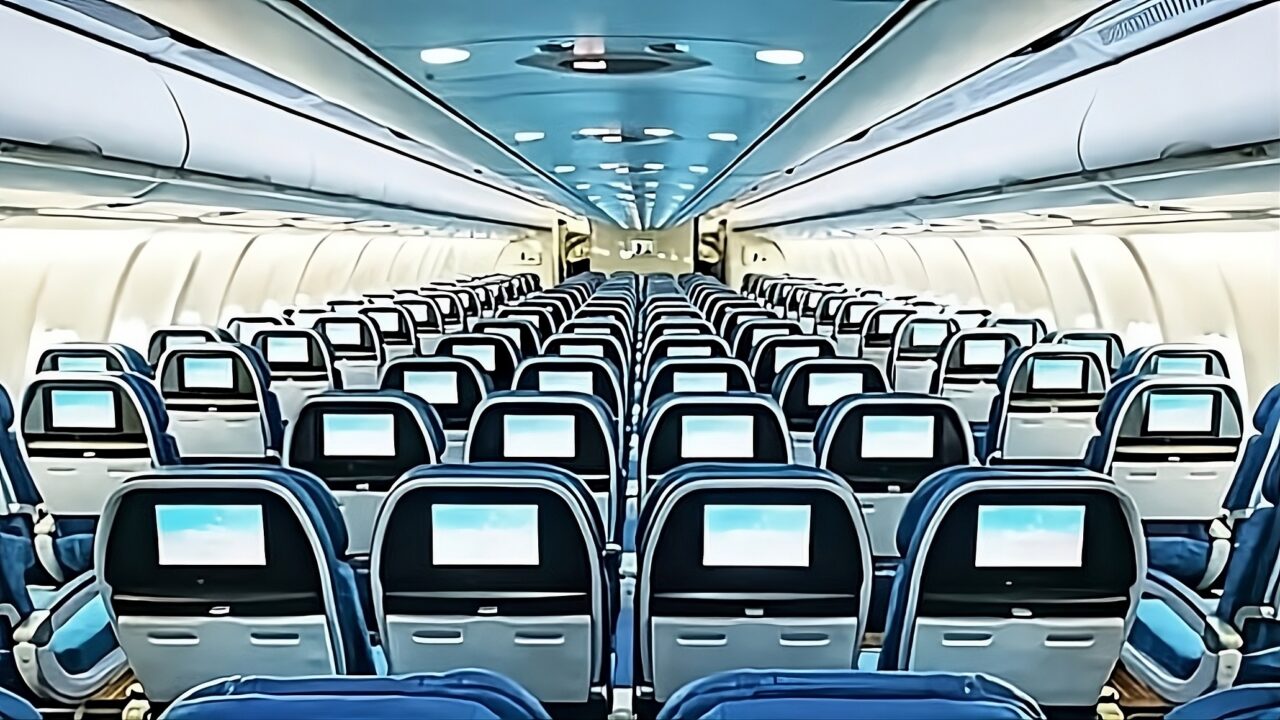
Airlines spent years betting Hawaii travelers would accept the loss of seatback screens. Bring your own phone, bring your own tablet, laptop, anything, to stream your own entertainment. It became the new standard on too many flights to the islands.
Travelers pushed back anyway, and now that bet is starting to unravel. American Airlines’ reported move to reconsider screens on narrowbody aircraft, with a decision possible as soon as next month, is the clearest sign yet that airlines misread what passengers were willing to tolerate on flights to Hawaii.
That is more significant here because Hawaii is not some short domestic hop. If an airline takes away the screen on a route like that, it is not a small inconvenience. It changes how families get through the trip, how older or non-tech travelers manage, how easy it is to watch anything at all, and whether passengers feel like they are getting a good product or are being forced to endure just one more cost cut sold as airline innovation.
To be clear, American is not bringing anything back yet. This is still under consideration, and even if it approves the move, retrofitting hundreds of jets would take years. But the shift still says a lot.
The airline spent nearly a decade stripping screens from narrowbody planes and pushing the idea that personal devices were enough. Now it is talking to Amazon and Starlink about a broader onboard entertainment and connectivity upgrade, some of it new and even controversial, and screens are suddenly back on the table in a big and important way.
The airlines like to blur together all domestic flying.
It’s as if a five-hour trip to Maui is basically the same as a short mainland flight. It is not. Plenty of Beat of Hawaii readers already made that point the last time this came up. They were not asking for luxury. They were asking not to be stuck for hours staring at a phone, hoping the battery lasts or the charger works, or juggling a tablet they did not want to carry in the first place.
That was especially true for readers traveling as couples, with kids, or with someone who is not comfortable with tech. One reader said seatback screens were the reason kids survived the Seattle-to-Honolulu flight. Another said her partner does not even have a smartphone and that six hours without a screen is simply a bad experience.
Someone else commented that if a competing airline offered a direct Maui route with screens, that alone could decide who gets the booking. Travelers were obviously saying this loudly enough and for long enough that even largely tone-deaf airlines are now starting to respond.
The Hawaii screen scorecard right now.
If you are booking a trip to Hawaii today, the gap between airlines is real. United still has seatback screens on Hawaii routes and is expanding them aggressively. Delta also has them and keeps investing, with newer display tech, Bluetooth, and more built into the experience. Hawaiian still has seatback screens on the A330 fleet, and that remains one of the clearest differences between its widebody aircraft and the A321neo narrowbody fleet.
On the Hawaiian A321neo, there are no screens, just streaming to your own device, even though super-fast Starlink helps soften the blow. Southwest also stays firmly in the no-screen camp, with entertainment living on your own phone or tablet through the onboard web portal. American Airlines belongs in that same group today on Hawaii narrowbody service. It is talking about changing direction, but for travelers booking now, nothing has changed yet.
American Airlines problem is not just the screen.
The bigger issue is that airlines took something away, spent years defending that decision, and now may want credit for fixing it. Travelers were told their phones were somehow a better solution. They were told this was modernity. They were told that built-in entertainment was old school. Meanwhile, United and Delta kept moving in the other direction, putting more into the seats, not less.
So if American Airlines reverses course now, it will be hard not to read that as a concession that passengers never really bought the original argument. Hawaii travelers certainly did not. These flights are long enough that comfort choices become booking choices.
There is also the Amazon angle, which could get strange fast.
The same reporting says American is discussing not just entertainment content but the possibility of shopping tied to miles. That opens the door for a seatback screen to become not just a movie screen but another sales channel. Travelers may like getting a screen back, but that does not mean they want their six-hour Hawaii flight turned into one more place to be marketed to.
What this means if you are booking a trip to Hawaii now.
If seatback screens matter to you, you need to look at the aircraft and the airline now, not at what may happen later. American is still in the maybe stage. We’ll know soon. Hawaiian/Alaska is mixed depending on whether you get an A330 or A321neo. United and Delta remain the safer bets if built-in screens are part of how you want to get to Hawaii. Southwest is still firmly bringing your own everything.
We now know screens were not some outdated extra that travelers would shrug off. On Hawaii flights, they remain part of the core experience, and airlines that removed them are finding that passengers noticed and chose accordingly.
If you are flying to Hawaii, would seatback screens change which airline you book?
Get Breaking Hawaii Travel News


Whatever happened to the art of reading and sleeping?! : D. My husband and I are with Ricky T. Cost and flight schedule are the primary concerns. And we don’t have tv at home and wouldn’t relish having it on a seat back screen. Who wants to be assailed by commercials when you’re on vacation?
Have to give United some credit– they stuck with it when the others were saying “oh, use your phone. it’s fine”.
The new United blended cabin layout, with those monster screens, is very enticing. I still despise the United MAX form factor for long-haul, but between the screens and Starlink Free Internet? It’s a lot better than Southwest. That’s for sure.
Just got back from a Maui trip on Alaska from Seattle. No seat back displays. With a 5-6 hour flight time, it isn’t bad. Alaska airlines is our airline of choice and we are used to the Alaska in flight wifi / movies on your personal device so we were expecting no seat back displays and it worked fine. Our family of 4 all had devices we could use if we wanted to. Personally i prefer to watch my own downloaded content (Netflix, Crunchroll, Disney+) and not the movies available on Alaska in flight wifi or other seat back systems (Delta), so i typically don’t use seat back movies even if they have it.
I’ve done both on trips to Hawaii and obviously prefer seat back screens, but have made do watching my phone. To the question, the screens alone would not influence my decision of whom to fly with whatsoever. That depends on cost first and foremost, and then flight times and scheduling second.
Seat back screens are not a metric I use to determine who I fly to Hawaii on, but carry on luggage is, so in seven trips, I’ve never flown there on United.
I don’t know if it would influence my choice of airline, but it was one of the things I noticed right away, and liked least, about the A321. I don’t spend the whole flight staring at a screen, but having the option available if I wish is nice.
The win fir American would be to bring them back with free live tv. Watching a Football game flying from Honolulu to Los Angeles would be a win…
Yes, having screens for entertainment were a BIG deal to my husband and me, and not having them on our long flight to Hawaii has definitely changed our choice to flight there anymore along with all the other negative changes.
It’s almost impossible to get my husband to fly anymore! We choice not to go this year, after going to Hawaii every year for over 20 years.