
Visitors who booked the drier, sunnier sides of Hawaii last week, including Waikiki, Wailea, Poipu, and Kona, found that those areas were not insulated from the storm. The system that hit was a Kona Storm, and if that term is unfamiliar, that is exactly the problem. It caused extensive damage across the state, left tens of thousands without power for days, and disrupted travel to the tune of tens of millions of dollars across every island. A Kona Storm does not respect the side of the island you chose.
What a Kona Storm actually is.
A lot of visitors think Hawaii rain works in a predictable way, and most of the time, it does. If it rains, it will probably be brief, maybe local, and more of an issue on the wetter side of the island than where most are staying. That is, after all, how a lot of Hawaii’s normal weather works. A Kona Storm is different. Instead of the usual trade wind pattern from the northeast, this setup pulls moisture in from the south and west. That can reverse which side of each island takes the rain.
The National Weather Service describes Kona lows as cool-season systems that usually affect Hawaii from November through March. They generally form west or southwest of the islands, pull in warm, moisture-rich air from the south rather than the usual trade direction, and typically affect Hawaii one or two times a year. This is a real seasonal pattern, not some strange one-off.
Resort areas are the most exposed.
A lot of Hawaii’s visitor economy sits in places that are normally protected from the kind of rain people associate with the islands. Kona, Waikiki, Wailea, Poipu, and similar resort areas are part of that. People book these because they are usually sunnier and drier, and most of the time that works out.
During a Kona Storm, that logic can fall apart when the weather hits those areas from the wrong direction. The side of the island people picked to avoid wetter conditions can become the problem side instead. These storms hit travelers harder than regular rain not just because there is more rain, but because it lands where visitors thought they had already avoided it.
Why these storms last so long.
The other reason these storms are different is that they can stall over the islands for days rather than passing through like a regular rainy day that ruins an afternoon and moves on. This Kona Storm lasted nearly five days, which is the kind of timeline that ruins entire vacations.
Several days of canceled flights, closed roads, power outages, and washed-out plans are a different problem from a single bad-weather day. Once the storm stays put, more parts of the trip start failing one after another.
Kona Storms are a cool-season issue.
The general window for a Kona Storm is November through March. That does not mean every winter trip is in danger. It does say that visitors should stop thinking only in terms of trade showers and brief bursts of rain during those winter months.
This last storm showed exactly how that can play out, in dramatic terms. The damage across the state was real and severe, well beyond what anyone expected. Maui saw between 27 and nearly 40 inches of rain in some areas over roughly three days, and some Hawaii rainfall records that fell during this event had stood since 1951.
More than 100,000 customers lost power statewide. Travelers were stranded through at least Wednesday. Oahu opened emergency shelters. Kauai saw closures at Polihale and Kalalau. On the Big Island, the storm arrived while Kilauea was already erupting, with tephra from the volcano closing Highway 11 for clearing even before the worst of the rain hit.
What to do differently when visiting Hawaii during these months.
People spend too much money on trips to Hawaii, leaving little wiggle room. They go to multiple islands, book non-refundable accommodations, buy tours, reserve cars, make dinner bookings, lock in timed entries, and have inter-island flights all packed into a short stay. That works as long as everything keeps cooperating. A Kona Storm is one of the clearest examples of what happens when it does not.
If you book your trip through a third-party site like Expedia, you will not be able to deal directly with the airline or hotel when something goes wrong. This is an important point to remember. Instead, you often have to work through the company you booked with, and its rules may be very different from the airline’s or hotel’s own policies.
Leave more slack in trip planning than you think you need when booking November through March. Be careful about same-day interisland connections, especially if one missed flight would also knock out a hotel, a car, or the next destination.
Travel insurance can help, but only if it actually covers the kind of weather disruption that strands you or forces a change. Many visitors assume they will figure it out as they go. Hawaii is not always that forgiving once flights fill up and roads close.
The harder truth is this: a carefully planned Hawaii trip can come apart much faster in the Kona Storm season than most people think. If you have been through one, what did a Kona Storm do to your Hawaii trip that a normal rainy day never would have done?
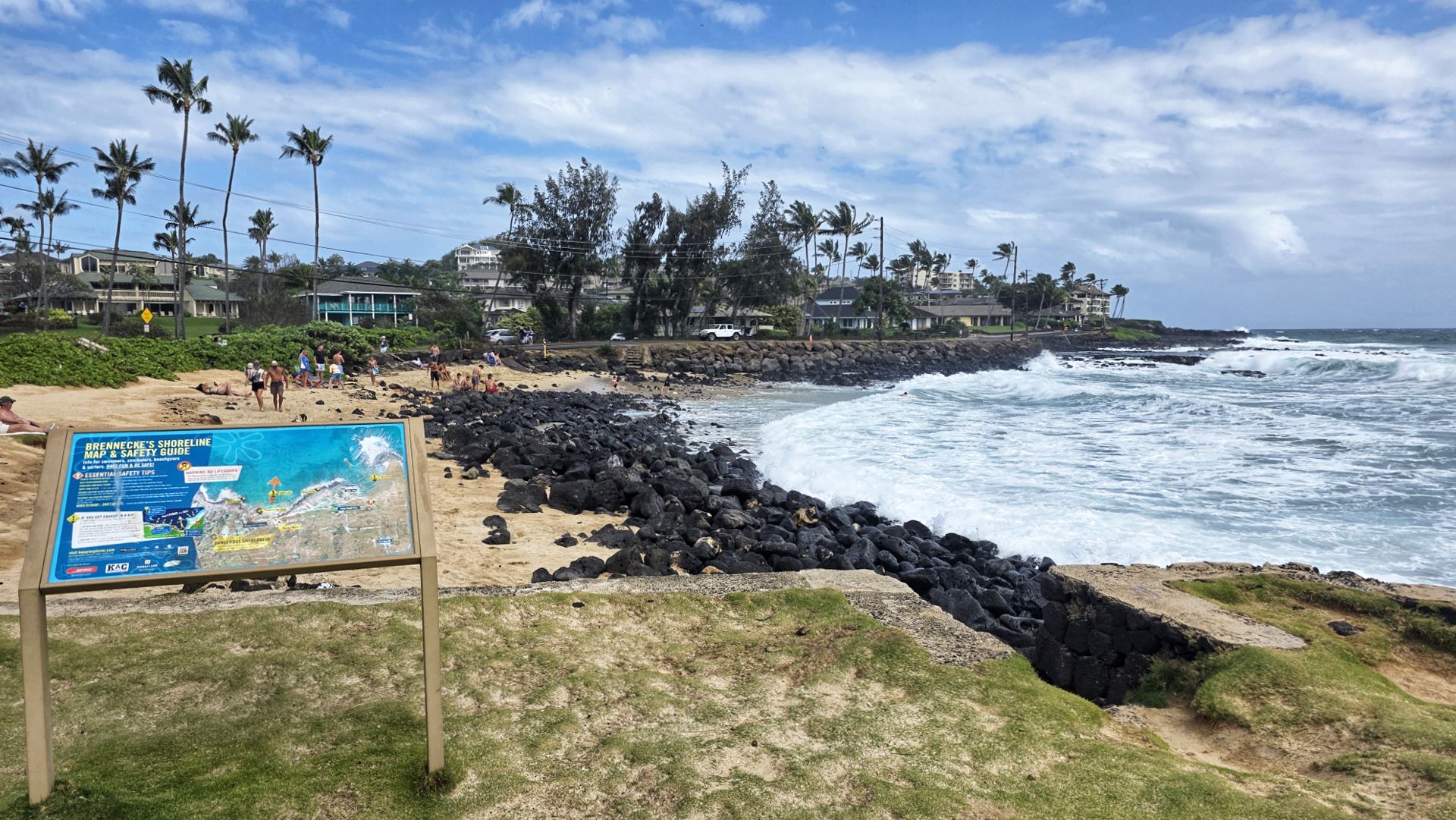
Lead Photo Credit: © Beat of Hawaii at Brennecke Beach (Kauai) after Kona Storm.
Get Breaking Hawaii Travel News



Aloha Rich,
Why post twice?- important to you that tourists vi$it….?
I suggested ‘Live YouTube’ streams so people can see the damage in real time and plan accordingly. Seems fair and honest.
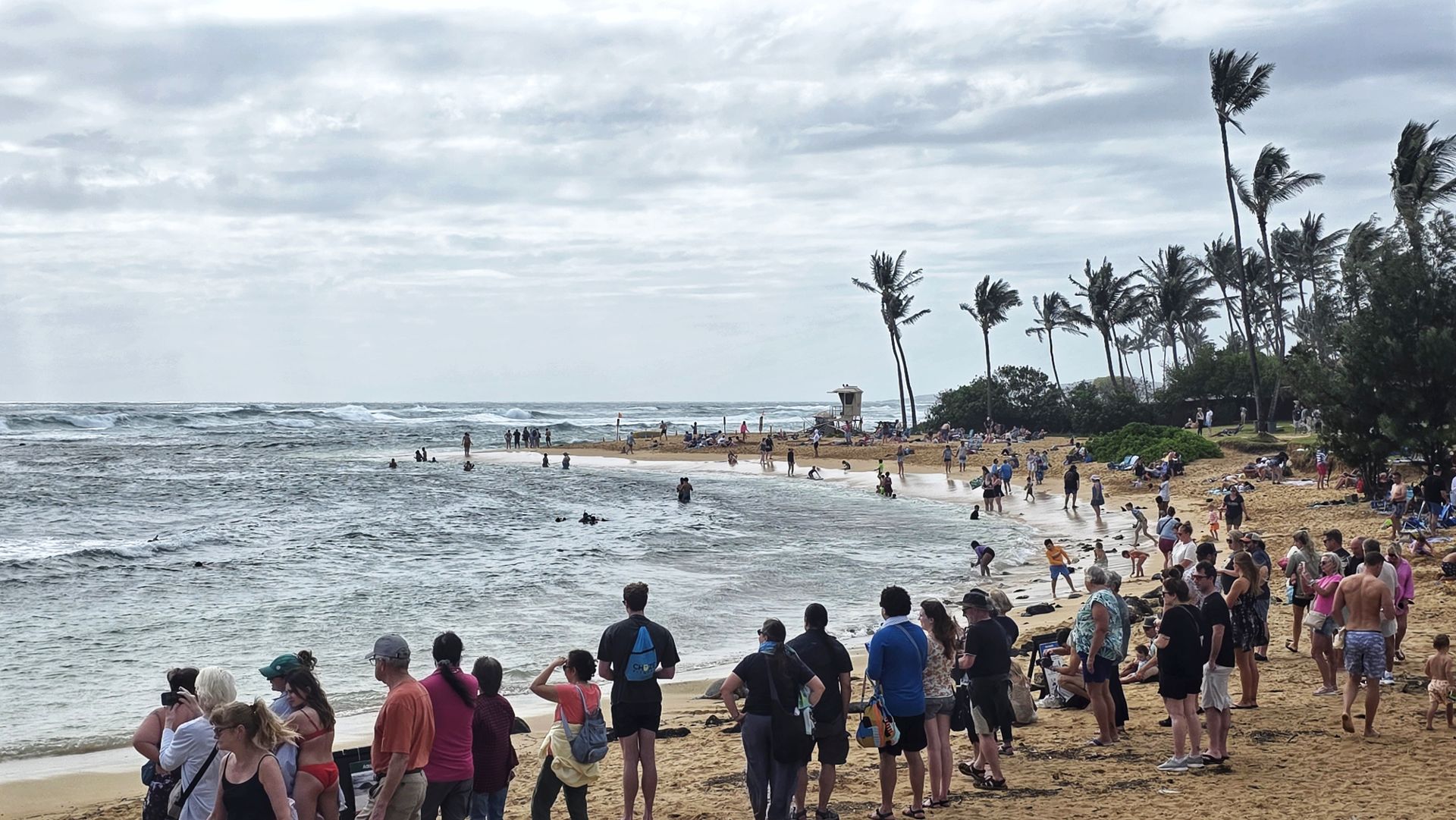
While the beaches that rely on imported sand may have lost some during the Kona low, that’s not the overall situation. We’re on island and South Maui (and West Maui) definitely hasn’t run out of sand. Plenty of Beach. In the areas where the sand was washed away, hotels and businesses will replenish it – and fast, they have been doing this since the hotels and resort areas were built. The other areas will naturally get their sand back, it’ll just take a little more time.
The South facing beaches have all lost most if not all of their sand!
View any “Live” YouTube stream of Hawaii beaches and you will see the total devastation. Expect six months or more of rocky, steep, dangerous conditions.
While the beaches that rely on imported sand may have lost some during the Kona low, that’s not the overall situation. We’re on island and South Maui (and West Maui) definitely hasn’t run out of sand. Plenty of Beach. In the areas where the sand was washed away, hotels and businesses will replenish it – and fast, they have been doing this since the hotels and resort areas were built. The other areas will naturally get their sand back, it’ll just take a little more time.
I sympathize with visitors who were caught by this storm, particularly first-timers to Hawaii. For residents, it was relief from the drought. Driving around the West side today, I was reminded of Ireland, it’s so green!
Happy St. Patrick’s Day!
Wow. I barely recognize Brennecke Beach!
I assume the boulders are normally absent?
David, those boulders are usually covered by deep sand. Brenneckes beach has a narrow head and the force of the wind and water can literally take off the layer of sand exposing the boulders. This is one of those beaches that needs sand replenishment every now and then. The local businesses and lodgings donate towards it.