
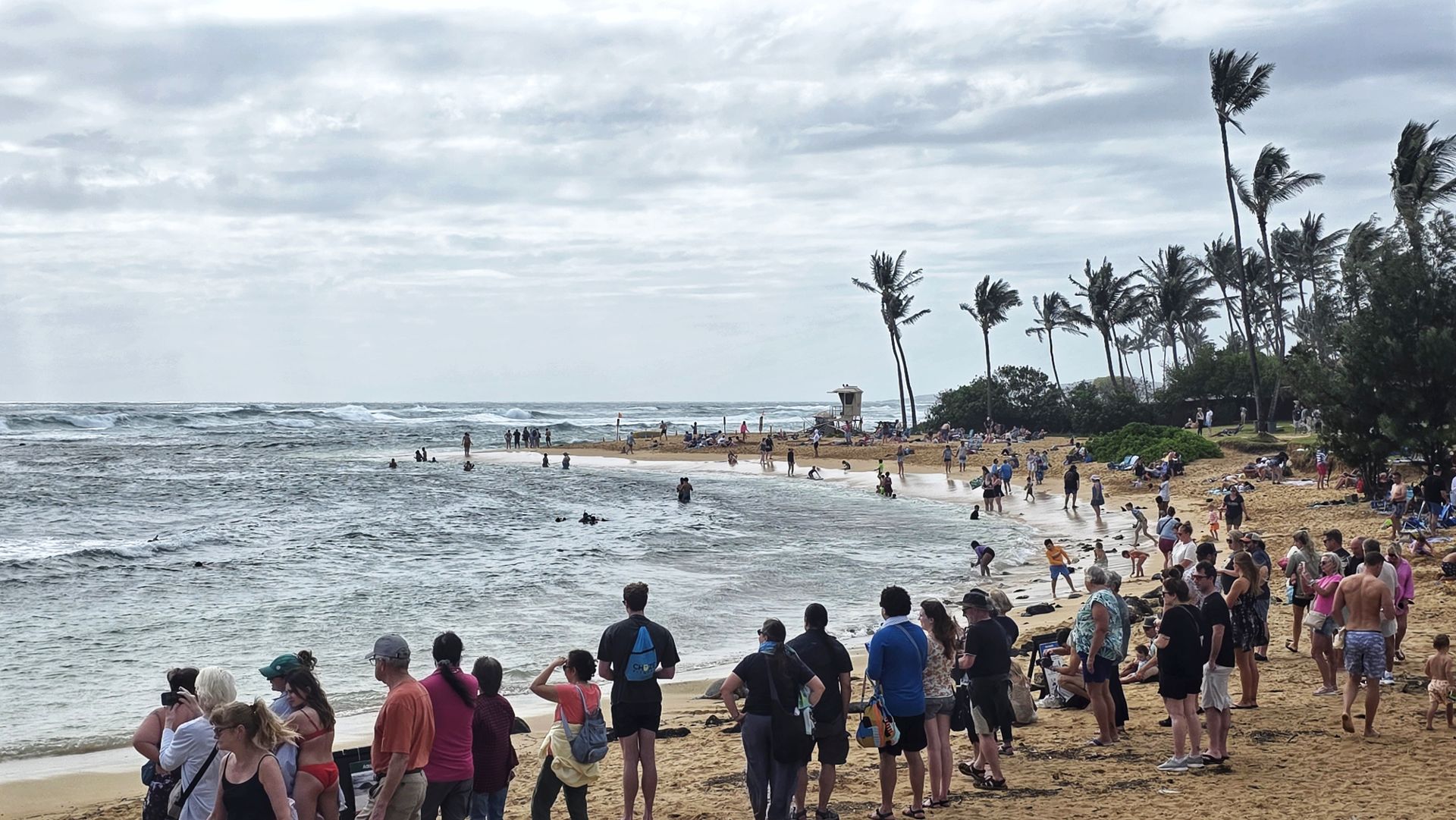
People prepare for Hawaii flight delays, road closures, mud, canceled activities, and maybe power outages during island storms. They do not prepare for what comes next.
As Hawaii’s big winter storms pass and everything starts returning to normal, visitors usually think the hard part is over. In one sense, it is. Visitors start trying to get back to the Hawaii vacation they thought they were having. But on a tropical island, heavy rain does not end when the sky clears. It leaves something behind.
The storms that hit Hawaii this week are not fully done yet. Another day or two of rain is still possible before conditions settle. But once they do, the next problem is already taking shape. Standing water does not take much time in Hawaii’s warmth to become a mosquito problem. DOH directly tied the two, noting that recent and anticipated storms make reducing standing water more urgent to prevent increases in mosquito populations.
When the rain stops, this starts.
Hawaii just showed how fast a trip can come apart in bad weather. Visitors were stranded, highways were cut off, and getting from one part of an island to another suddenly was not something anyone could count on. That part gets attention because it is dramatic. Once roads begin reopening and the sun comes back out, people pivot quickly to salvage what is left of the vacation they thought they were having: beach plans, hikes, dinners, and everything else that makes a Hawaii trip feel like Hawaii.
What gets less attention is what comes next. Heavy rain here does not leave clean endings. It leaves standing water in puddles, ditches, gutters, saturated ground, trail edges, yards, and every other low spot where water can sit. Visitors step outside on that first clearer evening, thinking the hard part is over. It is not. The mosquitoes found the standing water before the visitors did.
What the rain leaves behind.
Mosquitoes in Hawaii do not need any invitation. Warm temperatures, tropical vegetation, and water sitting anywhere it can collect are enough. After storms like these, the water is everywhere. Not just the obvious places. The planter outside the condo. The low corner of the hotel walkway. The roadside ditch near the trailhead or beach. The drainage area behind the vacation rental nobody thought to check.
Visitors are not thinking about any of that. They are thinking the beach may still be rough, the trail may still be somewhat muddy, or the waterfall they wanted to see may be extraordinary. All true. But they are not thinking about mosquitoes.
That is where this is about to hit. Nothing dramatic. Just enough to change how places feel. Evenings get cut short. Doors and windows get handled differently. Outdoor spaces stop feeling relaxing in the same way. People start slapping at their ankles at breakfast or giving up on sitting outside at sunset. The trip is back on, but it does not feel quite like the one they thought they were having.
What visitors need to know now.
Hawaii is home to mosquito species capable of transmitting dengue and other viruses. Transmission remains rare, but DOH issues standing water advisories after significant rain events precisely because the storm aftermath is when conditions become critical. This week qualifies.
None of this needs to take over a Hawaii vacation. But a few things are worth knowing if you are planning on arriving this spring.
- DEET-based repellent is still what officials actually recommend, not just anything grabbed at a convenience store.
- Dawn and dusk are when mosquito activity peaks, which in Hawaii is significant because those are also just the hours people tend to be outside enjoying the parts of Hawaii that make the vacation more wonderful. Great timing for mosquitoes.
- Long sleeves and pants help more than people realize, especially in shady areas.
- Staying in a vacation rental or condo? Be sure to check around the property. Planters, low spots, buckets, anything holding water. Emptying it is something visitors can actually do and almost never think to do. A well-managed resort handles this. A rental does not always. And even with the best management, this much rain will inevitably breed large numbers of mosquitoes.
Sunshine returning doesn’t mean everything is back to normal quite yet. In Hawaii, especially, the weather is a significant aspect of the trip, longer than the rain forecast.
Mosquitoes love visitors. Share your experiences with them and any tips you have.
Photo Credit: © Beat of Hawaii at Poipu Beach on Kauai.
Get Breaking Hawaii Travel News


20% Picardian repellants are just as effective as DEET and do not have all of the nasty dangers of DEET.
Nobody warned about, except “DOH issues standing water advisories after significant rain events precisely because the storm aftermath is when conditions become critical. “
Mosquitoes are not the only problem after heavy rains. All the Islands have experienced torrential rains, flooding damage and some ruined vacations.
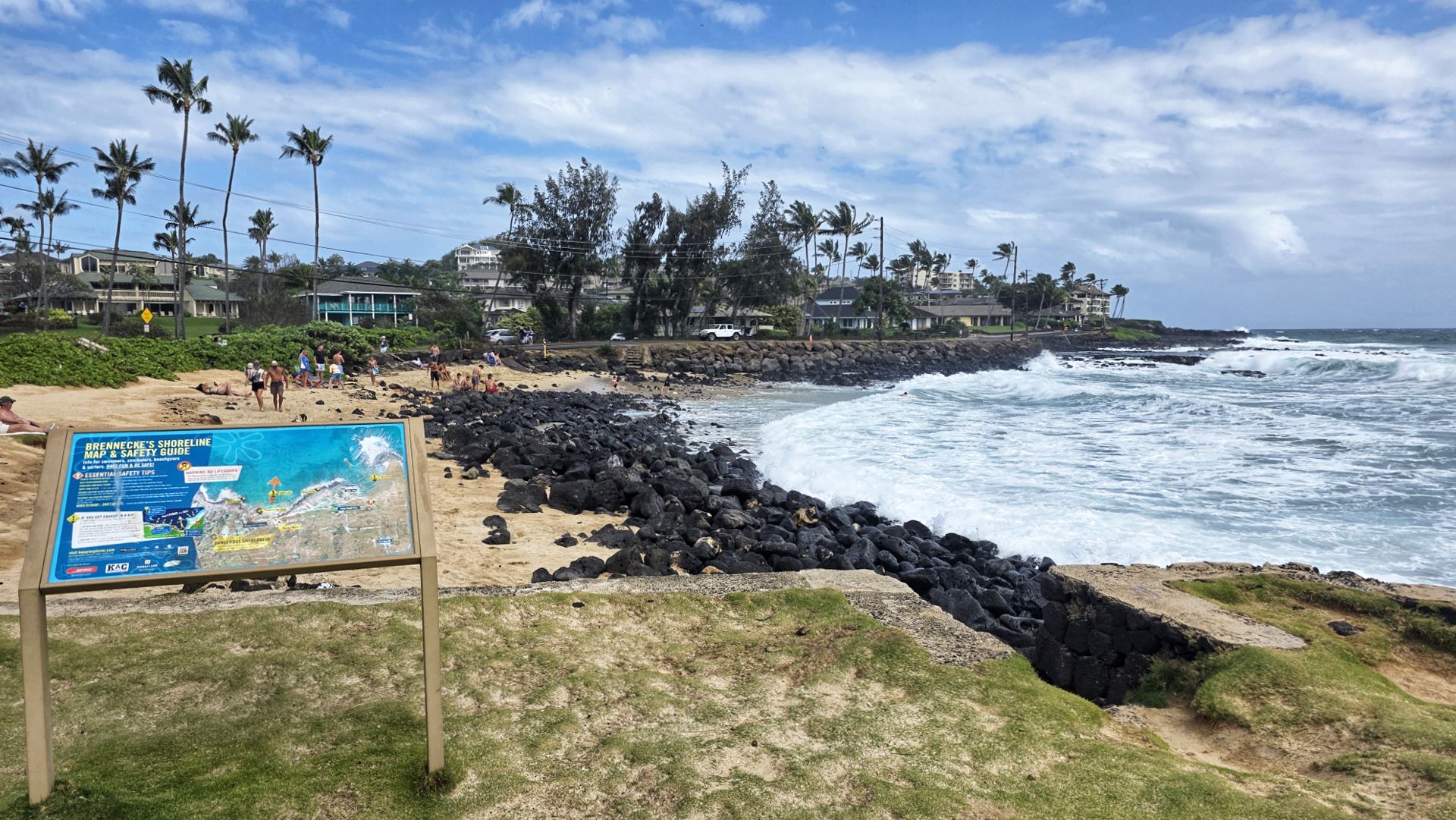
Up on the beautiful mountains the rains hit first creating landslides and waterfalls. Of course this water runs down hill towards the ocean. It brings all types of pollution animal and human waste. Use caution before entering the water as signs might not be posted. Using common sense is necessary to avoid disease and infections.
This is right. After 3 delightful weeks on Kauai, we were filling up the gas in the rental car on the way to the airport Tuesday, when a mosquito got into the car and bit my arm twice. It made the flight to the Mainland uncomfortable. Those things bite and hurt !
Times like these I am grateful for my little rechargeable mosquito repeller for use on my lanai.
I’ve Loved the “monsoon season”, i.e. the “rainy” season in Hawai’i for 70+ years … whether clad in T-shirt, shorts, and barefoot on my bicycle as a boy or sitting under a cover of some sort at the Moana or Royal these days as a “more experienced” boy-at-heart …
On Oahu, we’ve never had a mosquito problem, runoff, or anything resembling “flooding” that we need to worry about …
I’ve lived in other “rainy” locales in the past all over the Pacific and US over the decades, and Hawai’i is still ‘da best by a long shot …
Locals and vacationers be aware all the rain stormwater runoff into the ocean putting bathers/swimmers at risk for Leptospirosis is a bacterial zoonotic disease caused by Leptospira bacteria, transmitted to humans through contact with infected animal urine, water, or soil. Symptoms include high fever, severe headache, muscle aches, vomiting, and jaundice. While often mild, it can lead to severe organ failure (Weil’s disease) or death if untreated.
I live on Kauai and can confirm. After a big rain, you can almost watch the mosquito population explode. It does not take long. Have you seen the new and improved lake of a parking lot at Poipu?
We were on Maui last spring after heavy rain and could not sit outside on the lanai at dinner at all. Every meal was indoors after that or else I needed to bath in repellent.
Been coming to Hawaii for 25 years. The mosquitoes after storms seem to have definitely gotten worse. Don’t like it but resort to the Deet sprays.
We recently got back from Kauai and this is 100% accurate. Mosquitoes were already brutal after the first big storm.