

If you’re heading to the beach in Hawaii today, look twice before you swim. Water advisories are active across Oahu, Kauai, and the Big Island, each for a different reason. Jellyfish have already stung swimmers in Waikiki. Coastal roads are starting to flood on the island of Hawaii. And in Hanalei, brown runoff is swirling at the river mouth where people usually wade in.
These aren’t rare events. But when they stack up across multiple islands on the same day, they send a clear message. The ocean isn’t always what it seems.
Jellyfish stings reported at Waikiki.
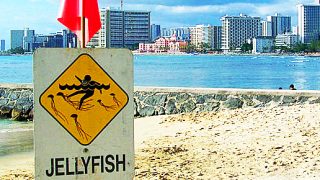
Box jellyfish showed up almost right on schedule today (or actually a little late), about eight days after the full moon. The City and County of Honolulu issued a warning just before noon, and lifeguards began posting signs and treating stings along Waikiki Beach. A few swimmers got stung before the signs even started going up.
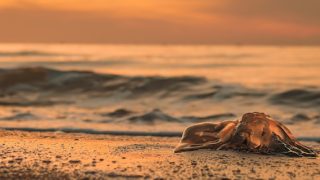
These jellyfish are almost invisible in the water, yet easily visible on the sand, and their sting can be painful. In some cases, it can be serious. If you do get stung, rinse with vinegar and find a lifeguard. Do not rub the area. That makes things worse.
Best call? Skip the ocean for a day. The jellyfish usually move on within 48 hours, and there’s no reason to let a jellyfish sting wreck your trip.
Brown water at Hanalei and Wailua.
Here on Kauai, two of the island’s most popular beaches are under brown water advisories today. The Department of Health flagged both Hanalei Bay and Wailua Bay this morning after rain sent runoff and debris into the ocean.
It may look calm, but brown water can carry bacteria, pesticides, and even sewage. You won’t see the risk, but it’s there and very real. Several longtime visitors told us they’re steering clear of Hanalei for now, especially near the river mouth where the water’s been swirling with mud.
There are no fences or lifeguards turning people away. But infections and illness are not uncommon when people ignore these warnings. If the water looks murky, it’s a good day to do something else.
Coastal flooding hits Hawaii Island.
On the Big Island, a different kind of problem is unfolding. The National Weather Service has issued a coastal flood advisory, effective through Thursday, as unusually high tides coincide with already elevated ocean levels.
This isn’t storm-related. Rather, it’s part of a pattern we’ve been seeing more often lately, especially during summer peak tides. On Monday, low-lying roads near the shoreline, particularly in areas like Hilo and Kona, began to flood. Officials asked residents to move cars, secure any beach gear, and avoid those areas during high tide.
Visitors sometimes dismiss this, but it doesn’t take much to cause problems. Beach parking lots can become inaccessible, and saltwater can damage a rental car or electronics left near the edge. If the tide is high, stay back.
What visitors should do right now.
Hawaii’s beaches may look inviting today, but that doesn’t mean it’s a good time to swim. The risks are real, even if you don’t see them.
Brown water can make you sick. Jellyfish can hit before you ever notice them. High tides can flood your beach access or ruin your gear. If you see a warning sign, take it seriously.
You can check conditions at https://hawaiibeachsafety.com or just ask a lifeguard. When in doubt, wait it out. The beach isn’t going anywhere.
Has any of these events impacted your Hawaii vacation?
Get Breaking Hawaii Travel News

With 88,000 cesspools in Hawaii you’ll rarely find me in the ocean.
Here’s a breakdown by island:
Big Island: Nearly 50,000 cesspools.
Kauai: Almost 14,000 cesspools.
Maui: Over 12,000 cesspools.
Oahu: Over 11,000 cesspools.
Molokai: Over 1,400 cesspools