
Hawaiian Airlines employees who check your bags, prepare your flight, fly the aircraft, and serve you in the cabin are still negotiating their future under Alaska ownership, more than two years after the acquisition. While much of the airline’s operational integration is complete, major agreements covering pay, job protections, and working conditions remain unfinished.
This week brought sharply different developments. Hawaiian pilots reached a tentative joint contract after more than 600 days of negotiations, while the union representing ground workers accused management of seeking sweeping outsourcing and AI powers and announced preparations for mobilization activities. Flight attendants, meanwhile, pressed Alaska for progress on their own agreement.
Hawaiian employees have continued contacting BOH privately throughout the acquisition, including this week, about concerns involving their jobs and the airline they’ve helped build.
Pilots reach a major milestone after more than 600 days.
The Air Line Pilots Association (ALPA) announced that its Alaska and Hawaiian pilot leadership councils unanimously approved a tentative joint collective bargaining agreement on November 10. The two groups represent approximately 3,400 Alaska pilots and more than 1,200 Hawaiian pilots. The agreement now goes to those pilots for ratification, and their approval is still required before it becomes a contract.
The proposed terms reportedly include pay increases, an 18% company contribution to pilots’ 401(k) accounts, and tighter restrictions on flying assigned to smaller contract carriers, according to Aero Crew News’ review of the union’s agreement guide. The agreement would also establish common work rules for pilots who have historically operated under different contracts, although integrating their seniority lists separately remains ahead.
We reported last year on Hawaiian pilots’ concerns about widebody aircraft assignments, outsourcing, and the future of Hawaii-based flying. Those disagreements had exposed substantial differences between the two pilot groups as Alaska built its expanded international operation from Seattle. A tentative agreement supported unanimously by their elected leadership is meaningful progress after that history, even with a membership vote still to come.
Ground workers face a very different negotiation.
On the same day as the pilots’ announcement, IAM District 142 issued a sharply worded bulletin following bargaining in Seattle the previous week. The International Association of Machinists and Aerospace Workers accused Alaska management of seeking “absolute authority” to outsource union work to cheaper contractors and “unrestricted freedom” to introduce AI and automated systems without job protections.
IAM says management also rejected its proposal requiring union staffing at new stations once flight activity reaches certain levels. The union wants permanent outsourcing protections, safeguards against automation, and wages it considers appropriate for the work its members perform. These are the union’s descriptions of management’s bargaining positions, not evidence that Alaska has already replaced Hawaiian employees with AI or decided to eliminate their positions.
The dispute is particularly striking because IAM enthusiastically supported the acquisition. In August 2024, the union urged federal regulators to approve the deal, arguing that a larger, financially stronger airline would provide greater job security and career opportunities. When the acquisition closed, Alaska explicitly committed to preserving and growing union-represented jobs in Hawaii.
Those assurances are being tested as IAM negotiates the terms of the combined workforce’s next agreement. The company has reported hiring more than 1,500 Hawaiian employees since the acquisition, primarily into Hawaii-based union jobs, even as it has eliminated nonunion management positions in Honolulu. Hiring has continued, but the union is concerned about what management could do with existing and future jobs under a new contract.
IAM says Alaska Airlines union locations will receive additional information about mobilization activities and future bargaining dates. Alaska has not publicly detailed its own position on the specific outsourcing and AI proposals described in the November 10 bulletin.
Flight attendants want the same commitment the pilots received.
The Association of Flight Attendants (AFA), representing cabin crews at both airlines, added another development on November 11. In congratulating the pilots on their tentative agreement, the union called on Alaska to show the same urgency and financial commitment in its ongoing flight attendant negotiations.
Unlike the ground workers’ confrontation, flight attendant bargaining has recently produced progress on several individual contract provisions. During their October sessions, AFA and management reached tentative agreements covering seniority, retiree travel privileges, and retiree health insurance. Other matters, including scheduling, vacation, benefits, and compensation, remain under negotiation. Their next bargaining session is scheduled for November 16 through 18.
The flight attendants’ concerns already have revealed a passenger-facing aspect. In August, we reported on Hawaiian crews delivering Alaska’s new international service aboard Dreamliners flying to Europe, even as their union challenged the workload associated with additional service requirements. That dispute is separate from the joint contract negotiations, but both involve the working conditions of the employees providing the onboard experience.
For passengers, none of these developments requires action. Longer term, however, decisions about who handles baggage, who operates particular flights, and how cabin crews are staffed could influence the service Hawaiian provides, especially in Hawaii, where so much of the airline’s identity has been tied to its employees.
Have you noticed changes in Hawaiian Airlines’ service or employees since the acquisition, and how important is preserving Hawaii-based airline jobs to you?
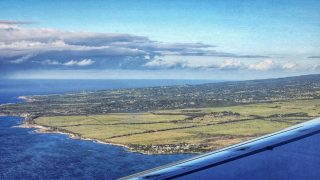
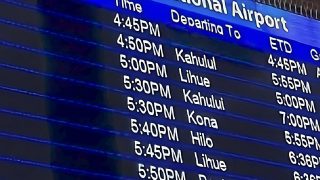
The lead photo can be seen in person at HNL. Photographed by Beat of Hawaii.
By Rob and Jeff, Beat of Hawaii.
Some of Hawaii’s most meaningful parts are the ones visitors walk right past without knowing they are there. We’ve spent nearly 20 years finding them firsthand for BOH as full-time Hawaii residents reporting on travel, culture, and island life, and telling you what they mean for your trip. Join us →
Get Breaking Hawaii Travel News