

This Saturday, the Outrigger Kona Resort & Spa will host the World Manta Day Festival at Keauhou Bay. The free event, co-sponsored by the resort and Manta Pacific Research Foundation, will celebrate one of Hawaii Island’s most captivating residents.
Families, visitors, and residents will be invited to learn more about manta rays through cultural talks, science presentations, and community activities, held from noon to 7 pm.
Hawaii’s manta rays, especially those at Keauhou, are under increasing pressure from the very popularity that made them so famous.
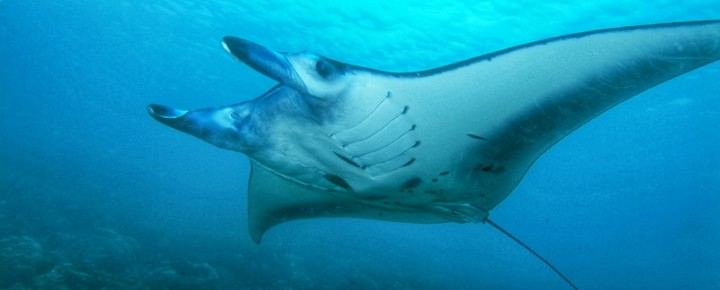
The night magic of Keauhou Bay.
Spotlights shine across the water, and enormous wings appear from the depths. Snorkelers hold on to custom-made light boards. Manta rays, drawn to the plankton attracted by the light, glide and turn in a spectacle that is unlike anything else in Hawaii. For decades, it has been a signature experience on the Big Island. Visitors pay for night snorkel and dive tours that guarantee close encounters, and for many, it becomes a highlight of their trip.
We wrote about the history of this encounter in Manta Rays in Hawaii: History. But with fame has come crowding. At its peak, there were reportedly as many as 70 different operators running tours from Kona. Boats jostled for space, snorkelers bumped into each other, and safety risks mounted. Propeller strikes, overuse of lighting, and the stress of human proximity became part of the conversation.
DLNR’s plan to cut back.
Last year, we reported on the Department of Land and Natural Resources’ plan to drastically reduce the number of manta tour operators. The goal is to shrink the number at Keauhou and Makako Bays from roughly 70 to just 24.
The move is part of a larger statewide crackdown on ocean recreation companies, ranging from kayak rentals to dolphin tours, aimed at addressing overuse and ecological harm.
For manta operators, it could mean a drastic reshaping of an industry that has grown with little oversight for years. See our report on the latest plan to limit Hawaii boat adventure companies for more on that.
The proposal has sparked controversy. Some operators support the cuts, citing safety and conservation concerns. Others warn that the rules are uneven and will crush small family-run businesses while doing little to solve the core issue: unrelenting visitor demand.
A festival caught in the middle.
That is where this weekend’s festival comes in. Outrigger Kona Resort positions the World Manta Day Festival as a celebration of culture and conservation. Talks by marine biologists and cultural practitioners highlight the importance of mantas in Hawaii’s ecosystem and traditions. Resort promotions invite guests to book stay packages that tie in with the event from $299 + taxes per night. This offer includes waived resort fees, complimentary parking, and a daily dining credit.
The intentions are noble, but the optics raise questions. Can a resort-sponsored festival really separate conservation from commercialization? By spotlighting mantas as a visitor draw, does it deepen the very pressures conservationists are warning about?
Conservation voices
Keller Laros of the Manta Pacific Research Foundation has long been a leading advocate for the protection of manta rays. The foundation works on legislation, education, and research. Laros has said that outreach events like this festival help to spread awareness and encourage responsible behavior.
At the same time, he and others recognize that the more manta encounters are promoted, the more people will want to join the tours. The paradox is that awareness and stress grow side by side.
Marine experts have noted similar patterns with honu at Poipu Beach, dolphins off Waianae, and coral reefs at Kee. Hawaii’s most iconic wildlife often suffers from its own popularity. Regulations attempt to slow the damage, but enforcement is inconsistent, and the visitor demand rarely relents.
What visitors are asking.
Visitors are filled with questions about manta encounters. Which tour is best? Can children go? Is it worth the price? Is it environmentally appropriate? The enthusiasm is clear, but so too is the lack of awareness about conservation impacts.
Where things stand.
DLNR’s permitting roadmap remains unresolved, and operators are effectively in limbo. As of April 2025, the Division of Boating and Ocean Recreation has clarified that no new Commercial Use Permits (CUPs) are being issued. Existing operators may only maintain their current activity or reduce capacity, per a court order; any increase is strictly prohibited (DLNR).
The court ruled against DLNR in December 2024, halting permit renewals until the completion of environmental reviews. A reconsideration hearing is scheduled for September, but until then, the future of the permitting system remains uncertain.
In this climate, the festival proceeds under the resort’s banner, even as the rules governing tours could shift dramatically once DLNR acts. If implemented, the restrictions could significantly reduce the number of active operators, potentially leading to higher prices and restricted access. For now, the tension between conserving manta populations and sustaining tourism remains a pressing issue.
The bigger picture.
Hawaii is not alone in facing this dilemma. From Venice to Maui, tourism hotspots are grappling with how to sustain attractions that are at risk of being overloved. In Keauhou Bay, the symbol is the manta ray, a graceful creature whose nightly flights perennially inspire awe.
Whether festivals and regulations can protect them for future generations will depend on how seriously Hawaii takes managing the magic that draws people here in the first place.
What do you think? Can Hawaii both celebrate and protect its manta rays, or is this another case of tourism pushing nature too far?
Lead Photo Credit: Beat of Hawaii.
Get Breaking Hawaii Travel News
The Mantas come first. Reduce the number of operators or the number of passengers per boat. National parks set limits by reservations, fish catches by numbers. Sting Ray city use to allow scuba. No more.
Two years ago we webt on a night Manta trip to Keouhou bay. The operator did not even do a marine safety briefing, the equipment provided was questionable and some boats would tether other boats to them. This should be more supervised than it has been.
Another tragedy is the whale boats that harrass and chase the humpback whales. Pictures and videos document this abuse.
The whales can’t even surface to breath without boats driving right over the top of them.
Save the whales!
I’m happy to watch them from the viewing platform. I don’t need to be in the water with them, but for those who do how about restricting it to a couple of boats on a rotating schedule and with a limited number of passengers
Pure and simple. The encounters should be controlled. Number of encounters per month, day, week and closed area similar to Capt. Cook.
The encounters should be a paid DNLR professionaly hosted ecotour event similar to Elephant Sanctuary visits in Thailand where they are stopping riding elephants, other places around the world where we are loving the adventures to death.
Exactly! I took my youngest daughter on this tour and there were 9 or 10 boats filled with 12-24 people and cycling every 2 hours. At 100.00 per person i thought it was crazy…when they are only traveling 100 yards or so.
I’m for anything that gives these animals a break from human contact. Their health and well being are more important than money. Limiting it to a only a few companies would be a step in the right direction.
I’ve been a scuba diver for over 40 years now. I’ve seen the drastic changes in the ocean environment. We need to do something,
We saw the mantas. There were about five boats in the cove. All seemed cooperative.
Maybe a solution is X boats in a cove/bay, for xx time.
I don’t think any solution is perfect, but the mantas are a spectacular sight!
In other resource-use activities there are caps placed on use. Access to Hakalau NWR is limited to guided trips, which themselves have limits. Access to areas for hunting and fishing are often limited to a fixed number of permits. These limits are generally supported by the stakeholders because the information is available to demonstrate the necessity of limits. It behooves DLNR to develop data-based analyses of the impacts not only to the Mantas but to the experience.
As the world’s population continues to grow, tourism demand will grow along with it. Exponential demand vs. finite space will always be a problem. Many of the world’s iconic sites and experiences are already getting loved to death. When any attempt at capacity control is introduced, someone always cries foul.
Some form of gatekeeping must be introduced. Otherwise, Hawai’i will continue to be overrun by hordes of tourists suffering from FOMO and other social-media-induced madness.
There shouldn’t be a conflict here. The number one goal of all decisions needs to be to protect the manta rays, no matter the cost to businesses. I understand that much of Hawaii’s economy is based on tourism, and swimming with rays is part of that, but it’s inhumane, threatens them as a species, so IMO all commercial tours to swim with rays should stop. Just like with the dolphins. Feel lucky to catch a glimpse of one while out snorkeling, and that should be enough of a grand experience. Yes, cut back in a controlled way on all tourism, but you can start right now limiting then ceasing the ray tours.
Having stayed at this property several times in the past when the evening show was much less lightly attended I feel it has to be more regulated. Over tourism is or will kill the proverbial golden goose and only causes harm to these creatures with little if any positive benefit to them.