
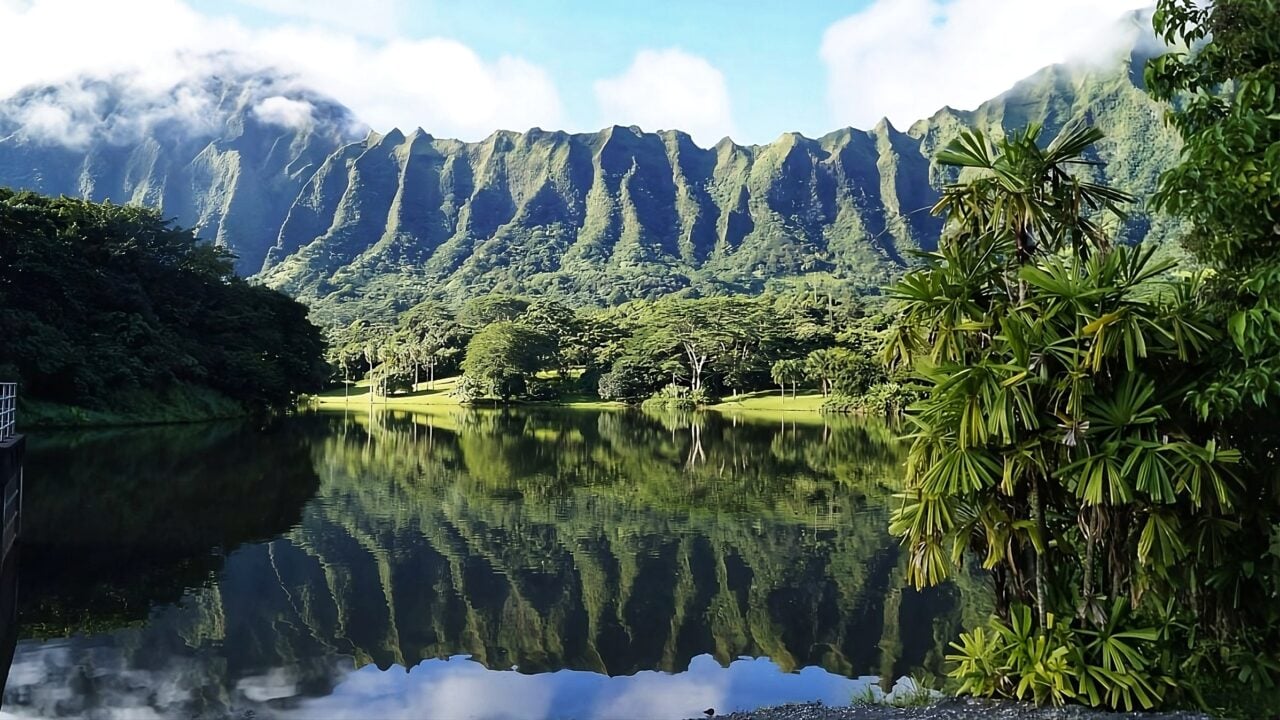
Hawaii is quietly but unmistakably changing how visitors experience its natural treasures. Once open nearly every day of the year, more of the state’s most beloved places are adopting regular “rest days” or strict access limits.
From Hanauma Bay’s two-day weekly closure to timed reservations at Haena and Waianapanapa, the list of restrictions is growing. Now, another major Oahu attraction will soon lock its gates one day every week, a move framed as essential for preservation but one that raises questions about whether this is really needed or if visitors are slowly being pushed out.
We’ve had the same experience traveling elsewhere in Hawaii and across the Pacific. At the new Hanalei National Wildlife Refuge Overlook on Kauai, for example, we arrived in the afternoon only to find the gates closing at 3:30 and no bathrooms available. In French Polynesia, too, restaurants may not be open every day, and even some beaches close before sunset.
Experiences like these leave you reworking plans on the fly and feeling caught off guard. Hawaii’s move toward weekly rest days could create that same kind of uncertainty for visitors here.
Hawaii visitor boom is pushing nature to the brink.
In 2015, fewer than 200,000 people visited this 400-acre preserve on Windward Oahu. By 2024, that number had soared past 720,000, up more than 270 percent in less than a decade. The preserve was initially designed to accommodate 600,000 annual visitors, but these limits are now consistently surpassed.
The impact is visible everywhere: cracked roads, eroded trails, overrun bathrooms, and stressed facilities. More alarming are invasive species like the coconut rhinoceros beetle, which has already killed over 100 palms. Staff say native loulu palms are at real risk without the time and resources to fight infestations.
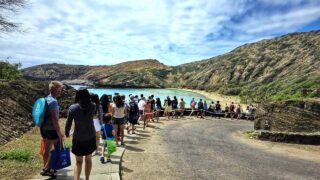
The trend is not unique. Hanauma Bay once welcomed more than three million visitors annually, only to shut down two days each week to help its reef recover. As we reported in Hanauma Bay – With Fewer Visitors And Higher Fees, those closures revitalized marine life but also made access harder than ever.

What to know before you go.
Hoomaluhia Botanical Garden covers 400 acres in Kaneohe on Windward Oahu. It’s open daily from 9:00 a.m. to 4:00 p.m., with free admission for both residents and visitors. The grounds feature a 32-acre lake, where catch-and-release fishing is allowed with a permit. Three campgrounds feature 28 total sites, plus space for activities like drawing, painting, and guided nature walks. Camping requires reservations and fees, but general entry remains without charge.
How weekly closures will change your Hawaii trip.
City officials plan to shut the gates one day a week starting in 2026. The public is being asked to pick whether Tuesday or Thursday will be the designated day. Officials say the pause will let staff prune trees, repave walkways, clean restrooms, and spray for beetles without disruption.
For visitors, though, the change will be felt in very real ways. Families planning a picnic could find the gates locked. Photographers waiting for that once-in-a-lifetime sunrise may be turned away. Tour buses will have to reroute and reschedule.
For some, the closure will seem like a small price to protect Hawaii’s beauty. For others, it is one more barrier stacked on top of fees, reservations, and restricted hours. A longtime visitor told us after being shut out of Hanauma Bay, “I used to go every week. Now it feels like visitors are being pushed out.” That same frustration could easily grow as weekly closures spread across Hawaii.
Preservation or exclusion? The debate over Hawaii’s closures.
Supporters of weekly rest days argue they are about malama aina, caring for the land. Without pauses, invasive beetles, heavy traffic, and crumbling infrastructure only accelerate. Allowing nature to breathe, they say, is the only way to guarantee future generations see the same beauty visitors enjoy today.
Critics counter that closures are the easy way out. They mask deeper problems, such as thin staffing and chronic underfunding. Honolulu’s entire botanical garden system runs on just $1.4 million a year, and half of that goes to security. That leaves little for the basic repairs and improvements travelers expect.
Readers on Beat of Hawaii have been blunt about these issues. In Maui Visitors Are Quietly Saying It: We’re Not Coming Back, one commenter wrote, “We planned our entire trip around a beach day only to find it closed. It feels like Hawaii doesn’t want us there.” That frustration shows how even well-intended closures can end up eroding the very visitor experience Hawaii depends on.
Weekly closures spread across Hawaii’s most loved places.
Hoomaluhia is only the latest in a long line of Hawaii attractions tightening access. Hanauma Bay’s closure days are now permanent. Haena State Park demands advance reservations. Waianapanapa has capped entry to shield its fragile coastline.
We reported on this shift in New Hawaii Fees Starting In 2026 | The Price Of Paradise?, where readers voiced alarm not only about rising costs but about the creeping sense that Hawaii vacations are becoming more complicated and less welcoming.
Every new closure feeds some visitors’ perception that Hawaii is shutting the door a little more each year. For residents, restrictions can feel like overdue relief. For visitors, they increasingly appear to be barriers to the aloha spirit that once defined a trip here.
The emotional stakes for visitors.
For many, visiting Hawaii is about rituals and traditions: returning to the same beach year after year, bringing children to see waterfalls, or walking a favorite trail. Closures disrupt those traditions. Arriving at a locked gate, especially after planning a day around it, leaves travelers feeling unwelcome.
This emotional undercurrent fuels many of the comments we’ve seen in recent years. That raw sentiment, while not universal, shows just how deeply closures are reshaping the visitor experience
What Hawaii’s next round of closures could mean for you.
The public survey on which day to close runs through October 8. Officials say the decision will take effect in 2026, with either Tuesday or Thursday chosen as the rest day. What remains unclear is whether this will become a model for other parks and gardens across Hawaii or remain a one-off experiment.
One thing is certain: Hawaii’s approach to tourism is shifting. The era of open gates and unlimited access is over. Visitors now face a new reality of rest days, timed reservations, and mounting fees.
What do you think? Would weekly closures improve your Hawaii experience, or do they feel like one more barrier standing between you and the islands?
Photo Credit: Image courtesy City and County of Honolulu.
Get Breaking Hawaii Travel News


Reading visitors’ comments, it’s clear that a simple measure would go a very long way towards calming everyone, to wit:
** post on all relevant sites a prominent link to a site that gives a schedule of closures (or open times) for the next 30 days, **
Of course, the site needs to be maintained daily, with updates listed by 9am, and counties and state need to limit last-minute closures to emergencies only and ensure these are posted asap on the same site.
(And it may havevto be 2 sites, one for state and one for county, in case the lines of communication are in need of repair.)
Defeated planning is one of the greatest frustrations for families on vacation — let’s help avoid it.
Only one day a week to not have their world showered with urine, sweat, sunscreen and foul plague like invasion!
Please be as magnanimous and generous to the natural world as you pretend to be.
So. Much. Entitlement.
There are many articles complaining about the crowding of popular sites around Hawaii. This reservation system controls that and protects the environment at the same time. Yet people don’t want the reservation system cause it might inconvience their trip?? So they want it both ways? Which is it? Perhaps a more rural part of Florida would better suit them.
Haena State Park? All of it now, or “just” Ke’e Beach? If that includes the beach (Haena) then we’ll have to pray it doesn’t rain on our selected day. We typically stay on the south end of Kapa’a and decide on where to go based on the weather report for that day.
Their home their rules! We live in a tourist trap too. It would be amazing if we could do what Hawaiians are courageously doing! Have some respect, you are not entitled o make your own rules, you are a guest!
Preserving the natural beauty of the islands is a priority, as it should always be!
It is about time. I have visited and loved all the islands and people for many years and have witnessed the absolute destruction and disregard for natural resources by visitors. When visiting I always tried to make a positive impact and help where ever needed but the situation is out of hand. Thank goodness the Hawaiian people are standing up and taking action to save their homeland.
Just got back to the mainland after visiting Oahu and Maui. Tried to take my son who uses a wheelchair to the botanical gardens. While there were disabled parking spaces in the main lot they were full. Found more disabled parking spaces in the 2nd lot but there was no accessible way to get to the main lot and visitor center. Excessive parking charges in many areas of Maui left a bitter taste…. $29 to park in one area. Another place we wanted to visit a shop and the least parking charge was 3 hours for $12. Only wanted to stay a half hour. How to drive business away.
I don’t know of a mechanic who will do regular service on my car while the engine is running. Nature deserves the same consideration.
Goodness gracious! The ‘entitlement’ comments from potential visitors is disturbing. During the Covid-19 shutdown, the islands along with other overrun sights got to take a breather. I, for one, would rather visit somewhere that is well taken care of, not bandaged together. When I visit another place, I take the time to research the places I hope to visit and plan accordingly. I do not take offense that I am being ‘punished’ or being made to feel unwelcome if my choice is closed. I look for another place to visit and enjoy my time in that city. Mother Nature needs a break, too.
Don’t bite the hand that feeds you. Coconut and pineapple exports will not pay for your infrastructure or the social services that many on the Islands depend on. Hawaii is a tourist based economy, run the tourist off and your people will suffer.
Despite what a number of visitors writing in this forum seem to assume, cost increases, crowds, lack of maintenance, and occasional short remarks by overworked staff are not a matter of policy. They are a natural consequence of large increases in visitors to a collection of islands that has no room to “grow” new attractions and that relies on a fixed pool of workers to run facilities. Locals (whether small businesses, hotel employees, or government personnel) are often underpaid and overworked while large corporations that own the hotels, the airlines, the rental agencies, are taking in more money.
So it’s sad to read what sometimes appear to be vengeful or threatening comments (“see if you can survive on seafood and coconuts”). Not all locals are enthusiastic about tourism, naturally, but a large majority is and tries to provide a congenial atmosphere for our visitors.
As a long-time yearly visitor and now a resident for the last dozen years, I welcome the restrictions. Beautiful places on Earth are not a renewable resource: if we destroy them through overuse, no substitute will appear. Moreover, with each beautiful place lost, the pressures put on the remaining ones increases.
With the ever-increasing human population. we need to take care of nature, lest we turn the entire planet into a single, monstrous city, with all food grown in vats and with no contact left with nature.
Aloha
As a yearly visitor to the Hawaiian Islands, im fine with closures for certain days or limited access and high fees, as long as I see improvements. Reef research from Univ of Hawaii states that time off helps reefs so we are all for that…we will adjust accordingly.
Mahalo
Jen
Will the ecosystems in question benefit from the closures?
Will the closures be adequate for needed malama of the facilities?
Will accurate, current information about fees/closure/opening times, be easy for potential visitors to find, i.e. by google search, before they put in travel time to find closed gates?
Do people assume they can just show up at an airport and immediately fly to Hawaii whenever they want without planning ahead a little? Because it sounds like what’s expected upon arrival to the islands.
I enjoy Hawaii more when I allow a good balance of flexibility and advance planning. Sudden closures/cancelations are always possible. A valuable part of visiting Hawaii for me is letting Hawaii show me its ways and change me, rather than having rigid attachment to expectations and control of my Hawaii experience.
A lot of folks show up to Hawaii trying to do too much (myself included). It’s a recipe for disappointment and discord between locals, ‘aina, and visitors.
I have visited all the islands over the last 10 years. It was a vacation I saved for and enjoyed so much. Now the time has come to say “goodbye to Hawaii”. They have priced their islands out of the market for visitors! Sad to say I won’t be coming back, hope they will be happy with less and less visitors. Our dollars will no longer be there.
This is a very common practice all around the world. Places are closed 1-2 days a week and you plan around that. Having a reserved slot keeps the crowds down on the day you do go. I’m not sure why people are making it into this insurmountable issue. The beauty of Hawaii is why people want to go and visit – having to be organized on your trip is a tiny price to pay in order to protect the very things that make it such a special place.
I’ve lived in Kaneohe for over 60 years only several houses away from the entry gate to Hoomaluhia gardens. I used to take daily walks in the park for my health and peaceful nature. After the pandemic all of that has changed. The traffic going in and out of the park makes it a pain to even leave my driveway. The readily available street parking is now often occupied by visitors cars especially on weekends. Those walks I used to take for my health are now a thing of the past. After being hit by the side mirror of a passing car, I now feel it is no longer safe for me to enjoy my “peaceful” walks. I don’t blame our visitors, but I lament the loss of the peace, quiet and safety I enjoyed pre-Covid. I feel for the people living in the area, there should be some control over the amount of visitors allowed to visit on any given day. Give the park time to rest and recover.
Closed two days a week. Let nature rest. Really. Lets close hotels 2 days a week. Close stores 2 days a week. Close beaches 2 days a week. Close car rentals 2 days a week. With this phoney nature deal outside of a regular 5 day workweek cut to 3 days or 24hrs a week who can afford to loose 16 more hours of income? Seriously who in Hawaii ever wants employment or finds more reasons to slack off? IMO Hawaii is getting to be a state unemployment assisted state or residents just wanting to suck off the financial assistance programs.
Hawaii just cut to the chase. Just close the HNL airport and other major airports and offer only flights to locals needing inter island travel. If you don’t have any attractions open for tourist’s then what is the point of going to Hawaii? Sorry I don’t want to stay the whole time in a hotel, shop just to spend money, or get severly burned at the beach because there is nothing else to do.
Close access. Too many people are destroying our natural beauty which is why the tourists come. Limiting access and requiring permits and fees will only make it more desirable. Protect The Aina!!!
Closing the tourist locations is a great idea. It would be best if the locations were all closed to tourists five days a week and allow Hawaii residents free admission on those five days.
Tourists can visit on two days a week.
Mother Nature needs to be nurtured. Let her rest a bit. Everyone reasonable should understand. People will just have to plan a little in advance. One possible idea could be for all/most these sites to somehow coordinate different days of closure, so that there is at least “somewhere to go” at any given time. Just a thought, if it resonates.
It’s not specifically mentioned, but are these visitor only closures or are locals included also?
It might be easier if everything is closed on the same day. It might make planning a little less complicated as you would know ahead of time that nothing is open on a given day.
We’ve been going to Kauai for 30 years. We remember the unbelievable crowding at Ke’e Beach, and the inability to park there. We also felt the crowds at the Kilauea Lighthouse, when we tried to view the lovely scenery. We are Totally supportive of the requirement to get passes at both places. Since we live in PA, we have to get up at 6 AM in order to get a pass for Ke’e but so
what ? It’s worth it, to have crowd control.
My recommendation is to get organized before you go, get the required passes, and let everyone enjoy the beauty but not the crowds. Everyone can be cooperative and no one should be “entitled”.
I have put money down on a once in a life time trip for my family. When I read these comments I wish I had not. Sounds like a money grab and they don’t care if we actually enjoy our stay.
Next time it’s Florida for us.
It would be helpful if the famous parks, sites, gardens. etc Punlish newly changed and reduced hours
This isn’t surprising. It’s happening all over the world. We went all the way to Greece to visit an archaeological site and found it closed during posted open hours. We made the best of it, and still have good memories of the trip, because we didn’t feel *entitled* to a good experience. It’s all about expectations.
If a destination needs to rest in order to stay in good condition, then the obvious correct choice is to close it so it can recover. If it is allowed to deteriorate to the point where it’s not the same, then advertising it as being what it once was is disingenuous.
Hawaii is IMO getting to be a book, reserve, schedule type of destination. Who likes to rest or relax when everything is now like a time frame doctors appointment. Next will Hawaii demand everyone to book a table at their fast food chain restaurant or not get a table. The big problem is what day’s can I go where and half the places not be closed. IMO too big of a hassle.
I feel the day or two of rest is a good thing. As listed in the article, there must be things that need to be done that can’t be done efficiently with high numbers of visitors moving around the venue. Having said that, I hope for transparency. Regular closures or limited accesses need to be posted online in very visible understandable ways. Sometimes we hear about closures, limited access, and/or parking charges by word of mouth. We then check on line to learn more. From now on, we’ll check on line before leaving home. Prevent surprised locked gates etc.
I agree the closures are a gift to preserve the environment. They are not about excluding anybody glass half full?
For travelers visiting in any of these areas, all we need to do is go online and see what days and what hours the site is open. Traveling takes study and research anyway…
The idea of considering this as an exclusion is not a healthy one. The reason being we have to keep the sites healthy so that people can enjoy them. If the sites don’t have some space to regenerate and the Parks aren’t able to manage, then they won’t do anybody any good anyway! It’s about time that we took some responsibility for balancing out, enjoying these places and giving the places the time they need to regenerate.
Aloha Rob+Jeff I think it’s a great idea to close the park for even 2 consecutive days. Workers can accomplish more that way, working on sections of the park at a time instead of piecemeal areas. And how does security deserve that much money? No wonder the staff is short. Can’t they get anything properly vetted over there? The council members are making too much in salary for what they are Not getting done.