When a Hawaii flight is canceled, getting another seat can be only the beginning of the problem. Limited alternatives across the Pacific can split people traveling together onto different routes, leave one passenger connecting while another flies nonstop, and force decisions about timing and cabin that nobody ever planned to make.
That is the bind BOH reader Gary says he encountered after his Alaska flight was cancelled about three hours before departure. He had paid for first class, but Alaska’s cancellation resulted in Gary and his traveling companions being rebooked on different Hawaii itineraries. Gary is 82 and needs assistance from his companions while traveling. He says he “took the available seats to be on the same flight.”
After the trip, Gary asked Alaska to refund the difference between the first-class fare he purchased and the economy transportation he ultimately received. According to Gary, Alaska told him no refund would be made because he “voluntarily changed” his first-class seats to get on the same flight as his companions.
Gary’s account raises questions that don’t have clean answers, including one BOH could not resolve from what he submitted alone. When a flight is cancelled, a traveler is generally entitled to a refund of that fare if they choose not to use the replacement ticket. Gary’s report does not address what happened to the value of his original cancelled first-class ticket, whether it was refunded, credited, or applied to the replacement ticket. Without that, it is not clear whether Gary lost real money or lost something harder to quantify: the cabin he expected and his sense that Alaska should have recognized why he needed to be with his companions.
Alaska flight cancellation splits Gary from his traveling companions.
Gary was scheduled to travel on Alaska flight AS932, a Kahului to Las Vegas flight, on July 28, when it was, as we can confirm, canceled. According to Gary, Alaska then rebooked his first-class ticket onto another itinerary leaving later. His account does not specify the exact routing of that replacement flight.
His traveling companions were rebooked differently, on an itinerary through Honolulu. Gary says he then called the airline to change onto the same flight as his companions.
Seats were available, but first class wasn’t. Faced with traveling separately in the cabin he had purchased or staying with his companions in economy, he chose the latter. From an airline ticketing standpoint, that distinction can be important.
Mechanical delay on the replacement Hawaii flight adds to the disruption.
According to Gary, and as we confirmed, AS808, the flight he moved to, had to change aircraft due to a mechanical issue, pushing its departure to 3:00 am that same day. When Gary returned home, he contacted Alaska and asked for a refund of the difference between his first-class fare and the economy transportation he received. He says Alaska refused.
Gary says Alaska later provided a $200 discount code for a future flight, which he calls “a customer service gesture.” That didn’t resolve his request for the first-class fare difference.
Why Alaska called Gary’s rebooking a voluntary change.
According to Gary, Alaska’s reasoning was that it had already accommodated the cancellation by rebooking him on another first-class itinerary. Gary then asked to move to a different itinerary where first class wasn’t available. The airline cancelled Gary’s original flight, provided replacement transportation in his purchased cabin, and Gary subsequently requested another flight and accepted a lower cabin.
Gary sees the sequence differently. Alaska’s cancellation was what separated him from his traveling companions in the first place. He wasn’t asking for a more convenient departure or a preferred connection. He says he moved because he needed to remain with the people assisting him during the trip.
The harder question in Gary’s case is whether he was involuntarily downgraded, and that question depends on something his account does not establish: whether Alaska had any way of knowing his reservation was connected to his companions’ at all. Gary’s account does not say whether the reservations were linked or whether Alaska otherwise knew they were traveling together.
If Alaska’s system had no way to see that connection, the airline may not have known it was separating him from the people he needed. That changes how reasonably “voluntary” describes what happened next, because Alaska may have seen a passenger asking to change an already completed first-class rebooking while Gary saw himself trying to stay with the people he needed after the cancellation split them apart.
What the federal downgrade rule says.
U.S. Department of Transportation refund rules address a situation that sounds straightforward at first. When a passenger is involuntarily moved to a lower class of service, DOT says the passenger is entitled to a refund of the difference between the fare paid and the fare for the class of service actually provided.
How airlines calculate downgrade refunds has itself become contentious. American Airlines faced a DOT complaint over a policy that refunded 40% of the fare assigned to a downgraded segment rather than the full difference between the premium fare paid and the lower cabin fare. That complaint challenges American’s formula as inconsistent with federal refund requirements. DOT’s own rule says that when an involuntarily downgraded passenger continues traveling, the airline must refund the fare difference.
Buying first class and eventually flying economy doesn’t necessarily answer the question by itself. How the passenger arrived in that economy seat may be just as important.
What happened to Gary’s original first-class ticket?
There is another part of Gary’s account we can’t resolve from what he submitted. We don’t know what happened financially to the value of the original first-class ticket Alaska cancelled.
Was that value refunded, credited, or applied to the replacement ticket? Without knowing that, we can’t determine whether Gary actually lost the difference between a first-class and economy fare, or whether the dispute is instead over how the ticket was handled after he chose the flight carrying his companions.
That isn’t a small technicality. It goes directly to what Gary is asking Alaska to refund and what, if anything, remained financially attached to the first-class ticket after the cancellation and rebooking. We also can’t independently confirm the exact routing of Gary’s replacement flight or how it connected to his companions’ itinerary. That gap doesn’t change the core dispute, whether a passenger-requested change made necessary by an airline’s own cancellation should count as voluntary, but it is one more piece of the sequence that rests on Gary’s account alone.
Hawaii cancellations can leave travelers with imperfect choices.
A mainland cancellation can often present numerous flights, connections and even nearby airports as alternatives. Hawaii doesn’t always offer that flexibility. On many routes there may be only a handful of practical ways across the Pacific that day, and available premium seats can disappear quickly when an entire cancelled flight suddenly needs somewhere else to go.
Groups can also get split during reaccommodation, as Gary says happened to his party. One passenger may be routed through Honolulu while another gets a mainland connection, and the airline’s first solution for each individual ticket may not preserve the group.
That is where Gary’s experience becomes useful beyond his own dispute. Travelers may assume that every choice made after a cancellation is still part of the original airline-caused disruption, while the airline may treat a passenger-requested change after the initial reaccommodation as a separate, voluntary transaction. Neither assumption should be made without asking.
What to ask before changing the replacement flight.
Gary’s experience suggests a question worth asking: if an airline has already rebooked you after cancelling a Hawaii flight, what happens if you ask it to change that replacement? Before agreeing to a different itinerary, especially one involving a lower cabin, it may be worth asking the agent whether the new flight will be recorded as a voluntary change and whether accepting it affects any refund of the fare difference.
If staying with children, an older relative, someone providing assistance, or the rest of your traveling party is the reason for the request, explain that before the ticket is changed and ask that it be documented. It is also worth asking whether the airline’s system shows that you are traveling together rather than assuming the agent can see the connection.
Those aren’t questions most of us expect to ask while trying to recover from a cancellation. At that point, the immediate goal is usually just getting to or from Hawaii with the people we planned to travel with.
Was that voluntary because Gary requested the change? Or was it still a consequence of a cancellation Alaska caused, even if Alaska never saw the connection to his companions? And separately, what became of the value of his original ticket is a question Gary’s account leaves open too.
These are the kinds of gaps a traveler in this position should ask about directly, before assuming an airline sees the full picture the way the traveler does. How would you view it? Gary says he’s sharing his experience “to see if other travelers are aware of this so it does not happen to them.” Please comment and join the discussion.
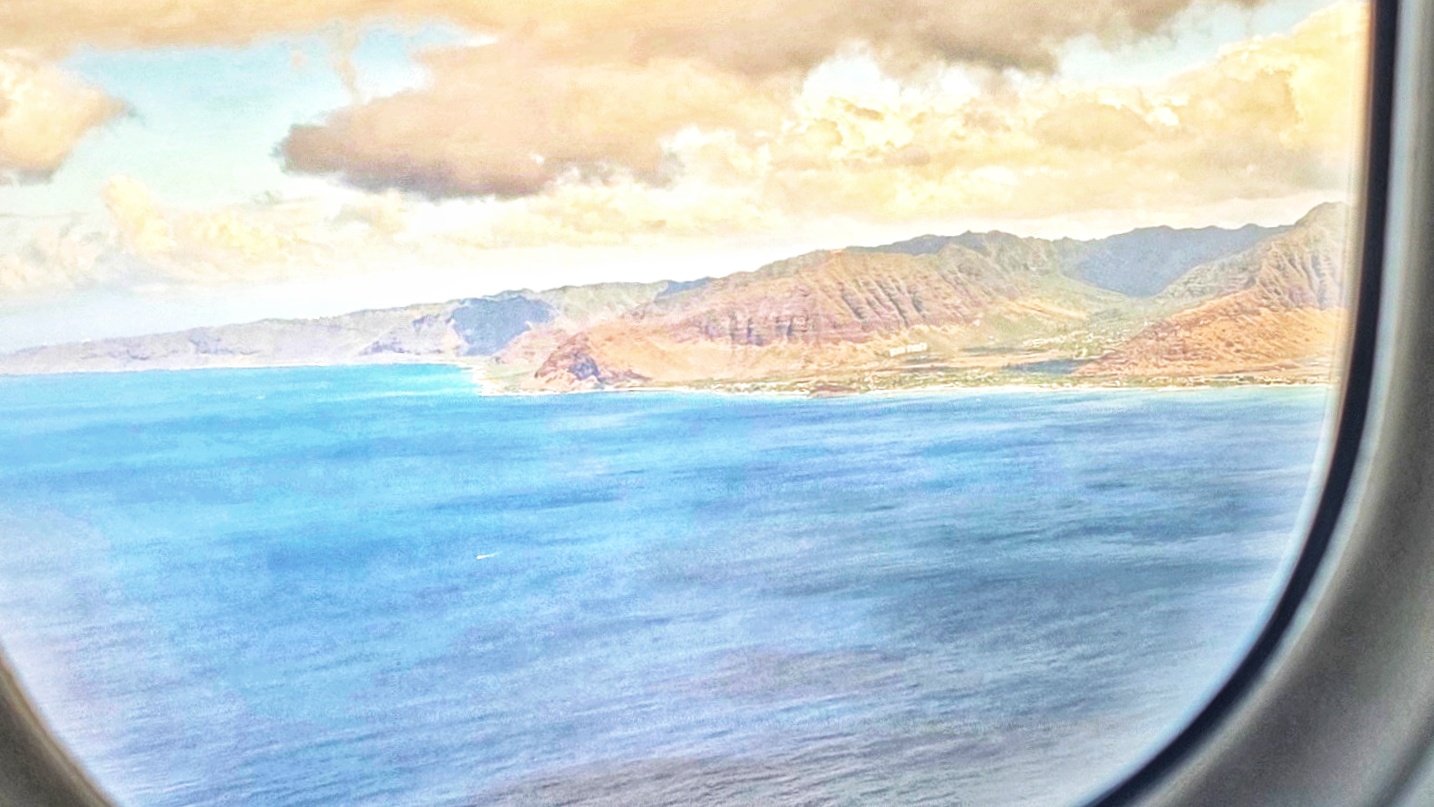
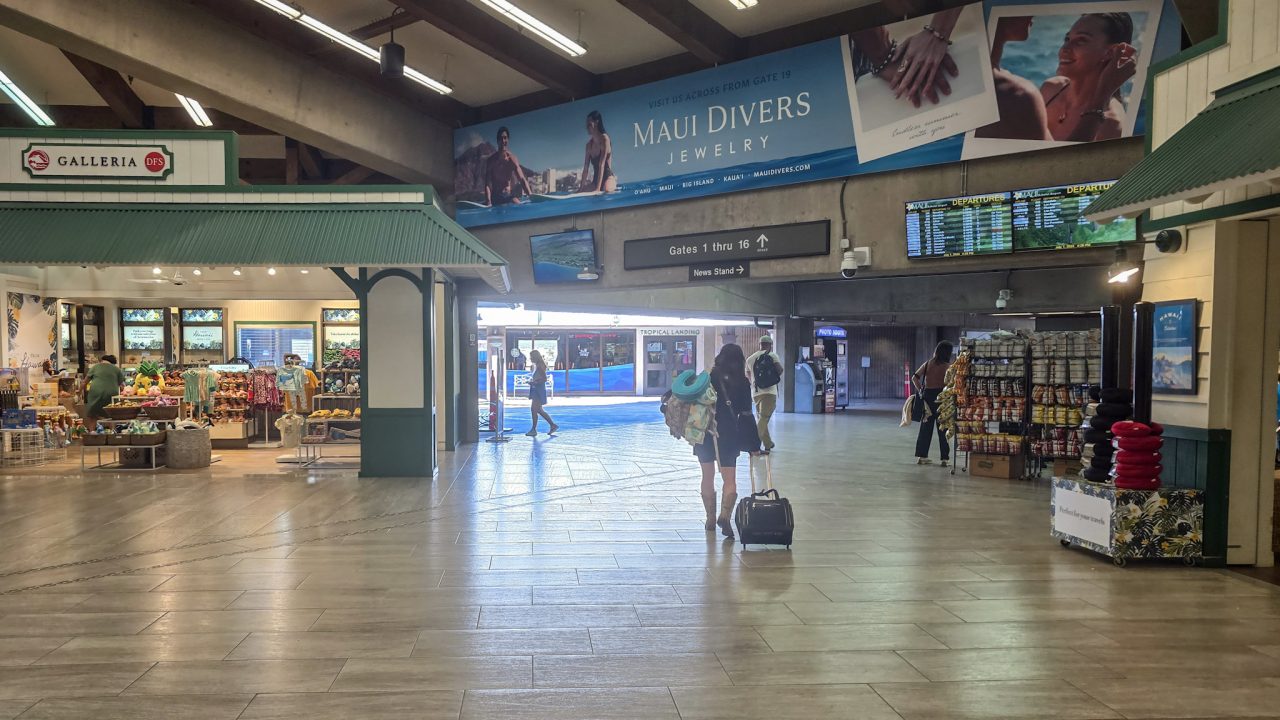
Lead Photo by Beat of Hawaii at Kahului Airport on Maui.
By Rob and Jeff, Beat of Hawaii.
Some of the most meaningful parts of Hawaii are the ones visitors walk right past without knowing they are there. We’ve spent nearly 20 years finding them firsthand for BOH as full-time Hawaii residents reporting on travel, culture, and island life, and telling you what they mean for your trip. Join us →
Excerpt:
A Hawaii traveler says Alaska cancelled his flight, separating him from the companions he relies on while traveling, then denied his first-class fare refund by calling the rebooking that reunited them voluntary.
Yoast SEO title:
His Hawaii Flight Was Cancelled. Then His Rebooking Became “Voluntary.”
Meta description:
A Hawaii traveler says Alaska denied his first-class fare refund after a cancelled flight and rebooking raised an unexpected question about what counts as voluntary.
Get Breaking Hawaii Travel News