
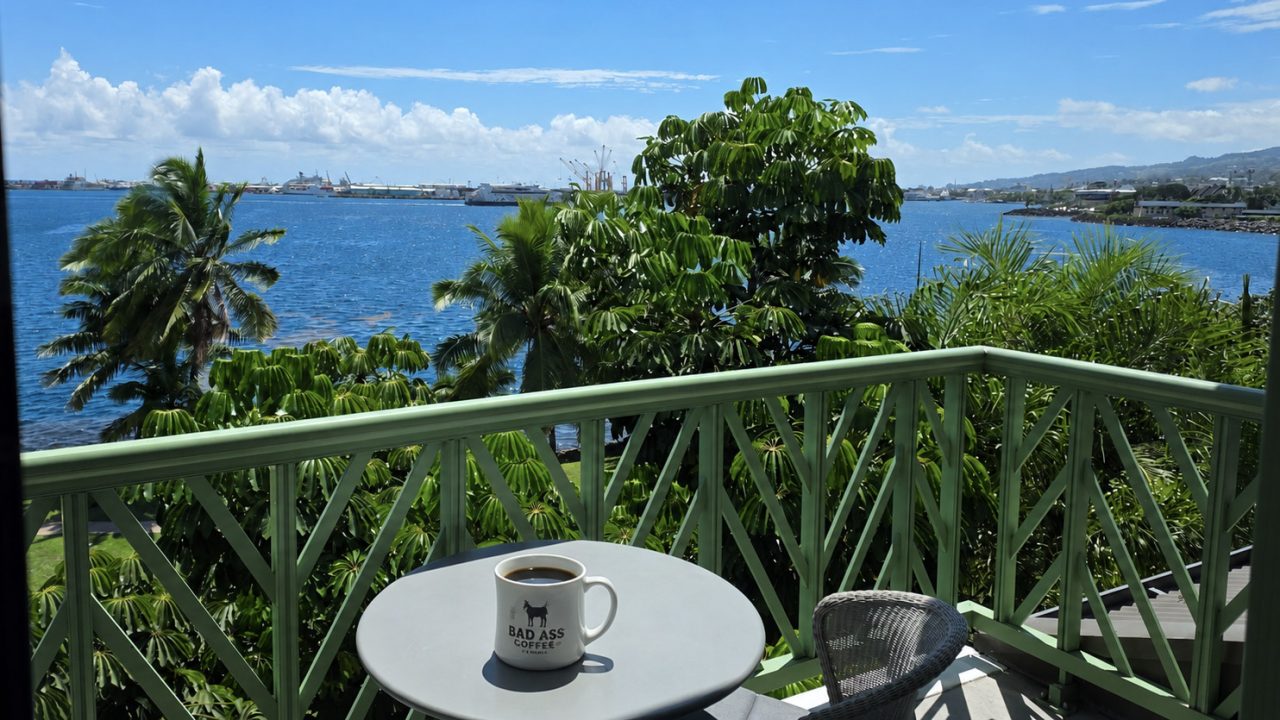
Walk through a mainland airport or shopping mall, and sooner or later, you run into Hawaii. Not Hawaii the place, but Hawaii as a product.
It might be aloha shirts, tiki decor, shave ice, coffee, or poke bowls. We have even seen acai, which is Brazilian, folded into the same island feeling as if everything tropical somehow belongs under one giant Hawaii umbrella.
The latest example is one many readers have probably already walked past. Bad Ass Coffee of Hawaii is spreading through mainland malls, travel plazas, and shopping centers, and it raises the question we ask whenever we see Hawaii being sold far from home: how much Hawaii is actually in it?
You keep seeing “Hawaii” for sale, and you are nowhere near Hawaii.
No place seems to travel quite like Hawaii does. The name alone suggests sunshine, beaches, hospitality, escape, and a feeling people recognize before they know anything else about the islands.
Businesses understand that power. Add surfboards, tropical flowers, bamboo accents, island words, and a few beach colors, and customers instantly know what they are supposed to feel, even if they are many thousands of miles from the Pacific.
The example you have already walked past.
Bad Ass Coffee of Hawaii looks and feels Hawaiian by design. The stores lean into island imagery, Hawaiian place names, and the promise of a coffee experience connected to the islands.
That connection is not invented. The company began in Kona on the Big Island in 1989, and its name comes from the pack donkeys that once carried coffee down Kona’s steep slopes before modern roads reached many coffee farms.
The Hawaii roots are real.
The company has real Hawaii history, but it is no longer simply a Hawaii coffee shop. It grew through mainland franchising from Salt Lake City owners in 1995 and has been run from the Denver area since 2020 under the Colorado-based Royal Aloha Franchise Company.
That does not make the brand fake. It does make it a useful example of how Hawaii can start as a real place-based story and then become a national product sold in places that have no direct connection to the islands.
How much of Hawaii is actually in it?
The honest answer is that it depends on what you buy.
Bad Ass Coffee sells real Hawaii-grown coffee from the Big Island, Kauai, and Maui. It also openly sells premium international coffees and blends, which means the Hawaii name is constant while the origin depends on what you order
In that transparency, the company isn’t hiding the blended reality. Yet its big Hawaii identity can still lead customers to assume that everything in the cup came from Hawaii, even though that is not always the case.
Selling the name is bigger than one coffee shop.
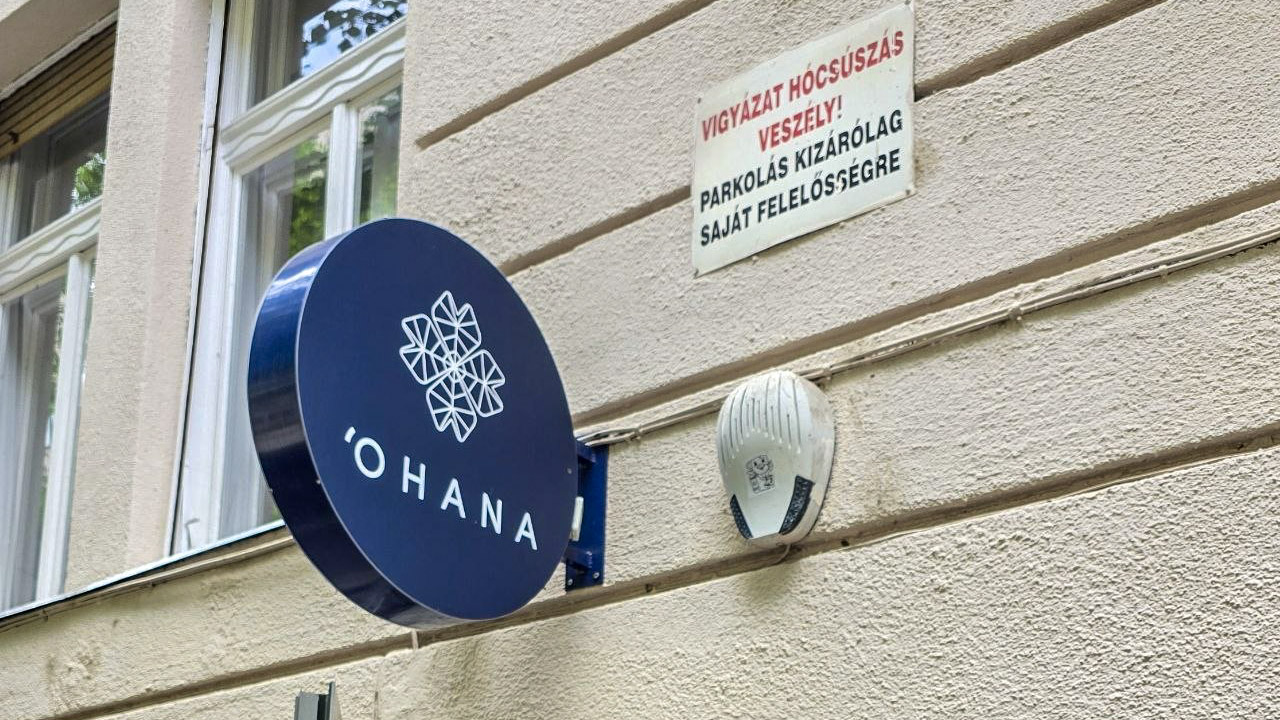
This is not really about one coffee chain at all. It is about how Hawaii has become a product that can show up in a mainland strip mall, a shopping center, or even an Ohana coffee shop in Budapest, which we were surprised to walk past.
When we went inside, we asked where the Hawaii connection came from. We were told the owner had visited Hawaii, fallen in love with the islands, and wanted to share aloha in Budapest.
Nothing about the coffee itself appeared to be from Hawaii. But when we stepped inside and saw the Hawaii decor, it still felt strangely familiar, like a piece of home showing up on the other side of the world.
The place behind that feeling has its own stakes. Right here on Kauai, the largest coffee farm in the country came within months of losing its land this year before a new 15-year lease saved Kauai Coffee.
As residents, we find all of that both familiar and strange. Hawaii inspires people around the world, but the farther the branding travels, the easier it becomes to mistake the feeling of Hawaii for something that actually came from here.
How to tell whether “Hawaiian” is actually from Hawaii.
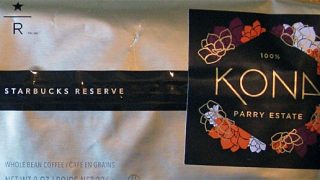
Coffee labels require more than a glance at the largest words on the front. Under current Hawaii law, a coffee sold as a Kona blend can contain as little as 10% coffee actually grown in Hawaii, as long as the label discloses that percentage and the origin of the rest.
That changes on July 1, 2027. Starting then, roasted, instant, and ready-to-drink coffee using Hawaii regional names must contain at least 51% Hawaii-grown coffee, building on Hawaii’s coffee labeling law, which already requires the front label to state the origin and weight percentage of the beans inside. That is why the small print is becoming more important.
For buyers, the simplest move is to read the label before trusting the largest words. Look for 100% Hawaii-grown, check whether it says “blend,” and see whether the label states how much of the coffee actually came from Hawaii.
If you want the real thing, here is how to find it.
If the goal is to support Hawaii coffee farmers, buy 100% Hawaii-grown coffee whenever possible. Buying direct from Hawaii farms or trusted Hawaii roasters also gives more of the money a chance to stay connected to the place on the label.
What’s the most surprising place you’ve ever come across Hawaii being sold or celebrated?
Photo Credit: © Beat of Hawaii at Kona.
By Rob and Jeff, Beat of Hawaii.
Some of the most meaningful parts of Hawaii are the ones visitors walk right past without knowing they are there. We’ve spent nearly 20 years finding them firsthand for BOH as full-time Hawaii residents reporting on travel, culture, and island life, and telling you what they mean for your trip. Join us →
Get Breaking Hawaii Travel News
As a long time visitor and homeowner on Hawaii, the one I get the biggest chuckle out of is Kona Brewing- if it’s still being made on one of the Islands, it is purely a convenience to Corp. Of course long ago sold to Anheuser-Busch (not sure who owns them now.) Ordered a Big Wave once on mainland and when I asked why I was being charged for an import (one of those places that charges more for imported beers than domestic) they said, “….well it’s from Hawaii.” (Can’t fix stupid.) Oh well. Of course Hawaiian Bread products actually made in Carson, CA.
I am glad that Kona Brewing’s Restaurant in Kona did not change when ownership changed. We eat there several time on each Big Island trip. They serve excellent food and beverages at “reasonable for Hawaii” prices. Ambiance and service are always great as well. I had hoped that they would open a location in Kaanapali, but we ended up with Maui Brewing instead. (Average beer and mediocre food.)