
If you spend even a little time researching a Hawaii trip right now, a pattern shows up fast. Reddit threads warn visitors to stay away. Comment sections are filled with stories about shaming and hostility. TikTok videos frame the islands as resentful, fed up, and tired of outsiders. “Haole go home” has become shorthand for a much bigger idea about what visiting Hawaii is supposed to feel like now.
That idea is no longer just online chatter. It is changing real behavior. We hear from readers who have canceled trips, skipped Hawaii entirely, or quietly rerouted vacations to other countries. Others tell us they arrived already on edge, apologetic before anything even happened, unsure how they would be received just for being there.
The anxiety has moved past prices and crowds into something more basic. Visitors want to know to what degree they are still welcome, and what they should expect to encounter. Anyone paying attention to Hawaii travel coverage or online discussion has run into it repeatedly, whether they were looking for it or not.
Given how much we’ve covered visitor frustration over the past few years, it would be easy to assume where this story is headed. We did too. That assumption didn’t hold up as we traveled around Maui, the Big Island, and Oahu in December. We decided to check it out ourselves after an encounter we had in October.
The moment that made it personal.
On a flight from Chicago to Los Angeles in late October, on our way back to Hawaii, we overheard a conversation in the row in front of us. Three passengers were casually bouncing between destinations, talking about future travel plans the way people often do mid-flight. Our ears perked up when Hawaii came up briefly, and one of them said flatly, “They do not want us there anymore.”
The other passenger’s response was immediate. “Forget Hawaii,” they said (using an expletive), then added they were going to Fiji instead. There was no hesitation, no debate, and no follow-up discussion. It was an earful.
They did not know we could hear them, and they were not performing for anyone. This was not a social media argument or a comment-section pile-on. It was a real travel decision being made in real time, based entirely on a belief about how Hawaii feels toward visitors now.
We landed back in Hawaii shortly after that flight and then began moving around the islands for end-of-2025 destination reporting. That short exchange stayed with us as we got to work and started traveling again.
Why we were paying attention.
The travel we did from then until the end of December was not designed as a sentiment experiment at all. We were on the ground working, writing destination coverage as we did with our recent Mama’s Fish House review, moving between islands, driving rental cars, staying in different places, and spending long days out in public spaces. Kauai, where we live. Oahu, multiple times. Maui. The Big Island. We traveled during the peak holiday season and during quieter stretches in between.
Because of our nature as travel writers, from that comment we heard off-handedly at the start of this, and more, we were, in hindsight, paying added attention. We were not looking for confrontation, and we were not announcing anything to anyone, but we were watching how everyday interactions actually unfolded. We spent time in obvious visitor zones and in places tourists are often warned about. Local beaches, small towns, rural Maui, East Hawaii, grocery stores, gas stations, parking lots, eateries, and the unremarkable places where friction usually shows up first.
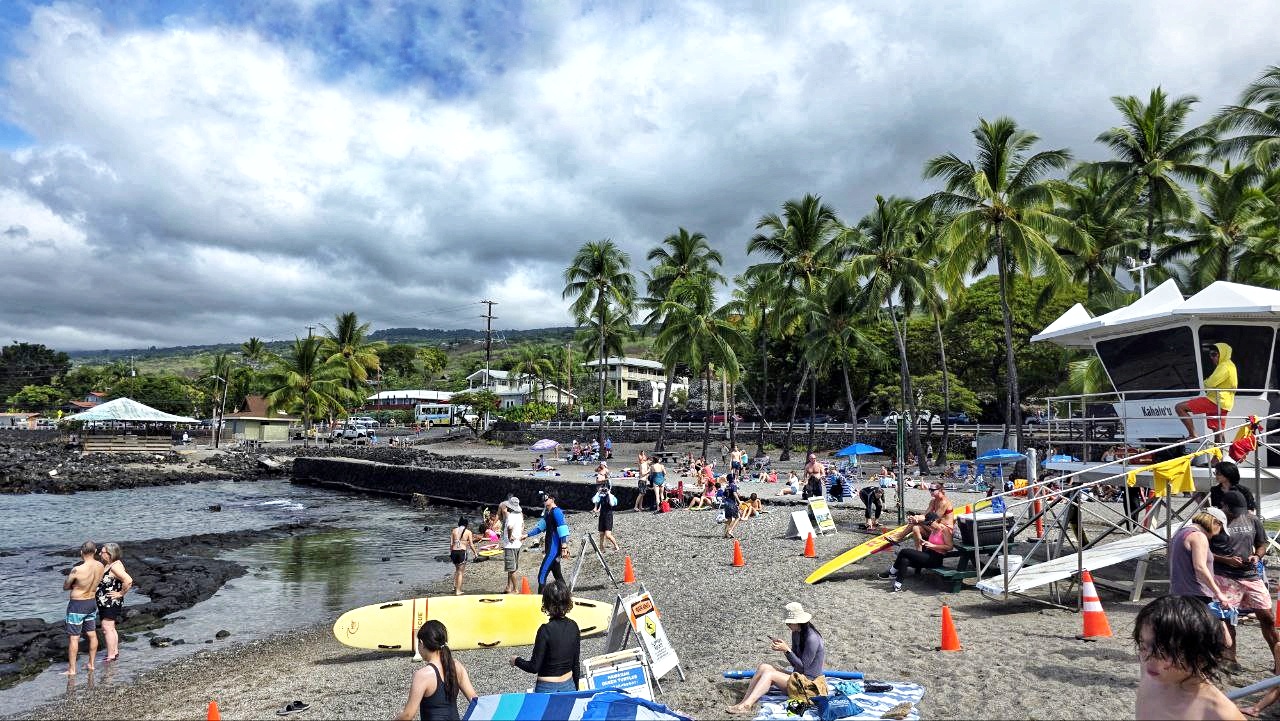
Earlier, that attention had felt warranted. When we visited Maui in fall 2024, about a year after the Lahaina wildfire and while the island was still very much in recovery mode, something felt off. Nothing overt happened, and there was no single incident to point to, but the tone felt flatter and less welcoming than what we were used to. It did not feel hostile, and was not unexpected under the circumstances, but it was noticeable enough that we talked about it and did not wave it away.
So when we returned on a statewide travel sweep a year later, the question lingered in the background. Was that feeling still there, or had something shifted yet again?
What we expected to encounter.
Based on everything circulating online, we would not have been surprised to run into something. A sign. A comment. A moment at a beach or in a parking lot where it became clear that visitors were no longer as welcome as they once were. If anti-tourist sentiment had really become more widespread, it seemed reasonable that it would surface somewhere over nearly two months of moving around the state.
We were especially alert in the places most often cited by visitors. These were not random stops or resort corridors, but everyday settings where visitors tend to feel exposed or uncertain about belonging. If widespread anti-tourist sentiment existed, this is where we expected it to surface.
We were not there trying to test boundaries, but were simply doing what travelers do, even ones from another island, while paying attention to the tone around us.
What happened over nearly two months.
Not once did we experience an incident that would support the idea that Hawaii is broadly anti-tourist right now. There were no confrontations, no shaming, and no moments where we felt unwelcome for simply being there. Not in any way. As the weeks went on, the absence of incidents became impossible to ignore.
We are haole, and we drove rental cars throughout the trip. We did not try to blend in or disguise ourselves. Over the course of the travel period, we easily had more than 100 routine interactions with people. What we got ranged from neutral to genuinely warm.
We did the full Road to Hana, including the back road, during busy periods. We saw cones where parking would have been dangerous and congestion where congestion usually exists, but we did not encounter the hostility or tension we had heard of. We went to local beaches where we half-expected awkwardness or friction and found none. In Hilo and elsewhere on the Big Island, everyday interactions were unremarkable in the best possible Hawaii way.
We did not see a single “haole go home” sign, or anything like that. We did not experience even low-grade resentment directed at us for being visitors. At some point midway through the trip, we both acknowledged what was becoming clear: whatever we had been bracing for simply was not happening.
The only tension we consistently saw.
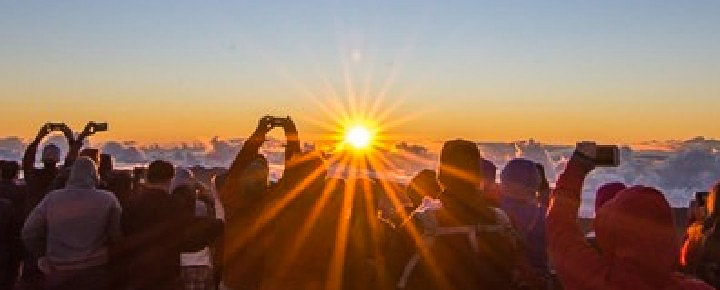
The only places where tension reliably surfaced were high-volume sites like Haleakala and Hawaii Volcanoes National Park. Even there, what stood out was neither resentment nor bad visitor behavior so much as infrastructure that was clearly not built to absorb the sheer number of people being sent through it. Parking constraints, traffic backups, and unclear flow created friction that had little to do with attitude or intent.
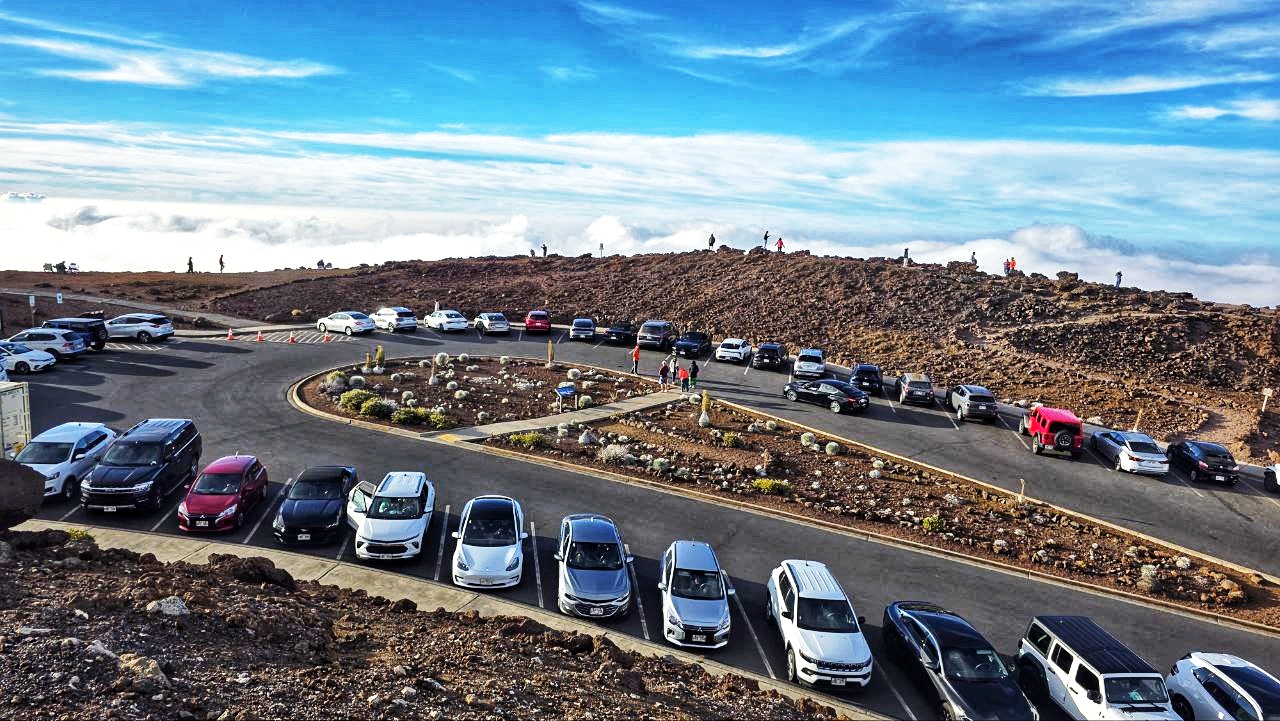
What looked like bad behavior was often visitors reacting to congestion and confusing systems in fragile places. That dynamic was frustrating, but it felt structural rather than personal. It explained why irritation can occur in certain popular settings, but it still did not suggest that visitors were being singled out simply for showing up.
Where the internet and Hawaii’s reality diverge.
None of this erases Hawaii’s underlying challenges. Housing costs remain high, infrastructure is strained and inadequate, traffic is still traffic, and environmental pressure has not gone away. Those issues were clearly visible everywhere we traveled.
What stood out was the gap between an online narrative and what we actually experienced on the ground across four islands in late 2025. One statistic often cited by the Hawaii Visitors and Convention Bureau helps explain why that gap can grow so wide. Most negative Maui posts during a recent analysis period came from people who did not live in Hawaii, which helps explain how perceptions can become louder than on-the-ground experiences.
Our working theory isn’t complicated. More than two years have passed since the Maui fires, and the initial wave of grief, anger, and extreme social media amplification has cooled. Financial reality has also reasserted itself, as tourism remains the only significant economic engine across the state. A vocal minority that feels deeply anti-tourist still exists, but it appears far smaller on the ground than it looks online, and we did not encounter it at all over nearly two months of deliberate, statewide travel.
What this does and does not mean.
This does not erase anyone’s bad experiences, nor does it invalidate people who felt unwelcome earlier or in specific situations. Those experiences are real, and BOH readers have shared plenty of them.
What it does mean is that a powerful belief is still circulating right now that appears to be changing travel decisions in ways that no longer match what many visitors will actually experience when they arrive. While we heard that belief redirected a trip to Fiji before we even started exploring, we then spent months on the ground failing to see it play out in real life.
That mismatch is important. It shapes who comes, who stays away, and how people show up before they even land.
If you have traveled to Hawaii recently, was it something that happened on the ground, or something you carried with you before you arrived?
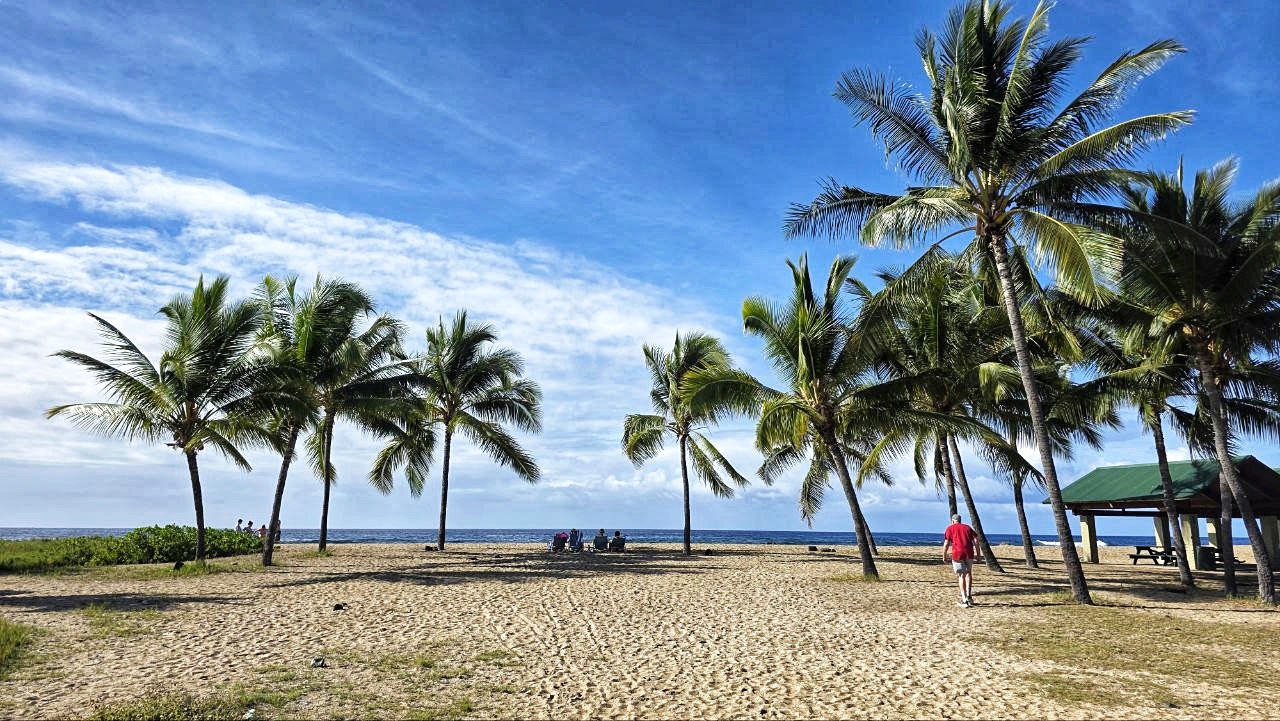
Photo Credits: All from Beat of Hawaii. The lead photo is Old Kona Airport Beach.
Get Breaking Hawaii Travel News



It’s time for a reality check regarding Maui. While tourism boards sell the “Aloha Spirit,” the ground reality is a culture of hostility. Being yelled at and targeted with the term “haole” isn’t “island charm”—it’s xenophobia.
Hawaii often demands to be treated as a special entity, yet to most Americans, it is simply another U.S. state. Many locals expect a level of reverence they refuse to reciprocate, even ignoring standard driving rules and expecting visitors to just “know” local habits.
Imagine the outcry if a family from Hawaii visited NYC or Los Angeles and were screamed at for being outsiders or told they didn’t belong in a public park. It would be rightfully called out as harassment. Why is this behavior tolerated in Maui?
We pay the same taxes and carry the same passports. If the goal is to drive away the visitors who sustain the economy, it’s working. We won’t be returning; Maui feels incredibly overrated and unwelcoming compared to the other islands.
Each of us have a different tolerance for actual or perceived offenses made against us. My experiences in Hawaii have been super friendly with nearly everyone. However, a few times I’ve been the recipient of local anger, verbal only, with derogatory tone referencing my skin color. For some visitors, one time is all it takes to turn off to a place. For me, I’ll be okay. Haole is perfectly fine description when used a certain way, but not fine when used in other ways that are combined with many other four letter words and threat of physical violence. I grew up in a very integrated part of California, so it didn’t really bother me. But I did recognize the hate and/or ignorance immediately. I will still visit Hawaii and tread as lightly as possible to respect local culture, as usual, since I would want the same respect shown in return when visitors from Hawaii visit my hometown in the PNW.
I’ve lived in the islands;
They (islands and islanders) are tired of the abuse and disrespect! The “ugly American” lives on!
I’ve never had any of these experiences, or even close – and not even when I moved here full time many years ago. If any, I’ve been embraced by kaamaina and kanaka, because they’ve seen “me” and my genuine interest in getting to know them, their culture and now the place I call home. Sure, you might find any exception here and there, but the real easy tenant here is treat others as you want to be treated and each step first should be respect.
This has served me well across many nations, countries, cities, towns, villages, wealthy and poor neighborhoods. 100% I believe it’s mostly going to be You than “them”.
PS, like anywhere new – get at least up to speed on some common cultural norms no matter where you’re going – Hawai’i included. 🤙
That’s good to know. I actually think the venom is more directed at second homeowners and vacation rental owners than tourists.
But I have to say I just visited New Zealand, and Hawaii could learn a lot from them about how to treat tourists. Everyone is genuinely friendly, the food is excellent everywhere (even very inexpensive places), and everything is immaculately maintained. The tourist attractions are super organized and well run, and always include protecting the natural environment. Lots of easy free parking and clean, free bathrooms. Hawaii talks about wanting high end tourists but frankly it often doesn’t provide a high quality experience.
Precisely my observations about New Zealand. I posted a comment to another BOH post with almost exactly your sentiment.
I talked with a Māori woman for a long time while I was in New Zealand. They have the same issues that Hawaii has regarding housing, indigenous rights, land ownership, etc., and has handled it soo much better. She went as far as to tell me that they, the government, and the Pākehā have worked together over time to coexist in harmony.
Hawaii should definitely take a page from the Māori handbook!
Thank you, BOH, for your research and this great post. I was beginning to feel that BOH was becoming only a place where people could gripe about how terrible Hawaii is and how they’ve decided to go elsewhere, which doesn’t at all reflect my experience. We spend two weeks, usually Maui and Kauai, in Hawaii every January/February, and have done so for coming up on 30 years. We have not once experienced any sense of being unwelcome, and continue to find Hawaii one of the most wonderful places we could ever be. I don’t deny the bad experiences some people have had, but I do wonder if they actually represent a small minority of tourist experiences? Our Maui trip is in about 3 weeks and I can’t wait!
Regarding your article “Is Hawaii (Maui) anti tourism “ All you need do is look at the movement to terminate short-term rentals… which has so far succeeded. The theme of the entire movement was to get rid of tourists. It in reality was nothing about “affordable” housing for the fire victims.
The Aloha spirit has left, at least on Mau
We’ve gone to Hawaii 15+ times over the past 30 years. We’re Asian American and can usually pass for residents once we get some color. Usually residents ask where we’re from, they expect us to say Oahu or a different town on the island. Once we say California, you could sense a bit of reticence. Not rude but less friendly. Different than in years past. That in itself is not a dealbreaker. What I abhore is on all the social media platforms, all the rules of behavior dictated to Every visitor like we are a bunch of idiots. Don’t do this, do this, on and on. Rules above and beyond what I bet every local on the island needs to live up to. I get it, most of the people making those comments are not locals, could be transplants. But that in itself makes Hawaii less desirable than in the past.
Just last year stopped at our favorite Punaluu Bakery.
While walking in, two local “youths” yelled obscenities, gunned their
car spraying gravel at us, and finished with the one finger salute.
Glad to hear the boots-on-the-ground report about the current sentiment in Hawaii. Now, if they can figure out a way to lower prices back to what they were before the post-pandemic surge and high inflation, we might be able to afford to go again…as they say, though, you can’t put the genie back in the bottle.
The only thing I’ve ever seen directed specifically at me was on Molokai. I knew it was a risk when I chose to go there. I had some kids give me the middle finger, yell “****** haoli get out of here” unprovoked. That said, the attitude on Molokai outside that specific indecent was the most friendly of all of my visits. I’ve heard it said that if you know how to act like you live in a small town, you’ll be fine. I do live in a small town and was fine.
I’ve seen plenty of idiot tourists get yelled at. Especially for trespassing. That or approaching wildlife. Since I hate both, I had no issue with what the local said.
We typically visit the islands twice/year (Kauaʻi and Maui). We did not change our routine due to the fire as we wanted to support the local people and businesses.
We have not sensed any change in attitude toward us. Sure, we saw signs of stress in West Maui but as we talked to people that lived there it became clear that if we treat people with respect and dignity, that same respect and dignity is reflected back in most cases. Same as on the mainland.
I will say that we are fortunate to have bought timeshare properties on both islands decades ago and our cost to stay is much lower than hotels so I canʻt comment on the accommodation price frustration. Weʻre still getting a pretty good deal, relatively.
We love Hawaiʻi and will continue to visit.
As a time share owner, the only major gripe I have is that we’re now charged a short term rental fee for someplace I Own.
I’ve been flying to the islands with the military and for vacation for the past 30 years with the majority of that time spent on Waikiki and Kauai. I never once experienced issues with the locals referenced in your article. When you treat people with kindness and respect you get that in return. Act like an ugly American and you get that in return as well.
I experienced this first hand myself. My wife, me and 2 kids age around 7-9 years old was faced with a Hawaiian yelling “Hey Haole. Get off our beach” I explained I was last at Hawaii 40 years ago and wanted to give my kids the same experience I had when I was their age. He understood where I was coming from and by me asking educate me he explained his side of the story and everything made sense. I thanked him for his time and I left with the feeling like wow has this place changed in 40 years. What happened. Sorry to say that was 18 years ago. Do you really think things got better in the last 18 years? By the way this was at Sunset Beach North Shore Oahu.
Thank you BOH for such a thorough, factual, and fair analysis! For me this also reinforces that if we could all just be much, much less online with the algorithms and both human- and bot-assisted amplification of anything “controversial”, imagine how much better off we (and the world) would be
We have a botanical garden on the Big Island we regularly get between 150-300 people a day. We offer free parking & our staff is trained to be respectful to all guests. We have a staff of 23 dedicated people who depend on visitors coming in order to keep the garden & their paychecks funded.
Rarely do we see bad behavior from visitors, but we have noticed the downturn in overall visitors to the islands, this of course impacts us.
I believe it’s a combination of factors, the after covid anti tourist sentiment, the mismanagement of funds by the Hawaiian government causing infrastructure problems & constantly raising fees, the lack of funding the past several years to the marketing of the islands & and the current federal government administration. Add on the Maui fires & everything they have had to go through the last few years. It’s hard to plan with the overall climate so volatile.
A bit of a contrarian here. I had two bad experiences on Maui soon after the fire. They weren’t dramatic, and I’m sure things have evolved since then, but they were enough that I probably won’t go back soon.