
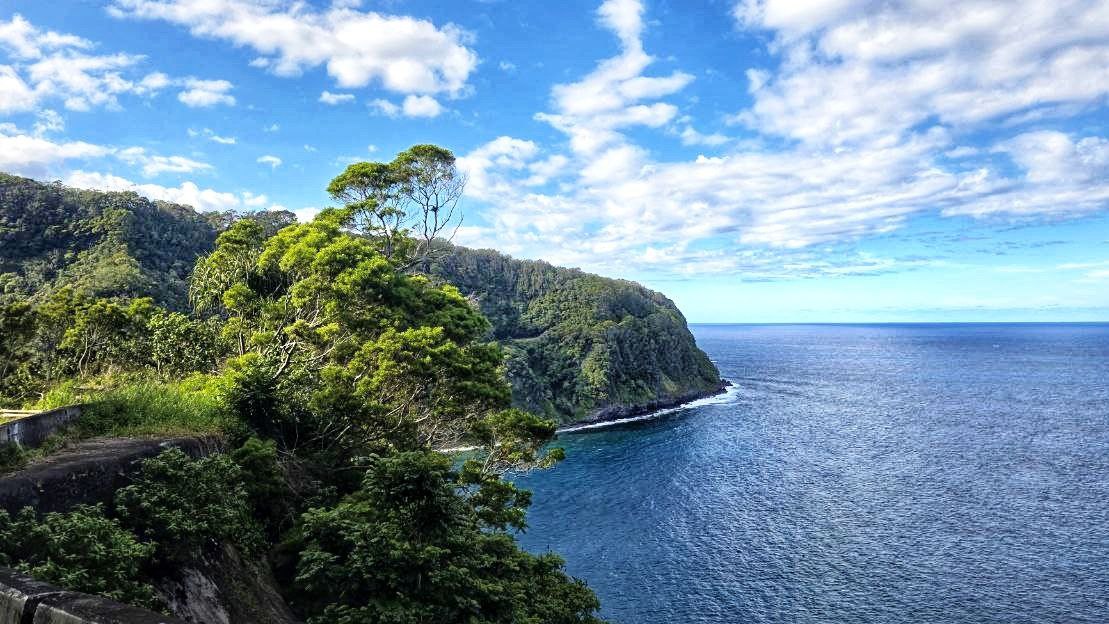
A fight on the Road to Hana made headlines this month. We were just there, which is why the incident coverage stood out. On first read, you would think the road has become a problem in itself. A confrontation. A shattered windshield. A juvenile arrest. Racial slurs reportedly used. Plus conflicting accounts. It sounds like it might have been a part of a broader discussion that Hawaii, and this road in particular, has become hostile ground for visitors.
But that framing skips over something important. One contested incident does not answer the question travelers are actually asking right now. Is the Road to Hana actually dangerous to drive? We went looking for that answer in person.
We drove the Road to Hana with purpose.
It was part of our broader reporting on whether anti-tourism sentiment in Hawaii is as widespread as some narratives suggest. On the drive, we were not drifting along on autopilot; we were paying close attention.
Another point, we were not blending in as locals. We live in Hawaii, but on another island. We were in a plain rental car, clearly identifiable as visitors, and we made no effort to disguise that. If anything, we looked exactly like the kind of drivers some headlines suggest are being targeted.
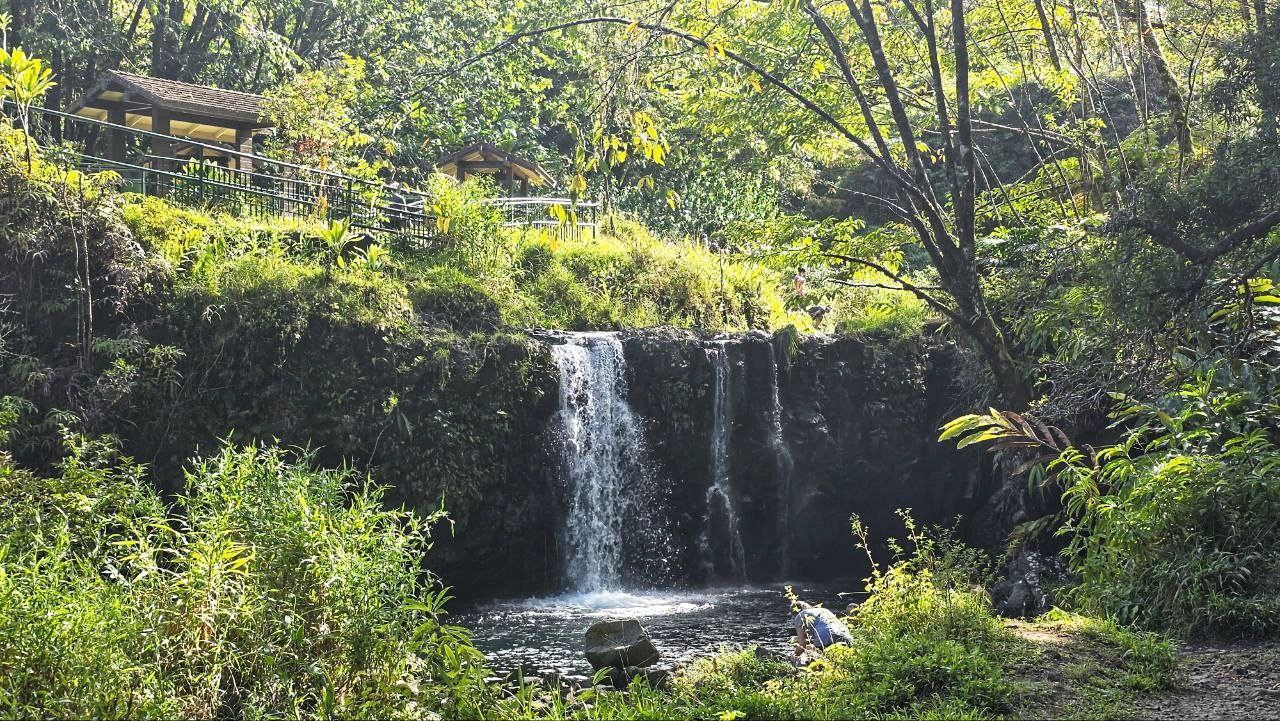
The first thing that stood out was something we didn’t expect at all. It was how dry the road was. It was the driest we have ever seen it. Many of the waterfalls that define the classic Road to Hana experience were barely running or not running at all. The lush, dripping scenery people expect simply was not there on our drive, something that is changing as the seasonal rains return, but was impossible to ignore.
The second thing that stood out was how much more controlled the road felt. The county has installed cones and no-parking controls in areas that were once notorious for problems of illegal roadside parking. In past years, those spots routinely clogged traffic, forced pedestrians into blind curves, and created exactly the kind of stress that could turn irritation into confrontation.
On this drive, that chaos appeared largely under control. We saw far fewer vehicles pulled over in unsafe places. We did not see bridges blocked by parked cars. Traffic was slow and winding, but it moved.
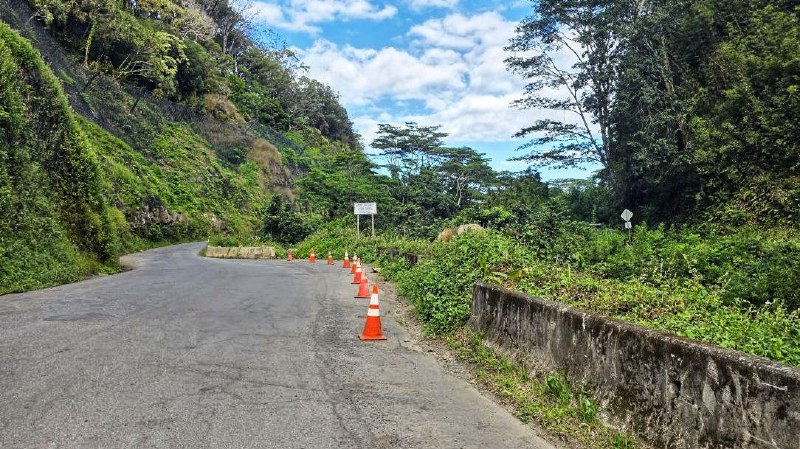
While not anticipating problems, we were nonetheless aware of what others have depicted and thus actively looked for any signs of anti-visitor sentiment. We did not find them. There were no anti-tourist signs. We were alert to the possibility precisely because of recent headlines, and it just never materialized. The drive felt manageable in a way it has not always felt before.
We did not do the classic out-and-back Road to Hana drive on this trip.
Our drive started Upcountry Maui, called the Back Road to Hana, and then continued on the popular stretch from Hana to Paia. We wrote about it separately after experiencing it firsthand. That stretch reinforced the same takeaway: conditions varied, the road demanded attention and respect, but nothing about the experience suggested visitors were being targeted or that the drive itself had become inherently unsafe.
Why incidents still happen anyway.
None of this means friction is imaginary. It isn’t. The Road to Hana is a long, narrow, winding public highway that residents rely on every day for work, school, medical appointments, and airport runs. Visitors understandably experience it as an immersive scenic adventure to soak in. Those two different realities share the same pavement, and that overlap is where tension begins.
One of the biggest sources of friction has nothing to do with hostility and everything to do with driving etiquette. On Hana Highway, slower drivers are expected to pull over at the limited number of designated spots that allow faster local traffic to pass. There are signs posted explaining this, and most visitors do comply when they see them.
Some drivers miss the signs or don’t think about them. We saw that as well. Others may be unsure where it is safe to stop. Notably, a small number ignored the expectation entirely. When a local vehicle sits behind a slow-moving rental car for long stretches with no opportunity to pass, frustration can build quickly. It would anywhere else, too.
That frustration does not excuse aggressive behavior or violence. But it does help explain how tempers can flare on a road that already demands constant attention. Based on reporting, the confrontation this month appears to have started with exactly this kind of friction. What followed appears exceptional, not typical.
A familiar mainland media pattern.
This incident did not emerge in a vacuum. For several years now, mainland outlets have repeatedly framed the Road to Hana through isolated confrontations and worst-case scenarios.
Since 2023, multiple high-profile stories from mainland outlets have portrayed the road as increasingly hostile or unsafe for visitors.” In reality, fear travels fast. Readers are left to fill in the blanks themselves.
What visitors actually need to know.
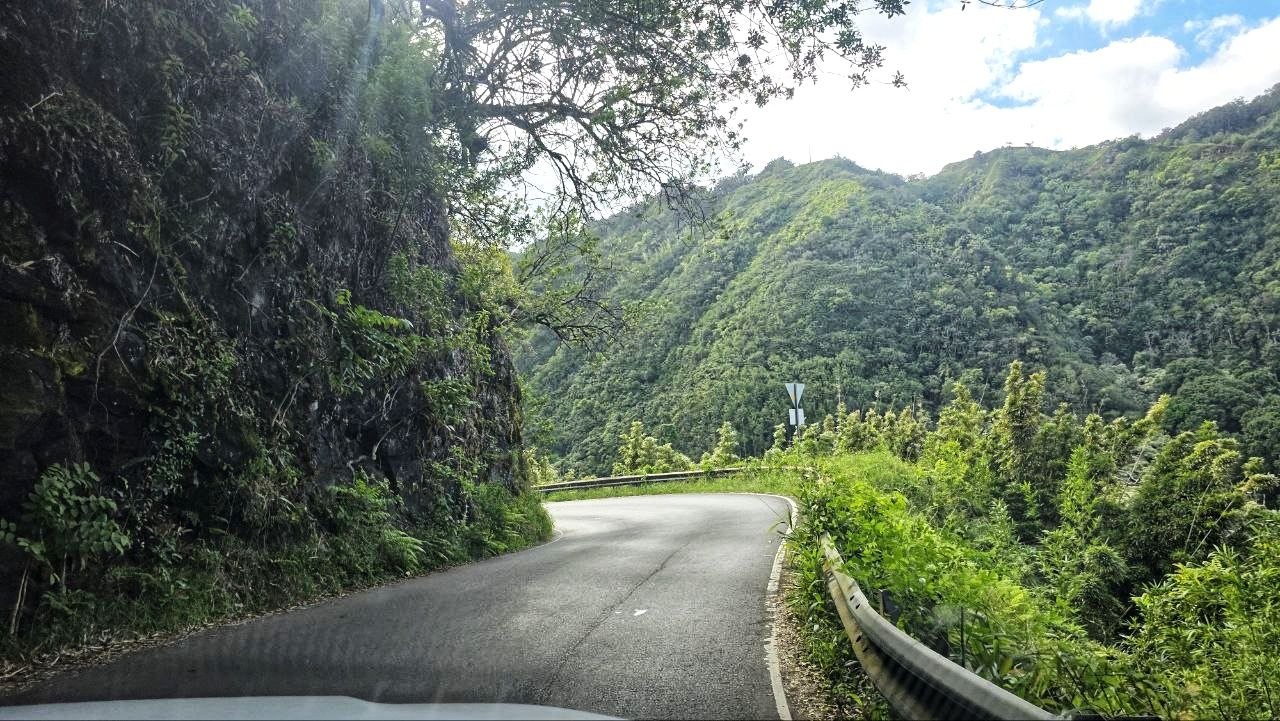
The Road to Hana is not newly dangerous. Its endless curves, one-lane bridges, blind corners, and lack of shoulders have always required careful driving, and that reality remains unchanged, even as we have driven that road for decades ourselves.
The biggest risks remain familiar ones. Driver inexperience. Motion sickness. Poor weather and visibility. Trying to do too much in one day and rushing when patience is required.
Understanding etiquette is key. Pull over for faster traffic as soon as it is safe to do so. Do not park illegally or trespass on private property. Respect that this road is part of daily life for the people who live along it and who have experienced traffic issues here for a very long time. Most visitors already do these things, and most have no problems whatsoever.
Conditions also matter. On our drive, the road was dry, and much of its famous waterfall scenery was muted. When the rains return, the experience changes. Planning for what exists beats panicking over news headlines.
The bottom line.
A messy confrontation between visitors and a juvenile with contested facts does not define the Road to Hana. We went looking and found neither. What we found was an incredibly famous drive that is better managed than it used to be, on a day when drought had stripped away much of its usual drama.
Should you drive it? If you respect the road, understand the etiquette, and remember that you are entering someone else’s daily commute, not just your own scenic adventure, then yes. The Road to Hana remains very much worth doing. It is an epic drive unlike any other.
And if you have driven it recently, please share your own experiences. We can’t wait to hear. Mahalo!
Photo Credits: © Beat of Hawaii on Road to Hana, Maui.
Get Breaking Hawaii Travel News



We stopped driving the Road to Hana about 10 years ago. Now if visitors go with us to the island we suggest they get the tour. Our main bad experience comes from simple things like shopping, dining. or unit parking where we stay. Locals have always parked at the very end near the park to fish. No problem. But now there are people parking in the regular spots near the front doors and facing the road. I asked the desk about it and we were told to park across the street in overfill. I had just relearned to walk and obviously had issues, so, that was rude. But the author should have gone from Paia to Hana like most tourists to get a real feel for it. When you are driving the speed limit and a local truck flies around a blind corner doing more than the limit, it gets interesting.
I will second or third other commenters, if you can swing it, go slow, enjoy the drive and scenery, and spend the night in Hana. You’ll be glad you did.
We’ve been frequent visitors to the Big Island for 40 years and have driven the road many times. Things have changed and its a reflection of our current world-impatience, anger and intolerance. I drive the familiar road well. But now, even going way too fast, I get honked at, flipped off and passed dangerously. And its by local yahoos driving their pickups like maniacs. Once again, a sign of our time most everywhere else. It saddens me that, of all places, the spirit of Aloha has been slowly unembraced.
I’ve lived in Hawaii for 40 years, raised on Oahu and lived on the Big Island for the last 20. Hana, Maui is the one and only place that I’ve been called a “f-ing Haole”. 1996 my sisters and I spent a weekend on Maui and drove the Hana road. We went down to the beach park to stretch our legs before the return drive. Some other young people cut us off as we left the parking lot and yelled at us as we tried to avoid an accident in our rental car. It was a surreal experience that I’ve never forgotten. There was an assumption that we weren’t from around there and thus, had no right to be there. It could have happened in any tiny town in any state of the country. But it had never happened to me even in awkward first years of transplanting and school in a new culture. So it gave me an idea of what it feels like to be a minority and I hope I never treat any visitor or neighbor that way. Lets give people a little space and also don’t use racial slurs or your kids will think it’s ok!
I see a problem right away. No center yellow stripped line to designate a two way road and the annoyance of someone hogging the roadway. You have to respect a marking showing who is on the right side of their lane as this is somewhat a responsibility of the local traffic maintenance department. If they don’t care then where is their respect to the locals and visitors alike. This issue may entice road rage, disputes, and problems. Again where are the rules of the road when the road is clearly unmarked? Wouldn’t someone cautious just drive up the middle and not move over. I would think if this is a highway it would at least be a two way road.
I have driven the Road to Hana in a rental car 4 times. In October, we chose to let Valley Isle Excursions handle the drive. Despite wanting to drive it myself, I felt that locals would appreciate less cars on the road back there.
During the trip, we watched a Hana-bound white SUV become impatient behind us. When he had the chance, he blew by us on a stretch of road I would never have imagined passing anyone on. I was seated in the front row of the tour bus and heard our driver Uncle Joe remark, “He is taking a mighty big risk,” as he shook his head at the bad behavior. Sure enough, about a quarter mile down the road, we rounded the bend and there was the white SUV involved in a head on collision with a Paia-bound local. I heard a fellow passenger exclaim, “That’s the car that just passed us!”
Patience is key on this drive. Show courtesy and aloha to other drivers. Since I am normally the driver on this drive, the tour allowed me to relax and enjoy the scenery more.
Just drove the road last week with absolutely no problems. In fact, we got several shaka’s simply because we did pull over and let the locals pass. Simple kindness and an understanding of the road eliminates any anti-tourist sentiment. Drive with aloha.
I drove the Road to Hana in May 2025 and thoroughly enjoyed it. However, while you noted that on your drive you did “not find…any signs of anti-visitor sentiment,” and that “there were no anti-tourist signs,” I did observe, in at least two locations, signs reading “East Maui is not for sale.”
Now, I’m not sure if it would be completely accurate to characterize that sentiment as explicitly or exclusively anti-tourist. But it’s certainly anti-something.
I have driven to Hana too many times to count. All of our visitors want to make the trip. Locals that live out toward Hana have to commute toward Kahului. Many of them are tradesmen driving big pickup trucks. I make it a point to avoid traveling in the morning and afternoon when these workers are trying to get to work and then home after a long day. People poking along and slowing for every Kodak moment are a source of frustration for those trying to get to work. Be considerate and you will avoid a lot negative reactions.
Aloha
I’ve driven on the road to Hana, and I most certainly recommend not trying to do it all in one day. Enjoy it! We drove out, allowing time to stop at fruit stands, driving down a road bordered by coffee bean plants, and more. We stayed at a condo for one night in Hana (wished we stayed two), then continued on around going east and south, to the 7 pools falls. Take it easy & enjoy!
We had an issue happen about 6 years ago. My bestie and I were in her SUV and my hanai daughter and her friends were in the car behind us. We booked a cabin at Waianapanapa State Park and were about 2/3rds of the way there when a red corvette started tailgating the girls. They called us because they were scared. We did stop in the middle of the road and confront him about his unsafe driving. He was rude, so we let him pass and continued on. We have been on Maui for about 20 years and I do not know if it was a visitor or local, but we were not driving slow as we have been on the road many times before.
We did the road to Hana in July. I agree, the road wasn’t bad at all. But then I live on that kind of road, so I’m really familiar with the type of road. We did all of the “bad” ones. The back side is great, no idea why it has a bad reputation. It was probably the best part. The road around West Maui north out of Kahului does earn its reputation. If you’re not familiar with backing up on a one lane road without guardrails, don’t go there.
I’ll second the suggestion of staying a night or more in Hana. Less stress and rush.
I would say the worst drivers were the tour operators. Some were downright jerks. The locals were easy to pick out, but since I always let them pass as soon as I can, they were polite.
I’ve never done the Road to Hana, but I have done the West Maui loop – on a reasonably powerful (it got up to 55 with two people) scooter. I’m not sure I’d want to do it on anything much larger – I saw people driving Expeditions and Suburbans on that road and I thought they were insane.
We have driven the “ Road to Hana” probably 20 plus times. We have never encountered any animosity from anyone. When a speeding truck or car comes from behind get out of their way ASAP. They will often give you a little toot on their horn for recognition. Just use some common sense.
“Respect the road, understand the etiquette, and remember that you are entering someone else’s daily commute, not just your own scenic adventure,” This is the most salient part of the whole article. I have driven the road many times and find that having a little courtesy and awareness goes along way. Pulling over and letting others pass can bring much aloha.
So basically, “Be nice – don’t drive stupid,” and you’ll be fine.
Too bad the temptation to be stupid is one so many people find hard to resist.