
When we met Gloria Marks years ago, she was not standing in front of a group or sharing stories. She was working in the small shop at Kalaupapa, doing what she had done for years, greeting people, answering questions, and helping out where help was needed.
It felt completely ordinary at the time. There was no ceremony to it, no sense that we were meeting someone whose presence there would someday feel rare or final. She was simply part of the place, the way the shop itself was part of it.
What we did not know back then was that there would be a time when only five Hansen’s disease survivors remained statewide. Gloria was one of the last people left who could explain Kalaupapa from lived memory rather than history.
That ordinariness is probably why the moment stayed with us. Nothing was being staged, and nothing felt like it was being preserved for later retelling. It was just a typical day at Kalaupapa, which is exactly why it mattered.
Looking back now, what stands out is that nothing was being framed or interpreted. Kalaupapa was not being explained through a recording or a sign. It was being lived. Gloria was part of the daily rhythm of the community, not as a spokesperson, but as someone who belonged there.
Gloria died on October 10, 2025, at the age of 87. With her passing, Hawaii lost one of the last living connections to Kalaupapa as a community shaped by people who actually lived the history rather than simply preserving it. That quiet shift changes how everything connected to Kalaupapa feels going forward.
Kalaupapa was never abstract.
Kalaupapa has never fit neatly into a headline or a single label. Over the years it has been called a leper settlement, a prison, a refuge, a sacred place, and a forbidden destination. Each description captures something real, but none of them fully explain what it feels like to stand there on hallowed ground and realize this was once where people were sent away, to live or die, often without a choice and often without a way back.
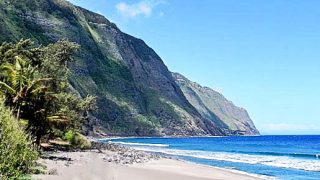
When we visited, the majestic cliffs and the peninsula’s isolation were impossible to ignore. The geography does a lot of the talking for itself. But that was not what stayed with us once we left, and it is not what people tend to talk about even years later.
What stayed with us was the sense that Kalaupapa still had a pulse. It was quiet, but it was not frozen in time. There were people there who still defined what the place meant and shaped how visitors truly understood what they were witnessing.
People like Gloria and her late husband, Richard Marks, were still present and very much still engaged with Kalaupapa. They answered questions directly, even when the questions were uncomfortable. They showed guests what the peninsula was all about. They did not soften the past, and they did not make it a show for visitors either. It was matter-of-fact in the best possible way.
There was no sense that Kalaupapa’s history was being packaged for consumption. What you were hearing came from people who had lived it and carried it with them still every day. That is a different kind of authority, and you could feel it even decades ago.
How we came to write about Kalaupapa.
That experience became the foundation for our earlier Kalaupapa coverage, including Forbidden Hawaii Destination May Soon See Visitors, Forbidden Hawaii: Sacred Kalaupapa Opens But Only By Plane, and Kalaupapa Leper Settlement: Once Prison, Now Forbidden Refuge. Those pieces were not written from a distance or assembled from documents and press releases.
They came from standing there, meeting key people, including Father Felix, listening carefully, and trying to understand what access really means in a place shaped by such shocking forced isolation and loss. At the time, the debate centered on restrictions and who should decide Kalaupapa’s future. Readers felt that tension immediately, and the comments told us as much.
Now, that conversation feels clearly different. Kalaupapa is no longer a living community as it once was, and that reality hangs over every discussion about access, preservation, and protection. You can see that as progress or you can call it a loss, but it is happening.

Gloria made a life at Kalaupapa.
Gloria was born in American Samoa and came to Hawaii as a teenager, expecting a bright future that looked like anyone else’s. That future ended abruptly when she was diagnosed with Hansen’s disease at 16 and banished to Kalaupapa. Like so many others, she was separated from family and from the life she thought she would have, not because of something she chose, but because of fear and policy.
She once said, “We all had to make things to better ourselves and also to make ourselves happy because you know the situation when you come here.”
Many people who were sent to Kalaupapa never recovered emotionally from that rupture, even after treatment became available. The separation, the stigma, and the isolation left profound and lasting damage. Gloria made a life anyway, and that is the part that keeps coming back when we think about meeting her in that shop.
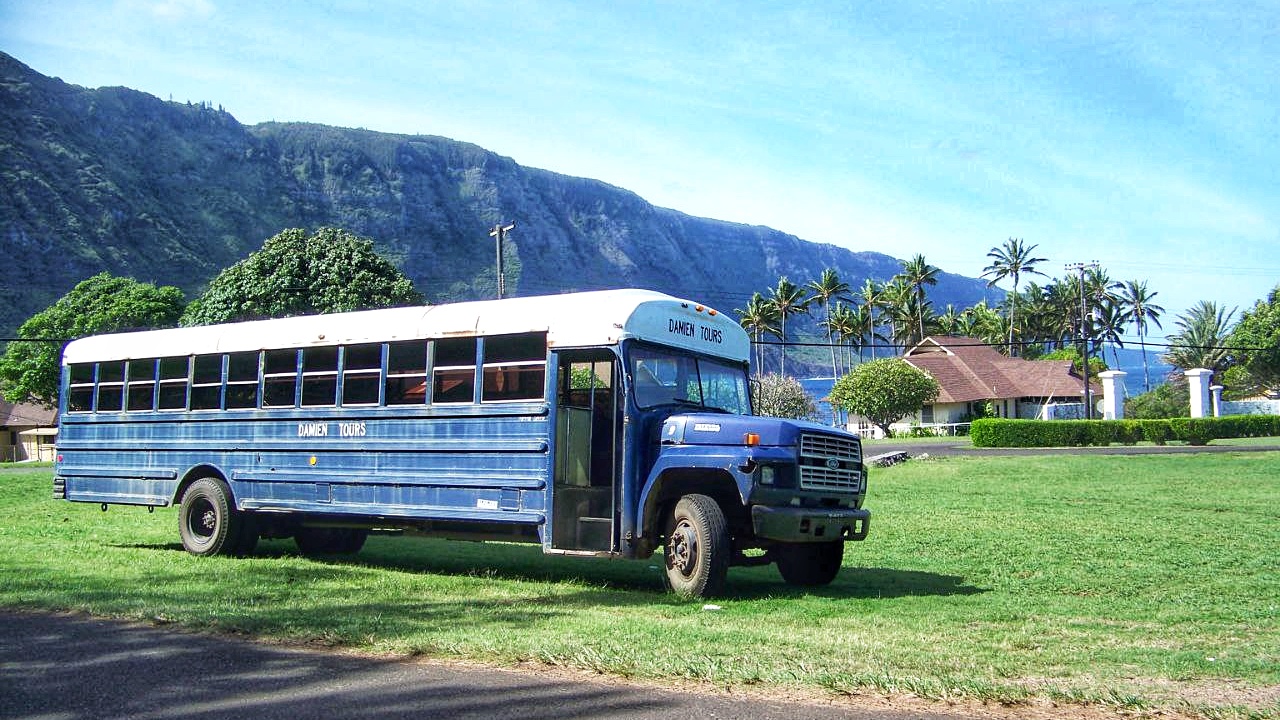
Over the decades, she became a leader in nearly every community organization. Along with Richard, she helped create Damien Tours, which ran for more than 50 years and gave visitors something far more meaningful than access alone. It gave them a chance to understand what they were seeing through the eyes of the people who had to live it and learned to love it, rather than through the eyes of outsiders trying to summarize it.
Together, they raised five children at Kalaupapa and built a life in a place that had once been designed to take lives apart. Kalaupapa was not just where Gloria lived. It was where she made an impactful life anyway, even with everything stacked against her.
What many visitors remember most.
That impact is clear in the way readers talk about their own visits. Again and again, people describe human moments rather than scenery. One reader recalled visiting in the early 1980s, riding mules down the trail, and being greeted by a resident with visible effects of the disease, and then watching other visitors hesitate as if they did not know what to do with themselves.
While others held back, her husband stepped forward and shook the man’s hand. Only then did everyone else follow. Decades later, that handshake was all that remained, not the ride down, not the view, not the adrenaline.
Many others have commented, remembering Richard as their guide and describing Kalaupapa not as a tour, but as something closer to a pilgrimage. They talk about the quiet and the sense that you should not speak too loudly, not because someone told you to, but because the place itself makes you lower your voice and bow your head. They also talk about how the residents were the ones guiding the experience, not any outside operator checking boxes.
Those memories did not come from signs or exhibits. They came from people like Gloria, who would not let Kalaupapa become a museum piece. They also came from visitors to Hawaii who understood, in the moment, that they were walking into someone else’s pain and someone else’s home.
What happens when the voices are gone.
Kalaupapa will remain, but the way it is understood is changing. Each passing year makes it more true that lived memory is giving way to preserved memory, and with that shift comes difficult questions. Some of those questions are uncomfortable, perhaps on purpose, and they should be.
Who speaks for Kalaupapa when the people who lived it are gone? How access works when there are no longer residents to define what respect looks like. How a place built on trauma is protected once decisions are made entirely by people who never lived there.
That shift is already underway. As the living community disappears, control inevitably moves to agencies, managers, and policies that were never shaped by life inside Kalaupapa itself.
The National Park Service already manages Kalaupapa as a national historical park, but the Hawaii Department of Health has maintained a role as long as patients remain. That arrangement is expected to end with the death of the last patient. What happens after that, and who ultimately shapes access and preservation, is not entirely settled.
NPS has one set of priorities. The state may have others. And neither is the community that built the place. The transition plan already proposes removing the 100-visitor daily cap and allowing children for the first time.
These questions have surfaced repeatedly in reader responses over the years. Some argue for strict protection and minimal access. Others support carefully limited visitation tied to education and reverence. Many worry about commercialization, noise, and the slow erosion that follows when restraint is written into rules rather than practiced by people.
Those concerns aren’t abstract. They are grounded in what people have already seen elsewhere in Hawaii. Once the tone shifts from reverence to entitlement, it is hard to shift it back, and Hawaii has learned that lesson the hard way.
Kalaupapa is one of the few places left that has not been optimized for visitors or reduced to a stop on a bucket list. That restraint did not come from rules or signage. It came from the people who lived there and set the tone in person. When those voices are gone, just what happens?
Why meeting Gloria still matters to us.
Looking back, meeting Gloria in the shop feels like meeting Kalaupapa in its most honest form. There was no performance. Just a presence and continuity, and the reminder that this place has always been about people first.
With her death, something essential has shifted. Kalaupapa doesn’t need more visitors. It needs the restraint that is much harder to maintain once the people who enforced it simply by being there are gone.
Some argue Kalaupapa should open while there are still people alive who can explain it in their own words. Others believe that is exactly why it should remain closed, because once those voices are gone, there is no way to put the guardrails back on. Either way, the decisions made next will permanently shape Kalaupapa.
What do you think should happen at Kalaupapa now that the last people who set the tone won’t be there much longer?
Lead Photo Credit: Beat of Hawaii at Kalaupapa, 2009.
Get Breaking Hawaii Travel News

I’ve commented on this topic before, but do so again, as it warrants repeating, if only to relive the memory:
I’ve visited Hawaii many times, but have visited Molokai only once. My husband and I booked a tour with Damien Tours, and rather than ride the mules down, we hiked down the pali trail on foot. We were met at the base by our guide and that large, old school bus. We were lucky – though we didn’t know just how lucky at the time – that our guide for the day was Mr. Marks. The tour was so moving; walking through the grounds of the settlement, and around the cemetery at St. Philomena’s, had the same effect as walking through a cathedral; it was profound in ways I didn’t expect. We were saddened by Mr. Marks’ passing some years ago, and though we did not have the privilege of meeting Mrs. Marks on that tour, we received a beautiful card from her, in response to a letter of condolences we sent after Mr. Marks’ passing. May they both rest peacefully.
Mahalo BOH for this excellent article and update on Kalaupapa.
As someone who has made several trips long ago in the mid and late 1970s for mission work trips at the old historic Congregational Church, I feel that the Kalaupapa settlement must be preserved with reverence and loving care to honor all those who lived there over the many decades that have passed. I remember Richard Marks from our several trips, and his excellent stewardship. The National Park Service has the ability, as well as the State of Hawaii to give strict oversight to this sacred community, and its spectacularly beautiful and peaceful location.
Aloha ke akua.
The headline is unfortunate: Only five left . . . Five what? five seals? It just seemed a glaringly bad beginning to a good and important story.
My ancestor, Joseph Dutton is buried there with Fr. Damien and I’ve spent a week there. So incredibly moving. What happens next is important and I understand the current residents and their families And the two religious orders who gave everything to serve the residents in dire times – have not been consulted. I hope the best outcome is achieveable.
I was blessed to be invited to Kalaupapa last November 2025 as part of a family reunion. Our goal was to locate the graves of our kūpuna, visit with them and leave leis that we had made the night before. The feeling there is indescribable. I could spend days just walking through the cemeteries and ‘visiting’ with those who lived there, relative or not.. I was fortunate to have located the grave of my 2nd great-grandaunt who passed away in 1932 in Kalaupapa. She surely made me work to find her resting place in Papaloa Cemetery! I said my hellos, a little prayer and left my lei for her. My heart ached at the thought of what all residents endured there. So honor their memory by maintaining their dignity, and not have an influx of visitors on a daily basis.
Who owns the land? Will oprah or zuckerberg buy it and turn it into their private retreat?
I’m curious. What do the remaining residents want and how do they feel about it? Also, Gloria and Richard raised five children there. What are their wishes and hopes for Kalaupapa?
I was in Kalaupapa for a visit and the quiet tour was one of the best I’ve ever taken. Rick Shonoly gave the tour to three of us. It was spiritual in feeling and all of us spoke softly. I think this should stay the same after there are no patients. Tours like I took could remain and be historical. Children by their nature can be noisy and run around. That would ruin the atmosphere of this special place. I can’t even imagine 100 people on a tour in one day. It would be terrible to have a hotel and/or restaurants there. I’m very in favor of keeping Kalaupapa as it is today.
We love Molokai, have stayed there and took part in local ctivities at the library and HS baseball games. We flew into Kalaupapa and took the wonderful Damien tour on an old school bus. We visited the town but not allowed to interfere with everyday life, visited the church and saw the beautiful area and the rugged coastline where many were dropped off. It was a day we will not forget
I hope that someone makes a video interviewing those who are still there, sharing their memories of those who have gone.