

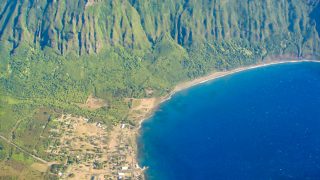
Kalaupapa on Molokai is reopening this month, and yet it will never be the same. For decades, visitors reached Molokai’s most isolated peninsula by hiking down the steep trail on foot or on a mule. Others arrived by plane.
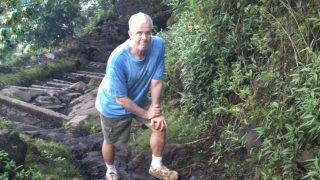
Today, only one way remains. Small flights tied to a guided tour are the sole permitted entry, with access capped and controlled. The mule rides are gone, hiking is closed to the public, and the price of a visit has risen from the $15 bus tours once run by resident guides to hundreds of dollars.
We were there in 2009 and plan to return later this year, but the Kalaupapa we will visit is no longer a living community. It is becoming a memorial.
Details for the tour are still being worked out. According to the National Park Service website, visits are available through the Kalaupapa Saints Tour, founded by patient Meli Watanuki. Seawind Tours will operate the tours on Watanuki’s behalf. When we checked tonight, there was no information about costs. When tours resume, visitors must be at least 16 years of age and obtain a permit from the Hawaii State Department of Health, which the tour company will assist in arranging.
What Kalaupapa has always meant.
Visitors come to Kalaupapa to walk in the footsteps of two saints. Father Damien gave his life here, moving into the settlement in the 19th century to care for those exiled with (leprosy) Hansen’s disease. He built churches, homes, and schools, and he stayed until he himself died of the disease.

Mother Marianne Cope of the Sisters of St. Francis carried on that mission, arriving with six nuns and bringing compassion and medical care that eased the suffering of many.
The Catholic Church later canonized both. Their presence still defines Kalaupapa. To stand in St. Philomena’s Church where Damien once preached, or to hear stories of Marianne’s quiet service, is to understand why this place is remembered not just for exile, but for sacrifice and Aloha.
From community to memorial.
When we first visited, residents still lived here, and they often led tours. School buses carried small groups past homes, churches, and cemeteries. Guides like Richard Marks and his wife Gloria brought the history alive with humor, even as the tragedy of exile hung in the air.
Nancy M. told us her husband’s grandfather was born in Kalawao in 1894, and that visiting with Richard Marks as their guide was the most memorable trip of their lives. Encounters like these are what made Kalaupapa unforgettable.
That living memory is nearly gone. Fewer than ten former patients remain, with most living outside the settlement. The peninsula itself is shifting from a place where people once lived to a place that remembers.
That is what makes this reopening different. The National Park Service and the Department of Health are now the guardians, and the terms are strict. Ever since the pandemic, Kalaupapa has been closed to the general public.
A sacred balance.
Readers are divided. Some call for wider access, saying that visitors should be allowed to experience and learn from Kalaupapa as part of Hawaii’s story. Others warn that opening the door too widely will ruin what makes this place sacred.
One kamaaina wrote that the beautiful and spiritual essence of Kalaupapa may be ruined without strict limits, and that all visitors should be educated in the same manner as those at Hanauma Bay.
The tension between remembrance and access is not new in Hawaii. Kalaupapa is simply the most concentrated version of it. Visitors want to come. Locals want to protect. The compromise is controlled, costly, and narrow.
The peninsula itself still holds the weight of thousands who were sent here against their will, separated from family, and forced to build new lives in exile. That truth will not change whether a visitor arrives by mule, by trail, or by plane.
Our reflections then and now.
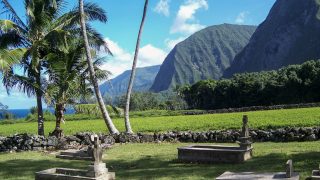
We remember the silence of the peninsula broken only by the wind and the surf. We recognize the old church where the floor still bore holes to spit blood through, a reminder of the suffering that once filled the room. We remember visiting Father Felix, whose quiet dignity and warmth embodied the spirit of Kalaupapa.

Encounters like these, with those who lived or served here, are why Kalaupapa lingers in memory. It is not just the cliffs or the ocean views, but the people who gave their lives to this place.
The future of Kalaupapa visits.
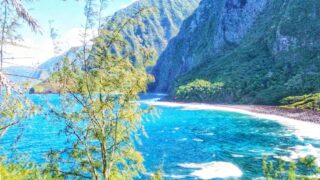
To walk or ride through Kalaupapa is to feel the history of exile, service, and resilience. It is to hear echoes of Father Damien and Mother Marianne Cope. It is to see the contrast of Hawaii’s most stunning natural beauty with one of its most profound tragedies.
As soon as more details are announced for the tours, we will update this post. Do you plan to visit Kalaupapa?
Photo Credits: Beat of Hawaii, Kalaupapa, 2009.
Get Breaking Hawaii Travel News


I have been to Kalaupapa three times. First time in 1987. I was taking pictures of old churches and my main interest was Father Damien’s church. RIchard Marks met the plane, greeted me and hugged me. He suggested I set closer to him on the bus if I expected to hear anything he was saying because of the noise of the people that rode the donkeys down the switchback trail. We talked a lot and he expressed a lot of history to me. He let me leave the tour group and get pictures of the inside of the church when no one was in there. I enjoyed the time with him and his funny tales, his feeding the feral cats that ran out when they heard the bus. He said goodbye to me and hugged me that day telling me I would be back. I went back two more times. He was ill the last time I was there didn’t get to see him. His wife was handling the tour. There were still 34 residents and two passed that day. The most spiritual experience I have ever had.
I’ve been to Kalaupapa twice. 2003 and 2004. Both times were just touch and go landings as I was flying the airplane. It would be interesting to take the tour to learn more about the location and people.
Yet Another bad move by Hawaii!! Unreal!
Dear Beat of Hawaii,
Mahalo for this wonderful update. It truly touched my heart.
I have visited Kalaupapa a number of times over the years, with various family and friends, first by mule and later by hiking.
And was lucky to have Richard Marks (a remarkable man) as my first guide.
Of all the memorable experiences that my husband and I have had over the past 50 years, visiting Hawaii, this was (along with The Merrie Monarch Festival) the most poignant.
Would love to return to Kalaupapa, perhaps next March if available, depending on the cost and who would be leading the tour.
No, Kalaupapa is a sacred space and should be treated as such. I don’t need to put my feet in a sacred place to know the importance of preserving that place, and tourism will do nothing to uphold that preservation of spirit.
I hope to visit the resting places of ‘ohana who are buried at Kalaupapa. I fear though by opening up visitation, the sacredness of Kalaupapa will be exploited by social media influencers. Ugh.
One hopes this remarkable place that embodied the truest meaning of religion and Aloha spirituality navigates that delicate balance.
Just as the black plague devastated Europe, they have seen fit to remember and celebrate its end. I was in Venice once for that remarkable event.
Thanks BOH for the update. Kalaupapa is indeed a very special and sacred place. I remember Richard Marks from back in the day too. My first trip was in 1979, leading a youth mission trip to refurbish the Fellowship Hall at the Kana’ana Hou-Siloana Congregational Church in the quiet village of Kalaupapa. At that time there were about 60 people living there. We returned again in 1980.
Beautiful loving people that we will always honor and remember in our hearts.
Aloha ke akua
mahalo for this update. My tutu is buried here. I am interested in visiting. Aloha
Books that are interesting (fiction but realistic I think) Molokai + Daughter of Molokai. I’m sure there are others as well.
We most certainly will visit as soon as it is available. This is very interesting news.
I decided not to ride the mule down when I visited Molokai in the 90’s. It felt like I was going to a zoo. One should always remember the saints of Molokai and equally the terrible treatment of victims historically in the islands and the fear the disease provoked across the globe at that time. I have no problem in creating a memorial to the saints and victims but it should be one of pilgrimage not of a tourist trip with high prices, overcrowding and souvenir stores.
I agree about making it a pilgrimage. That’s why I want to visit.
Yes – absolutely.
I was privileged enough to visit once in the mid 2000’s via the hike and once again in 2017 or 2018 via mule. It is such a special place. The quiet you described is like no other and I am so grateful to be able to recall it in my mind.
Yes – I will definitely go back. It will be different for sure, as a special part of the experience was the getting there. But I am supportive of whatever the residents and families choose to do to protect their special place. I will visit it in whatever capacity they feel comfortable with if and when it is allowed.
Thank you for this post and for all the memories that it brought up for me.
Mahalo for the update. My daughter and I went to Molokai in May and the journey would have been complete if we had been able to visit Kalaupapa. Luckily we met locals who had worked there and a wonderful guide named Gordon who gave us much insight. I would love to experience in person and look forward to more news about Kalaupapa.
I was in Kalaupapa in 2019. At that time, the trail was closed due to the need for repair so I flew in. It cost about $350 for the tour and Rick Shonoly was the tour guide. I think there were 11 patients living there at the time. There were only three of us on the tour. It was a very peaceful day, remembering Fr. Damien and what life was like for the people who lived there with him. Because it was a small group, a sister took us into the convent and told us more information, especially about Mother Marianne Cope. It was a special day I won’t forget.
What a beautiful place, as well as sacred. We were lucky to be able to hike in and out before the pandemic. We’ll Never forget the sites and history. Please help protect it.
Aloha,
Tom & Beth
Kalaupapa is a place of deep history and spirituality. Its moving to see how the National Park Service now guards this sacred ground, ensuring visitors learn about the struggles and sacrifices here. The strict controls help keep its essence intact while sharing its story.