
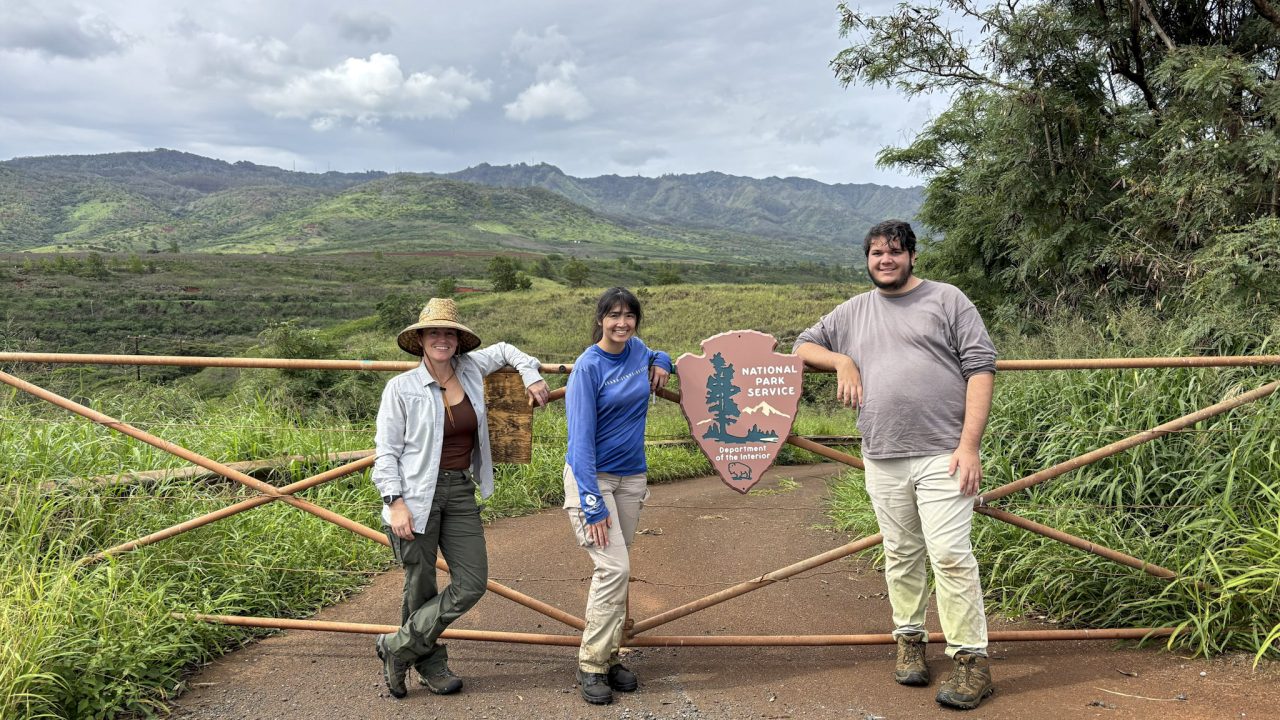
For decades, Honouliuli existed more as a memory than a place visitors could reach. Some knew Hawaii’s largest wartime incarceration camp had been there, but its exact location was lost until 2002, and public access still did not follow.
That changed on June 4, when the National Park Service announced the first-ever public tours at Honouliuli National Historic Site on Oahu. Then, almost immediately, the next thing happened: every spot for the year disappeared.
This is a pilot year with just six Saturday tours of 22 people each, for a total of 132 public spots for all of 2026. A place closed to the public for its entire existence finally opened a door, and almost no one will get through it this year.
What just opened and how fast it vanished.
The six 2026 tour dates are July 18, August 22, September 19, October 17, November 14, and December 12. All are currently full, with waitlists exceeding 200 for July, 150 for August, 75 for both September and October, and 40 for both November and December.
That means roughly 500 or more people are already waiting for cancellations across just 132 annual spots. The first tour also falls in the 80th year since the camp closed, which lends that July date weight beyond mere first access.
How the reservation and waitlist system actually works.
The National Park Service is handling reservations and waitlists by email, and the mechanics are the story now. Visitors email [email protected] with the subject line “[Tour date] TOUR RSVP, Party of [number].”
The request must include the party name and size, phone number, email address, and whether you want to be placed on the waitlist if that date is full. NPS then replies to confirm, and you must reply back confirming that you understand the physical requirements of the tour.
The waitlist is first come, first served. NPS says cancellations are accepted up to three days before a tour, which means a waitlisted person could still get a call as late as the Friday before a Saturday tour.
That also means anyone on the waitlist needs to be reachable. If staff cannot reach you within 24 hours, they move to the next person. If you have not heard by the day before the tour, NPS says to assume you do not have a seat.
Reservations close the Thursday before each Saturday tour. NPS also says availability is updated every business day, which is worth checking because these numbers are now moving targets.
What the tour involves.
The free tour runs about three hours. Visitors check in at 8:15 a.m. at Hawaii’s Plantation Village in Waipahu, then take a shuttle into the gulch, with transportation sponsored by Pacific Historic Parks.
After the shuttle, visitors walk a half-mile unpaved trail each way. It is downhill going in and fully uphill coming out, with uneven, steep sections, no shade, no facilities at the site beyond one porta-potty, and hot, humid Oahu conditions. When you visit their website, you’ll see videos of the in-and-out hike to make sure it’s right for you.
Closed-toed shoes are required, and sandals and Crocs are not allowed. Visitors are told to bring at least two liters of water per person, stay on designated trails because of hidden sinkholes up to six feet deep, and expect mosquitoes, bees, wasps, and stinging ants.
A University of Hawaii West Oahu waiver is signed on the day of the tour. No photos are allowed on the university lands the shuttle crosses, though photography inside the park is allowed for personal use. After returning around 11:30 a.m., visitors can see the Honouliuli exhibit at Hawaii’s Plantation Village.
The history visitors will be standing in.
Honouliuli operated from 1943 to 1946 and was Hawaii’s largest and longest-used wartime incarceration site. About 4,000 prisoners of war were held there, most of them Okinawans and Koreans conscripted into Japanese forces.
Roughly 400 civilians of Japanese, German, Italian, and other ancestry were also held under martial law imposed in Hawaii after December 7, 1941. That is one reason Hawaii’s incarceration story differs from the mainland story tied to Executive Order 9066.
NPS uses the words “unjustly detained,” and that plain language is needed here. Internees called the gulch jigoku dani, or Hell Valley, a name that says more than any travel description could.
After 1946, the camp was dismantled and largely lost from public memory. Japanese Cultural Center of Hawaii volunteers rediscovered the site in 2002, President Obama designated it a national monument in 2015, and Congress redesignated it a national historic site in 2019.
The site covers 123 acres and is one of only two national historic sites in Hawaii. What remains includes the aqueduct with its restored 1920 inscription, rock walls, foundations, and the difficult physical setting that shaped the camp’s isolation.
What comes next.
The reason there are only six tours this year is capacity. NPS describes 2026 as a deliberate pilot year, limited by staff and volunteer docent availability, and the park hopes to add more tours as that docent group grows.
That makes 2027 the next real opening for most people. NPS says next year’s tour dates will be released at the end of 2026 on the park website, Facebook, and Instagram.
For now, those who cannot get in still have ways to engage with the history. The passport stamp is available on tours, but also at the Pearl Harbor National Memorial visitor center desk for those who cannot get a spot. Hawaii’s Plantation Village and the Japanese Cultural Center of Hawaii also remain important places to understand the story while the actual site stays mostly inaccessible.
Would you join a waitlist of 200 people for a half-day at a place like this? We did and will let you know if we go.
Lead Photo Credit: Volunteers at Honouliuli. Courtesy of National Park Service.
Get Breaking Hawaii Travel News




There should be fees for visiting and the money should be used to buy land to be given back to the Kingdom of Hawaii.
Agreed. Better yet, do what’s right and just return it. It’s wrong to have to buy back stolen property.
Here on the mainland, the people incarcerated numbered about 125,O00 and were not P.O.W’s as was the case in Hawaii.
Most detainees here were American citizens by birth, and were denied their constitutional rights of due process, etc.
Young Japanese Americans volunteered to join the mostly Hawaiian 442nd RCT of the U.S. Army.
Many of the ten relocation camps in the mainland are being opened once again for visitors.
In the 1980’s surviving detainees received an apology and $20,000 redress from the Government.
Interesting to see how the devide the POW portion of the camp and the internment portion of U.S. residents.
Great article. I never knew about this place.
I am not sure how the site was “lost” since anyone that lived on the island after Dec. 7, 1941 knew/knows exactly where it is. I’m pretty sure if anyone asked at the Byodo-In temple they could tell you exactly where it was. My Tutu had a marvelous Japanese woman that lived with them and ran the house and cooked in exchange for room and board. She was picked up because she had family in Japan. My Tutu said she marched down there and demanded they release her and our family would vouch for her. Tutu was a woman not to mess with. Our lady was released and spent the war years with us. My Dad was an SBD pilot, and whenever he was in port, he told me she would tell him to be very very careful because the Japanese pilots were very good. When she was 85 she returned to Japan to the place of her birth.
no pictures?