
If you book a doors-off helicopter tour on Kauai today, you can learn quite a lot before you ever arrive for the flight. The booking pages spell out weight limits, phone rules, what to wear, when to check in, what you can bring, and how cancellations work.
What became a more pressing question for us today after the families of Patrick Haskell and Margaret Rimmler filed a wrongful death lawsuit against Airborne Aviation and AALeasing over the March 26, 2026, crash off Kauai’s Na Pali Coast, is different.
According to the complaint as described by Hawaii News Now, the families allege that Haskell and Rimmler survived the initial impact with the ocean but drowned because they were unable to escape the doors-off helicopter. Those are allegations in a lawsuit, not findings by the NTSB, and the federal investigation into the crash remains open.
The Kauai helicopter crash investigation and lawsuit are seeking answers to different questions.
The NTSB’s preliminary report describes what happened leading up to the helicopter entering the water. According to investigators, the pilot reported a high-frequency vibration that became stronger in waves near Kalalau Beach, followed by an uncommanded right yaw that he could not stop with left anti-torque pedal input. He entered an autorotation, made a Mayday call, and tried to reach shore before the helicopter hit the ocean roughly 75 yards offshore, according to the NTSB’s preliminary report.
The aircraft rolled onto its right side and became partially submerged. Three passengers died, while the pilot and one passenger survived. The NTSB has not determined the probable cause, so outside descriptions of a possible mechanical failure remain just outside assessments rather than any NTSB conclusion. A final report may be forthcoming in 2027.
According to reporting on the complaint, the families claim Haskell and Rimmler survived the impact but could not get out before drowning. The lawsuit alleges Airborne Aviation and AALeasing failed to provide a reasonably safe means of emergency egress following what it describes as a foreseeable water landing.
Airborne’s Kauai doors-off booking process.
We went back through Airborne Aviation’s public website selling its doors-off tours to see what someone could realistically learn before paying for the experience. There is no shortage of practical detail, including passenger weights, baggage limits, identification requirements, arrival times, phone-lanyard instructions, cancellation terms, and what passengers should wear.
Airborne’s own site says passengers use “safety harnesses for extra security when the doors are off.” We could not find a public explanation identifying the type of harness, how it releases, whether another restraint or tether is also used, or what passengers are instructed to do if the helicopter ends up in the water.
The major third-party booking sites we reviewed explain what visitors can bring, what can be attached to their bodies, and how weight restrictions work, but we found no public explanation of water-emergency egress or how passengers release themselves from the restraint system.
That information may be covered during Airborne’s in-person safety briefing before departure. Reviews describe such a briefing, but it takes place shortly before the flight, generally after passengers have already booked and arranged part of their Kauai itinerary around the tour.
Doors-off helicopter restraints create a basic safety tradeoff.
The appeal of flying with the doors off is obvious here on Kauai. There is no window between passengers and the Na Pali Coast, no glare in photographs, and a more open experience than flying inside a conventional tour helicopter.
That also means a passenger sitting near an open doorway has to be securely restrained throughout the flight. The restraint has to prevent someone from moving outside the aircraft during turbulence, maneuvering, or other unexpected movement, while still allowing that passenger to get out during an emergency.
The lawsuit brought by the Haskell and Rimmler families puts that second part under scrutiny. It alleges that the couple could not escape after the helicopter entered the water, but Airborne’s public booking information does not describe its current restraint system in enough detail to show how it releases or what a passenger would be expected to do underwater.
None of that information is likely to determine whether someone thinks doors-off flying is a good idea for them. But it could determine whether they are comfortable booking it.
What changed after the New York doors-off helicopter crash.
The question of how passengers get out of a doors-off helicopter is not new. After a doors-off helicopter ditched in New York’s East River in 2018, five passengers died, and the restraint system in that incident became a central issue in the investigation and subsequent litigation.
Robb & Robb, the same firm representing the Haskell and Rimmler families on Kauai, later obtained a $116 million verdict in litigation arising from that crash. The firm also represented the Quintua family following the 2024 Alii Air Tours crash on Kauai, although that case involved a different operator, different aircraft, and a different set of circumstances and theory centered on weather and operational decision-making.
The FAA did change its rules after the New York crash. Current FAA doors-off helicopter restraint regulations require supplemental passenger restraint systems used in doors-off operations to include a release mechanism that can be operated quickly, with minimal difficulty, and without a knife, tool, or another person’s help.
What to ask before booking a Kauai doors-off helicopter tour.
We have written about Kauai helicopter tours for years, have flown them ourselves, and have looked at the kinds of things visitors often check before choosing an operator. Aircraft, weather, pilot experience, doors on or off, and a company’s safety history have all been part of that discussion.
After this lawsuit, we will add three questions before we ever book. What restraint system will I be wearing, how do I release it myself, and what am I supposed to do if the helicopter ends up in the water? In our prior Kauai helicopter tours, we found the safety briefings were very thorough, as was the checking of all equipment, including the harnesses. We just would not have had the wherewithal to inquire about this before. Would you?
These questions do not mean that anything is wrong with Airborne or any other operator’s current equipment or procedures. They arise because this new lawsuit alleges that two passengers survived the initial impact but could not escape, while the information available to someone booking a tour today does not seem to explain how the current restraint system works in that kind of emergency.
Visitors can learn whether their phone needs a lanyard and exactly how much they are allowed to weigh long before they arrive at the heliport. It does not seem unreasonable for the emergency-exit information to be just as easy to find.
If you were booking a Kauai helicopter tour today, what questions would you want answered before you clicked “Book”?
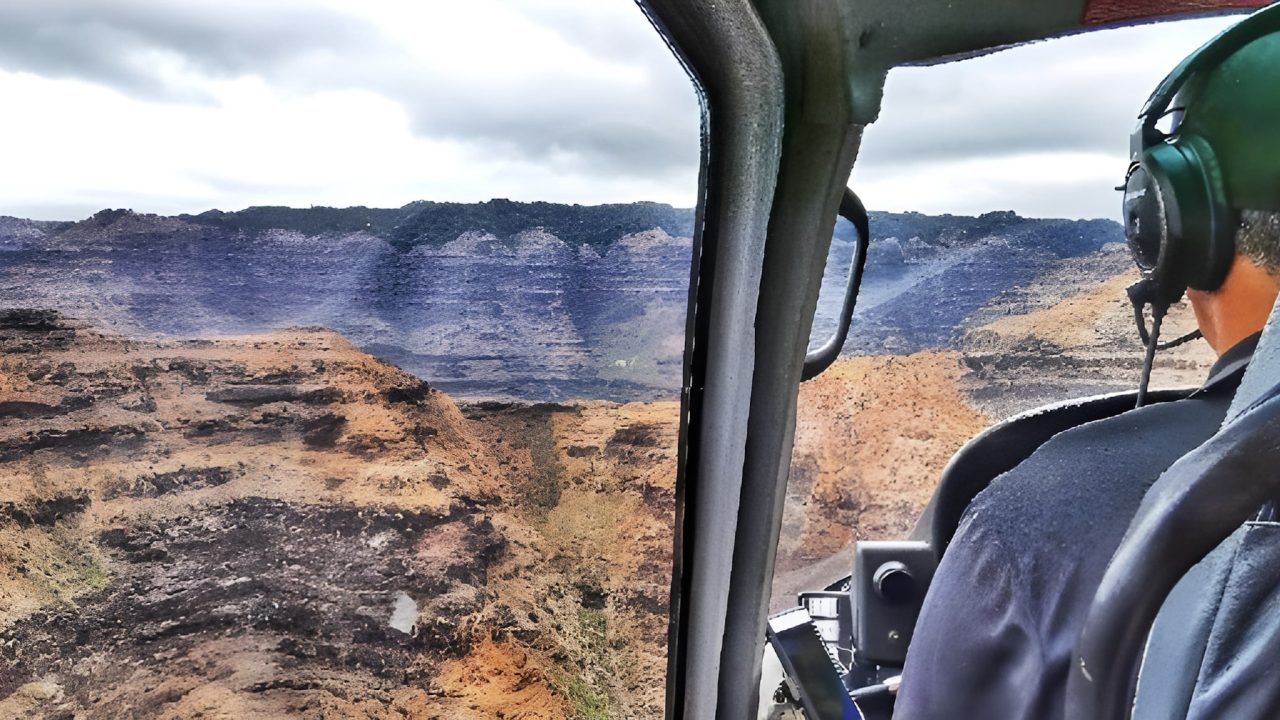
Lead Photo Credit: © Beat of Hawaii flying over Waimea Canyon, Kauai.
By Rob and Jeff, Beat of Hawaii.
Some of the most meaningful parts of Hawaii are the ones visitors walk right past without knowing they are there. We’ve spent nearly 20 years finding them firsthand for BOH as full-time Hawaii residents reporting on travel, culture, and island life, and telling you what they mean for your trip. Join us →
Get Breaking Hawaii Travel News