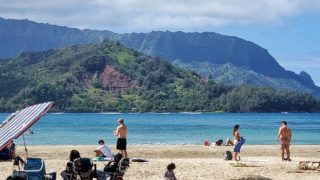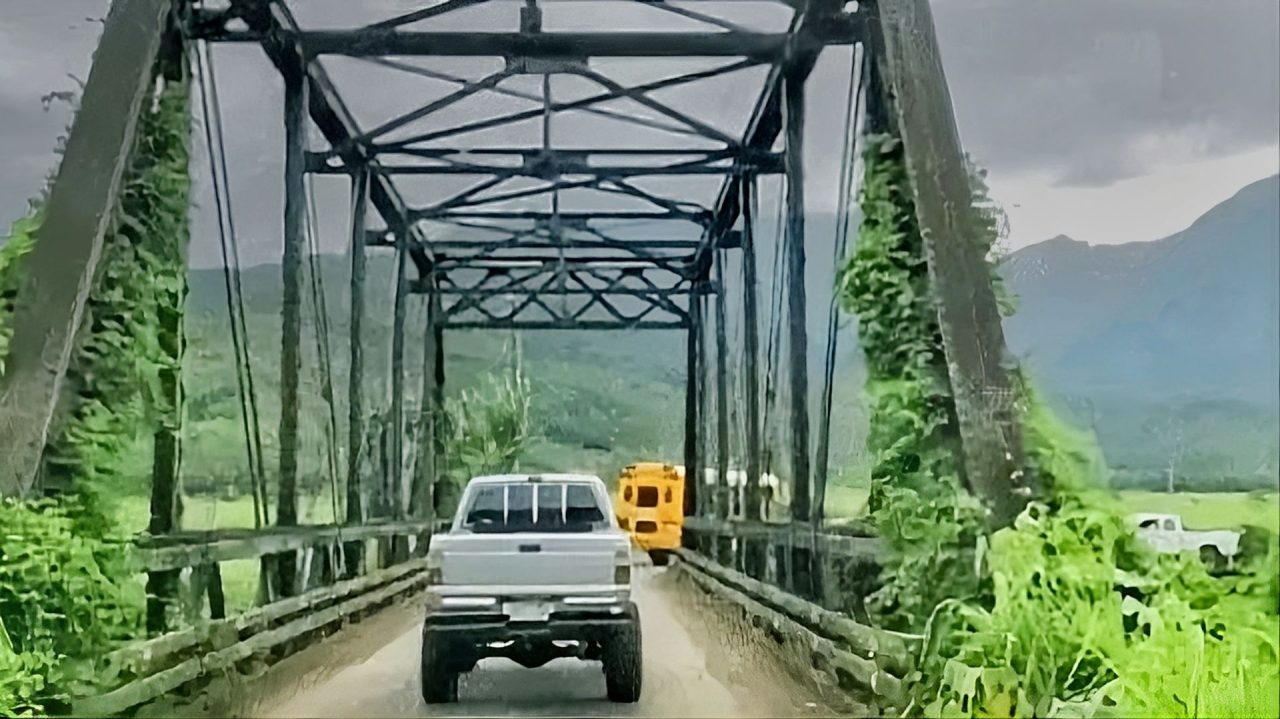
When Kauai’s only north shore highway closed today, visitors and residents who had driven up to Hanalei could not get back, and those trying to reach the north shore could not get through. That is what yet another serious Hawaii storm actually looks like, and it is nothing like what websites prepare you for.
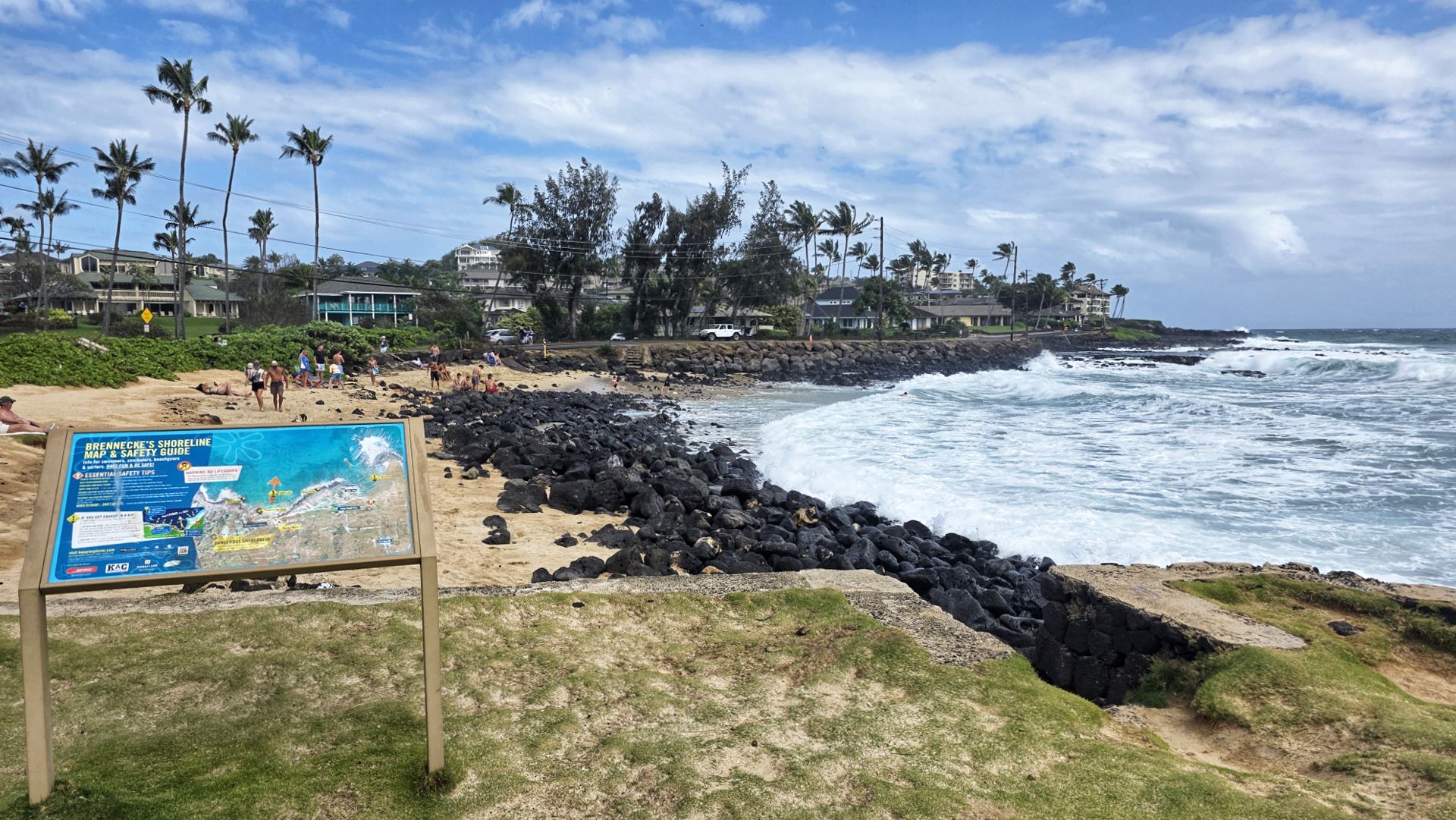
Kauai County asked everyone to stay off the roads until the storm passes. On the south shore, a downed power pole on Lolokai Road blocked the only access to Salt Pond Beach Park. Those residents and visitors at the beach could not drive out. That, while nearby, the Hanapepe River was running high and fast.
The Kauai Police Department was on scene at Salt Pond, and community members placed chairs in the road to warn drivers. Then, the Kauai Island Utility Cooperative (KIUC) said it could not respond to power outages in Hanalei, Wainiha, and Haena because the Kuhio Highway is closed, leaving residents and visitors in those areas facing extended outages with no restoration timeline. We are getting coconut wireless reports of extensive outages across the island.
So the beach day you planned is gone. The drive you built your vacation day around is too. The radar shows no better option on the other side, and on Kauai, there isn’t even another road. Hawaii is still sold as a place where one side of the island is rainy, and the other is dry, and a little flexibility solves most problems. When another serious storm like this one settles in, that logic fails completely.
The places people head for when the weather goes bad were already filling up across the island, parking lots packed, cars circling, everyone having the same backup-plan idea at once. Anything indoors was fair game. This is not one of those times when Hawaii has endless rainy-day inventory if only you know where to look, because that is just not the case. But there are still ways to salvage the day and stop the trip from unraveling.
When the road is the only road.
Visitors from the mainland do not always understand how much of Hawaii depends on a very small number of roads behaving normally. On Kauai, that’s more true than anywhere in the state. The island has one highway that runs most of the way around it. But at he north shore it’s a dead end. When Kuhio Highway closes, there is no alternate route, no back road, and no workaround. The island splits there at the Hanalei Bridge, and people wait.
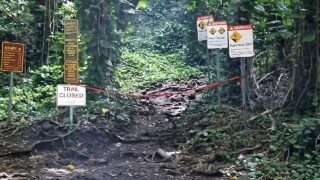
This road is how you reach Hanalei, the Na Pali and Haena State Park, beaches, the trailhead, lookouts, and small towns, and when it goes, that’s it. The same pattern played out statewide during the March storms and is poised to happen again with this storm. Then the road to Hana was closed. Kamehameha V Highway on Molokai was blocked by debris slides. Haleakala was closed. Highway 11 on the Big Island was affected. This storm is, of course, just unfolding, and Kauai is taking the brunt of it at this time.
When the state starts closing things down.
Tonight, Governor Green announced the closure of all state departments on Oahu, along with the Judiciary, University of Hawaii campuses, public schools, public charter schools, and most City and County of Honolulu offices, for Friday. Emergency shelters are opening at Kahuku Elementary and Nanakuli High and Intermediate. The ground is still saturated from the back-to-back March storms, and the governor said the state is taking this situation extremely seriously because of it.
The state has also closed all state parks, trails, and camping areas on Oahu as of 6:45 p.m. tonight until further notice, citing the danger of rising streams, flash flooding, falling trees, storm surge, and high surf. Anyone with camping reservations will be contacted directly about options. The closure notice warns that emergency response or rescue from forested and coastal areas may be delayed.
What the options actually are.
A passenger aboard the NCL Pride of America cruise ship docked on Kauai tonight posted the situation plainly: “all excursions canceled, rain falling, looking for a private driver or any recommendation for somewhere to go.”
The honest answer depends heavily on the island because the indoor options are not remotely equal, and Oahu has the most backup options by far. Bishop Museum and the Honolulu Museum of Art are absolutely two of them. They are substantial and worth doing even on a sunny trip. Ala Moana is the obvious answer for a reason. It is entirely covered, large, easy, and can take up hours without much effort. Oahu also has more restaurants, more hotel infrastructure, and more urban capacity than anywhere else in the state.
Maui past fewer options than many visitors realize. The Shops at Wailea give the south side something, with restaurants and resort spaces that can take up part of a day. Kahului has shopping and dining options. Paia has coffee shops and galleries that work for an hour or two. But none of it adds up to a full rainy day answer, and once the weather turns serious, the options disappear quickly.
The Big Island fools people because its size suggests endless alternatives, and it doesn’t work quite that way. Volcano can be a good pivot on a normal bad-weather day elsewhere on the island, but in severe weather, that option fails too. Roads can close, conditions can change, and visibility can disappear. Hilo has some indoor stops and a better rainy-day feel than it gets credit for, but the Big Island is still overwhelmingly an outdoor trip.
Across Hawaii, there are museums, spas, coffee shops, galleries, and restaurants where you can visit, or sit for a while and reset. There is no secret indoor Hawaii waiting to be unlocked. When the weather turns like this week, the options are limited and the few useful ones fill up immediately.
What residents actually do.
Today we stayed in the office. A short outing during a weather break around midday, a few miles, and then back before the rain, wind, and clouds closed in again. That is the honest local answer on a serious storm day, and it is almost the opposite of what visitors typically try to do.
Residents watch the NOAA radar. Not obsessively, but enough to know when a break is coming and how long it might last. With storms from the south like this one, the radar is reliable. When a break opens up, you take it for a coffee run, an errand, a drive to see what the ocean is doing from somewhere safe. You do not try to squeeze a beach day out of an hour window.
The surf during a storm is well worth seeing where you can watch what the Pacific Ocean does when it means business. Hawaii in a bad weather mood looks different from Hawaii on a postcard, and there is something about that worth seeing.
Cooking if you have a condo with a kitchen. A covered lanai, if you have one. Oahu and Maui have movie theaters. Kauai has the small Waimea Theater on the West Side. The Big Island depends entirely on where you are staying. Across all islands, the honest answer is the same one residents arrive at every time: stop fighting the day, find one thing that works in the weather you have, and let everything else wait. This storm is not expected to last as long as the previous one.
The weather panic back home is usually worse than the weather itself.
There is another group in this besides the people already stuck in it, the friends and family on the mainland who have not left yet and are now seeing flood headlines, road closures, and ugly forecast maps, and wondering if the whole trip is blown. They are texting, emailing, and calling.
Bad Hawaii weather almost always looks worse from far away than it feels on the ground, and canceling before you go is usually the wrong call. That does not mean the impacts here are fake. Sometimes they are very real. Roads close. Flights don’t operate on time. The beach water turns brown and is unsuitable. Activities get canceled, and plans have to change. But the mainland view seems to mash all of that into one full disaster, when what many visitors actually experience is one or two rough days followed by some of the best visual conditions of the trip after the storm system clears.
The same storm that wrecks a day can leave behind washed-clean air and sand, stronger waterfalls, deeper green, and clearer visibility once it passes. Visitors who stay flexible often end up saying afterward that the weather changed the trip but did not ruin it.
Have you ever been caught in serious weather on a Hawaii trip? Tell us what you did and what you wish you had known in the comments below.
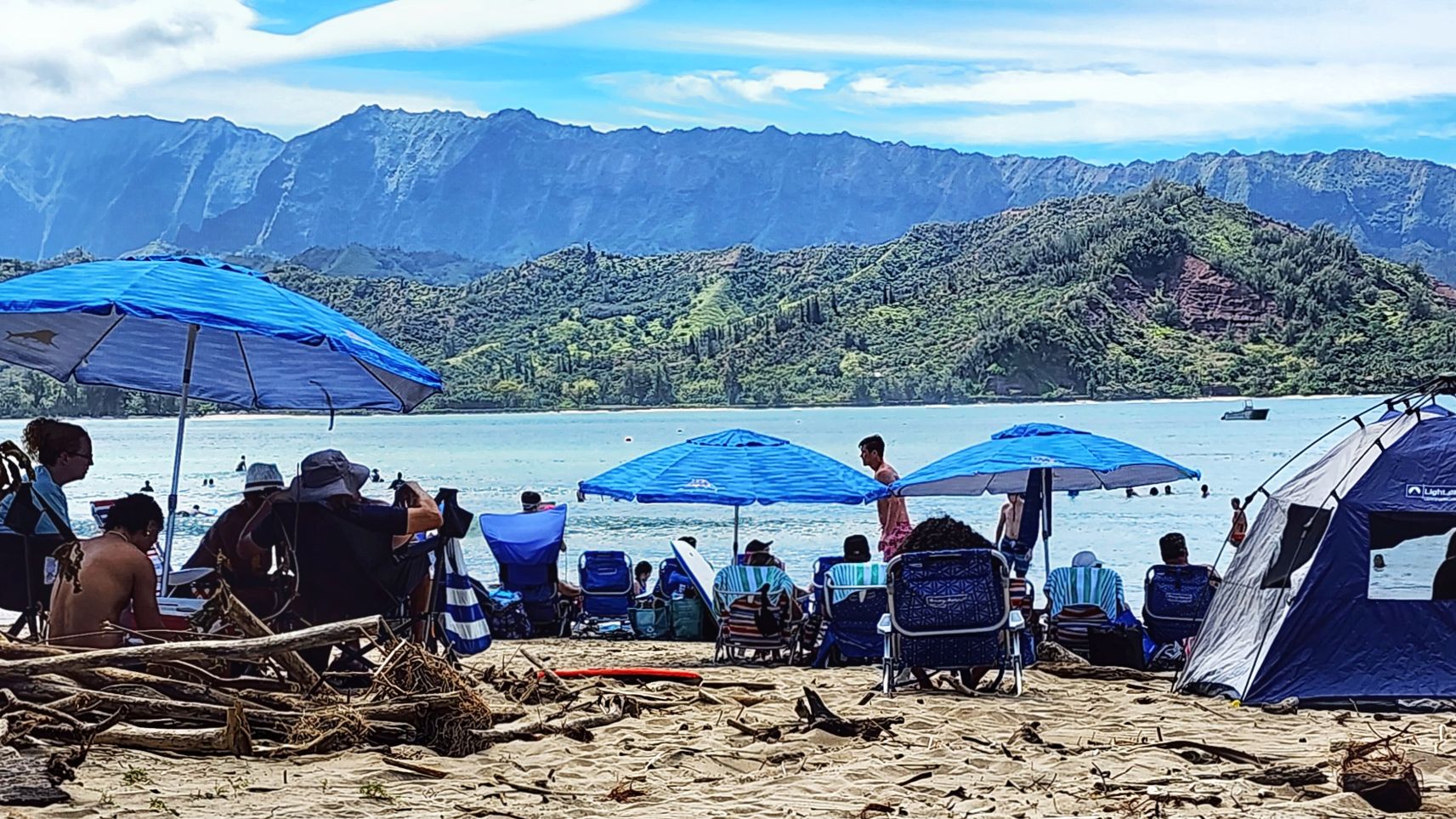
Photo Credit: © Beat of Hawaii at Hanalei Bridge on Kauai.
Get Breaking Hawaii Travel News