
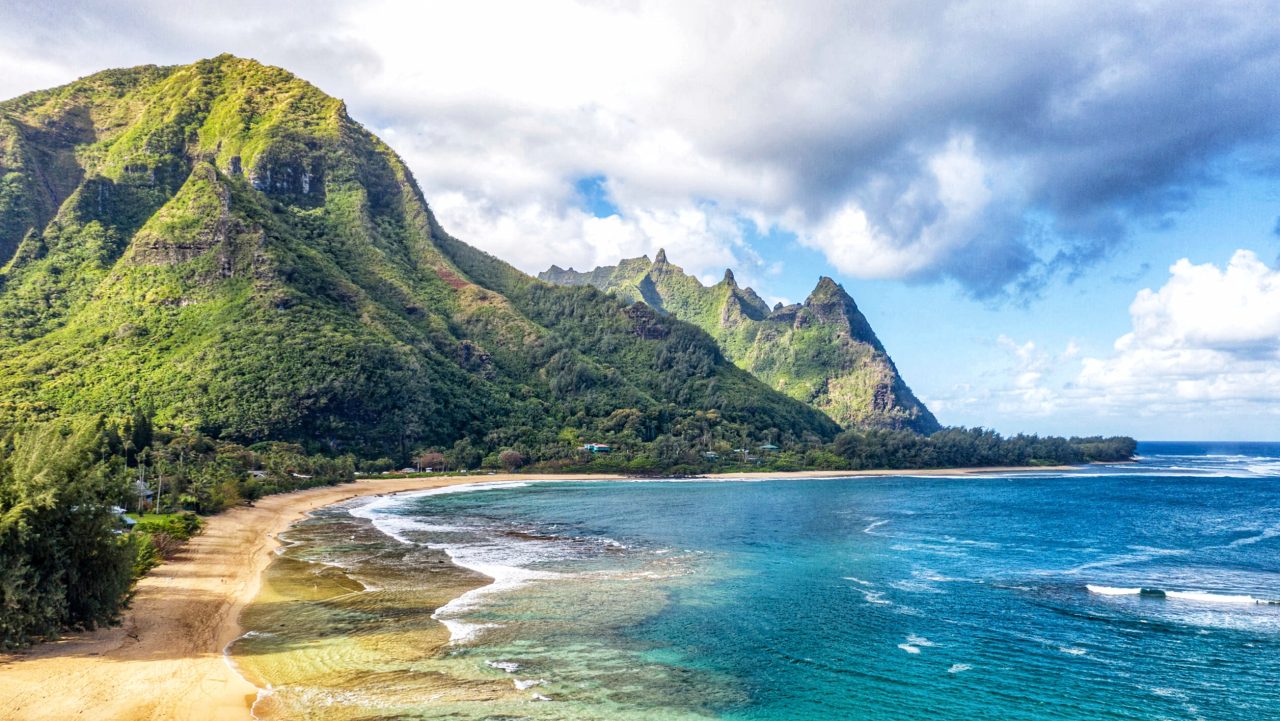
A comment from a longtime North Shore Kauai waterman, Charlie, connected dots between Kee Beach, Haena Beach Park, and Tunnels Beach in terms of snorkeling. He pointed out that the State has already limited access to Kee, the only north shore snorkel spot with full facilities and a lifeguard tower, and is now evaluating a transfer of Haena Beach Park to State control. If that happens, Tunnels Beach, which is accessed at Haena Beach for snorkeling, could become functionally off-limits, and two lifeguard beaches for snorkeling (Kee and Haena) would then be under state reservations.
Haena Beach Park is where people park to reach the Tunnels, the premier snorkeling destination on Kauai, which they can now do without reservations. The beach sits a quarter-mile down the sand. Put Haena Beach behind a reservation system like Kee, however, and now there is virtually no place to park for Tunnels unless you secure a reservation 30 days in advance to park at Haena.
His point was blunt: “Kauai tells visitors to choose lifeguarded beaches (for snorkeling) while steadily restricting access to the very places where lifeguards actually stand watch.”
How Kee became reservation-only.
The Kee visitors’ experience today is a far cry from what it was before the April 2018 floods shut down the north shore. When Haena State Park reopened in June 2019, the State replaced years of unchecked crowding with daily caps, paid shuttle access, limited parking, and advance reservations for non-residents.
It is the model we wrote about in Should Haena Beach Park Go To The State? Hawaii Divided, and the same one that featured so prominently in Visitors Say Hawaii Is Getting Too Complicated To Enjoy, where people told us they were setting alarms on the mainland for midnight Hawaii time in hopes of claiming a slot that often vanished in minutes.
Even with these changes, Kee remains the safest snorkeling entry on the north shore. The tower is staffed, and lifeguards quickly close the beach when winter surf rises or currents shift. Nothing about Kee’s safety changed. What changed is the barrier between the public and the safest option.
Kee is now a place you must secure nearly a month in advance. For an island that tells visitors to monitor conditions and pick beaches accordingly, that creates a timing problem. The safest days to snorkel often do not align with the days people managed to reserve.
The real lifeguard picture at Tunnels.
On official State lists, Makua (Tunnels) is not classified as a lifeguarded beach. Technically, that is accurate. There is no fixed tower sitting on the sand at Tunnels. But it does not reflect how that coastline is actually supervised. Haena Beach Park, which sits on the same uninterrupted stretch of shoreline, does have a staffed tower. The guards there do not sit still. They patrol the beach throughout the day on four-wheelers, passing in both directions and watching the reef breaks as they go.
While Tunnels lacks a tower, it has a trained, daily safety presence that many visitors do not realize exists. On high-surf days, guards have been known to close the entire nearshore zone of Tunnels, redirecting swimmers back toward Haena, where they can monitor conditions more closely.
This is why the waterman described Tunnels as lifeguarded. From a policy standpoint, it is not. From a practical standpoint, it absolutely is. Lifeguards monitor that reef. They intervene. They close it when necessary. The coverage is consistent, visible, and respected by the people who use that shoreline most. It is, in function, one of Kauai’s safest snorkel zones, even if no official list will label it that way.
What the State is actually proposing.
This is not just speculation. The State is actively evaluating a transfer of Haena Beach Park from the County to State Parks. If that transfer happens, the Tunnels access corridor would fall under the same management structure as Haena State Park and Kee. That means the same model of visitor caps, reservations, timed entry, paid parking, and a shuttle-heavy system could be extended across the entire area.
Residents who live near Tunnels Beach said a State takeover might finally relieve the parking chaos that has plagued their neighborhood for decades. Others warned that imposing Kee-style restrictions on Tunnels would make spontaneous shoreline access nearly impossible, not just for visitors, but also for residents who rely on that stretch of coastline in their daily lives.
The safety problem is easy to miss if you focus only on crowd control. Kee already requires reservations. If Haena/Tunnels ends up behind a similar State Parks gate, Kauai’s two safest north shore snorkeling beaches end up inside a single access system. Conditions on the north shore change by the day and often by the hour. When Kee is unsafe due to surf, and Tunnels is limited by access controls, the remaining practical option people choose for snorkeling is Anini.
Why Anini can’t carry the increased traffic for snorkeling.
Anini is cherished for its long, protective reef and calm, inviting waters. On good days, it is gentle, beautiful, and forgiving. But it is not a substitute for Kee or Tunnels for structured safety. The lifeguard presence at Anini is roving. Because Anini has no tower and sits far from any fixed lifeguard station, coverage depends entirely on whether the roaming guard happens to be nearby.
The distance between entry points is long. Activity is spread across shoreline parking, backroads, and informal paths. Visitors can drift farther than they realize. The reef shelf can be safe in shallow spots and hazardous where it changes depth abruptly. It is a beach that rewards experienced swimmers, not beginners.
If Kee and Haena/Tunnels both become controlled-entry areas, Anini becomes the default for the people who were told to choose lifeguarded beaches but could not access the ones where lifeguards are actually stationed. That is not a small change. It shifts the weight of north shore visitor safety onto the beach with the least concentrated lifeguard coverage.
The mayor’s role and the limits of it.
Charlie pointed out that Mayor Derek Kawakami is a water person. He is comfortable in the ocean and understands the rhythm of north shore conditions better than many elected officials. But Kee is under state control. The proposed expansion of State management to include Haena is also a State initiative. The County’s role is whether to transfer Haena Beach Park and, if so, what conditions it insists on.
Even so, locals familiar with these beaches expect the mayor to advocate for the practical realities ocean users face. County lifeguards are the ones patrolling Tunnels today. They are the ones closing the water when necessary. They are the ones who understand how the end of the road works at 8 a.m. in January versus 3 p.m. in July. When county lifeguard coverage intersects with State access restrictions, residents expect county leadership to ensure safety remains the priority.
The contradiction Kauai now faces.
Our Kauai waterman, Charlie, put it plainly. Kauai tells visitors to choose lifeguarded beaches. That message is reinforced after every near-drowning and every winter swell. Yet Kee is behind a reservation system, and Tunnels may soon be folded into one. Those are the two beaches with the most active, effective lifeguard oversight for north shore snorkeling. Anini cannot replace them in that role. This is not a debate about visitor caps or parking fees. This is a safety contradiction that demands a public answer.
If the State limits the only two beaches where lifeguards actually monitor snorkeling conditions on the North Shore, then the message to visitors needs to be honest about that. If Kauai wants people to make safer choices, then the safest choices must remain physically and practically accessible.
Should the State be restricting access to beaches with active lifeguard oversight while visitor drownings remain a serious concern, or should ocean safety come first when new rules are written?
Get Breaking Hawaii Travel News




I can tell you my beach on Kauai has a great reef people love to snorkel there. However lately the fisherman have taken over and tell swimmers not to get close to their lines .snorklers feel intimidated it isn’t fair. The fisherman don’t respect the reef and walk all over it daily.
I support this reservation system including Haena Beach park.
Hawaii has limited resources that require careful management
Sarcastically, when will Hawaii demand passports and visas for mainland US citizens to visit Hawaii and to access a beach?
Sarcastic answer: About the same time Disneyland and Vegas put travel fees and restrictions on Hawaii residents. Hawaii residents can visit the mainland, but need to stay in their hotels due to overtourism.
Another sarcastic answer:
Also, if HI residents want to go to any parks or beaches on the mainland, they will need to make a reservation 30 days out and pay outrageous fees for the privledge. Of coarse local residents on the mainland won’t pay any fees or be required to get a permit to visit the same areas.
While we are at it, we need to charge higher tourism tourism taxes for HI residents visiting the mainland. These taxes will include car rentals, lodging, and any other taxes we deem necessary for HI resident to visit the mainland.
If this is how Hawaii want’s to act then please reimburse or repay the US federal government the 1.6 billion dollars of financial aid the government gave Maui for disaster relief.
Is this confusing enough? Hawaii is not so relaxing and laid back anymore.
Once again, this issue is driven by simply too many people all craving the same thing at the same time. Or more simply put…. too many visitors!
Despite all the moaning about taxes and fees, they still keep coming. For every visitor who decries “enough is enough”, there are three more waiting to take their place. Perhaps it’s time to finally put a cap on visitor arrivals.
One small problem… capping visitors an restricting travel to Hawaii would be illegal.
Right to Travel: The Supreme Court has established that citizens have a fundamental right to move between states, meaning a state cannot entirely close its borders.
Privileges and Immunities Clause: States cannot blatantly discriminate against visitors, but they can impose reasonable, non-discriminatory regulations that apply to everyone, or regulations that only incidentally affect out-of-staters.
Aloha Rob+Jeff. Seems like every new news blog that you publish is just another restriction or problem that will probably take ? to solve. Makes you once again think twice or more about spending copious amounts of$ to even go there anymore. Everything written seems to be such a deterrent to visiting there. It’s really sad that the times have come to this. The mayor is a waterman? Then maybe he could take a moment in his job and figure out a solution. But then again, there’s so many problems there that this is way down on his list. What in the world is happening to the islands??? Is there no one competent to run the position that the title calls for? What is your take on this ? I would really like to know. Always grateful for your latest info. Hope it gets better.
The state should change its reservation system to release blocks of reservations at something like 30-10-1 day out, so that people doing weather and surf dependent activities can wait to see. Washington uses a similar system for the San Juan Island ferries.
I agree with the comment by Laura W -“Visitors are not entitled to North Shore access”.
Visitors have no right to use public beaches because they are not locals and they do not know how to behave with Aloha. During Covid when tourists could not leave hotels things were perfect.
I really hope this is sarcasm.
This comment is so one sided and discriminatory. Using this logic, Hawaiians have no right to visit public areas on the mainland unless locals determine that they are acting respecfully.
It is really unfortunate when I see comments like this, because it paints Hawaiians in a bad light and does not reflect the opinion of all Hawaiians. It is only representative of a few narrow minded locals that lack Aloha, many of which I am guessing are not even native.
IMO that is exactly the same logic as Our island is not your playground. This is our home. Guess what my state has beaches and my state allows all tourist’s to venture on our beaches. Oahu isn’t a small island. It is literally 50 miles in a circle. The big island is probably around 80 miles across and maybe more north to south. IMO put it short the great or exact opinion was commented Hawaii=1000 small cuts.
Indeed. Let’s just give Hawaii back to it’s people, and let them take care of themselves. Leave the USA completely.
What a mess. But, imo, safety is and should always be the primary consideration. Under different physical circumstances, this might not be a problem. But that end of the highway has so many residents struggling with overuse of the road and parking problems, so maybe this is what it has to be. Locals can access Ke’e and, if it’s transferred to state control, Ha’ena, with no reservation. Visitors aren’t entitled to North Shore access. But I do worry this will lead to more injuries and worse at non-patrolled beaches. Sad.
Wrong… the last I checked, this is the US and discrimination is illegal. How would you feel if you were told that you weren’t entitled to access areas on the mainland because you are a visitor?
What should happen is locals pay for a yearly pass to access these areas as well. If you feel visitors aren’t entitled to visit these areas, maybe the state parks should stop receiving tax money generated by tourism.
When a place is being overvisited to it’s detriment and visitors are dying due to unsafe conditions, I have no problem with limiting or removing access, regardless of the location. I respect your opinion to the contrary, please respect mine.
I respect your opinion, but what you suggested is illegal and discriminatory, unless the same rules and restrictions are applied to HI residents as well.
The reservation is meant to reduce crowds and provide safe parking. The North Shore was being loved to death! The floods and Covid revealed the positive environmental changes that limiting numbers promotes. For locals, there is little chance of visiting Tunnels because the parking lot overflows onto the narrow road. Everyone turned away from Haena now go to the County Beach Park. Sad but true! Reservations take the pressure off, still accessible by the shuttle bus and congestion is resolved. A great idea whose time has come!
Hello BOH and friends. I’ve been following your blog for a long time and have seen so much back and forth about the reservation system and parking permits, but I still don’t know where to go to reserve a spot for the beach or the parking. I must have missed it at some point. Please provide a link to the reservations site. Mahalo.
I both love and dread summer snorkeling plans at Tunnels; Every year we have to get up there earlier & earlier to get a legal parking spot!
As a 20 yr resident, as well as a former R.N. & FF/EMT, I believe ocean safety is paramount, but residents access and some form of monitored safe parking is also very important. Personally, I thought the new plan was a good one, despite pros & cons. Perhaps Anini needs to look at having x2 lifeguard stands at this point, inc. a roving guard?!
Some aspects of the reservation system are good, however, it seems to be broken. It is nearly impossible to get a reservation, even when logging on at midnight the reservations sell out in seconds.
I think a bigger problem is that many reservations go unused, which takes away the opportunity for others to visit Ke’e (I know I am guilty of this due to plans that changed). There has to be a way to make reservations that are not used become available the day of the time slot reserved to open up those spaces, or determine how many go unused on average per month and oversell the reservations by that percentage.
Gohaena.com for reservations. If you are a Hawaiʻi resident with a valid Hawaiʻi drivers license, there is no need for a reservation. There is dedicated parking at Kee for residents. If anyone in your car is from out of state you will need to by a pass for them to enter with you – passes are also available on Gohaena.com
Here is the site for reservations.
gohaena.com/
Hawaii’s economic, taxation, and regulatory environment keeps getting worse with no letup in sight. Hawaii is damned if it does and damned if it doesn’t.