
Maui now runs overlapping parking systems that look similar on the ground but work differently depending on the beach, the agency, and the lot. For visitors planning a trip, the more practical problem is not whether beaches are public. All beaches in Hawaii are. Maui beach parking fees starting in 2026 are what changed, and the rules are not uniform.
The problem is that there is no single, unified way to understand what applies where, when restrictions kick in, and how much a typical beach week will actually cost, because Maui beach access is now spread across separate systems and separate platforms.
When locals were asked online whether Maui beaches now require reservations and fees. Thirty responses followed. Some said no, beaches are public and always free. Others said yes, certain beaches require reservations. A few named Waianapanapa and Iao Valley, and their timed entry, while others talked about per-person fees at Big Beach. One person asked if the original poster was a bot.
As more comments rolled in, links appeared, assumptions grew stronger, and the original question became harder to answer rather than easier. The confusion is not a visitor problem.
A simple question that no longer has a simple answer.
The clearest way to explain the confusion is this. Maui now operates in at least three different lanes that visitors routinely mix together, and the overlap is where frustration starts.
One lane is for state parks and monuments, where reservations and entry rules apply at specific sites. Another lane is county beach parking, where paid parking is expanding, and resident priority windows are also being added. A third lane is private or resort-controlled parking, where fees are driven by property control rather than anything to do with public policy.
To a visitor standing at a gate, scanning a QR code, or looking at a parking kiosk, all of this feels effectively identical. Pay here. Reserve here. On vacation, people do not necessarily think in terms of separate policy lanes. They just want to know what applies to the beach in front of them.
That is why the online discussion spiraled. Everyone was describing something real, but not everyone was describing the same thing. As a result, Maui now has beach access conversations where confidence may be high, but clarity is low.
The weekend morning lockout is what people are reacting to.
The new South Maui beach parking rollout is triggering the greatest reaction for one reason that has little to do with the dollar amount. It is about timing, and visitors feel it cuts directly into how they actually use and enjoy Maui.
Many visitors plan their beach days around morning conditions. That is not a casual preference; it is a routine shaped by wind, glare, and the mainland time difference. People wake early, arrive between 7 AM and 9 AM, snorkel while conditions are calmer before winds kick in, then adjust plans later.
That is why the 10 AM weekend and holiday resident priority window is landing as more than just paid parking. It changes access to prime hours and does so in a way that some say feels targeted at visitor behavior rather than at congestion itself.
One BOH comment stated, “Due to the time difference from the mainland, we usually wake up and head to the beach at 8 AM to enjoy snorkeling before the wind and sun become unbearable. The 10 AM parking limit is just another malicious way to ban tourists from beach access. The Aloha is gone.” His frustration is rooted in logistics as much as emotion, because those hours are when many visitors and residents feel Maui is at its best.
Gary approached it from a planning angle and wrote, “The $50/week fee sounds good, but excluding tourists until 10 AM makes it a non-saving for us and anyone else who likes to snorkel at the best lesser wave 7-9 am time frames; this takes 2 snorkel days out of each 7 for each of our 2 week trips there.” That kind of calculation occurs before people decide whether Maui still works for them overall.
Several readers also pointed out a basic reality that rarely makes it into official explanations. A weekly beach parking pass does not guarantee a spot. If a lot fills early, the pass becomes permission to pay, not assurance of parking access, and that may be more of an issue than the price.
The lifeguard issue has become its own flashpoint.
Another theme that surfaced repeatedly was concern about lifeguards being pulled into parking enforcement or conflict management. Whether that is planned or not, readers say that is a line that should not be crossed.
Kensu wrote, “As a former lifeguard, I am very concerned about lifeguards having to watch over parking lots. Their jobs require full attention on the water.” Lynda reinforced that concern and wrote, “Lifeguards have gone through rigorous training to deal with emergency situations on the water, oceans, or swimming pools. It’s ridiculous to even suggest they deal with parking lot issues!”
Don framed it bluntly and wrote, “Naturally, a 10 pound sledgehammer solution is being used where a ball-peen hammer would work better.” He described an approach that keeps lifeguards focused on water safety and enforcement tied to MPD instead, then added, “Whoever decided to spend hundreds of thousands of dollars for this program should be fired or removed from the county council for plain stupidity!”
The language is sharp, but the concern is consistent. Readers do not trust Maui to run a complicated enforcement system cleanly, and they do not want the critical safety role of lifeguards blurred in the process.
Three beach systems collide, yet visitors experience them as one.
State parks and monuments on Maui operate under Hawaii’s state park rules. Waianapanapa State Park and Iao Valley State Monument are among these, where non-residents must make reservations and pay entry and parking fees.
Makena State Park is a contrast point that trips some people up. It charges the same $10 per vehicle and $5 per person fees, but it requires no reservation. That inconsistency is confusing to some, because visitors naturally assume similar fees mean similar rules.
County beach parking is an entirely separate system. This is where ParkMaui applies, covering places like the Kamaole parks and introducing paid parking, resident exemptions, and time-based restrictions that do not exist at the state parks.
Finally, there are private or resort-controlled lots, especially in West Maui, where app-based paid parking feels like a policy change even when it is simply a property owner’s decision. When visitors say a West Maui beach costs $29 to park, they are often describing who controls the lot, and that has nothing to do with county or state mandates.
From a visitor’s perspective, it all blends together as “Maui.” From a planning perspective, it is three different systems with different rules, and that is precisely why the same question keeps producing contradictory answers.
What this actually does to a one-week Maui vacation.
The reason this issue resonates is that the costs only become clear when they are added together. A family of four visiting Maui for a week and hitting common highlights would pay about $30 to visit Waianapanapa State Park, another $30 to visit Iao Valley State Monument, and another $30 to spend a day at Makena State Park. Multiple visits to Kamaole beaches would cost either $10 per day or $50 for a weekly pass, but neither option guarantees weekend morning access.
That puts beach-related entry and parking costs in the $120 to $140 range for the week, before factoring in West Maui paid lots, Haleakala sunrise reservations, or resort parking fees. Individually, none of those numbers feels dramatic. Taken together, they start to feel like at least some friction.
The deeper question Maui still has not answered.
Eric addressed the accountability issue directly and commented, “I hope an enterprising reporter will take a close look at this in one year and tell us how much revenue was collected, how much was spent on its intended purpose, and if tourism is not recovering, how much of it is this new set of fees responsible.”
That is not an anti-tourism question. If Maui says this is about funding maintenance and improving the park experience, visitors and residents alike will expect to see cleaner facilities, smoother enforcement, and less chaos. If Maui says this is about congestion, the test will be whether it actually reduces it or simply moves it elsewhere.
So here is the question for readers to weigh in on. Does this feel like Maui fixing a real problem, or turning a beach morning into homework?
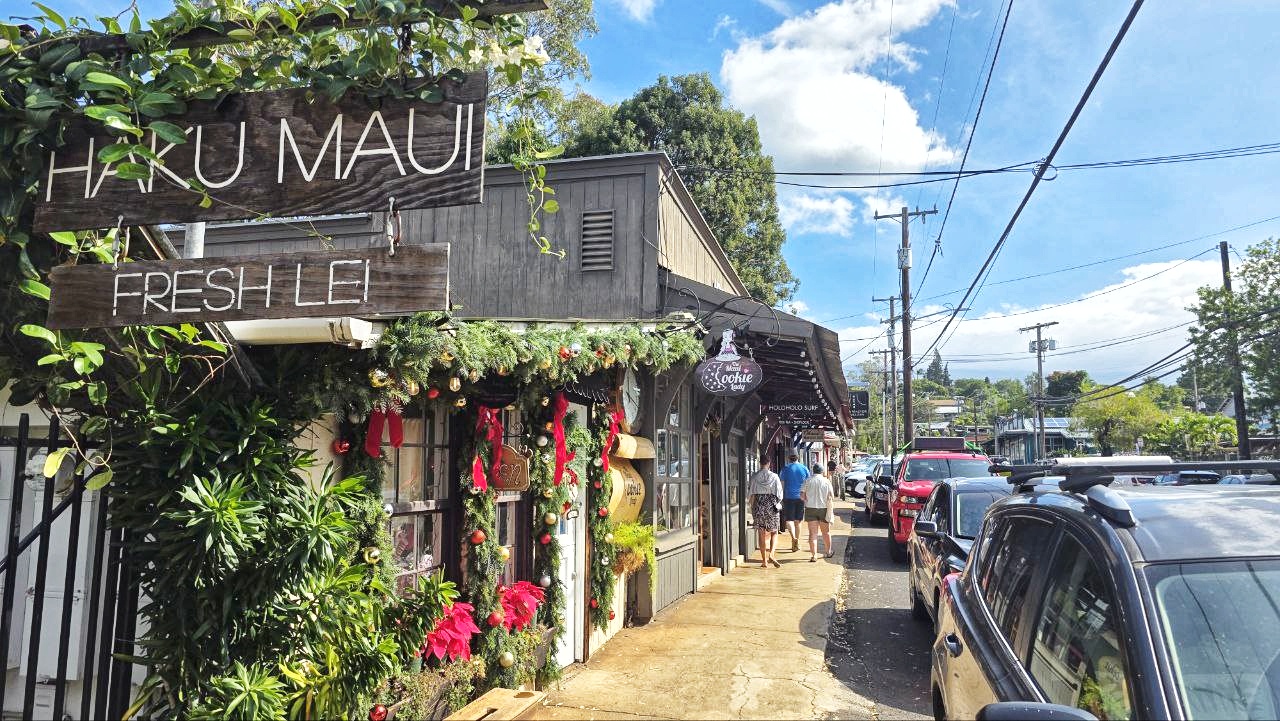
Lead Photo: Beat of Hawaii in Makawao, Maui.
Get Breaking Hawaii Travel News


We have visited Maui several times. Our last trip was this past October. We will not be returning again. Maui is not what it used to be.
There are other places just as tropical, exotic, beautiful, and friendly where they still appreciate our tourist dollars and do not work overtime to complicate and frustrate the tourist experience. We will turn our attention to the Caribbean and elsewhere.
What about those of us that don’t take cell phones to the beaches and parks and don’t do QR codes of any type. How do we pay for parking if all the lots are going to require you to have an app or QR code reader? Did the county just assume that everyone has a cell phone and it is with them all the time? Same at a restaurant, I never take my cell phone into a restaurant when we are dining and if the menu access is only by a QR code to read on your phone or tablet, there are other places to dine at. We stopped at the Maui Aquarium and ended up not going since I didn’t have the required “app” on my phone and didn’t want to add another app to my phone.
You need to do a story on the paid parking fiasco in Kailua Kona where it costs more to park than Waikiki and you don’t know how much it is until you park and scan the QR code.
Not only the parking lot rules but now the can’t park within 20 feet of a crosswalk or intersection (unmqrked or not) and receive a $50 citation.
with all the reservation issues, parking fee’s, designated time slots for tourist’s only plus manditory selected fee’s for certain beaches. Where is the beaches so convenient for tourists? Do you really have the freedom to really visit a beach in Hawaii? What is Hawaii without beaches? IMO just another stay at any hotel with a swimming pool and spending money shopping. Exactly what Hawaii wants tourist’s to do.
Do you have Uber in Hawaii/Maui? Leave the car at your ‘home’ location and I believe you could do it cheaper and make return reservations and adhere to them.
Que up residential street parking restrictions coming soon. You’re going to see families unload everyone but the driver and their gear, then go park within 1/2 mile or so of the beach.
aloha again. Another big mess!! The new rules are so (pardon me) stupid. if you live here and swim everyday you know this. absolutely no point in closing the Kam beaches till 10 am. except maybe on the weekends for local parties. locals do not go to these beaches to swim and snorkel very much during the week. nothing to see. other beaches were we do go will be impacted with the tourists that cant park at the Kams. Just totally Stupid!!! the originators must not live here or swim here.