Something has fundamentally broken in air travel, and our 13-flight journey around the Pacific and on connecting mainland flights to Hawaii proved it five different ways. Five flight days went very wrong on a single trip. What used to be a relatively easy dream journey has turned into a real test of patience and endurance. Over 14,000 miles and 13 flights, we saw what happens when modern air travel runs out of margin. The results were equal parts absurd, exhausting, and, if we stand back, quite humorous.
We almost did not go at all.
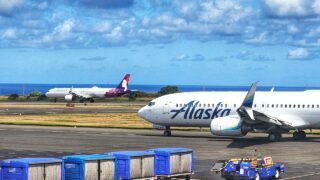
Our itinerary started in Hawaii, to The Cook Islands, then on to French Polynesia, Chicago, and back to Hawaii. The trip nearly ended before it began when we were denied boarding at Kauai over a documentation error that was not ours but rather Hawaiian Airlines’. While other passengers boarded, we stood at the counter watching the clock rapidly running out on our connection to the South Pacific.
It took a supervisor (who arrived only after much insistence), two international phone calls, and a quiet word from a sympathetic agent who explained what had actually gone wrong to finally clear it. By the time we were last running onto the plane, it already felt like a bizarre warning sign for what was coming next.

The Cook Islands domino.
Following time spent in Cooks to report contrasts between Hawaii and its slower neighbor directly south, the travel chaos picked up right where it had left off departing Hawaii. On this next three-hour flight, after three days on the spectacular Aitutaki lagoon, we were traveling between Rarotonga and French Polynesia.
When the plane limped back to Rarotonga with a failed engine the day before our flight, we were suddenly notified that our flight to Papeete had been cancelled. Later, we learned we would be travelling the following day, early in the morning. As we arrived in Rarotonga from Aitutaki, we taxied past that disabled aircraft that the day before never made it to Tahiti.
The distance between the Cook Islands and French Polynesia definitely pushes the limits of that small plane, a SAAB 340 with 34 seats. If the engine had quit halfway across the 3-hour, 720-mile flight, we might not be talking just about delays. The same kind of route fragility affects Hawaii’s neighbor-island connections, where a single aircraft breakdown can snowball, stranding hundreds. So there we were.

By the time our flight was rescheduled for 7 am the next day, the small airport had gone still. Hotels near Rarotonga Airport, slim pickings in the very best of times, had filled instantly. We also watched as our Tahiti hotel and car rental reservations expired in real time, already thinking about an upcoming travel insurance claim, while awaiting more details, and refreshing emails and texts to see what would happen next.
The next morning, before daybreak, the Air Rarotonga counter became ground zero for travel anxiety. By the time we boarded, passengers fanned themselves and swapped stories about missed accommodations, tours, connections, and travel insurance.
It was no one’s fault, yet it showed how fragile South Pacific air links really are. When a single aircraft fails, an entire nation’s connection to the outside world simply pauses. Travelers wait, pay, and hope the next flight actually happens. It finally did.
United’s expensive long-haul business class letdown hit hard.
Following a stay in Bora Bora, to report on that island and contrast it too with Hawaii travel, we boarded United’s Polaris business-class flight from Papeete to San Francisco. This was a long-awaited flight for a multitude of reasons, and it was to be a highlight of the transportation part of the trip.
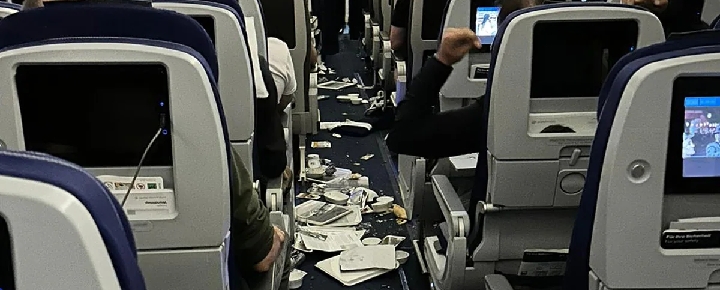
We were expecting this rare splurge to provide much-needed, albeit expensive relief, a pre-ordered meal, and some overnight sleep. Instead, the red-eye turned into yet another ordeal. The flight departed, then we sat in silence as the crew vanished for most of the next three hours before “express” meal service was completed. A few trays appeared long after midnight.

We have flown Polaris before and covered its highs and lows, but this was an entirely new low, and a first. Passengers were clearly not pleased, and one across the aisle finally laughed and said, “So this is premium now?” The lie-flat seat was excellent. But a solid three hours into an eight-hour hour flight, we had both scavenged every peanut and other snack we had brought on board, and we were still waiting for water and food. All while continuing watching the galley and the non-existent flight attendants with total curiosity about what on earth could have happened.
Premium used to at least mean service. Now it meant paying extra to be ignored in a nicer seat. We received a negligible mileage credit from UAL, which didn’t really address the situation. Honestly, we were just glad to get off the Dreamliner plane and be done.
Cross-country fatigue.
A short mainland business stop then separated us from an already much-anticipated return home to Hawaii, which, in fact, turned out great. Before that flight, the two American Airlines flights around it both ran very late, the first by more than three hours, and with no explanation provided whatsoever.
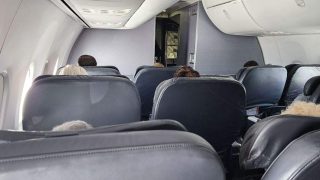
Twice on the second flight, American agents tried to give away our paid extra seat, part of our comfort plan, and the three-seat trick that lets two travelers create a little breathing room on longer-haul flights. The first time was before the flight, when we and the third seat were moved to different rows. The second time was in-flight, when a flight attendant tried to place a passenger in the seat we had previously purchased.
We book three seats for two people on longer flights because we find it to be the only way to make economy survivable. The math works. Three seats almost always cost significantly less than two in business, and you get an entire row. It is a trick almost no one talks about, but one that has saved us on dozens of flights, until American unexpectedly tried to override it.
In any event, we had to quickly produce receipts and boarding passes for the extra seat to prove we had paid for our own space. Fortunately, we had a paper copy of the boarding pass showing the original seats. American restored the original seats and relocated the passenger our third seat was assigned to.
The five-flight toll.
Add it up: denied boarding on departure. The Air Rarotonga mechanical failure delayed one of just two planes capable of the journey to French Polynesia. United’s business collapse to the mainland. Two late American flights inlcuding a seat assignment battle.
By the time we finally connected home on a stellar, nostalgic Hawaiian Dreamliner flight through Honolulu and landed on Kauai, we had spent five full travel days wrestling with air travel breakdowns that used to be extremely rare. The excitement of the trip had been replaced by sheer exhaustion and wonder about what might even happen next.
Another sweet spot turned out to be travel insurance.
When traveling internationally, we routinely buy trip insurance both to have medical coverage (U.S. medical coverage almost never works abroad), and to have other coverage like trip interruption and delay. And we sure used it this time.
When we returned, we quickly filed a claim for the lost and extra accommodations, expenses, and for the car rental that we couldn’t use. Within a couple of weeks, we received a complete refund of the lost expenses we’d paid.
The Real Cost of Five Bad Flight Days
13 flights, 5 went wrong
1 engine failure, not ours, but close enough
3+ hours of unexplained delays
2 attempts to take our paid seats
1 lost Tahiti hotel night and a lost car reservation
0 meaningful apologies
Infinite reasons we miss the old days
There was a time when flying to Hawaii and elsewhere felt like an integral part of the vacation. We still remember real meals, timely flights, and friendly crews. Today, the flights are just a means of survival before the vacation can begin. You pack food because catering will almost certainly be a fail. You keep the flight details as screenshots in case the reservation system forgets you. You measure success not by upgrades or miles, but by making it home on the same day you had planned.
Every itinerary feels like a test now. Will the flight leave on time? Will our seats still exist? Will the airline be able to hold it together? A fellow passenger stranded en route summed it up perfectly: “I used to collect miles. Now I collect war stories.” That line stayed with us the rest of the trip back to Hawaii.
Have your recent flights to or from Hawaii gone smoothly, or are you collecting travel war stories too?
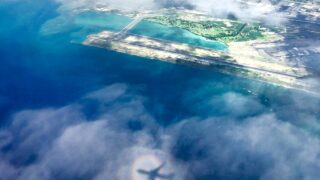
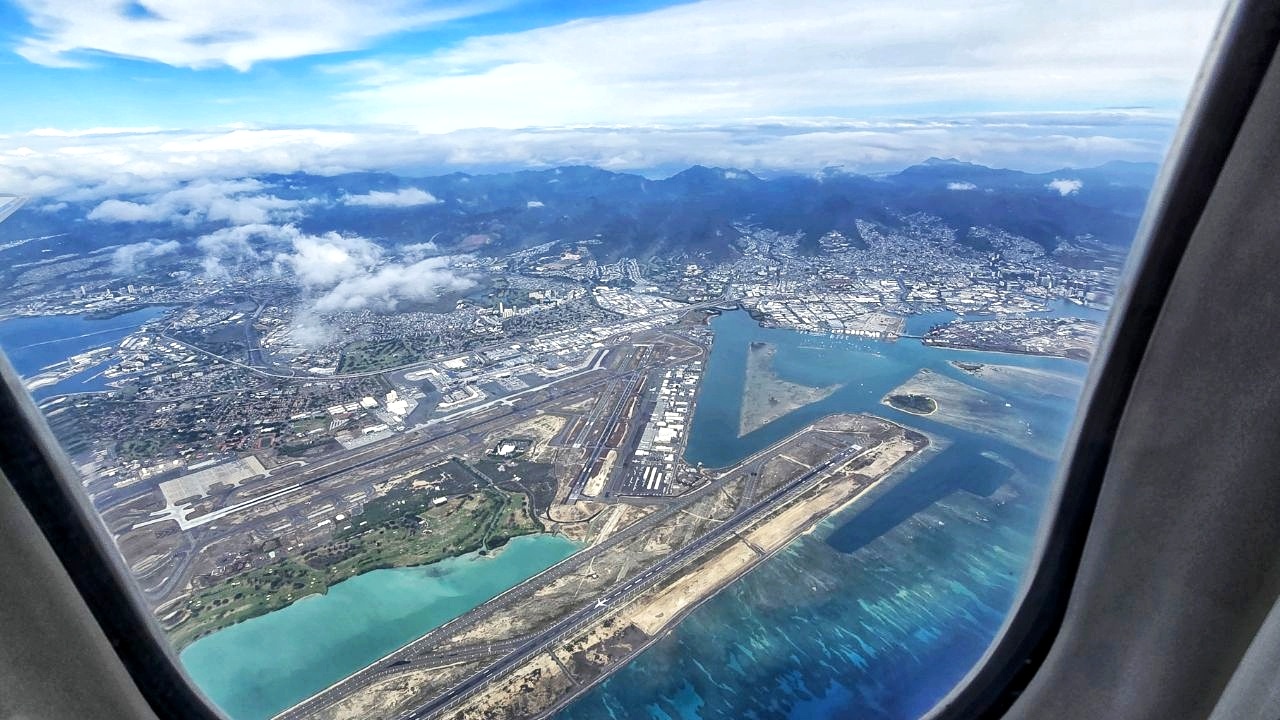
Photo Credits: Beat of Hawaii. The lead photo shows HNL from our seat.
Get Breaking Hawaii Travel News