
A reader comment about Hawaiian flight attendants sent us looking in a direction we hadn’t expected. Sammy pointed us toward complaints on Facebook and forums about inconsistent beverage service, fewer trips through the cabin, and difficulty getting water, then went further: “They are doing purposeful work slowdown on international routes.”
We found the passenger complaints he was talking about, but no evidence of any organized slowdown. The Association of Flight Attendants (AFA) has actually told Hawaiian flight attendants to perform the international service as written while documenting the workload problems they encounter. Harder to ignore is the extraordinary situation surrounding these employees, because Alaska and Hawaiian came together as companies much faster than the cultures of two very different airlines ever could.
There is no doubt Hawaiian was in a very difficult financial position before Alaska arrived, or that the acquisition brought resources and stability Hawaiian desperately needed. We’ve reported on those realities throughout the merger, and nothing changes them.
But a merger can make financial and strategic sense while still creating enormous friction when thousands of employees from two very different airline cultures are asked to become one. In that sense, this isn’t similar to United and Continental or American and US Airways, which certainly had different cultures but still came from the same broad mainland airline world. Hawaiian and Alaska grew up in places, communities, and working cultures that are arguably far further apart.
Hawaiian was built around relationships that are hard to replicate.
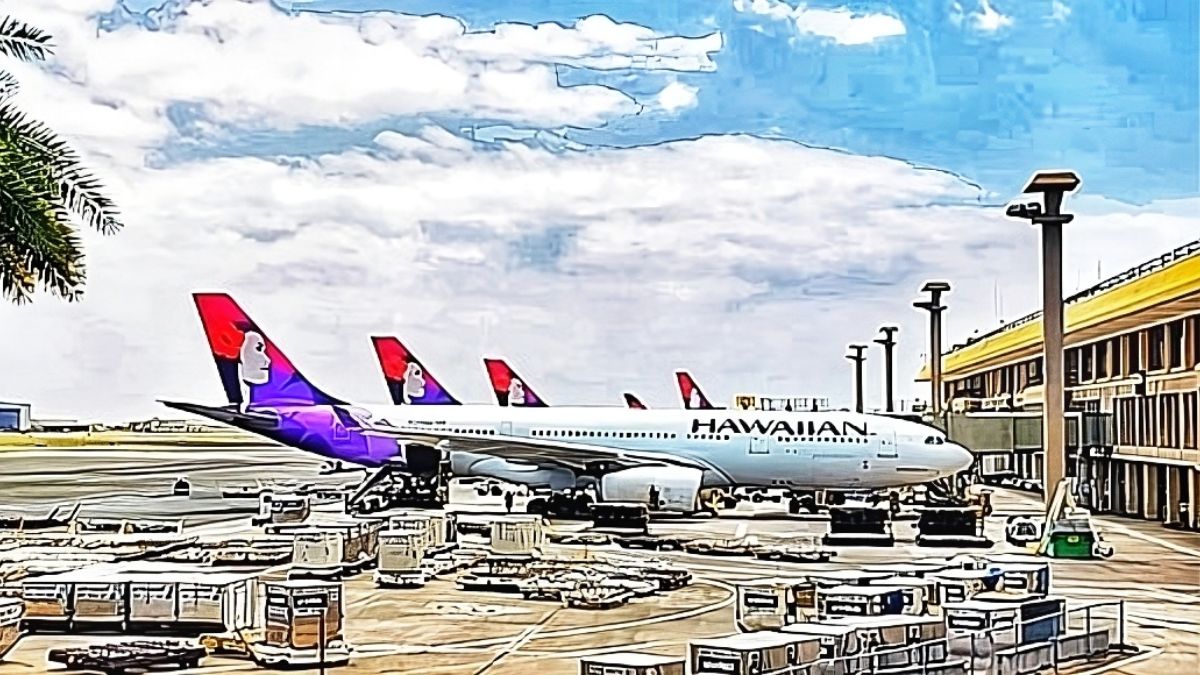
We’ve watched this for years, walking through Honolulu Airport, with ourselves knowing so many of their employees. Hawaiian crews are constantly greeting, hugging, and talking with one another, and there is an unmistakable familiarity among people who have often spent years working around the same airline in the same small island community. We aren’t suggesting everyone at Hawaiian was one happy family, but the relationships around the company have always been unusually visible.
Alaska has its own history, loyal workforce and strong company culture, but it grew up in a different place and at a different scale. Putting the two organizations together involves far more than successfully combining reservations, repainting aircraft and eventually negotiating joint contracts.
Flight attendants make that collision especially visible because passengers interact with them directly and there are so many of them. Alaska reported there were more than 2,500 Hawaiian flight attendants at the end of 2025, along with more than 1,200 Hawaiian pilots, representing thousands of working lives and families that came into the acquisition with their own contracts, seniority, routines, and relationships.
Those employees didn’t suddenly become culturally Alaska because ownership changed. Many had built careers in Hawaii around Hawaiian Airlines long before anyone imagined that its most advanced aircraft would eventually wear Alaska colors and take them from Seattle to Europe.
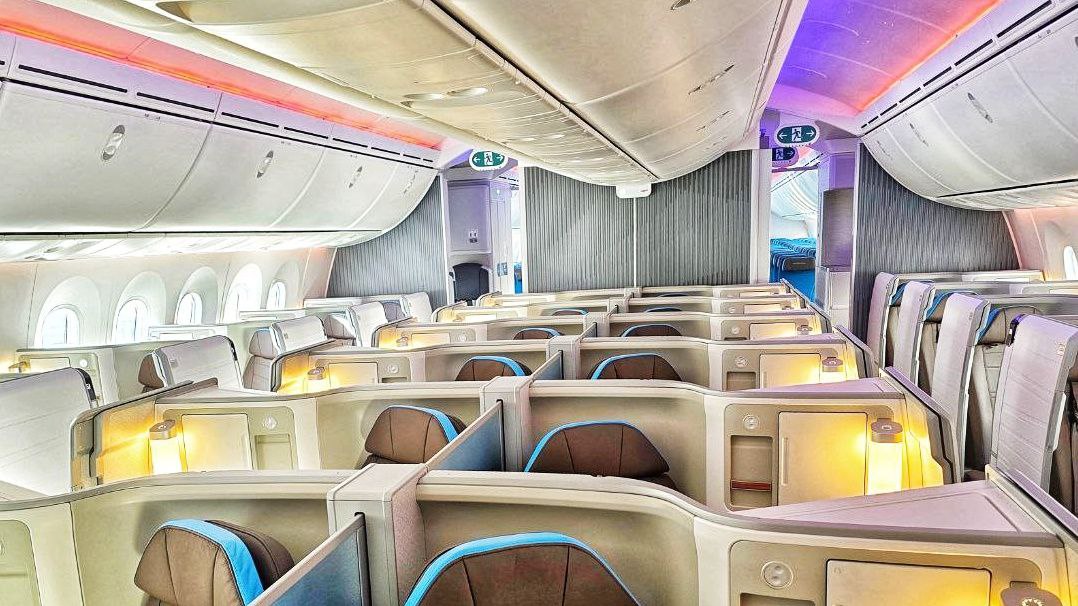
The Dreamliners reflect how the transition is going.
We flew Hawaiian Airlines’ Dreamliner in first class before the transformation and came away especially impressed by the Hawaiian flight attendants. The aircraft was new and beautiful, but the people working it were a major part of what made the experience feel uniquely Hawaiian.
Those same Dreamliners now have Alaska painted across their fuselages. Hawaiian’s 787 fleet was repainted remarkably quickly, and the airplanes are being used to build Alaska’s ambitious long-haul international network from Seattle. Rome, London, Seoul and Tokyo are part of that operation, while Alaska announced on August 20 that Athens and Paris will be added next May.
The flight attendants aboard the Dreamliners remain pre-merger Hawaiian employees. Until the two flight attendant groups are fully integrated, Hawaiian flight attendants remain on a separate seniority list and under Hawaiian work rules, and only Hawaiian flight attendants operate the groupings and aircraft assigned to the Hawaiian side of the operation.
Passengers see an Alaska Dreamliner departing Seattle for Europe, while the people delivering the onboard experience still come from a Hawaiian workforce that has not yet been fully integrated.
Alaska involved Hawaiian’s service team when developing its new international product because those employees brought experience with the 787 and Hawaiian’s onboard service. Their expertise helps build the new operation.
Seattle brought the change much closer to home.
Alaska opened a new Seattle domicile specifically for Hawaiian flight attendants on April 1, initially planning about 250 positions with the possibility of growing to around 400 by the end of this year. By early January, 189 Hawaiian flight attendants had bid for Seattle, and 163 of them came from the Honolulu base.
Being Seattle-based doesn’t necessarily mean someone has moved their entire household there. Flight attendants often commute to their assigned base, so an employee whose family and life remain in Hawaii may have another trans-Pacific flight before the international work even begins. Hawaiian flight attendants retain their existing commuter policy, while AFA also secured an 18-month period during which they cannot be involuntarily transferred to Seattle.
For those who do relocate, Seattle means leaving the place around which a career at Hawaiian was built. For those who commute, it can create a different kind of disruption. Moving the center of Dreamliner flying changes things for these employees and their lives.
The community around Hawaiian hasn’t simply disappeared because a new base opened. When Hawaiian flight attendants held their first Seattle membership meeting on August 15, their union addressed them as “Aloha Seattle ‘Ohana.” About 30 flight attendants attended, with 787 staffing, workload, onboard service, and food consistency among the issues they discussed.
Why you can’t schedule cultural integration for 2,500 flight attendants.
Some parts of the merger have happened with remarkable efficiency. Hawaiian’s visual identity disappeared from the Dreamliners, the reservation systems have been successfully combined, routes have been reshuffled, and Alaska is moving ahead with a global expansion Hawaiian never undertook.
But people don’t move on the same timetable. Hawaiian flight attendants still work under their own contract, while questions that might seem small from a corporate perspective have already shown how different the two cultures are. We previously reported on Hawaiian flight attendants wearing lei and flowers on Alaska’s international flights, an issue that exposed the difficulty of deciding which parts of Hawaiian fit inside a more standardized international operation.
Hawaiian’s reputation was based on less measurable parts of the experience: attentiveness, warmth, conversation, and employees doing things that weren’t necessarily spelled out line by line in a service manual.
At the same time, Alaska is asking those employees to deliver a competitive and increasingly elaborate international product. Hawaiian flight attendants have now filed a formal grievance over 787 staffing and workload, saying additional duties were introduced after service testing and that management needs either to add staffing or reduce its expectations.
Passengers may be seeing the strain.
The complaints we found on recent international flights don’t all point in the same direction. Some passengers describe good Hawaiian flight attendants and attentive service, while others report long periods without water, limited cabin presence, and employees who seem irritated when asked for something between scheduled services.
One passenger described going hours between meal services without a water or snack pass, while another recent London traveler said flight attendants seemed irritated when asked for water. Other passengers reported much better experiences on the same international operation, which is why the pattern looks uneven rather than universal.
That doesn’t establish what really happened, however. AFA has reported catering problems, staffing concerns, and difficulties with the new service structure. Morale could also affect what passengers experience without anyone consciously deciding to reduce service.
These are hard to measure issues beyond whether a beverage cart reached the back of the aircraft, and it’s why we’re reluctant to suggest what is happening is a slowdown. Yet the changes around these employees suggest the human side of the integration may deserve a closer look.
From the passenger side, the merger can appear much further along than it does from within the workforce. More than 2,500 Hawaiian flight attendants are still bringing relationships, habits, and a service culture developed over decades into an airline that grew up somewhere else entirely.
Have you noticed Hawaiian’s service feeling different since the merger, and if so, what changed for you?
Photo Credits: © Beat of Hawaii.
By Rob and Jeff, Beat of Hawaii.
Some of the most meaningful parts of Hawaii are the ones visitors walk right past without knowing they are there. We’ve spent nearly 20 years finding them firsthand for BOH as full-time Hawaii residents reporting on travel, culture, and island life, and telling you what they mean for your trip. Join us →
Get Breaking Hawaii Travel News



The changes in the “Hawaiian Spirit” go beyond just the merger. For sure airline mergers are volatile and sensitive situations that risk bringing out the worst in competing employee groups. Change is always hard. But Hawaiian was changing even without the merger. The Pre Covid airline was a tight knit crew that when you went to work you had a shared history of survival and triumph with. Most of the employees that built Hawaiian through the tough times have been replaced by a whole new employee group that reflects the modern realities. They have never been furloughed, never faced bankruptcy, pay cuts, etc. It’s a different world out there and good bad or indifferent, they reflect that. The dust will eventually settle and Alaska will be a much bigger airline and it will still have strong Hawaiian DNA. How much will be an individual choice of each employee.
I have flown Hawaiian Airlines for years and even lived in Makakilo on Oahu. The service onboard Hawaiian Airlines reminded me of the early days of PanAm and TWA. I always felt US air carriers could learn the “Spirit of Aloha” from Hawaiian. What is really sad is that after 95 years of Hawaiian Airlines that the State of Hawaii did Not go in and support the airlines and buy them and keep them as their own. Yes, Alaska Airlines is growing but at what cost to Hawaiian Airlines? Alaska Airlines should, in no way, change Hawaiian Airlines. Alaksa is really doing a disservice to Hawaii, it’s people and is customers.
Hi. I recently flew Alaska Air and Hawaiian on a trip a few weeks ago. There is definitely a difference between both when it comes to Hawaii Service. Flying on Alaska from Seattle to Honolulu was just another flight. No getting hyped up over the trip to Hawaii. Some people saved their life savings to go to this beautiful group of islands and not to play up Hawaii is ashamed. Hawaiian flights talk about the islands, give out flowers or umbrellas with their drinks, and make it feel as if an unexpected, great trip to the islands is ahead. Just a feeling, but totally different
Our first experience of reduced service and , perhaps, poor morale was Hawaiian to Tahiti in May of 2024. We found little aloha on the flight. The return was slightly better. We fly Hawaiian to Tokyo in October and we are hoping for better!
First noticed a change in service [after merger]on a. domestic flight. Previously, drink service was done about 30 minutes after take off prior to meal service. Drinks were again served during meal service. Water was offered for the rest of flight, with flight attendants walking through the plane.
Other drinks were available at a designated area.
Noticed when going to restroom, attendants sitting looking at phones during the rest of flight.