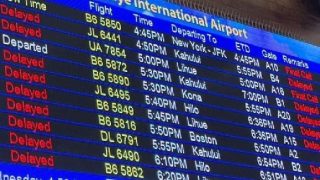
A canceled flight home from Hawaii can leave visitors who have already checked out and returned their rental cars stranded and facing an expensive, unexpected overnight stay. Whether the airline pays for another hotel room, meals, and transportation depends largely on what caused the cancellation.
A new federal rule could make that answer less favorable. On October 15, however, the Department of Transportation postponed changes to how airlines report certain cancellations and delays, moving the effective date from October 19 to February 1, 2027. DOT has already acknowledged that passengers can expect fewer complimentary hotel rooms, meals and other benefits as a result.
Ten flight problems that could cost Hawaii travelers more.
Under existing DOT reporting rules, the category for circumstances within an airline’s control has included familiar problems such as maintenance, crew scheduling, and aircraft cleaning. Airlines use that “controllable” distinction in their customer-service commitments, which can include meals, hotels, and transportation when a disruption strands passengers.
The new rule creates a separate category for ten specific causes that will no longer be reported as airline-controlled. They include certain unscheduled maintenance that can’t be deferred, removal of an unruly passenger, a medical emergency through no fault of the airline, certain cybersecurity attacks, unexpected government-system failures, and airport closures caused by volcanic ash (think Big Island), wind, or wind shear. It also covers several less common situations involving baggage systems, aircraft damage, and safety incidents.
DOT expects airlines to save money by providing less assistance when flights are disrupted, leaving passengers to cover more of their own hotel, meal, and transportation costs. The department acknowledged that travelers would lose benefits but couldn’t estimate how much they might pay out of pocket.
The hotel your airline provided may not be there next time.
For controllable cancellations, most airlines serving Hawaii currently commit to providing complimentary lodging and ground transportation when passengers are stranded overnight. Hawaiian, Alaska, American, Delta, United, and Southwest all make that hotel commitment on the DOT dashboard. Unlike the mainland, Hawaii has no highway or neighboring airport that can get you home from Hawaii when your flight is canceled. The rule doesn’t cancel those promises, but it could change which cancellations qualify for hotel coverage.
Earlier this year, we wrote about a crew problem that left Hawaii passengers facing an unexpected overnight stay. Crew scheduling will still be deemed airline-controlled, but the new rule will classify certain mechanical problems differently.
The most surprising is unscheduled maintenance. If a mechanical problem appears outside the scheduled maintenance program and can’t be deferred or must be fixed before departure, the new rule specifically excludes it from the airline-controlled reporting category. DOT has already shown just how that can affect passengers. In December 2025, the department announced it would not enforce certain airline commitments to provide hotels, meals and other assistance for disruptions caused by qualifying unscheduled maintenance in response to FAA airworthiness directives, although airlines could still voluntarily provide those benefits if they chose to do so.
Lowell showed how quickly the question becomes expensive.
Hurricane Lowell closed Lihue Airport on September 7, canceling flights. Weather-related cancellations wouldn’t normally qualify for airlines’ hotel commitments for controllable disruptions anyway. We’ve seen Hawaii storms and other major disruptions leave aircraft and crews scattered across the system after the original event, sometimes affecting flights the following day or beyond. The reason the airline gives for canceling your flight can determine whether you get a hotel voucher or have to find a room yourself.
We recently faced the expense from the other direction when bad weather first caused the airline to cancel, then ongoing bad Hawaii weather forced us to cancel a second time and rebuild our own Maui trip. We lost money on a nonrefundable Hana vacation rental, but at least we made those decisions before heading to the airport and losing control of the situation.
Federal law still doesn’t guarantee a hotel.
DOT had previously considered a broader rule that could have required airlines to provide cash compensation, meals, lodging, ground transportation, and rebooking during significant disruptions, with some protections potentially applying regardless of cause. That was withdrawn in November 2025 before becoming law, so the hotel and meal protections travelers commonly receive today largely come from airline customer-service commitments rather than any federal requirement.
We looked at this problem before after a BOH reader was delayed nearly seven hours flying from Kona to Los Angeles and received only a $20 food voucher. Our earlier look at Hawaii flight compensation and what airlines actually provide found that it depends on the airline’s own commitments and the reason assigned to the disruption.
If your airline cancels your flight and you decide not to accept another flight, you’re entitled to a refund of your ticket. But that doesn’t mean the airline has to pay for an extra hotel night in Hawaii, meals, or transportation while you’re left stranded.
Before you pay for another night in Hawaii.
If our flight was canceled overnight, we’d ask the airline exactly what caused it and whether it would provide a hotel room or reimburse us if we booked one ourselves. “Operational reasons” is too vague an answer to tell us whether the airline’s hotel commitment applies.
We’d ask for the airline’s response in writing and keep receipts for anything we had to pay ourselves. Have you had a Hawaii flight canceled after checkout, and, if so, what did your airline actually cover?
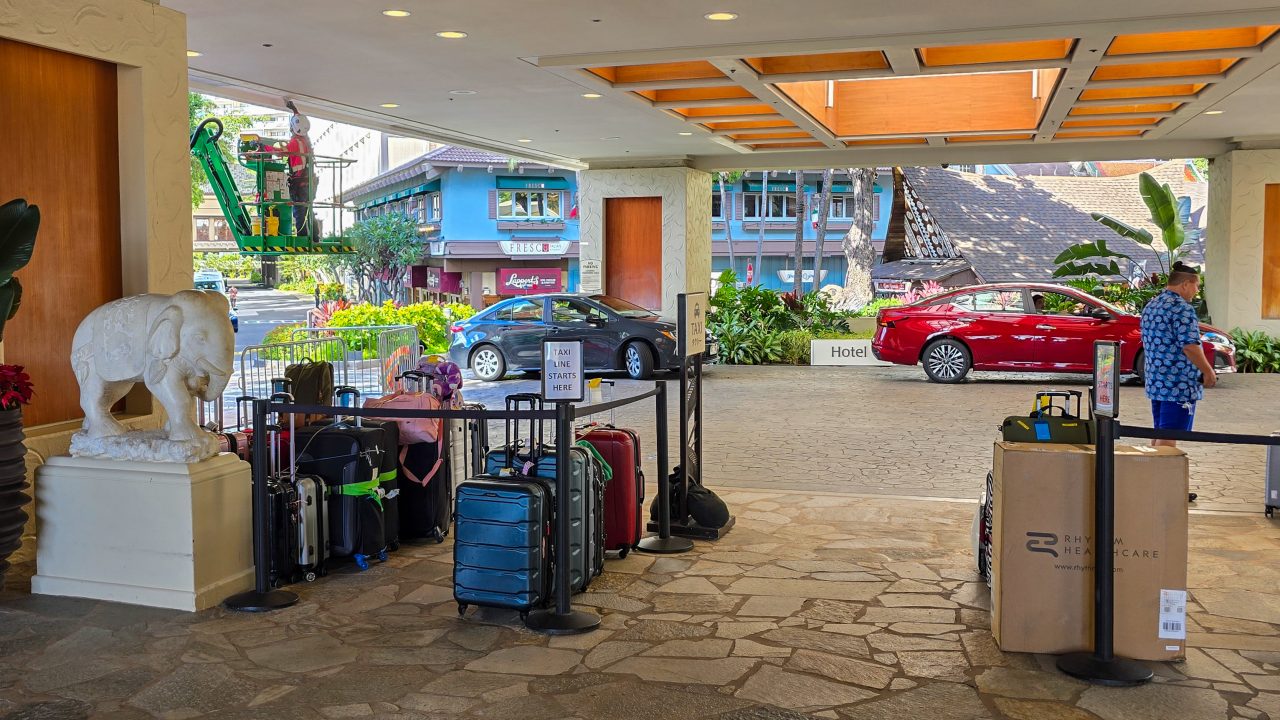
Lead Photo: Beat of Hawaii at Hilton Hawaiian Village.
By Rob and Jeff, Beat of Hawaii.
Some of Hawaii’s most meaningful parts are the ones visitors walk right past without knowing they are there. We’ve spent nearly 20 years finding them firsthand for BOH as full-time Hawaii residents reporting on travel, culture, and island life, and telling you what they mean for your trip. Join us →
Get Breaking Hawaii Travel News