
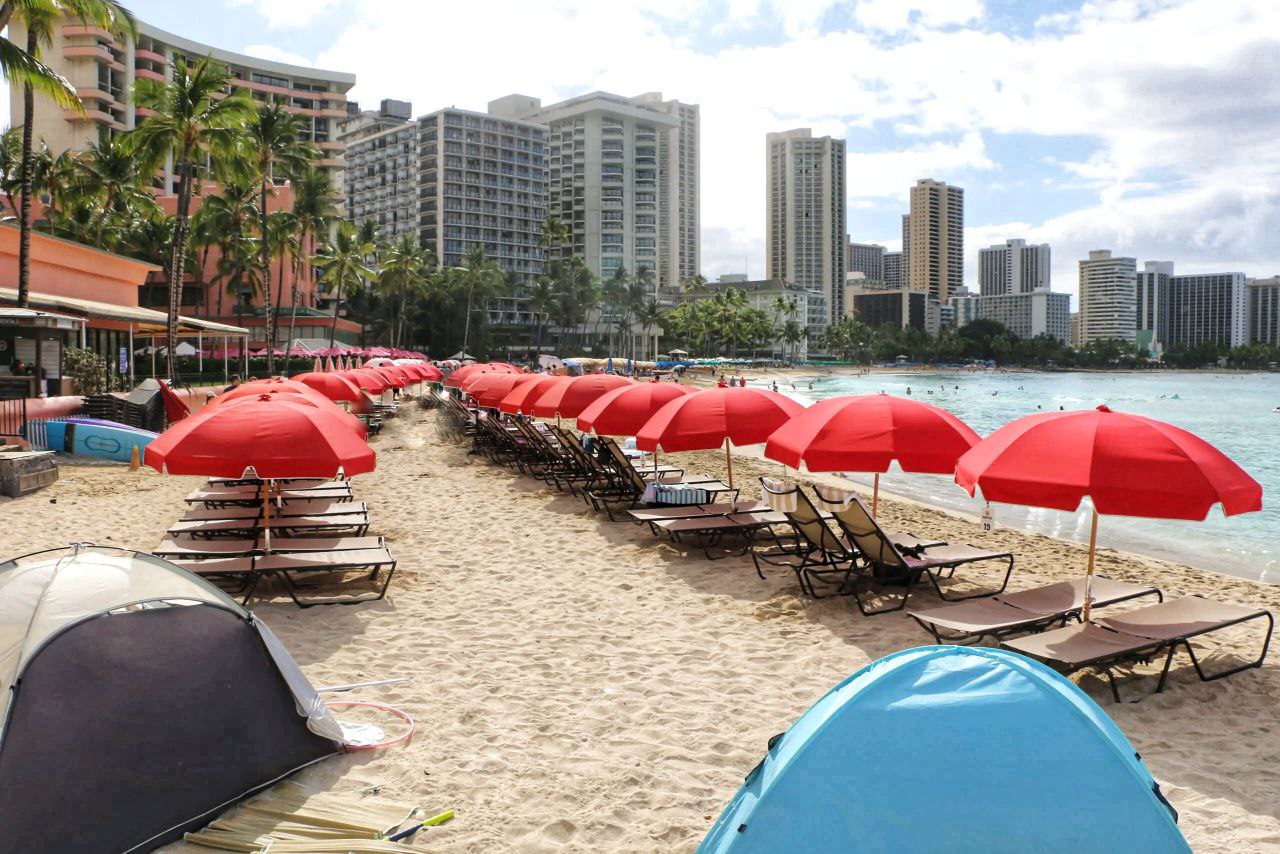
The visitors who are walking away from Hawaii have something in common. They are not the first-timers priced out before they arrive, and they are not simply casual island travelers drifting away on a whim. They are the ones who came to Hawaii for years, sometimes decades, and built Hawaii into a central and defining part of their lives.
They saved up, planned ahead, made trade-offs, and found ways to make their trips work even when it stretched the budget. We are not talking about luxury travelers chasing novelty or status. They are middle-class families who treated Hawaii as something meaningful and worth returning to.
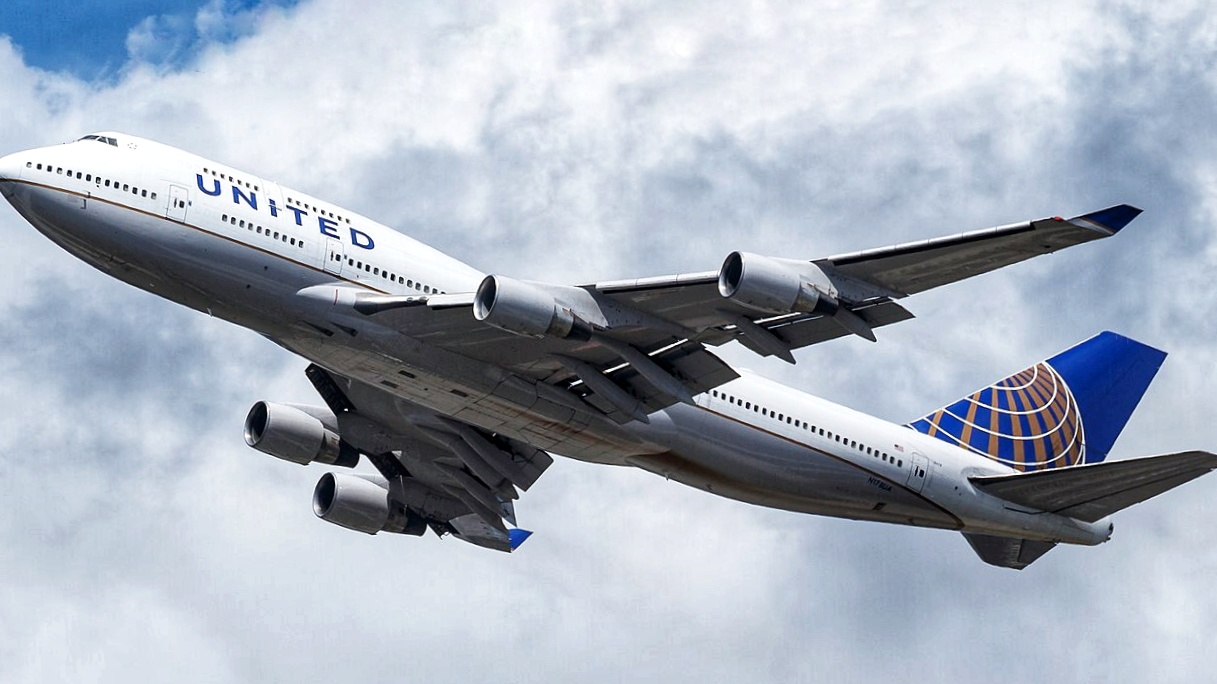
Fifty-six years ago today, one plane flew for the first time, becoming emblematic of Hawaii travel and permanently changing who could realistically come to Hawaii. What it unlocked was not glamour or exclusivity, but access itself, turning Hawaii affordable for middle-class families and something repeatable rather than just aspirational. That era is now largely undone, not only here in Hawaii, but this is where the loss is felt most personally by the people reading this.
What the 747 actually did for Hawaii.
Before the 747, flying to Hawaii was out of reach for most middle-class travelers. Aircraft were smaller, operating costs were perhaps double, and airfares still reflected an earlier and exclusive travel paradigm. Before then, a family vacation to the islands was seen as rare and often considered as a once-in-a-lifetime event rather than something people regularly planned around.
As we’ve written before in America’s love affair with Hawaii, jet travel turned the islands from just a dream into a place middle-class families could actually return to.
The jumbo jet changed that equation virtually overnight. With nearly 400 seats on a single flight instead of maybe 150, airlines could spread costs across more passengers. Far lower per-seat costs translated into lower fares, and those in turn changed who could come and how often they did. And this happened seemingly all at once.
Hawaii responded with unlikely speed, and Honolulu rushed to build one of the world’s first airport terminals designed specifically around the 747. The bet was made on long-haul, high-volume Hawaii travel. Soon thereafter, Hawaii committed $89 million to build the Reef Runway, nearly half a billion in today’s dollars. It was the world’s first major runway constructed entirely offshore, extending into Keehi Lagoon.
These were not cosmetic projects or short-term fixes. These were highly unusual for Hawaii: key infrastructure decisions rooted in the belief that tourism volume mattered and that middle-class visitors would become the very foundation of Hawaii travel. The state was not just accommodating a new aircraft; it was reshaping itself around what that aircraft made possible.
Hawaii’s big bet paid off. By the 1970s, Hawaii had transformed from an expensive, exclusive luxury destination into something teachers, nurses, firefighters, and retirees could realistically plan for if they saved and prepared. These visitors were no longer the wealthy, they were something different. They were loyal beyond to a fault, and they returned again and again, building traditions that lasted for more than half a century.
What’s replacing Hawaii’s golden era.
Those same travelers are now telling us, across thousands of comments, that they are done. Overall, not angrily and not dramatically, but with a kind of tired resignation that shows up repeatedly in reader comments and emails we receive. The sense is not that Hawaii changed overnight, but that it quietly became something they no longer recognize.
The travel paradigm shift did not arrive as a single shock. Resort fees became standard, parking fees followed, and new state and county taxes and fees entered the picture, whether framed as environmental responsibility or infrastructure support. Each change sounded manageable when viewed standalone.
Stacked together, however, the math just stopped working. A weeklong stay in Hawaii can now easily carry $700 or more just in mandatory charges beyond the eye-popping room rate, and before sky-high airfare, rental cars, or food are even considered. Nightly resort fees of little value and 19% taxes get applied to everything, including the fees themselves.
Then came the tragic fires and the messaging. Following the return of mass tourism after Covid and the Lahaina fire, Hawaii began openly signaling that indeed it was not for everyone. It started leaning hard into luxury positioning and talking about fewer visitors spending more. That messaging continues to this day. Vacation rental bans threaten to remove the same affordable options repeat travelers relied on for decades to keep costs within reach, especially for families who stayed longer and returned frequently.
We hear it constantly from readers. One longtime visitor wrote, “We have been coming to Hawaii since the early 1980s and raised our kids on those trips. This year will be our last because it is not one thing, it is everything stacked together.” Another said, “We still love Hawaii, but loving it is no longer enough to justify the cost.”
They are not strangers to the islands at all. They are the travelers the 747 and what followed brought to Hawaii in the first place, the same longtime visitors who commented by the hundreds in Maui visitors are quietly saying it: We’re not coming back. Rising costs and mounting friction finally pushed trips they once took for granted out of reach.
This isn’t just a Hawaii problem.
We travel widely to understand and make sense of what is happening here in the islands. Seeing other destinations firsthand is the only way to contextualize Hawaii honestly, rather than treating it as an isolated case. What we are seeing elsewhere makes tourism patterns hard to ignore.
Across the globe, the democratization of travel is reversing. Destinations that also once symbolized aspiration for middle-class travelers are now layering fees, friction, and access restrictions on top of base prices that have rapidly escalated since Covid. Tourism is no longer limited by scarcity, but instead by design.
Hawaii is not doing something unique. It is participating in, and perhaps leading, a global shift toward fewer visitors spending more, with travel complexity replacing simplicity and exclusivity replacing availability. The leisure travel model built on volume and accessibility is quickly being unwound almost everywhere. The only destinations where this hasn’t happened yet are those that haven’t reached the tourism thresholds where the brakes start to get applied. They are becoming fewer, and soon they too will follow.
But this is Beat of Hawaii, not Beat of Everywhere. Our readers feel this shift here because Hawaii is where they built their lifelong memories and routines, and that is where this loss lands squarely.
The question that lingers.
Hawaii once spent a fortune building a runway, literally offshore, for a plane that purely symbolized accessible travel. An entire visitor infrastructure was constructed from the ground up around the very idea that middle-class visitors mattered the most, and that volume was what sustained the system. That premise shaped the Hawaii that visitors came to know.
Today, officials talk openly about quality over quantity without fully acknowledging or perhaps even caring about what that shift means for those travelers who helped built this industry. The economics have changed globally, but the emotional disconnect is most visible here in Hawaii, where loyalty once counted for something, perhaps everything.
What the 747 made possible is fading faster than the plane itself did. Not just in Hawaii.
The visitors walking away already understand all of this at some level. They are not speculating or guessing, because they lived through the half-century the 747 defined, and they are watching it end.
Get Breaking Hawaii Travel News



Locals have voted our tourism issues into office. Elections have consequences. We have a governor that believes climate change is the problem and implements costly solutions to a non issue to most of our state. We have a mayor that doesn’t understand crosswalks need to be painted on major streets and a police department that needs a major overhaul.
Something else was happening in the 70s 80s – sugar plantations and sugar mills were closing. From the early 1900s, imported labor (Japanese, Chinese, Filipino and Portuguese) staffed the sugar industry. Generations of these families worked the fields and the mills. And just as the sugar industry was disappearing and leaving workers unemployed, the hospitality industry took off in Hawaii. These workers provided an immediate labor supply. The wide body is only part of the
Aloha,
Great article gents. I get emails from companies that I have done business with, and the latest was from a Maui resort that had availability. The prices (for the same suite) ranged from $3500 per night to $7500 per night, date dependent, with an “outcleaning” charge of $995. (plus fees, taxes and ripoffs). I am not in that league, so I was actually rather annoyed by it all. All I could think was “Man overboard!”.
Mahalo
Wow, just learned more about that reef runway…didn’t know it was sort of built for the Boeing 747! I’m a fairly recent traveler to Hawaii, and the biggest planes I’ve flown on to and from Honolulu are the Boeing 787-9 and the Boeing 777-200. (Missed out on the 747 era. 🫤)