
For years, when work took us across the islands, the trip was simple to plan. We picked the place that felt worth it and went. Lately, we have caught ourselves making smaller choices. For our next West Maui trip, we are staying at the Royal Lahaina at Kaanapali Beach, instead of the Hyatt Regency, a hotel we have enjoyed before. The room cost just over half as much.
Not only that. We stay only as long as we need to accomplish our Beat of Hawaii work, and we think harder than we once did before paying for any upgrades. If something costs more, we want to feel confident about what we’re getting in return.
That is not because we have lost interest in traveling around Hawaii. If anything, we probably spend more time thinking about Hawaii travel for Beat of Hawaii than ever. What has changed is the calculation. We suspect many readers have been making the very same one, whether that means trimming a day or two, choosing a different hotel or location, skipping the rental Jeep upgrade, or deciding that oceanfront is no longer worth the premium. It all comes down to robbing Peter to pay Paul.
The squeeze is showing up in different ways.
Some travelers shorten the vacation, and that one is the most clear direction in Hawaii. Others protect the length by moving down the price ladder. A luxury resort becomes a solid midrange property. An oceanfront room becomes a garden view. A daily restaurant dinner becomes every other night.
Those choices do not always feel dramatic while you are making them. They often happen one decision at a time until you look back and realize the vacation you take today is not quite the one you took even a few years ago.
That’s precisely why the newest Hawaii visitor data caught our attention. It did not tell us anything entirely new. It confirmed something we think many travelers already recognize, just as we do.
The numbers finally caught up with the feeling.
According to the latest Hawaii visitor statistics for May 2026, visitors spent $1.77 billion statewide, up 5.3% from a year earlier. Arrivals also increased by 3.8%, and spending per visitor per day climbed to $291.60, up 13.1%.
At first glance, that sounds like a relatively healthy picture. More visitors are coming, and they are spending more each day. On the surface, Hawaii appears to have had another strong tourism month, until the length of stay changes the picture. The average visit fell from 8.47 days to 7.60 days, a 10.3% drop in just one year. That’s noteworthy.
Even more striking, nearly every major visitor market has shortened stays in the same way. U.S. East visitors alone dropped more than a full day, from 9.33 to 8.16. Japan was the only major market that held steady.
When every major market starts compressing at the same time, it begins to look less like a coincidence and more like a broad shift in behavior.
Higher spending does not reveal the whole picture.
The state’s headlines naturally focused on the spending increase. What received much less attention is that the same state release specifically described those spending figures as being measured in nominal dollars. In other words, they are not at all adjusted for inflation.
Inflation changes the picture.
That’s where it turns. Mainland prices rose 4.2% over the same year, and spending per visitor for a whole trip rose just 1.4%, to $2,216 from $2,185. Once inflation is taken into account, the average visitor actually spent less across their entire Hawaii trip than a year ago.
So visitors are spending more money each day because nearly everything costs more. Hotels cost more. Meals cost more. Activities cost more. Rental cars, parking, resort fees, and almost every part of a Hawaii vacation cost more than they did just a few years ago, and, to our anecdotal observation, even compared to last year.
We heard readers making that point long before the state acknowledged it. After one of our Maui visitor spending articles last year, several readers pointed out that inflation alone explains much of the apparent increase in spending. The latest state release effectively makes that same point by labeling the figures as nominal dollars.
Viewed that way, shorter vacations become much more significant. Even if spending rises, fewer days often mean visitors get less of Hawaii for the money they spend.
Every island tells the same story.
The pattern appears across Hawaii, though each island reflects it slightly differently. Kauai, where we live, recorded one of the sharpest declines in average length of stay among the major visitor islands. The average visit fell from 7.38 days to 6.39 days, while daily spending climbed by more than 17% nominally.
Maui saw average stays fall from 7.43 days to 6.64 while daily spend rose nearly 20%. Visitor arrivals climbed strongly, but the typical vacation still got noticeably shorter.
Hawaii Island experienced an even steeper percentage decline in length of stay, while Oahu was the exception in another way. Visitor spending there actually declined despite shorter stays. Different islands and different visitor mixes, but clearly the same overall direction.
The vacation is changing before our eyes.
We are not convinced people love Hawaii any less than they used to. Quite the opposite. What seems to be changing is how people can still fit Hawaii into their lives. Many travelers continue to make the trip happen. They simply reshape it until it fits their budget.
That may mean staying five nights instead of seven. It may mean choosing a hotel they would not have considered before. It may mean crossing one expensive activity off the list or eating breakfast in the room instead of at the resort restaurant.
We recognize those decisions because we are making them ourselves. We no longer assume the higher-priced choice is automatically the better one. Sometimes it is. Often it is not.
The newest visitor numbers suggest that what many of us thought were just individual decisions are fast becoming something much larger. Hawaii vacations still happen, but for a quickly growing number of people, they are being compressed, adjusted, and rebalanced in ways that do not show up in most headlines.
The spending totals make the loud news. What’s happened to the Hawaii vacation is the part the headlines skip.
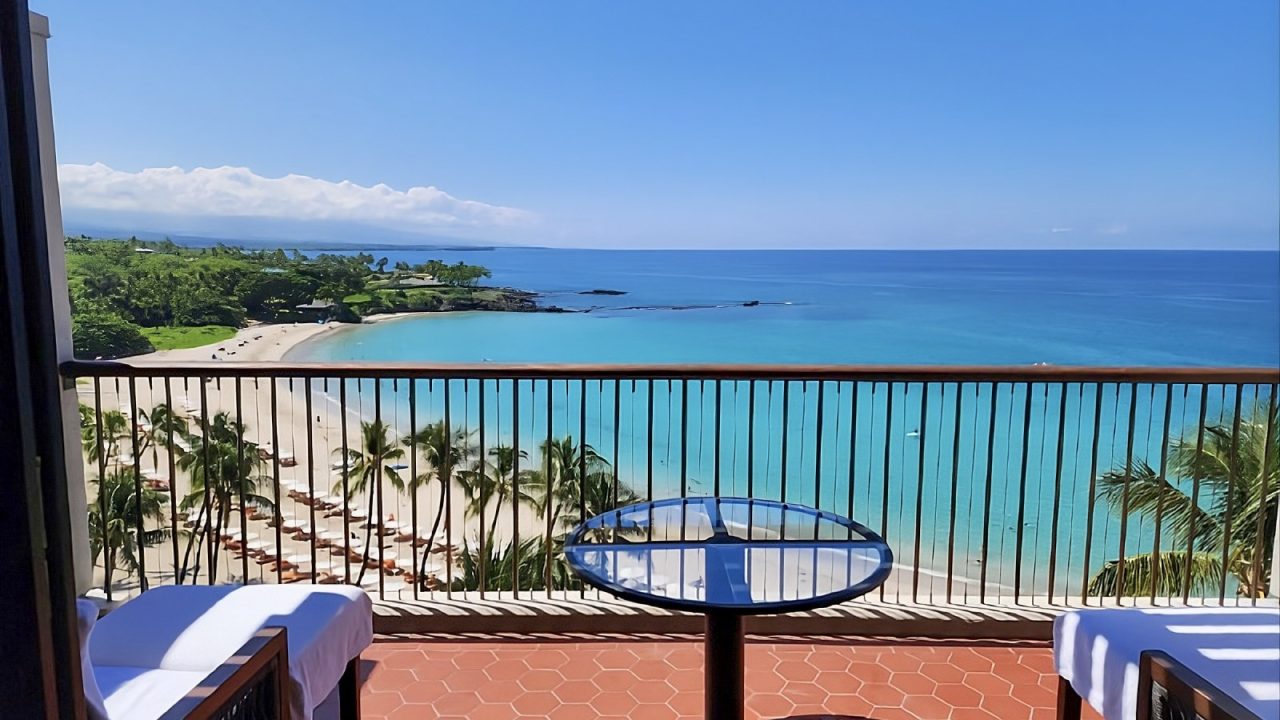
Lead Photo: © Beat of Hawaii at Mauna Kea Beach Resort on the Big Island.
How has your Hawaii vacation changed over the past few years? Are you staying fewer days, choosing different accommodations, or finding other ways to make the trip work?
By Rob and Jeff, Beat of Hawaii.
Some of the most meaningful parts of Hawaii are the ones visitors walk right past without knowing they are there. We’ve spent nearly 20 years finding them firsthand for BOH as full-time Hawaii residents reporting on travel, culture, and island life, and telling you what they mean for your trip. Join us →
Get Breaking Hawaii Travel News




We’ve been going to Maui annually for over 30 years, and the main thing that has changed is that I frequently re-check car rental costs to see if it’s getting cheaper! We’ve debated about renting a car for less days but then you can’t get to/from the airport without spending $$$. We’ve also more frequently stayed in Maui for our two full weeks, vs. one week in Maui and another elsewhere, mostly Kauai. But that’s mostly because of hassle, not economics. We’ve always limited dinners out to every other night at the most, and haven’t really changed that. And we don’t always do a whale watch sail (we only go to Maui when the whales are there!) but if we do, it’s the cheapest one. In many ways, part of the allure of Hawaii for us is doing all of the same things that we’ve always loved. Plus a new thing here and there!
As plane travel gets worse & worse, we stopped going to the mainland: lousy seating, tight connections, endless fees, and uncertainties every step make 5 days of vacay for 2+ days of transit and right back to work a losing tradeoff compared to years past.
Costs too: it’d be interesting to see costs measured not in dollars (adjusted or not) but in comparative wages: a quick lunch at a local carinderia-style resto or fast-food joint used to cost less than 15 minutes at minimum wage then. Nowadays ?
Excellent article BOH.
Our visits to Hawaii have changed over the years (decades) as we have grown older. We used to extend a week or two week visit to our Princeville timeshare with a couple of days on either end to stay on the South Shore or in the Lihue/Kapaa area. Now we usually only spend the overnight before the mainland departure in a hotel. That used to be a luxury stay, usually at the Grand Hyatt Kauai Resort, but now we sometimes stay at a more moderately priced hotel. Meals are cooked at the condo with only a few nights out for dinner. We try to use Happy Hour specials and avoid the more high priced tropical drinks, although you just can’t beat a wonderful top shelf Koloa Rum Mai Tai!
Aloha to all.
I am going to Kona next week. I have a timeshare in Oahu but decided to shake it up this year and see and do different things. When you have a timeshare you are kind of roped into going every year. But I love Hawaii and have been coming often for the past 50 years. Getting nervous about how expensive it is going to be. Going to cut out expensive restaurants and make more of my own drinks (or so I think.) I won’t even get started on the cost of airfare. 🐠🌴🧉
For the last several years we have visited both Maui and Hawaii and stayed a total of 3 weeks. This year we only visited Maui and stayed for 10 days. The condos that we love on Hawaii have an added beach club charge of $130 per day so we opted to skip the island all together because I only like to stay in that complex which has many choices, but still the same beach club charge. We do not plan to return for the next 2 years as we are making other plans not just for cost but with 20+ years of coming of every year we decided to make a change.
There is one solution for this problem that continue to worsen.
Give the vacation rental a chance.
Give people a choise
I used to try visiting Hawaii every other year, but that has slowed, starting with the Covid period. I now visit one island instead of two, and cruise one way since flying to/from the east cost is awful for all the reasons you mention. My visit/cruise this year will take me from Vancouver to Alaska to Hawaii over 16 days. When in Waikiki, I will stay for seven nights at the Hale Koa (Black Friday special seven nights for the price of six) with no outrageous taxes and reasonable parking fees. I won’t need a car for more than a couple of days since everything is walkable in Waikiki. The ABC store on Lewers is a great place to save on restaurant meals. This is not a fancy vacation by some standards, but it works well for me and is still affordable.
I was very fortunate to just spend three weeks in Kauai in Princeville. I never had an issue with traffic in any direction not even over to Poipu. I’m now in Maui for two weeks and it is packed! I don’t normally travel here in the summer months for this very reason. I’ve never seen so many people everywhere so what do we do? We manage our expectations. Allow more time to go to dinner. Allow more time to get to your favorite beach. Maybe that means getting up earlier to get a parking spot. I’m fortunate enough to have been here enough times to know the drill. Nothing will stop me from coming to the islands!
PS Fiji was an excellent alternative! The nicest people in the world will greet you in Fiji!!
That is good news to hear about Maui. We haven’t been since the fires and wasn’t sure we’d ever go back due to the sentiment from locals, but hearing this has me excited. Enjoy the rest of your vacation!
Although we visit family on Oahu, we usually go to the Big Island, because costs are slightly less there, and they join us from Oahu. We’ve also shortened our stays from 10 days to 7 or 8. We barbecue a lot because even though the groceries are far more expensive there than on the mainland, it’s cheaper than eating out. Prices rose significantly since the pandemic, and as far as I can see they’ve never gone back down. Since there are usually 7 of us total a shorter trip helps to reduce the costs. The biggest increases we’ve seen are in airline tickets. Since the merger between Hawaiian and Alaska the prices have seemed to do nothing but rise, and rise, and rise, soon to be unaffordable. It’s sad-we love Hawaii.
What is especially hard in all of the price inflation of hotel rooms, airfares, and car rentals is the effect on kanaka and kama’āina who have left Hawai’i ( Hawaiian diasphora) because of the general quest for a better life to include purchasing a home and sending their kids to college. Just this week when researching an emergency trip back home to Hawai’i to see a childhood friend fighting stage 4 cancer, I was amazed at the costs. Hawai’i is our homeland and yet the prices are tourist/ prices. We don’t quality for kama’āina rates as don’t have Hawai’i drivers license anymore. With no lead time to get a “deal” and summer being high-season, and so many of our family members still living at home in the house because of economy, there is no room to stay and most accomodations are full. I cannot afford to go. And it breaks my heart.
We are coming to Kauai in December for our 3rd straight Christmas/NY on the island. Ironically, our stay at 21 days will be 4 days longer than last year. We had thought last year would be the last, not because of the cost but because Kauai is getting so congested. As you have noted, trying to drive anywhere, across the south or up north, is long and tedious. We stay at a condo on Wailua Bay in Kapaa and just chill. I get up in the morning and drink coffee on the lanai and watch an endless string of red and white lights heading to Lihue. My traffic solution is to outlaw all oversized pickups not practically necessary.
It’s really simple….the cost of hotels & car rentals have Quadrupled since the global pandemic & rates have not come down & gone way-up!