Thirty hours disappeared from the average Hawaii vacation in a single year. That’s more than a full day, and enough time that it changes what fits comfortably into a trip before anyone even starts crossing a single thing off the itinerary.
That missing time doesn’t somehow come neatly off either end of the trip. It has to come from somewhere within it, whether that’s a second island, a full day somewhere you wanted to explore, or simply the breathing room to relax or change plans when Hawaii’s weather, surf, or traffic doesn’t cooperate.
The new State of Hawaii visitor data for July 2026 put a number on what’s happening: the average stay fell from 8.83 days to 7.59 days. That’s 29 hours and 46 minutes gone missing.
30 hours less can change what fits on a Hawaii vacation.
On Maui, the average stay dropped from 7.56 days to 6.41, a loss of 27.6 hours. Kauai lost 26.6 hours, falling from 7.33 to 6.22 days, while the Big Island lost 27.8 hours as stays declined from 7.40 to 6.24 days. Oahu was the outlier, losing a still-significant 14.6 hours as its average stay fell from 7.07 to 6.46 days.
The problem is that the boring parts of a trip to Hawaii don’t shrink with the vacation. You still burn vacation time getting on and off the plane on the way over, picking up the car, checking in, packing up, and doing it all again on the way home. Change islands, and you will lose a surprisingly big piece of a day before you’ve actually done anything at all.
We’ve looked before at what Hawaii visitors cut when a trip loses a day. The latest numbers make that choice harder because Maui, Kauai, and the Big Island have each now lost nearly that much time again compared with just last summer.
The big experiences aren’t necessarily gone.
Take Maui. A Road to Hana day can easily consume most of one of those missing 27.6 hours, yet someone who came to Maui specifically to drive the Road to Hana probably isn’t going to give that up easily. The more likely casualty may be the open day around it, when there was nowhere particular to be, and plans could have changed. It could also have been an easy day after two harrowing drives!
A very similar calculation appears on the Big Island. Hawaii Volcanoes National Park remains entirely possible from the Kona side, but dedicating a long day to it occupies far more of an average 6.24-day stay than before, when visitors had 7.40 days.
That becomes even more extreme when trying to take in two islands. We’ve previously found that island hopping makes far more sense when there’s enough time to absorb the transition, and a shorter Hawaii vacation makes that decision harder.
What disappeared first was flexibility.
We were reminded of that ourselves during our recent Maui travels when weather forced us to change plans repeatedly. We canceled, rearranged the trip, and ultimately salvaged most of what we’d intended to do. As we wrote in our firsthand account of changing a Hawaii trip around bad weather, conditions here don’t always cooperate with the itinerary.
That’s where losing 30 hours can become particularly noticeable here in Hawaii. Surf comes up, rain settles over one or more parts of the island, traffic eats an unexpected hour or more, or everyone is simply tired after long travel days. With another day available, plans can move around. Without it, something may simply need to be gone.
And sometimes what disappears was never on the itinerary at all. It’s another afternoon at the beach, returning somewhere you didn’t expect to like as much as you did, or deciding that one day’s plans aren’t worth doing the way you’d originally thought.
Visitors are spending the same money in fewer days.
There’s another part of the July numbers that catches everyone’s attention. Average daily spending jumped 17.1%, from about $253 to $296 per person, while the average vacation became 14.1% shorter. So spending per visitor across the entire trip barely changed. In other words, visitors aren’t spending 17% more on the entire Hawaii vacation. They’re concentrating nearly the same trip spending into considerably fewer days.
That helps explain why Hawaii can simultaneously have more arrivals, higher daily spending and substantially shorter vacations. The state counted more people coming in July, but each was here for considerably less time.
The missing time adds up quickly.
The statewide average daily census fell by over 13% from about 249k visitors last July to 216k this July. So Hawaii had nearly 33,000 fewer visitors present on an average day even though more people arrived during the month.
For many visitors, though, the more impactful number may still be the 30 hours missing. That’s enough time to make a second island harder, turn another ambitious island day into a choice, or remove the cushion that lets plans have reasonable flexibility.
If your Hawaii vacation lost 30 hours, what did you protect, and what did you give up? We’re especially curious whether visitors cut a major activity or island, or keep those plans and sacrifice the spontaneous time instead.
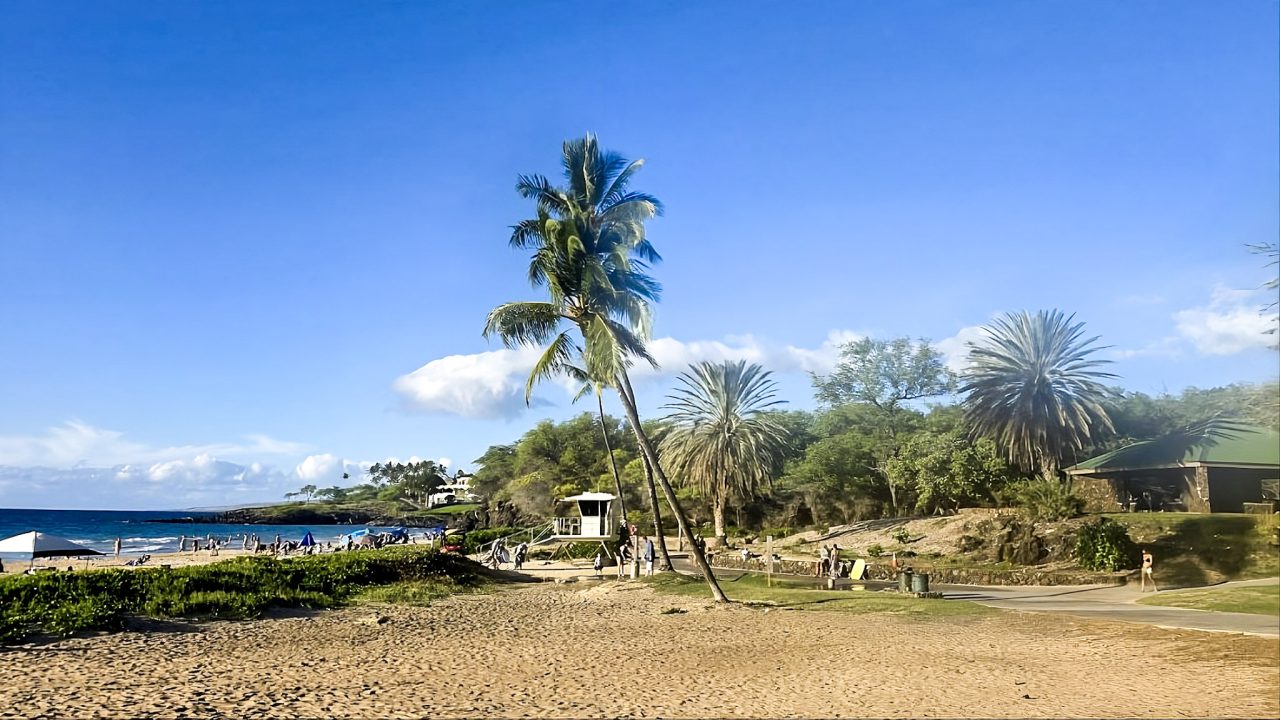
Lead Photo: © Beat of Hawaii at Hapuna Beach on Big Island.
By Rob and Jeff, Beat of Hawaii.
Some of the most meaningful parts of Hawaii are the ones visitors walk right past without knowing they are there. We’ve spent nearly 20 years finding them firsthand for BOH as full-time Hawaii residents reporting on travel, culture, and island life, and telling you what they mean for your trip. Join us →
Get Breaking Hawaii Travel News