
Hawaii Tourism Authority (HTA) is rolling out something weird and new, designed around the kind of trip many older mainland visitors have been wishing for years. One that is easier to plan, easier to navigate, and more attuned to how Hawaii vacations actually work now.
At first glance, it sounds like Hawaii is finally recognizing one of its most important visitor groups. Then comes the part that changes how this feels: this program was not built for most of the older people reading this.
For many longtime travelers, especially older repeat visitors, that stings a bit. They have been one of the foundations of Hawaii tourism for decades, returning year after year, often across generations, and long among the state’s most consistent and highest-value travelers.
The new campaign around older travelers sounds good at first.
HTA has pulled together a coordinated effort that goes far beyond a typical marketing campaign. This is not a few ads or a softer push to attract older travelers, but a structured program involving 58 partners, including airlines, travel agencies, hotels, and local attractions, all aligned around this one goal.
The idea is to remove friction at every stage of the trip. That starts before departure, where uncertainty can stop older travelers from booking at all. The program addresses concerns about mobility, navigation, planning trips that feel manageable rather than overwhelming, and more. Once on the ground, the experience is meant to feel connected, with tours, transportation, and accommodations working together instead of leaving visitors to figure it all out for themselves.
It feels detailed in a way that most Hawaii travel planning is not. A dedicated website, coordinated itineraries, and a clear recognition that older travelers are not all the same but share common concerns that can be anticipated and solved in advance. In some ways, this feels like the kind of thoughtful build that visitors to Hawaii have not seen in a long time. And just perhaps it will become a blueprint for that very thing.
The weird reveal and the marketing gap.
This entire effort is aimed at one market, and it is not U.S. visitors, and at least for now, it is not something mainland travelers can access. This version is focused exclusively on Japanese visitors aged 65 and older.
That is where the scale gap starts to feel strange. Japan sent 732K visitors to Hawaii in 2025, a number closely watched as the state tries to rebuild that long-valued segment. The U.S. mainland sent close to 10 times that, the largest and most loyal source Hawaii has. A base that loyal, skews older by definition, with a heavy share of the same senior travelers this new program is built around. Yet none of them get anything close to this level of coordinated support.
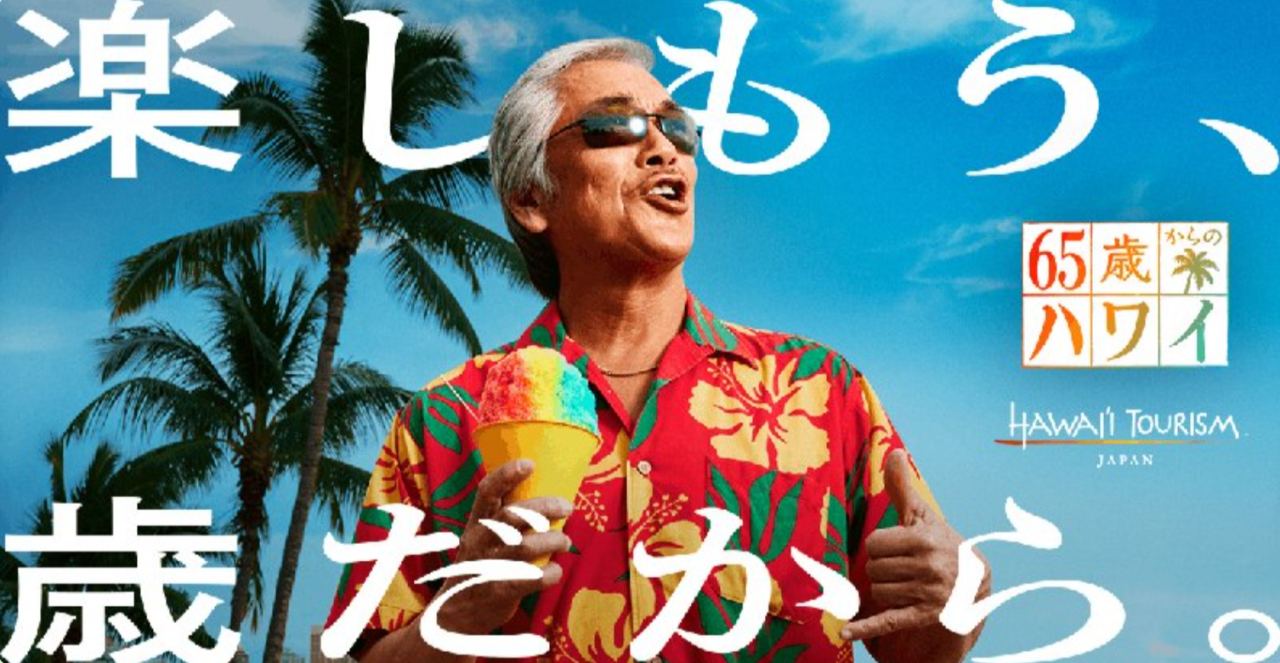
The program includes major airline participation, including Hawaiian Airlines, along with travel agencies known for packaging and delivering these experiences well. For those travelers, the trip is being designed before they even think about booking. For everyone else, the process remains largely unchanged.
It’s also worth noting that this is not a pilot or niche test but a full, coordinated effort to reshape how this group of visitors experiences Hawaii, existing alongside a much larger and arguably far more important group, U.S. seniors, navigating the same trip on their own.
What U.S. seniors actually face.
For mainland travelers, especially older ones, the trip to Hawaii has not gotten any easier; if anything, it has become more complicated over time, especially since Covid.
Planning means juggling flights, accommodations, rental cars, and an ever-growing number of reservations that often require precise and advanced timing and quick decisions. Accessibility, too, varies widely depending on where you go, and reliable information can be harder to compile into a plan than it should be. Transportation on the islands remains fragmented outside of Waikiki, and getting from one place to another takes more effort than many expect.
There are also the realities of family travel. Many older visitors are part of multi-generational trips, balancing their needs with those of children and grandchildren. The Japanese version of trips already includes a three-generation package built around grandparents traveling with adult kids and grandkids. There is nothing like that for U.S. visitors.
The concerns that the Japan program is built around are certainly not unique to those visitors. They are the same questions that U.S. travelers must ask before every trip to Hawaii. How hard will this be to plan? How easy will it be to get around? Will this feel relaxing or stressful once we get to the islands?
Right now, those questions still need to be answered individually, not through any system designed to help make the experience smoother.
Why this should exist for mainland visitors, too.
What Hawaii has built here is not the problem. In many ways, it is exactly what should have been and still needs to be done. The issue is who it is for, and who it leaves out: mainland visitors, the largest and most important group coming to Hawaii.
Mainland senior travelers have long been one of Hawaii’s most loyal visitor groups. They return again and again, and they are the ones most likely to keep coming and bringing family, even as prices rise and logistics get more complicated.
There is no clear reason this new model could not be expanded. The partnerships already exist, the framework is here, and the need is so obvious. What is missing is the good thinking to apply that same level of thoughtfulness to the visitors who already make up by far the largest share of Hawaii travel.
The Japan program shows that Hawaii actually has a plan for designing a better trip when it wants to, and that the state understands the concerns of important older travelers and can build vacations around them in meaningful ways.
So the question becomes simple. If Hawaii can make travel easier, clearer, and more welcoming for one group of seniors, why not for the ones who have been coming here and keeping Hawaii’s travel economy alive all along?
Lead Photo Credit: © Beat of Hawaii.
Get Breaking Hawaii Travel News





HTA doesn’t understand math or the economy. Japan is hurting. We’re flying to Japan – cheaply, they’re not flying here.
Go ask Vegas how all the nickel and diming is working out and trying to target a certain group to carry them. It’s not working – actually, it’s failing miserably.
First independent company that goes back to loyalty, value and reasonable wins my business over and over.
Arrogant and greedy? Kick rocks.
I am not Japanese but I am a senior (73) who comes to Hawaii often, about twice a year for the past 15 years. My favorite hotel and room type is a modest suite at Halekulani. Two things about that you may find interesting and I’m not sure what it means: 1. The room rate hasn’t changed for the past two years and in fact went down $100 on my upcoming fall trip. 2. The strict payment requirements have been greatly relaxed. Reserving a suite used to require one night’s non-refundable payment 30 days before arrival, then full non-refundable pre-payment 7 days before arrival. When I made my fall reservation recently they told me that has changed. Now there is a one night non-refunable payment 7 days before arrival, and the rest can be paid upon checkout. Much more customer friendly. It makes me wonder if their bookings have been struggling a bit.
Instead of grabbing the golden egg try to grab the nest egg while you still can. Is it segmented or targeted marketing? How many of these activities have facilities that meet mobility issues that this segmented class requires?
Book em Danno just might have become a new meaning.
The real reason is a no brainer—money. Japanese tourists are big spenders and generally travel in groups. And I’m betting that any or all the agencies/companies listed in HTA’s guide have paid for that privilege. This service isn’t being launched out of the goodness of anybody’s heart-it’s targeted at the demographic with the highest likelihood of financial return.
Interesting! At first I felt a bit offended – I am one of the repeat visitors now in that older age group, who has seen to it that all my kids and grandkids have visited Hawaii too, more than once. I feel a bit under appreciated! On the other hand, I don’t really need hand-holding since I’ve been traveling to Hawaii annually for at least 25 years. And I’m not traveling to a foreign country, as are Japanese folks. I can understand Hawaii wanting to help make it easier for Japanese tourists to visit. But I imagine there are also many American seniors who have never been to Hawaii and would appreciate this same kind of support. Hopefully as one commenter said, after this program is rolled out and bugs removed, Hawaii will roll it out for Americans.
Gone are the good old days when travelers could pop in to their local travel agent and have them do all the planning for them. One stop shopping with the airfare, the rental car or transfer and the accommodation all packaged for them.
And then came the “ do it yourself” era. As a travel agency owner for 41 years and now a vacation rental owner, I am appalled at the Bed tax amount that is collected by the government to fund HTA. I don’t see them doing anything to help the industry as a whole. Almost 19% on accommodation, and ridiculous parking fees at state parks that are only charged for visitor should be a clue why the overall market is shrinking.
Is it just me… or does it sound like maybe travel agents had an actual purpose in vacation planning?
Sayonara…we have been going to Hawaii since 1971, the last time in November 2023, which may be the last time. This article may have done it for me. We love and respect Hawaii deeply, the people, cultures, art , music and beauty…but I am so saddened by what changes caused by greed, misunderstanding, poor decisions and bad policy have done to the overall Hawaii experience since covid. Demanding tourists, friction between locals and tourists, political discord, promises not fulfilled, questionable fees, etc. Good change is welcome and necessary, and this program sounds like a great idea. But I agree with the fine writers of this blog, who have been so gracious, professional and helpful: What about us?
I agree the program should be for all seniors.
Also, on shorter trails there should be an alternative to steps. Recently I was unable to see Akaka falls on the big island, because of the steps. There are national parks that have trails for disabled people, along side of the steps, to access view points.
Doesn’t surprise me at all.
Aloha, after reading this piece it reaffirms a consistent theme about how the HTA is focusing on which tourist/income groups generate the most tourist revenues for the state with the least amount of tourists. Meanwhile, they’re ignoring the elephant in the room, the loyal, repeat, 65 and over (w/kids and grandkids) visitors from the mainland which have provided a continuous flow of revenue since before Hawaii became a U.S. State. At the same time, Japan and the Japanese also have deep cultural and historical ties to Hawaii and have significantly contributed to building the state’s modern economy in a myriad of ways (Kona Coffee, chocolates, real estate and agriculture). Perhaps, the HTA is using this particular group as a test market to eventually expand it to mainland 65 and over tourists? Stay tuned…
Clearly, mainland travelers’ loyalty is being taken for granted, why else would they prioritize a completely different segment. It’s because “somebody” has come up with the idea that that segment matters more than any other.
Everything is so expensive that most people, like me, will no longer visit.
The death spiral will continue…
Perhaps it’s due to the fact that long timers and US travelers are more independent and feel comfortable travelling to our favorite place, Hawaii. I certainly don’t want or need hand holding, but would appreciate it if I go to a different country
By the way, I’m here in Kauai now – the Aloha spirit is alive and well for our multi generational family!
As a “Kupuna” myself, a 50+year Hospitality professional (1969-1983 in Waikiki hotels, and sincein NorCal hotels), and now a travel advisor specializing in Hawaii culturally sensitive and multi-generational travel, I agree 100% that this should be available to any and all Seniors! I am one of those Seniors that return annually!
I’ve been returning to maui for years. I definitely have noticed the “aloha” spirit is gone. …and that’s a fact. Tourism has become a bad word with the locals.
I regret having to agree with you. Much of the animosity has been fostered by so-called native Hawaiians who blame tourists for all of Hawaii’s ills. They fail to see that tourism is an integral part of our economy.
As a lifelong resident, my experience with tourists has been mostly positive. I have seen the decline of the sugar and pineapple industries with many displaced workers employed in the visitor industry. So yes, we need people like you to continue to visit.
We just got back from Kona and the locals couldn’t have been nicer. I think that a lot of mainlanders need an attitude adjustment. A case in point was on our trip to Akaka Falls where a sign said absolutely no drones allowed. Sure enough a tourist was flying a drone through the valley. That’s just one example.
Aloha, I sense your frustration about the loss of aloha spirit in recent times but I think this partially due to political manipulation on the one hand, and on other hand, some valid and legitimate reasons voiced by the local population. With all due respect, the local and state representatives need to be held accountable about how the enormous revenue streams generated by tourism, billionaire real estate investments, and resorts, are invested to benefit the native and local residents. There is plenty of money to go around and when it benefits everyone in Hawaii (and not only the corporations the politicians, and non-residents) then the Aloha Spirit will gradually return!