
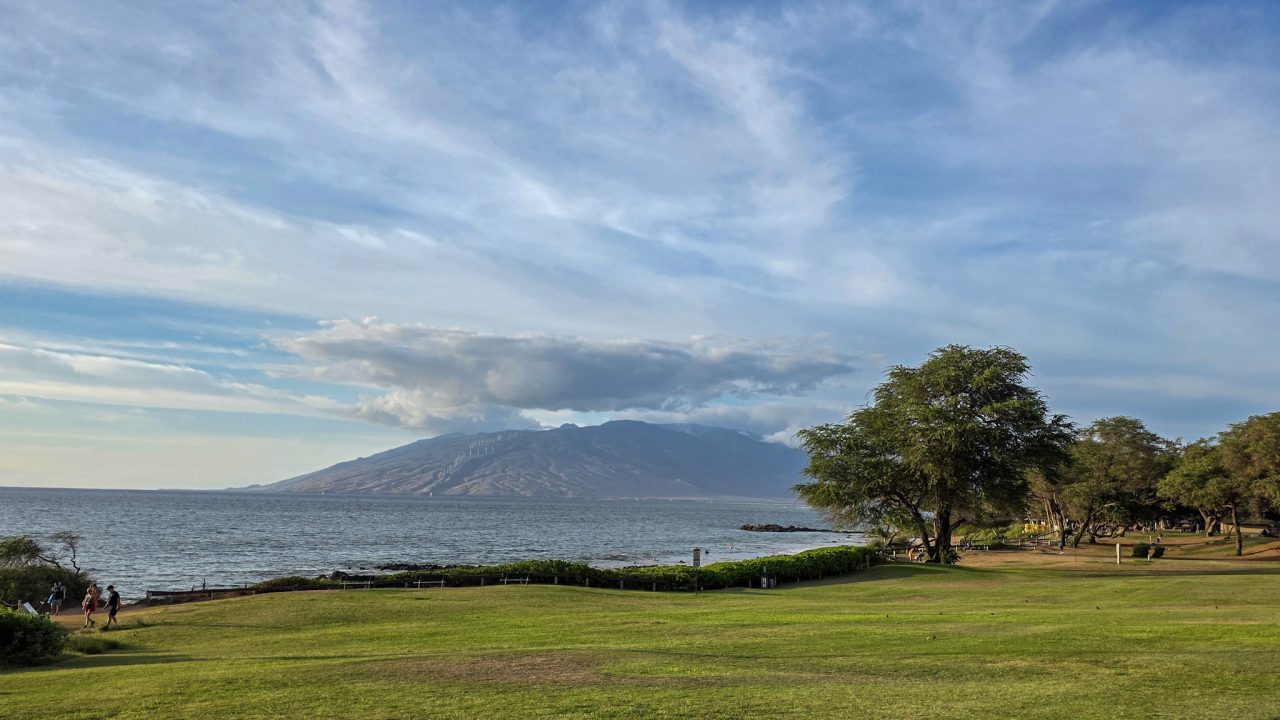
Anyone heading to Kamaole Beach after July 15 will find parking works differently than it did just a few weeks ago. While Maui County has been talking about its new Park Maui system for months, this is when it becomes a reality for visitors arriving at some of South Maui’s most popular beaches.
If you’ve been following our earlier announcements, there’s also one important change. The initial rollout is smaller than originally planned, meaning not every Kamaole Beach Park is included just yet. That distinction could also surprise visitors who thought the new system would cover all three beach parks from day one, as was originally intended.
Which parking lots are changing?
Beginning Wednesday, July 15, the new Park Maui system officially takes effect at the paved parking lots serving Kamaole Beach Parks I and III in Kihei. Those are now the only Kamaole lots included in the initial launch.
Kamaole Beach Park II is not yet part of the program because road repairs following the March storms are still underway. The dirt parking lot across from Kamaole Beach Park I, next to the ABC Store, is also excluded until nearby sinkhole repairs are completed. Depending on exactly where you park, you may encounter completely different rules even though you’re visiting the same stretch of beach.
What visitors will actually see.
Park Maui uses license plate recognition instead of paper tickets, so drivers enter their license plate through the Park Maui app or at an on-site pay station. The parking area is identified as Zone 797, and Maui County says parking ambassadors will be available during the rollout to answer questions and help visitors use the new system.
Visitors pay $10 for daily parking. There is no shorter or less expensive entry. Weekly passes cost $50 and monthly passes cost $150, but those longer-term passes are available only through the Park Maui app rather than at the pay stations. Hawaii residents continue to park for free by verifying their eligibility with the barcode on the back of their Hawaii driver’s license, using either the app or a pay station.
The one rule that may catch visitors by surprise.
The new system will affect travelers who like to arrive at the beach early. On weekends and Maui County holidays, the paved parking lots at Kamaole Beach Parks I and III are reserved exclusively for Hawaii residents until 10 a.m.
That restriction applies only on weekends and county holidays. On weekdays, there’s no time limit, so visitors simply pay the fee and park. After 10 a.m. on those restricted days, the lots return to normal public access under the Park Maui system.
Why current information matters.
Earlier information that included all three Kamaole Beach Parks is no longer accurate. The system that actually begins July 15 still only covers the paved lots at Kamaole I and III. There isn’t an announced date for all of the parking to come under the new rules.
We’ve followed Park Maui since it was first announced, and the plan has shifted several times. Keep checking current details rather than older announcements.
Beach parking is becoming another part of Maui trip planning.
Paying $10 is the relatively easy part. The real shift is that visitors now need to know which beach they’re visiting, which lot they’re using, which agency manages it, and which payment system they will use before they arrive.
The differences are already visible elsewhere on Maui. State-run Makena State Park, including Big Beach, charges nonresidents $5 per person plus $10 per vehicle under a separate state system rather than the one from county-run Park Maui. A day that includes both areas can cost more than $20 in parking plus admission before you reach any sand.
A day at Kamaole Beach hasn’t gotten harder. But the era of pulling into any beach lot without a second thought is fading. As more beaches adopt different fees, access rules, and payment systems, checking the parking details is becoming another small but necessary part of planning a Maui beach day.
Have changing parking rules affected where you choose to spend your beach day in Hawaii, or have you simply adapted?
Lead Photo Credit: © Beat of Hawaii at Kamaole Beach III, Maui.
By Rob and Jeff, Beat of Hawaii.
Some of the most meaningful parts of Hawaii are the ones visitors walk right past without knowing they are there. We’ve spent nearly 20 years finding them firsthand for BOH as full-time Hawaii residents reporting on travel, culture, and island life, and telling you what they mean for your trip. Join us →
Get Breaking Hawaii Travel News



Looking online, parking at Charley Young Beach lot is still free?
Money, money, money. That’s all this is about. More money fleeced from visitors and residents for the government of Hawaii to pay out to the elite who finance their offices. Good luck. Bonaire is a great location. And Tahiti is looking more reasonable if you account for the nickel and dining garage Hawaii is charging. Love the islands. Almost bought a home there for a respite from our San Diego home. Glad I didn’t. Beware, property taxes are a target for increases. Here’s to hoping somebody figures out that giving different breaks to different people based on residency is actually a violation of the 14th amendment to the constitution.
How incredibly confusing. If you need to pay for parking, simplify, simplify. You can never please everybody at the same time.
Thank you for trying to stay on top of the parking situation.
When we are on Maui we always catch a Hawaiian Slack Key Guitar show or two in Napiili. This April we parked in the lot (street parking was all taken) next to the resort in the paid parking lot. This cost $33 for 2 hours. This certainly was a shock and somewhat dimmed my enjoyment of the show, and of course we did not get tickets for another show the following week.
Altho we love Maui, and been coming every year or two, depending on finances, for over 20 years, this is another thing to think about when we decide where/plan future vacations.
Note that the blue Park Maui kiosks are installed on the street flanking Kamaole II but are just not activated until the road repairs from the sinkhole are completed. And that at Kam II the parking is on the street, not in a lot.
It has always been difficult to park for Kam II because there is only street parking, no lot and maybe only 14-15 spaces in all.
And my sense is that the vast majority of beachgoers for Kam II come from the three condos across the road anyway, and they don’t need street parking.