

On a flight from Chicago to Los Angeles, on our way home to Hawaii, we overheard three strangers seated in front of us talking about future trips. It was a casual yet unforgettable conversation until someone mentioned Hawaii. Another one shut it down immediately. “F them,” he said. “They don’t want us there anymore.” We were surprised to witness these feelings first hand.
Nobody was talking about rules or restrictions. Nobody mentioned the price, hotel costs, or a bad trip. Hawaii was treated as off the table for an entirely different reason. Not because they could not go, but because they felt they were not supposed to go.
It did not turn into a debate. Hawaii was not seriously compared with anything else, even as we heard French Polynesia and the Caribbean discussed. It was crossed off by all three, on instinct, as the decision had already been made somewhere else, long before that casual conversation ever happened.
This is not about price anymore.
It is also not another story about airfare spikes, resort fees, or whether Hawaii costs more than it used to. Those debates are familiar and constant. This is about something different. A decision that happens before research starts, before price comparison, before curiosity even kicks in.
In the past, travelers complained about cost but still shopped the destination. They looked for deals, shifted dates, downgraded hotels, or talked themselves into it anyway. That step is disappearing. More people are skipping straight to no.
We see this in reader comments. Instead of explaining why Hawaii was too expensive, people say they never checked. The tone is not angry. It is resigned. Hawaii is not being rejected after comparison. It is being dismissed before comparison.
How Hawaii taught travelers to assume no.
For years, Hawaii has sent increasingly complicated signals about tourism. Residents were noticeably frustrated. Infrastructure was badly strained. Overcrowding was real. Conversations about visitor caps or access limits, parking enforcement, new fees, and managing numbers became hard to avoid.
None of those issues was imagined. But messaging added up. Individual stories somehow blur into a single takeaway, and for a growing number of travelers, that takeaway is simple: Hawaii does not really want you here.
The response has not been outrage or boycotts. It has been different than that. Hawaii just stops making the final cut.
Stories about overcrowding, visitor conflict, enforcement, access disputes, and rising fees tend to reinforce one another. Even when each story is accurate, the cumulative effect reshapes perception. Travelers who have never had a bad experience in Hawaii begin to assume somehow they will.
Many of the state’s and counties’ messages were meant to encourage better behavior or make tourism more sustainable. And individually, those goals make sense. Taken together, they resulted in a different lesson, perhaps intended, perhaps not. That message was not “come, and be thoughtful.” It became “maybe just don’t come.”
That is the part Hawaii still seems slow to grasp. A lot of travelers are no longer making a case against Hawaii vacations. They are skipping the process entirely. They are not sitting down and comparing Maui with Tahiti, Kauai with the Cook Islands, or Oahu with Mexico. They are writing Hawaii off before any of that ever starts.
Once that happens, the usual fixes have little impact. It is not enough to simply tweak value, create an airfare or hotel sale, or promise a better experience. Those things only work when someone is still open to being sold.
Why Hawaii marketing is missing the real objection.
Hawaii’s tourism messaging has struggled to adjust to this shift. The marketing still leans on beauty, hotels, upgrades, and experiences. The product is still strong. The scenery is still spectacular. None of that is the problem.
At the same time, none of that addresses what is actually forming in some people’s minds. You cannot sell a resort credit or an upgrade to someone who has already adopted the belief that they are not wanted.
Competitor destinations are benefiting without trying to. The Cook Islands, Tahiti, and parts of Europe feel easier by comparison. That has been told in hundreds, if not thousands, of our comments. The tone is different. The friction feels less. Travelers who feel pushed away from Hawaii are finding places that feel more relaxed, even when overall prices are similar.
This shift is most visible among first-time and middle-class travelers. These are not repeat visitors who already get how Hawaii works. These are people deciding where to go next, influenced by headlines and even more so by social media. When they hear about fees, restrictions, and tension, they do not perceive nuance. They see a warning sign and keep scrolling past Hawaii.
That is a real problem because those travelers used to be a big part of Hawaii’s future pipeline. They were the people who tried Hawaii once, came back years later, and sometimes even turned into repeat visitors for life. That was actually the most common visitor at one point. The frequent one. So when they opt out before the first trip, Hawaii does not just lose one booking. It loses the chance to build a lifelong relationship at all.
It also changes the kind of slowdown Hawaii gets. If the people leaving first were only bargain hunters or one-time low spend visitors, that would be one thing. But that is not how this appears. The people who are peeling away are often the ones who can afford it and are otherwise open, flexible, and still deciding. And they are too easy to lose.
Hawaii got fewer visitors, just not the ones it expected.
For years, officials and residents talked about reducing volume and attracting the “right” kind of traveler. What is happening now looks like fewer visitors, but not in the way anyone had planned. The people opting out first are not the wealthy or the deeply committed. They are the curious, the undecided, and the flexible.
Hawaii cannot market itself back into someone’s vacation consideration once they believe the destination itself has closed them out.
That comment on the plane was not angry or dramatic. It was casual and final, the way people talk about places they believe no longer apply to them. Hawaii was not debated. It was entirely dismissed.
That is the bigger issue here. Not that travelers ran the numbers and decided Hawaii just costs too much now. Not that they researched everything and picked somewhere else better. A growing number are ruling the islands out before any of that. Hawaii is losing people before the shopping phase even begins.
That is actually a much harder problem than high prices. High prices can sometimes be explained, justified, or worked through. This, however, is different. This is a perception problem that has settled in early enough to stop the whole decision-making process.
And once people start talking that way to each other, it can spread fast. Not through anything official or even major headlines, but through ordinary conversation and social media. A friend says Hawaii does not want visitors. Someone else hears it, half believes it, and repeats it later. After a while, that coconut wireless becomes its own reality, whether it is fair or not.
That is where Hawaii now seems to be getting hit. Not by any single message, policy, or bad story, but by years of accumulation. After enough friction, enough conflict, enough public resentment, enough odd messaging, and enough talk of cost that some travelers have boiled it all down to just one conclusion: don’t bother with Hawaii.
That should worry anyone who depends on Hawaii travel, because a destination does not stay top of mind automatically. Not even one as iconic as Hawaii. It stays there because people keep re-imagining themselves here. Once they stop doing that, once Hawaii becomes the place they assume is too expensive, tense, restrictive, or unwelcoming to even check, the damage is already well underway.
Hawaii may be getting fewer visitors, but not just because travelers ran the numbers. Have you heard people talk about Hawaii this way? Please share your comments.
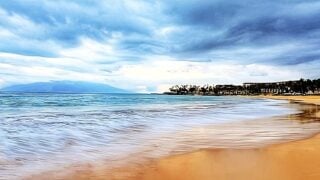
Lead Photo Credit: © Beat of Hawaii at Waikiki.
Get Breaking Hawaii Travel News



We have been to Kauai and Maui several times over the past few years. The “feeling” we get from the two islands is not similar. Maui used to be our favorite, but now it is Kauai. Kauai still feels welcoming. Laid back. There is still aloha.
We do not feel that anymore on Maui. The fires changed everything. We have, point blank, been told by locals that we “haoles” ars no longer wanted. The aloha seems to be disappearing rapidly. Store clerks, servers, tour guides, etc no longer carry smiles and friendly chit chat. The friendliness, when present, feels forced.
The main, most obvious signs that visitors are not wanted are the fees. $17 to park for 10 minutes to see a blow hole. Ridiculous parking fees for a quick photo of a waterfall. And there is talk of more fees coming. Nothing screams “not wanted” like those fees.
Hawaii built its tourism industry on Aloha. It has lost its aloha. Tourism will undoubtedly be lost as well.
Sounds exactly what the people of Hawaii want. If you don’t feel welcomed, included or safe, it’s not worth the time. Now that I can afford luxurious travel, I have lost all interest in Hawaii. It’s sad, and perhaps time to give Hawaii back, and lose It’s statehood.
Hawaii has changed over the years. I remember my first impression in 1982. It was affordable, not overcrowded and Clean! It was balanced. I loved it so much I moved here.
I loved the culture and respected the people and felt welcomed .I am an artist ,the beauty and friendships a source of joy, we still gather today. I worked in the downtown area and it was vibrant, a wonderful place to live , fall in love, marry a fourth generation local guy and raise a child here. I realize how lucky I was to come to Hawaii at this time.
Today, I understand how people feel about living here. For all the talk about the unique culture and beauty that is here ,the question to ask is, how has it profited from this increase in tourism?
Where and how has the quality of life improved for the people who live here and were welcoming? Start with the absurd cost of living.
The powers that be do not take care of issues that contribute to sustainable care and corruption is rife. Start there.
Live in a retirement community and we travel extensively. Have a travel club mtg and website to share tips and trip ideas.
Recently had travel agent attend meeting re booking upcoming trips.
Hawaii was taken off the agenda early in the meeting. Hawaiian attitude—ie they don’t want us was the issue.
FYI—-235 in our travel club.
Very well written and very true. I am one of those traveler’s you mentioned.
LA to any island…almost every year since 1971. Now it is not even considered when planning a vacation.
During Covid and shortly thereafter I heard from locals that they liked their beaches to themselves. Many were content not working. Living in SoCal we have visitors from all over the world but don’t tell them they are not welcome. I have had a timeshare in Oahu for years so always visit and plan extra trips. I love Hawaii. I try to look behind the attitude and just enjoy paradise. What is insane now is the price of flights. That alone will keep people away.
You’ve hit the nail on the head. I’ve said before the Maui fire brought a years long brewing issue to the surface for all to see. Then it spread like a virus to all the islands.
I feel Lahaina strong had a lot to do with spreading that exemplified by using tourists donated fire funds to travel to Oahu and petition the government to advance their agenda.
Of course that occurred after they sat on kaanapalli beach hassling tourists to sign their petition to do away with short term rentals.
Part of what I look at is who the residents choose to represent and lead them. Hawaii strikes out on all counts.
Mazie Hirono – demonstrably an idiot.
Josh Green – his only goal appears to be to figure out how to extract as much money from whoever comes near him.
The entire Maui government – when you are competing with California for “least competent and caring government” you aren’t doing anything right.
And they seem pretty sold out to the resorts. I’ll believe the government might actually care about the visitors when they mandate the up-front disclosure of of all taxes and fees and ban mandatory additional resort fees that are not just included in the base rate.
We’ve been going to Kauai once or twice a year for 30 years and I heartily disagree with the comments. We still have found the residents pleasant and welcoming. Last year, a server in a restaurant remembered us from the previous year. We attended a small church and received an invitation to tea and cookies at a member’s home. I could write more of the same. We stay at a timeshare and the workers are friendly and helpful. We have earned to live witth the restrictions, they have improved the visit.
Are these other visitors “entitled” ?
We will keep coming, no complaints.
“Aloha Spirit” has been discovered by the masses to be a worn out marketing ploy. I’ll always remember that no matter how respectful I was those ten years I lived in Hawaii and all those years I returned once or twice a year, being dismissed as an “F-ing Haole” – an outsider in a fancy 3rd world place. After the Lahaina fire, we stopped coming.
Totally agree with this. If the Hawaii government and tourism boards weren’t so incompetent they would make a plan and stick to it, stop making scapegoats for the actual problems, acknowledge they have no economy without tourism, and learn how to treat tourists. They could take lessons from New Zealand where tours are beautifully run and locals are friendly.
Your example is only one group of people, but I would be very curious to know if they are people who stay in hotels or vacation rentals. Because I think the hostility toward vacation rentals is causing the most damage. Most non-couple travelers are just not interested in large commercial hotels. But when they are afraid their house/condo rental is going to become illegal they’re just going to go elsewhere.
In the very short term, the situation in Mexico may benefit Hawaii tourism a bit, as people – especially on the West Coast – shift their trips away from Cabo and Puerto Vallarta. In the medium and long term, maybe a drop in visitor numbers will mitigate the problems (overcrowding, exorbitant prices) that are keeping visitors away. Then travel writers and influencers will ‘discover’ Hawaii all over again, and the pendulum will start to swing back.
I am starting to see Hawaii tourism ads here in California, which I don’t recall ever seeing before.
This is not necessarily a bad thing. For every traveler that opts out, there are still 3 more willing to take their place. That’s the problem with overtourism. There are simply too many people coming and loving a destination to death.
Hawaii Tourism can’t be an ever-expanding enterprise. There are finite limits, and we reached them a decade ago.
Equilibrium will eventually be reached.
Baja peninsula provides:
3 hr flight time from West Coast, great Dorado fishing on Sea of Cortez, fantastic beach side Resorts, wonderful food & tequila offerings, scenic welcoming towns & residents, a favorable dollar to peso exchange rate to name a few of my replacement to the Islands.
I experienced this firsthand recently, although in my case, the young lady I was speaking with had zero animosity. We were talking vacation destinations and of course I suggested Hawaii as I always do and she just flatly responded, “Hawaii doesn’t want visitors”, and continued the conversation matter of factly.
Of course I interjected but the revelation was stark; people who’ve never been there think Hawaii doesn’t want visitors. You can’t make that up nor can you take it back.
Aloha guys – Great article.
There are a couple of other factors that I believe are in play here. Hawaii keeps finding new ways to increase taxes and fees on the traveler which is feeling like death by a thousand cuts. Last visit, taxes and fees made up more than 50% of my car rental fee as an example. resort fees, landing fees. Here a fee, there a fee, everywhere fees.
We’re also making it harder to be spontaneous with the requirement of reservations (along with parking fees) for many spots. I don’t want to have to Disney-level planning to visit Hawaii, and its getting worse.
In summary, prospective tourists have concluded that the Spirit of Aloha is dead, the Red Carpet rolled up and put away. Same conclusion I’ve reached after watching Hawaii government foolishness over the last few years, as reported in this worthy publication. Too Bad, So Sad. By the time the people of Hawaii learn that their leftist government has sold them out and decimated the economy in the process, I’ll be too old to make the (horrific) trip from the East Coast.
Travelers have an undefeatable weapon: apathy. A complete turning away from the people who screamed “visit, spend, leave” at tourists.
You nailed it! Hawaii was always our top destination having made annual trips for over thirty years. Reputations are earned and often deserved but very difficult to change. Perception is reality.
IMO pretty blunt statement. Nothing in Hawaii is convenient and way overpriced. Bad news travels fast and this was probably not the first time that individual ever made that comment. Sounds like Hawaii is getting a reputation and it isn’t a good one.
Hawaii tourism can be compared to running a successful football team, its success depends highly on “drafting good players.” Hawaii no longer has the ability to attract those “new players” that turn into “dependable veterans.” Having been to Hawaii 25 times, we know how to handle “the new Hawaii” but potential first timers are turned off from the get go. Sadly, Hawaii will not get it and the longer term prospects are dimming.
I’d say I am in the demographic of writing it off without debate.
I was stationed at Wheeler AAF 1998-2001, and I loved my time there. I got married on Oahu. We honeymooned on Kauai and the Big Island. We returned in 2008 and 2011 to visit with our growing family.
Honestly, the ballooning costs and the crowding is a big part of it, but that over-arcing sense of not being wanted there is palpable.
There are other options that are more reasonably-priced.
It’s a shame, I’d love to go back and visit again.