

United Airlines is making bold moves in at least one mainland-to-Hawaii market, significantly increasing capacity and deploying more widebody aircraft. But this expansion may not just be about meeting demand—it may be a calculated strategy to dominate the route and its connections, and block competitors, particularly Alaska/Hawaiian Airlines and Southwest, from ever gaining real traction in that market.
United’s aggressive capacity increase.
United is ramping up flights between Denver and Hawaii this year, deploying two daily high-density Boeing 777s on the Denver-Honolulu route. This marks a major increase in available seats—over 700 visitors per day—compared to last summer, when some of the flights were operated on smaller, narrow-body planes including the aged Boeing 757.
Beyond Honolulu, United will also operate a daily 777 to Maui (OGG) plus a second Saturday 777 flight and 777 to Kona (KOA), together with its daily 757 to Lihue (LIH). This expanded schedule reinforces United’s already strong presence in the Hawaii market.
From its Denver hub, United Airlines leverages its extensive network to connect travelers heading to and from Hawaii with the rest of the U.S. and internationally. This expansive connectivity positions Denver as a pivotal hub, facilitating seamless travel to a myriad of destinations from and to the islands.
That notwithstanding, some in the industry have suggested this move isn’t solely about meeting current traveler demand. Instead, it appears to be a strategic play to discourage Alaska Airlines, now the acquiring parent of Hawaiian Airlines, as well as Southwest, from becoming entrenched in the Denver-Hawaii market in any meaningful way.

Is United flooding the market to keep Alaska and Hawaiian out?
United has long controlled nonstop Hawaii flights from Denver, both in terms of flights and typically high prices. With this latest expansion, the airline clearly intends to maintain that financially beneficial dominance. Alaska Airlines, through its purchase of Hawaiian Airlines, has gained access to a larger fleet capable of operating long-haul routes that could include Denver from Hawaii. However, with United aggressively adding flights, Alaska faces an uphill battle if it ever considers launching nonstops between Denver and Hawaii.
Aviation analysts believe United is leveraging its position by saturating the market with capacity, ensuring fares remain low enough to deter Alaska from competing. A move like this can be highly effective—if a competitor can’t secure enough demand to justify launching flights, they may stay out altogether.
United’s broader strategy in Denver includes pushing out competitors like Southwest and Frontier. Their Hawaii capacity surge is part of a larger plan to control Denver’s airline market. One industry observer told us, “United has the clearly upper hand in Denver against other airlines including Southwest, which doesn’t currently have the aircraft to fly non-stop from there to Hawaii. This move is about making sure Alaska, which has the planes, doesn’t even give it a try.”

The shifting focus of Alaska and Hawaiian.
While United strengthens its Denver-to-Hawaii service, Alaska appears more focused on Seattle as its long-haul hub. The Alaska-Hawaiian merger expands Alaska’s fleet, but instead of directly challenging United in Denver, Alaska may be content refining its Hawaii routes from West Coast bases. At the same time, many of its newly acquired widebody planes—soon to be refurbished—will be positioned for flights on the mainland, as well as to Asia and Europe, with Seattle as their primary base rather than Hawaii.This will lead over time to fewer widebody flights to Hawaii.
United’s Denver-Hawaii flights: What travelers can expect.
United’s expanded Denver-Hawaii service is operated by high-density Boeing 777 aircraft, offering multiple daily departures to Honolulu and Maui. For Honolulu, flight UA 1805 departs Denver at 4:25 PM, with a seven-hour journey landing in Hawaii at 7:34 PM, while UA 384 departs earlier at 11:55 AM and arrives at 3:04 PM.
Return flights are overnight, with UA 383 leaving Honolulu at 7:50 PM and UA 1806 at 9:40 PM, arriving in Denver early the next morning. These flights provide standard economy legroom of 31 inches, in-seat power outlets, and paid Wi-Fi, with fares ranging from $884 to $1,280 round trip.
For Maui, flight UA 1736 departs Denver at 12:05 PM, landing in Kahului at 3:09 PM after a seven-hour flight. The return service, UA 1735, departs Maui at 8:04 PM and arrives in Denver at 6:27 AM. With fares starting at $734, these flights mirror United’s Honolulu service in layout—high capacity, standard legroom, and limited premium comforts. While pricing remains competitive, UA 1805 is frequently delayed by 30 minutes or more, a factor for travelers needing reliability.
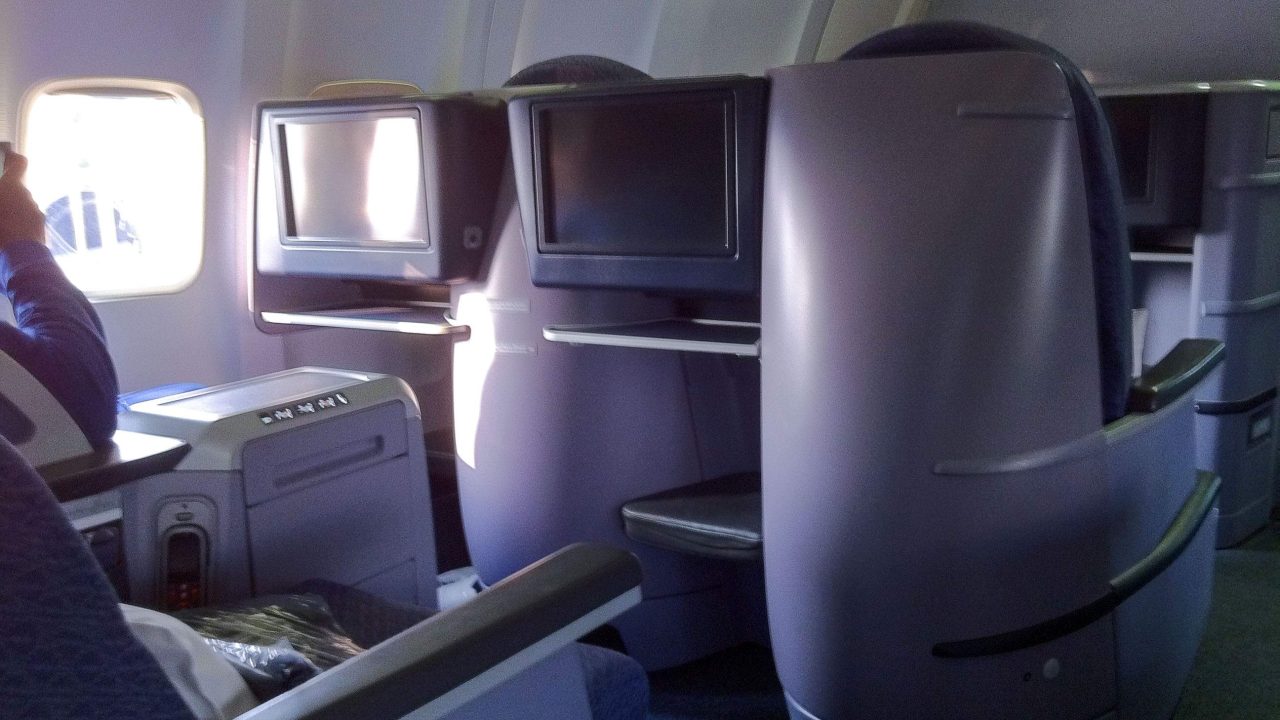
The 777 is also being deployed for Kona flights, leaving Lihue as the outlier, with those flights operated by Boeing 757 narrow-body planes, albeit with lie-flat business class seats.
By deploying its high-density 777s across many Denver-Hawaii routes, United maximizes seat availability while maintaining cost efficiency. This aggressive strategy ensures dominance in the market and keeps pricing pressure on potential competitors like Hawaiian/Alaska Airlines.
What this means for travelers.
For Denver-based travelers heading to Hawaii, United’s expansion equals more available flights, hopefully keeping fares somewhat competitive—at least in the short term. However, this comes with trade-offs. United’s high-density 777s maximize seating capacity, which for most passengers means tighter economy legroom and fewer in-flight amenities than Hawaiian Airlines traditionally offers.
The bigger picture: airline consolidation and competition.
United’s expansion in Denver to Hawaii flights reflects broader industry trends as airlines adjust to travel patterns and market consolidation. The Alaska-Hawaiian deal is reshaping Hawaii travel, and United’s Denver-Hawaii expansion is one direct response to this shift.
Denver is one of United’s long-term plays for future expansion. Their land purchases and potential headquarters relocation there signal a major commitment, making their aggressive Hawaii strategy feel even more calculated.
For Alaska Airlines, the challenge ahead remains to integrate Hawaiian Airlines’ network effectively without triggering aggressive responses from competitors like behemoth United. So far, the strategy appears to be one of calculated growth, focusing on existing strengths rather than taking on other airlines.
In the meantime, United is signaling that Denver-Hawaii is a market it intends to keep tightly under its control.
Final thoughts.
The airline industry is one where dominant players reinforce market control and discourage competition. For Denver travelers, more opportunities to fly nonstop to Hawaii are here. But as airlines continue to adjust strategies, the real question is whether United’s dominance will leave room for competition—or if it has effectively shut the door on any future challengers.
Get Breaking Hawaii Travel News




Aviation is a business … it’s hard going.
If Hawaiian wants to compete on the Denver- Hawaii route I would prefer that…and I think a lot of pax would. United may have the aircraft but they can’t compete with an airline that puts guests first. When you fly Hawaiian your vacation starts the minute you board. Kamaaina feel at home. UA is a bus, not an experience.
The customers are always right. They will choose the products that they like. United knows the products to offer that makes the most sense for the most people. UAL has done an incredible job by offering the products that most people like and with many different flight times per day. Think about if you are flying out of Denver to Hononlulu. You can fly non-stop or connect through SFO or LAX. You can fly morning, mid-day, afternoon or evening. If you misconnect, it’s convenient to have several other flights going to Honolulu. You have a choice of 4 different classes of service, food service, seat back entertainment with 100’s of movies. If you have their credit card you get 2 free bags, priority boarding and access to the United Club. United kind of has things rolling for them right now. Customer choice is about more than price.
I had to cut a Hawaiian stay short, and was scrambling to find FC seats from OGG. It was then I found AA has 2 nonstops DFWOGG on their 777 Flagship – no awful UA HD planes. I’m based in IAH, would love for UA to share the DEN love they’ve been passing out for the past 3 years!
I remember United had two flights between Denver and Lihue during the summer of 2019 which I think the second flight was a seasonal thing or just adding capacity and ended soon after the pandemic started in 2020, United flew two 757 or a 757 and a 767 between Denver and Lihue.
I have offered on this blog an outlook suggesting the Denver nonstop is the biggest opportunity for Hawaii air expansion. I wondered which airline would pounce. Alaska holds promise but their connections to Denver are poor and offer no nonstop service. Southwest has controlled the market but only with connecting flights. Nonstop to Denver opens all the US markets with the largest Southwest hub in their network in Denver. However, everything SWA has recently done in their service modifications are effectively killing the opportunity. United is stepping up, but needs a civilized day schedule for the Eastbound leg to Denver.
There is still room to capitalize in this but Alaska and SWA are failing fast.
If United wants to solidify its presence in Hawaii, it could start by resuming service to Hilo.
United doesn’t want to “solidify” its presence. It wants to be profitable, something the ITO service was not. If it were, they would have kept it.
And the tourists keep pouring in. It’s almost as if all the doomsday commentary over the past couple of years about how the Hawaiian economy was going to nosedive due to price increases of hotels and lack of accommodations. Travelers were going to be choosing destinations more aligned with their budgets, etc., etc.
Maybe the new administration has buoyed the public fears about a recession and everyone is spending freely again? Time will tell.
United, like every other corporate entity these days, values profit above all else, including their passengers.
I would hope so. Publicly traded corporations are required by law to put the interests of their shareholders above everything else.
United’s Denver hub is already a fortress, and now they’re locking down Hawaii flights too. Anybody else better move fast if they ever want a shot at making DEN work.
I actually prefer flying through Denver when heading to Hawaii. It breaks up the trip nicely if coming from the East Coast, and the connections are usually better than dealing with LAX or SFO madness. Smart of UA to focus here, and yes it is going to make it hard for anyone, whether SW or Alaska.
United’s play here is obvious—make sure no one else gets a foothold in Denver-Hawaii service. I fly this route often, and while it’s nice having more flights, I’d rather see some real competition to keep them in check. Prices are awful.
Denver to Hawaii is not just for local traffic, but it also takes advantage of a significant number of available one-stop connections to Hawaii through Denver on United. Seattle is not as well placed for connections to Hawaii as Denver for much of the country, and this allows United to aggressively compete on price and time on those connections.
That’s not to say local Denver traffic is unimportant, but that the economic value of those flights is not based strictly on local O&D. It does enable a better capability to price local O&D traffic competitively. In a different market, much of the United DFW-SFO traffic is connecting in SFO to Hawaii or Asia, and United is very much competing with American non-stops from DFW. More Denver to Hawaii flights help better fill North American flights to Denver. It would also not be unusual to find connections via Denver to Hawaii to be cheaper than a local Denver nonstop to Hawaii. It may even be cheaper to fly Denver-SFO-Hawaii than non-stop.
Does this have anything to do with AS/HA?
No. It is about the years long plan to build up Denver.
If UA was trying to hit AS, it would build up SFO and LAX.
I agree with you Goforride. HA and AS certainly has no problems competing with UA in LAX or SFO. The HA/AS alliance using the HA brand is a strong competitor no matter who else is flying the same route. HA and Delta seem to be coexisting just fine in SLC and Delta has just decided they can’t compete with HA in BOS.