
The old Hawaii vacation carried certain automatic qualities for many visitors, like planning ahead and worrying less about details. Summer 2026 already feels far more deliberate than that, with June still a week away. Even as the tone around trips has changed, and after twenty years of watching Hawaii travel patterns from inside the state, this feels, in some ways, like the first summer when the post-pandemic reset has fully settled into a normal visitor psychology. People clearly still want the Hawaii experience and are coming.
Maui is returning faster.
One of the most interesting aspects of summer 2026 is that Maui appears to be recovering faster than the broader conversation about travel to Hawaii. Visitor hesitation about Maui was still easy to spot even last summer, especially among travelers still unsure about how returning after the Lahaina fire would feel. This year feels different already.
According to the Hawaii Department of Business, Economic Development, and Tourism, Maui arrivals had already climbed 11.5% year over year by February. Hotel occupancy in Maui County rose to 78.0% from 71.5%, while occupancy in the Lahaina, Kaanapali, and Kapalua corridor climbed to 76.3% from 69.2%. Those are meaningful changes.
Travelers appear to be returning to Maui this summer, even as they remain more cautious about Hawaii’s overall affordability. Those two things are happening at the same time, and together they help explain the strange shape of Hawaii travel recovery right now.
The 2026 Hawaii vacation is more thought-provoking.
For years, and especially after the pandemic, Hawaii travel operated in part on momentum. People who had postponed trips came back, families reunited, and visitors absorbed the rising costs because simply being back in Hawaii still carried its own emotional weight. That cushion feels thinner now.
The accumulated costs of travel across Hawaii have fully settled into visitors’ minds. Airfare alone no longer defines the budget conversation the way it did years ago. Travelers are now looking at accommodation costs first, plus resort fees, restaurant tabs, parking, activities, rental car rates, and even the cost of groceries before they leave home.
The change is visible across decision-making. Visitors who once booked oceanfront rooms without hesitation tell us they now spend more time comparing categories and carefully reading the fees. DBEDT data confirms what we are hearing: the average length of stay is trending down in early 2026 compared with the prior year. Families who once automatically added extra nights are now clearly trimming a night to free up money for other parts of the trip.
Part of the shift is financial, but part of it comes from years of hearing about Hawaii in discussions of vacation rental crackdowns, overtourism debates, beach access fights, reservation systems, parking enforcement, and visitor behavior controversies. While these have all entered the public conversation during the past several years, most travelers who follow Hawaii news closely have absorbed that before arriving.
Visitors are booking later, staying shorter, and spending carefully.
Another noticeable difference heading into summer 2026 is how much shorter the booking window is compared with earlier Hawaii eras. Travelers will still make the trip, but many appear less eager to commit months in advance unless the pricing lines up cleanly. And that is rarely the case. Hawaii has become one of the destinations people watch more closely before pulling the trigger.
The Hawaii vacation itself is changing. Visitors who once split vacations between multiple islands are increasingly choosing one island and staying put. Families who once stretched trips to ten days or two weeks are trimming them to the now-familiar week. Spending is getting edited far more aggressively than ever before.
Luxury Hawaii travel has not disappeared by any measure, but spending patterns even then look different, too. Some visitors are keeping the high-end resort while cutting back on restaurant splurges, tours, or upgraded rental cars. Others are doing the opposite, choosing simpler accommodations while preserving the experiences that brought them to Hawaii in the first place.
The repeat visitor rhythm is changing too. Before the pandemic, many travelers treated Hawaii as an annual journey. They already knew their favorite islands, hotels or vacation rentals, restaurants, and beaches, and returning felt easy. Summer 2026 increasingly feels like travelers are treating Hawaii as a major trip they truly want to get right.
Every disruption now lands harder than it used to.
A Hawaii vacation has always involved friction somewhere along the way. Beaches close occasionally, traffic backs up unexpectedly, weather changes plans, and popular places fill up faster than visitors had hoped. The difference now is how personally those disruptions can land after families have committed so much money and emotional energy to the trip.
The emotional contract with Hawaii changed.
For decades, Hawaii guaranteed a certain simplicity to visitors. People came expecting relaxation, escape, and a break from mainland tension. Budget to high-end Hawaii vacations all carried an underlying feeling that the islands themselves would somehow make it all work.
That emotional agreement has become more complicated now. Visitors arrive after years of hearing about Hawaii through overtourism concerns, cultural sensitivity conversations, beach-crowding fights, and visitor-management issues. Even travelers who fully support those conversations still arrive more aware that Hawaii has changed.
What summer 2026 visitors are likely to notice.
Visitors arriving this summer will probably notice that Hawaii still feels extremely busy in many places despite all the discussion about slower tourism arrivals. Flights remain packed, major beaches fill up, and popular restaurants continue booking out ahead of time. Maui, in particular, may feel busier than some travelers expect.
They are also likely to notice how much planning Hawaii now demands compared with older versions of the journey. Reservation systems affect everything from restaurants to state parks, parking requires more strategy at many beaches, and last-minute spontaneity seems to collide with availability faster than visitors expect.
Pricing continues to change visitor experiences throughout. Some are skipping certain activities while keeping others, eating in more often, or choosing fewer paid excursions than they once might have. Overall spending remains significant, but travelers to the islands appear increasingly selective about where they believe the money still offers the best value.
Hawaii is still a top pick, just not in the same way.
People still want Hawaii badly enough to spend extraordinary amounts of money and travel time to get here. On the other hand, what appears to be changing is the emotional posture surrounding the decision. Hawaii vacations now feel more deliberate, more carefully scrutinized, and more emotionally charged than before. Travelers are still choosing the islands in big numbers, but fewer are doing it casually.
That shift may shape Hawaii tourism for years to come because it changes how visitors experience nearly every part of the trip. If you’re planning a Hawaii trip this summer, what is the one thing you are watching more carefully this year than you used to?
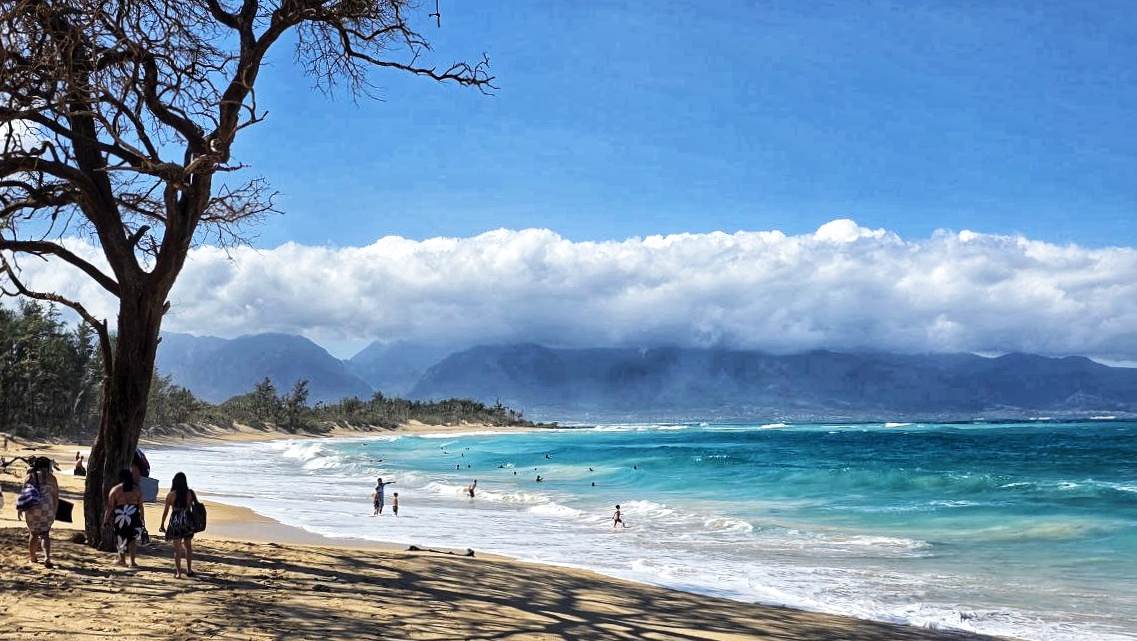
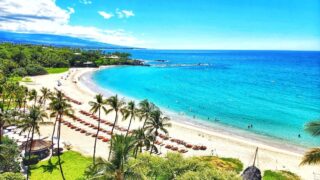
Photo Credit: © Beat of Hawaii at Baldwin Beach on Maui.
Get Breaking Hawaii Travel News


To Nancy – maybe you should try another island. We stay at the Kiahuna Plantation Beach Resort on Kauai. If an ocean view isn’t required, probably looking at $300-$500/nite. No resort fee, no parking fee and a beach club available & included in daily fee. Even a car rental won’t get you into the price per night you last paid.
Costs are up everywhere in the world. I personally am just starting to get used to the fact that my European lodging is averaging $600/night instead of the $300 I’m used to. But if you compare to what hotels cost 30 years ago, it seems like prices were artificially low for a long time.
And if people realized how much maintenance is required in Hawaii, they would think it’s a bargain. Pool cleaning, yard maintenance, cleaning, painting, repairs. It’s all very expensive here. It costs more to re-plaster a pool in Hawaii than to build a pool from scratch on the mainland. Stainless steel rusts. Plastic disintegrates. Wood rots. Appliances and TV’s don’t last. It is a never ending battle against the elements.
I used to look at a vacation rental that cost $20k/month and think that was crazy. Now I realize it’s a lot less expensive than owning that same place.
I’m sorry that less people will be able to spend less time in Hawaii. But there are less expensive ways.
2023 September my trip for 2 weeks on Big Island, 3 adults was well over $15,000.00. I’m coming back with my cousin Sept 2026. I’m sure it will be close to $13,000 if not more. This is with fantastic airfare, great rental car price for 2 weeks and I have stayed in this beautiful condo several times and know the owner… After about 35 years visiting frequently, this will probably be my last trip. The price of everything has escalated way beyond any wildest dreams of inflation. I’m an average person, retired a few years ago, work in seasonal job, fixed income otherwise.
It brakes my heart. I can no longer sustain the increases. When almost everything I want to do is $200.00 or more. No. I can’t do that. Very sad.
There are lower cost ways to vacation in Hawaii. The biggest cost here was lodging. If you want to stay in a condo at a resort it’s going to cost a lot. Also, staying at or near the resort areas seems like a boring way to see our islands. You could spend $300 a night in a vacation rental, for 10 days on the big island and have a lovely time. $300 more for cleaning fee and that’s $3,300 for lodging. Half what was spent on the condo and probably a nice place with a more genuine Hawaiian experience. There are many ways to experience the true Hawaii for much less than most people spend but if you want the higher end vacation structure, then you pay for that. It’s called capitalism. Supply and demand works for everything. Hawaii is in big demand and has limited supply. You can have a lovely vacation in South Dakota or New Mexico for a fraction of the cost. You want fancy, convenient Hawaii, then you pay for it.
I’m currently on BI a trip that was booked through Costco months ago.
I do all our travel booking find the current way to book trips very convenient. Everything from resort stay to dining to activities are planned and booked in advance, but I also leave enough room for spontaneous activities.
You are right that Hawaii isn’t a cheap get, but if done smartly you can still find value.
One last observation is that everyone from resort staff to other travelers even our shopping trip over to Kailua people have been over the top friendly.
Awe….it almost feels like someone should start a “tour business” just getting people to places they want to go on time and on the right day. Like “see Europe in 7 days”. You decide what you want to see and they plan your itinerary for you. They give you your “schedule” when you arrive and get you there and back and ready for the next day. No thanks. My Hawai’i was kick back, take a deep breath of the plumeria/ginger air and let “Hawaiian time” take over. I knew I was “home” but evidentially, “home” and my attachment to the ‘aina is a thing of the past.
Wow, you just expressed Exactly the way I feel. We used to go to Oahu every year, if not every other year for min two weeks, and several times an entire month. However, we have not been back to Hawaii since pre-pandemic as the cost and planning now rivals international travel. Now it is not a no brainer to go to Hawaii, but is Hawaii vs Italy, Hawaii vs Hong Kong and so on. We still want to go to Hawaii, but the value of Hawaii has lost its luster given the cost of lodging, car rental and food. We still have the spirit of aloha in our hearts, but my pocketbook says go elsewhere for about the same amount of money. I can now find Zippy’s in Las Vegas. It is not the same as being in Hawaii, but is a small food fix for now. Keep up the great journalism!
At OGG right now awaiting my return flight to the mainland and I can confirm that Maui has been pretty busy for the last two weeks
Hi Rob+Jeff I would say the main thing most people are concerned with is getting the most value for their money spent. No one wants to get gouged and ripped off by overpriced cars, accommodations, and food. I used to be able to go there for 2 weeks on $3,000 and that was for the whole trip
Now it’s $5,000 for 1 week. The economy has hit everyone hard including visitors, so the least we expect is to have a pleasant vacation. Happy Summer to you both and mahalo for all of your work and fine stories to keep us updated.
Debra M. –
Have you rented a car, dined @ a fine restaurant or seen a play or movie on the mainland recently ? Everything has gone up throughout our whole country & world.
Don’t come to the 50th state if you are not prepared for more expensive Everything !
We, who live here, deal every day. B
Be prepared to pay the price to visit our beautiful islands, or stay on the mainland.
Kurt.
Kurt, Yes if you read my post I said the economy has affected everyone. Hawaii, the Mainland, and Europe. Yes I have been out to a movie and restaurants here on the Mainland, so I am well aware of costs. I was just stating facts of differences in costs from not that long ago over there. Like 3 years to be exact.
Keep that attitude up Kurt. Remember, the mainland doesnt need you. Without tourism and the military base, Hawaii would be just some poor island in the Pacific Ocean.
We cancelled our month this summer. With gas and food costs we just decided we would stay home.
We are returning to Maui for our annual trip mostly because we quite simply didn’t take the time to plan a different destination. Many people return because they have timeshares & have to pay the high maintenance fees even if they don’t go. Vacation activities have definitely changed. Our airfare is mostly covered by points. We arrive & go directly to Costco & Walmart for food etc. We prepare almost every meal at our resort. We won’t be making reservations or paying fees to park. We will have a mostly “stay vacation” right there at the resort. The location is oceanfront so we have access to the beach, snorkeling pools etc. No more Luau’s. We plan to patronize our favorite restaurant, use our points at McDonalds, Panda Express and Starbucks. Times have changed. Don’t get me wrong, we’re going to have a lovely time but there are things we have determined simply aren’t worth our time.
We have stopped going to Hawaii and are looking for other places. Too much traffic, higher costs ad local rudeness have ruined the experience.
If you face “local rudeness” it’s likely because you have done something to deserve it. As a long time resident of Kauai it is my opinion that many tourists see Hawaii as existing only for their personal enjoyment. Recently I was at a local dog park. I noticed that a lady who was an obvious tourist (she had no dog and a rental car) entered the park to use the hose to wash off her shoes. She left the gates( there are a series of two gates to insure dogs don’t escape) wide open. To her this area existed only for her convenience. While this experience was blaring I see the same attitude all of the time . Crosswalks in the town of Kapaa every 1000 feet but pedestrians dashing across the road because they just don’t want to walk that extra 500 feet. I love Kauai but it sometimes feels like it belongs to those with the biggest wallet
@Barbara… I agree with you that there are some visitors who view our Islands as their personal playground.
I live on Maui, and when I see visitors leaving trash on the beach for someone else to pick up, I tell them that there’s a trash can 20 feet away from them. When I see visitors speeding through neighborhoods, I follow them to remind them to slow down. When I see visitors pushing locals out of their way at Kahului Airport, because they think they should always be first in line, I remind them that there’s is an established line.
If visitors think I’m being rude, either behave, and have respect for common courtesy, or go to Florida next year. I’m all for respectful visitors. For the unrespectful, please go somewhere else.
I don’t mind paying more if the experience is any better. What bothers me is paying more while getting less: now smaller rental cars, fewer housekeeping days, higher parking rates, and restaurants that feel short-staffed.
Paying more & getting less is a form of inflation.
We used to bring the grandkids every summer. This year we told them we could either do Hawaii or help with college, but not both. That was a sad conversation.
I think this explains why our last Hawaii trip felt challenging even though we still loved it. We spent the whole vacation checking the costs. Every activity became “is this worth another $300 for the four of us?” We still had a wonderful time though and we look forward to returning.
We have gone to Hawaii almost every year since 1998 and this is the first time I remember my husband sitting down and scrutinizing the money before we booked. Comparing parking fees, resort fees, car rental taxes, food costs, and even whether we should skip some things entirely because of cost. We are still excited to go, but it no longer feels as carefree. Not sure other places are much better though.
Yes, agree that the carefree aspect has Greatly diminished
I think people still badly want Hawaii after the past crazy years, but they no longer feel financially relaxed once they start looking to book it. That does change the tone of the vacation.
The shorter trip part is definitely true for us. We used to stay two weeks split between two islands and now we are doing seven nights on one island because the overall cost got too high.
We are still going to Maui this summer, but I spent more time looking at resorts, fees and restaurants than I ever have before. But at least we’re going and are happy about that!
Restaurants on Maui, especially in Kaanapali through Kapalua, may be more crowded because the Lahaina restaurants are no longer there. Making reservations before you go is a very smart move.